In a world where the concrete jungles often overshadow the natural ones, award-winning wildlife photographer and filmmaker Daphne Wong turns her lens to capture the ethereal beauty of one of the ocean’s most enigmatic creatures – the Chinese white dolphin. Her latest documentary, “Breathing Room,” is not just a visual feast; it’s a compelling narrative that brings to light the delicate dance between human expansion and wildlife conservation.
We had the opportunity to connect with Wong via Zoom, where she recounted the unforgettable experiences encountered while filming. She described a heart-stirring encounter with a pod of playful dolphins. “There was this one time,” Wong reminisced, “when a group of dolphins seemed to be performing just for us. They soared out of the water, reaching incredible heights, and descended gracefully near our boat. We weren’t prepared with our professional gear, but we managed to capture that moment on our phones. Their sheer vitality and freedom were incredibly moving.”
Wong’s documentary goes beyond the mere documentation of these majestic creatures. It’s an urgent plea to recognize the shrinking space these dolphins have to call home.


Daphne Wong is an award-winning wildlife photographer and filmmaker from Hong Kong. She is experienced in directing, filming, editing and producing films and images, as well as a deep passion for both wildlife and storytelling.
Daphne directed and filmed on the first wildlife documentary series in Hong Kong, “大自然大不同 Biodiversity in HK”, produced by Radio Television Hong Kong.
In 2020, she co-founded Frigatefilms, Hong Kong’s first natural history film production company, delivering high quality content for broadcast, NGOs, corporations, and educational institutions.
Besides film production and camera work, she leads ecotours and wildlife photography workshops for the public, aiming to educate the younger generation on conservation of the natural world.
Current Situation
Source: Agriculture, Fisheries and Conservation Department
Hong Kong’s cherished Chinese white dolphins are confronting a crisis of survival, with stark figures painting a troubling picture. Over the past decade, the overall population density has halved, plummeting from an estimated 80 individuals in 2012 to a mere 34 by 2022. This dramatic decline serves as a clarion call for heightened awareness and action to turn the tide for these enigmatic creatures.
Now let’s take a quiz to see how much we know about these animals as well as how aware we are of their challenges.
How did you score on the quiz? Even if you did well, don’t forget to read up on more dolphin-related facts and check out the websites of WWF as well as the AFCD.
Worryingly, there’s been a dramatic sharp decline in the population of dolphins, mostly due to human activities. The graph below shows the number of Chinese white dolphins from 2014 year by year to 2022, as well as the possibility of encountering them on a yearly basis.
We did some vox pop along the Kennedy Town Harbourfront and interviewed the general public on their views and awareness of the Chinese White Dolphins as well as various govermental projects and their impact on these animals. From these vox pops, we’ve concluded that human development is the main root cause behind the disappearance of the dolphins.
Today it’s the Lantau Tomorrow, tomorrow it’s something else – there’s always another project. You can’t just worry about the economy, more things determine our future than just economics.
As a human being I am willing to compromise for the survival of the dolphins…
Hong Kong has a lot of brownfield for development which are undeveloped. Land reclamation is not good because of course it’ll negatively affect marine ecosystems.
Human Needs v.s. Dolphin Needs
source: creative commons
In the bustling hub of Hong Kong, the relentless drive for urban expansion is setting the stage for a profound narrative of conflict and coexistence. This tale isn’t just about the towering skyscrapers and sprawling highways; it’s about the unseen inhabitants whose lives are intertwined with these developments—the Chinese white dolphins.
Imagine a scenario where every thrust of a pile driver into the seabed or a stretch of reclaimed land not only alters the skyline but also sends ripples through the marine ecosystems that are crucial for the survival of these enchanting creatures. The dolphins, known for their intelligence and playful nature, find themselves in an ever-shrinking realm of safe waters and clean sources essential for their existence.
Join us as we delve into this compelling conflict, exploring the delicate balance between advancing human aspirations and preserving the natural world. This is not just a story of environmental challenge; it’s a reflection on our choices and their impacts on the earth’s most delicate ecosystems.
The Hong Kong–Zhuhai–Macau Bridge (HZMB) spans 55 kilometers, or 34 miles, and is a bridge-tunnel consisting of three bridges, a tunnel, as well as four artificial islands. It’s the longest sea crossing in the world.
It’s main function is to connect the three cities, in particular Zhuhai, a major Pearl River Delta city on the mainland of China. The bridge cost ¥127 billion, or US$18.8 billion, to build.
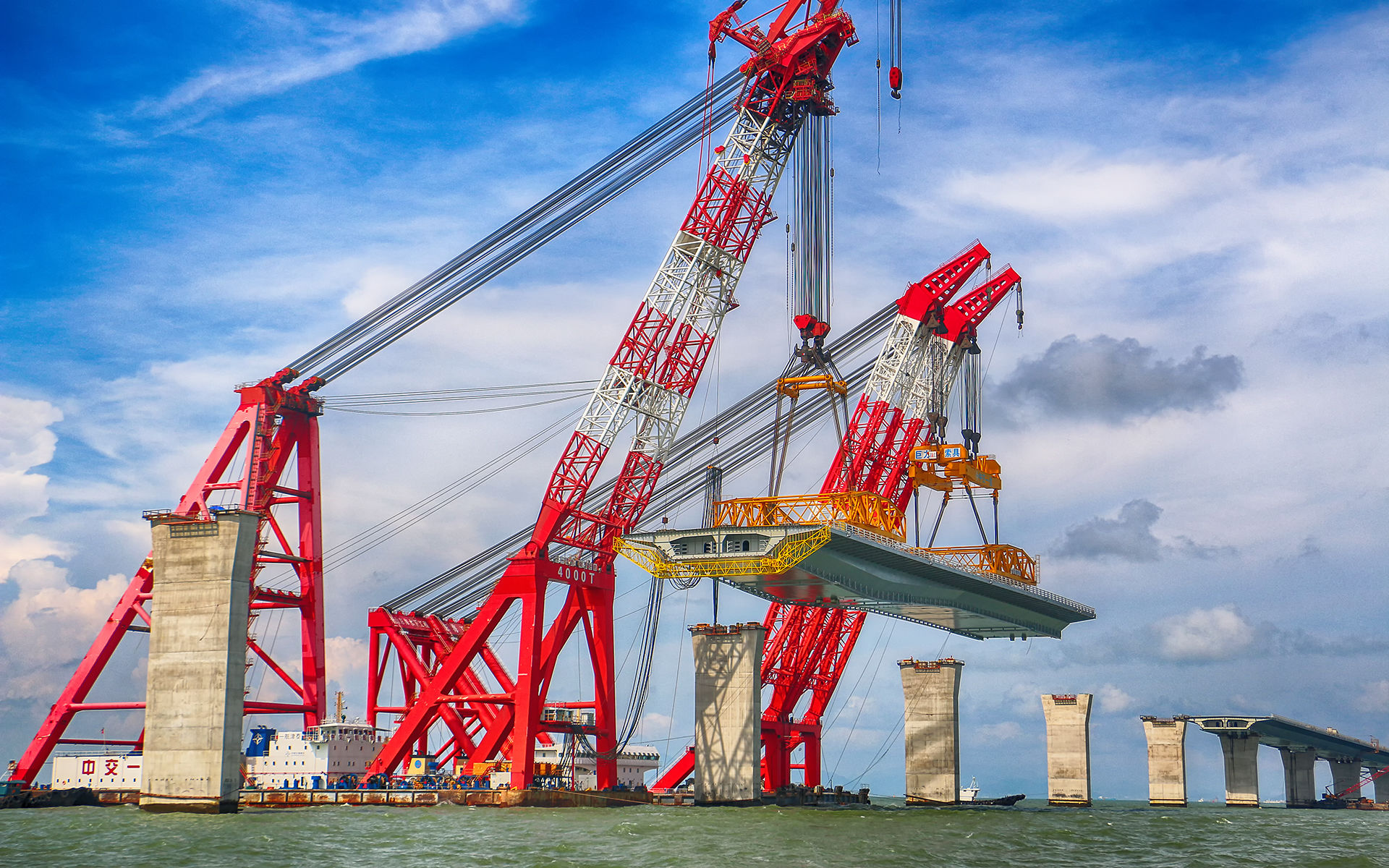
Source: Transport and Logistics Bureau, The Government of the Hong Kong Special Administrative Region of the People’s Republic of China
The Lantau Tomorrow Vision, formally known as the Kau Yi Chau Artificial Islands, is a development project in Hong Kong proposed by former Chief Executive Carrie Lam in 2018 during her policy address. It includes the land reclamation of a total of around 1,7000 hectares of areas near Kau Yi Chau and Hei Ling Chau east of Lantau Island.
The project has had its fair share of controversies when it comes to its high cost of estimated HK$580 billion as well as its impact on the land and marine environment.
In February of this year, Paul Chan, Hong Kong’s financial secretary said the project would go ahead, albeit postponed.
Public opinion on major infrastructure projects is deeply divided. On one side, proponents herald these developments as monumental achievements that promise to bolster economic growth, enhance connectivity, and provide much-needed housing and facilities.
Conversely, there is a growing contingent of concerned citizens and environmental advocates who argue that the costs to the natural environment, particularly to the habitats of the Chinese white dolphins.
This dichotomy in public perception underscores the complex interplay between development and conservation, highlighting the need for careful consideration and dialogue as Hong Kong continues to evolve.
The location is very strategic in the sense that with the reclamation, we can build a bridge and railways if justified, connecting the west side of Hong Kong Island to Lantau and all the way to Hung Shui Kiu and up to mainland China.
SCMP, Mar 1st 2024
Pages Ng, Tuen Mun, SCMP Letter to the Editor, Mar 30th 2024
Next, we’ll present the distribution map of the dolphins as well as their essential needs for survival. This visual guide will help illustrate not only where these magnificent creatures are found but also the critical environmental conditions necessary for their well-being. Understanding their habitat requirements and the challenges they face is key to fostering a more informed discussion about the impacts of urban development on marine life.
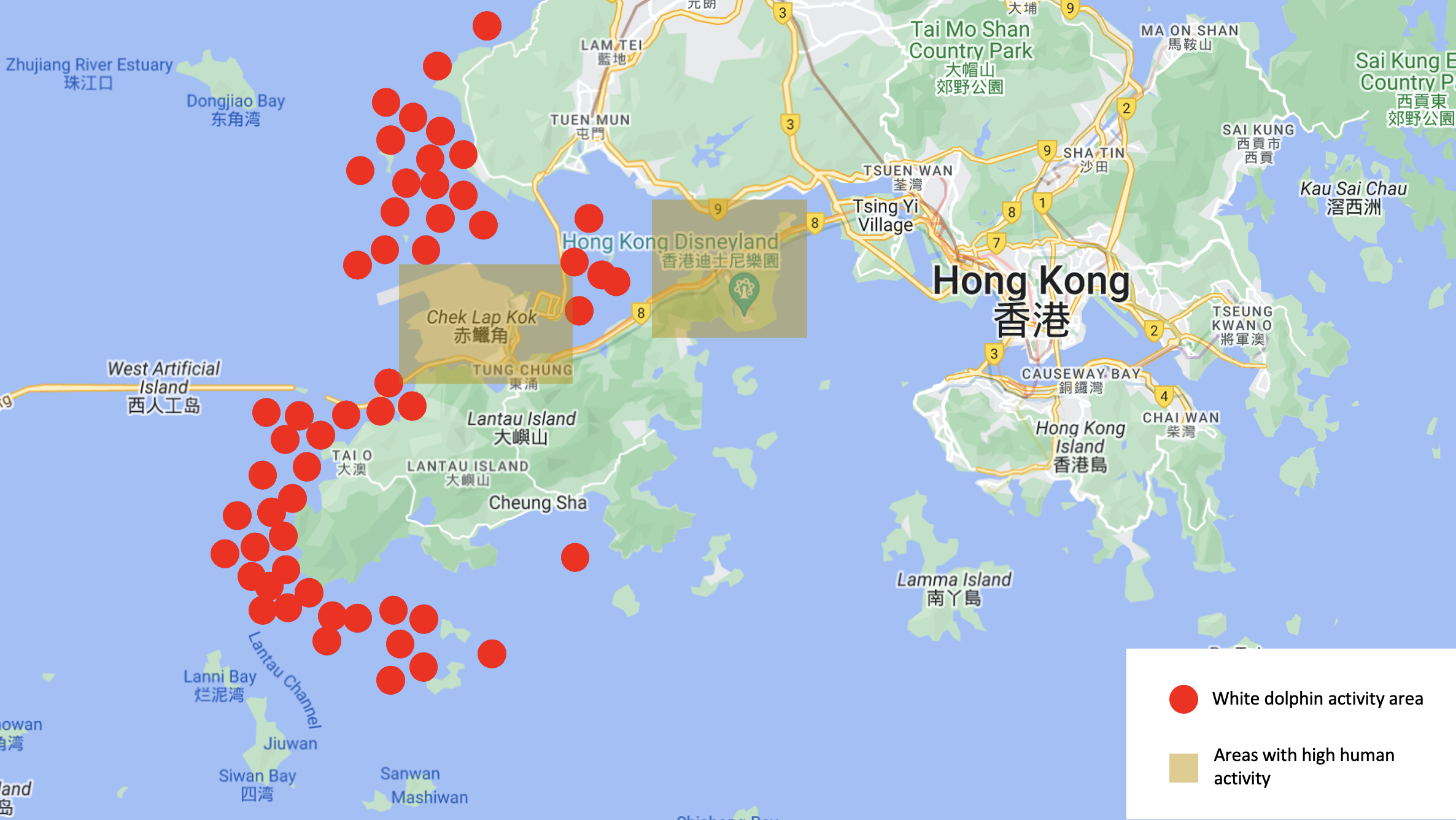
According to WWF Hong Kong, Chinese white dolphins can be seen year-round in the western waters of Hong Kong, including North Lantau near Castle Peak, Sha Chau and Lung Kwu Chau Marine Park, Chek Lap Kok and Tai O waters. Occasionally found in Fung Fung and Siu Ya Chau areas on South Lantau Island.
The enlarged particles and suspended solids in the water risk clogging the white dolphins’ fish gills. According to WWF, it also reduces growth rates and prevents calves from growing properly.
Pollutants and heavy metals from the contaminated mud dumped by construction sites then dissolves in the water which eventually accumulate in dolphins and their calves
Here in Hong Kong, there are no clear regulations as to whether fishing efforts are regulated or if a certain species can be caught. There’s been a continued decline among local fish species.
The fishing methods in Hong Kong are also far from being sustainable. The decline in fish populations have lead to reduction of food source for the dolphins.
They also alter their behavior, as well as the way they use acoustic communication.
Their Plight
Source: AFCD
Government has indeed implemented several measures aimed at reconciling the demands of human development with the survival needs of these marine mammals. Technological advancements have been leveraged to minimize negative impacts.
Let us first see what are the policies in place to protect these endangered animals? Here’s a list of official government policies in place to protect marine animals including the Chinese white dolphins.
POLICY TO PROTECT WHITE DOLPHINS
According to the Agriculture, Fisheries and Conservation Department of Hong Kong, or AFCD, “all cetaceans (dolphins, whales and porpoises) found in Hong Kong are protected locally by the Wild Animals Protection Ordinance (Cap. 170). Import, export and possession of these animals are restricted under the Protection of Endangered Species of Animals and Plants Ordinance (Cap. 586).”

Sha Chau and Lung Kwu Chau Marine Park
Source:AFCD

South Lantau Marine Park
Source:AFCD
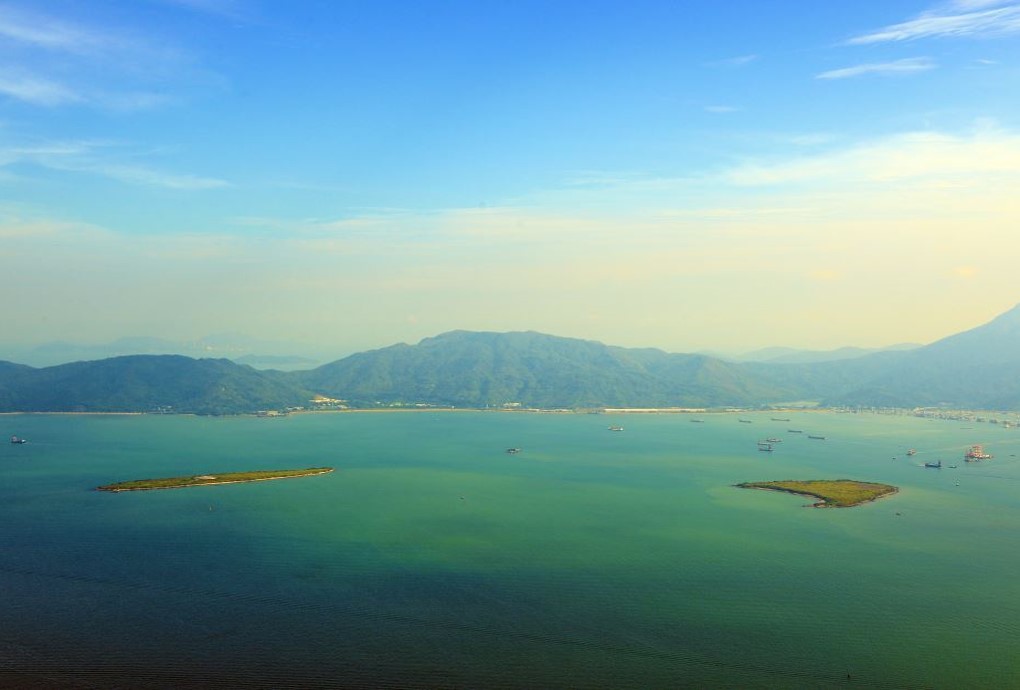
The Brothers Marine Park
Source:AFCD

Hoi Ha Wan Marine Park
Source: AFCD
“The Chinese white dolphin is listed as “Vulnerable” in the International Union for the Conservation of Nature and Natural Resources (IUCN) Red List of Threatened Species.”
According to the AFCD site, marine parks in Hong Kong such as the Brothers Marine Park established over the years provide abundant food sources for marine creatures.
HOW TECHNOLOGY CAN HELP WHITE DHOLPHIN
However, despite these efforts, the effectiveness of these measures has not quite met expectations. The ongoing challenges indicate that while steps have been taken in the right direction, achieving a true balance between development and conservation remains a complex and elusive goal. This situation underscores the need for continuous evaluation and adaptation of strategies to better protect our marine environment.
We spoke with Viena Mak, Vice-chairperson of Hong Kong Dolphin Conservation Society, about her experience volunteering at the organization, her thoughts on the seemingly advanced technologies that are supposed to “help” the dolphins, as well as relevant government policies.
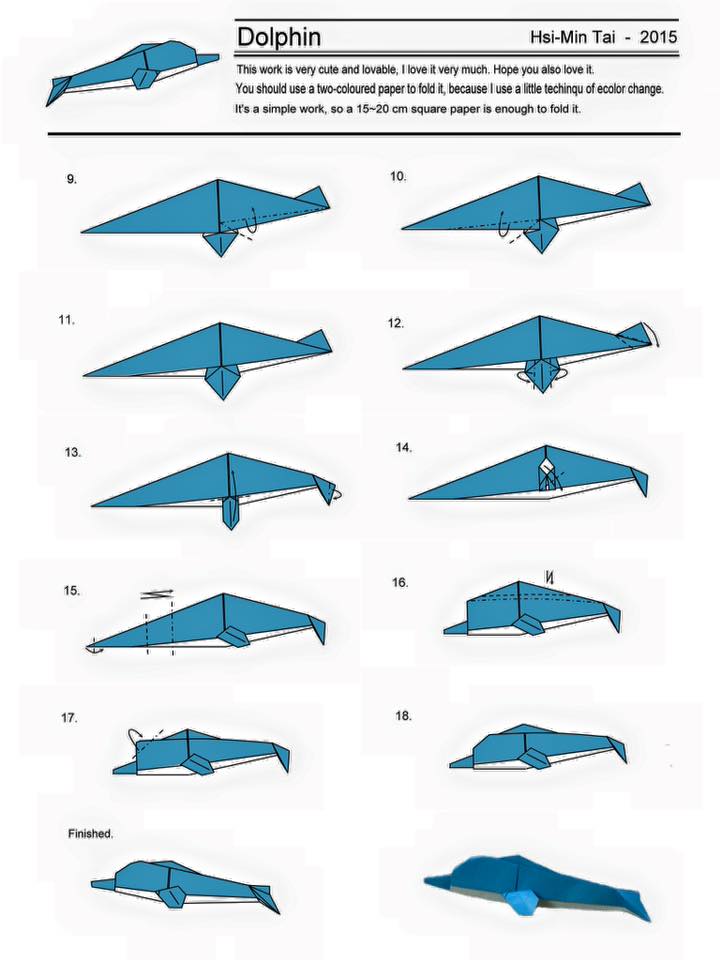
To bring this message closer to heart, we’ve created a touching origami dolphin folding tutorial. This gentle craft is more than just paper folding; it’s a symbol of our connection to the Chinese white dolphins and a call to nurture their fragile world. Let’s create your own dolphin together!
Origami of a Chinese White Dolphin
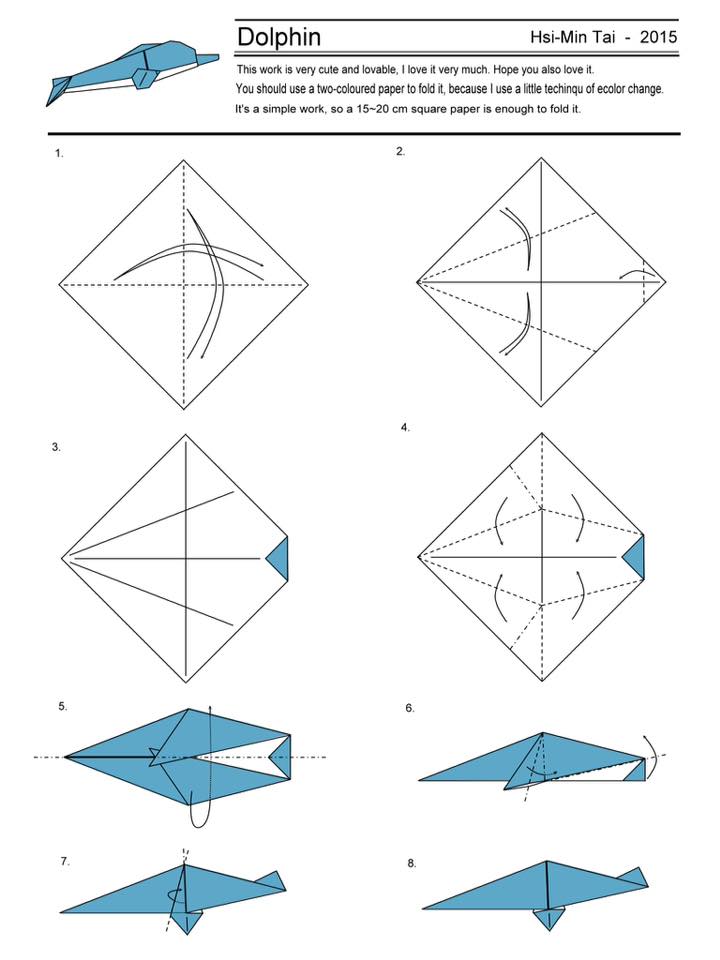
Source: Hong Kong Dolphin Conservation Society
Where does the future lie for these beautiful creatures? Perhaps no one knows. But with all these conservation efforts, there’s still a sliver of hope that they’ll still be frolicking in the waters of Hong Kong for future generations to come.