Navigating Uncertainty
The Rising Appeal of Tarot Cards in an Anxious EraIn the wake of the COVID-19 Pandemic, the healing economy is becoming a hot keyword in urban consumption. In an analysis report, Mintel, an international market research agency, mentioned that in 2023, Chinese consumers will use “healing” as the keyword to pursue the balance and health of mind, body and soul, as well as to regain their confidence and love of life.
Against this backdrop, tarot cards have gained more and more attention for their ability to read the mind, resolve difficult situations and pour out emotions. In Hong Kong as well as in the Mainland, the interest in tarot cards has increased a lot just in the last three years. Nowadays, tarotists’ stalls are regularly found at street fairs. There has also been a huge increase in interest and discussion about tarot cards on social media.
“After the epidemic, it’s a great time to start a tarot card business. A lot of people lost their jobs, lost their loved ones, and many others are very confused about the future. At this time, tarot cards can help them heal.” Eva, a tarot reader who just started interpreting tarot cards for others said.


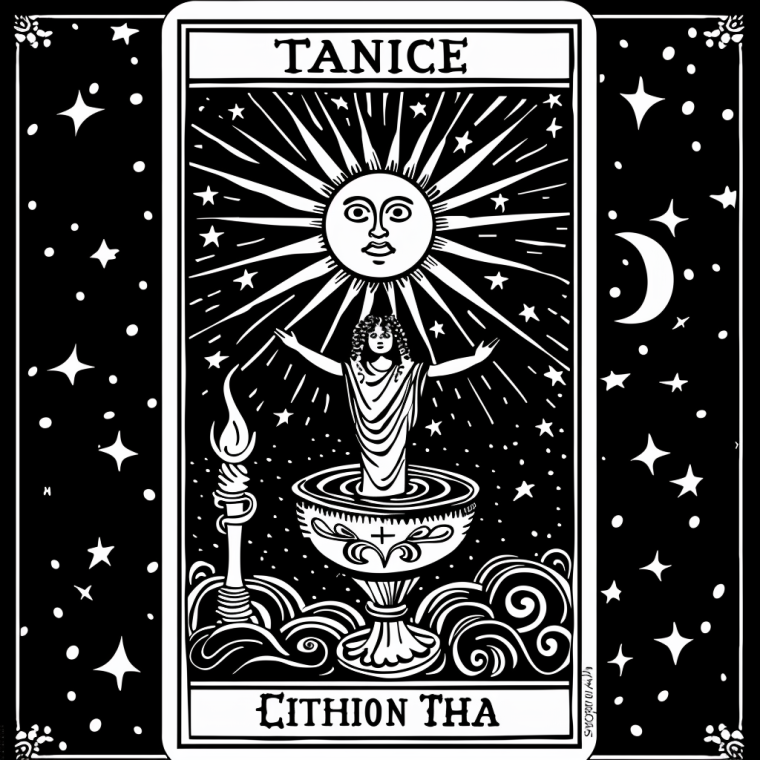
The Tarot began as a playful deck of cards, similar to today’s playing cards. Only later did it gradually become associated with mysticism and divination. Fortune tellers chose tarot cards as a divination tool because they believe that the images of tarot cards can evoke people’s deepest subconscious.
At the same time, the ease with which the images can be interpreted has allowed the Tarot to spread widely. Let’s take a look at the history of tarot cards, finding out how it became a popular, universal, and easy-to-understand divination tool!
Tarot cards are held up as a tool for dialoguing with the Holy Spirit because the images are made up of the elements in the nature of the earth. Before the arrival of scientific society, we all believed that the world was run by the gods who had mastered it, such as the gods of wind and fire. This was the law of nature and the law of the universe. When the world in front of us is surrounded by some unseen forces, we will be willing to believe in some supernatural forces and discover the rules.
As you can see in the example below, people tend to interpret the natural elements in the cards as having fixed meanings. Click on the dots on the image to see the corresponding elements and their meanings!
Some people believe that tarot card readings are accurate because of their ability to trigger mental and emotional responses in individuals. The symbols, images, and imagery in tarot cards can stimulate people’s intuition and subconscious mind, thus helping them to better understand current situations and future possibilities.
Carl Gustav Jung, a Swiss psychiatrist and psychoanalyst who founded analytical psychology, hold the same thought. He believed that the Tarot did not create archetypes, but rather appropriated the subconscious archetypes of people in their lives in order to generate the existing graphics of the Tarot. For example, the collective subconscious believes that sharp points can easily injure people and that cups hold objects, so the interpreter would equate the symbol “sword” with injury and “chalice” with gain.
However, those who hold another view believe that tarot card diviners usually speak in classes of generalized, universal terms, making it easy for people to assume that this describes them.
One theory that explains this phenomenon is the “Barnum effect”, named after the magician by Bertram Forer, which refers to the idea that people generally feel accurate about vague or universally applicable descriptive statements and believe that they apply to them. These descriptions are often common in divination or assessment tools such as astrology, tarot cards, and psychometric tests. People tend to perceive the results of tarot card readings as accurately revealing their character, destiny, or future circumstances, even though these descriptions are usually vague, applicable to most people, or open to interpretation in a variety of ways.
Despite their inaccuracy, the universality and ambiguity of tarot divination results can provide some psychological comfort. Even if these results are applicable to the majority, people may feel understood and supported by believing that they apply to them.
“A successful divination is the one that gives the asker the courage and comfort, supporting them to overcome obstacles on the basis of the interpretation of the cards.” Mira said.
Yes!! a big Yes! I believe in Tarot Card readings as they have been accurate for me most of the times. It surely has some divination and i think it majorly depends upon the Tarot Card Reader as to how they interpret your situations through Tarot and reveal the answers. Anyone can let you know the general meanings of the cards but only few will be able to connect to the supreme power (those who are real psychics and get intuitions) to get answers for your questions.
You can also say that it is a pure spiritual thing, like we ask our god to show us the path the reader also asks the cards to help you with the answers of your problems. Rest lies in how it has been interpreted to you. Also, if a Tarot card reader guarantees that his predictions are always true/accurate then this cannot happen. I personally feel that these things work on the basis of your faith, the more you believe the more accurate they will be.