Difficulties and concerns for mainland journalism students finding a job
By Gu Xinyu, Liu Xuetao and Qian Yiwen, HKU
Eric Jiang, who is a year four student from Hong Kong Baptist University, had the passion for journalism when he became a freelance journalist in BBC. He wrote an article about the middle aged mainland Chinese obtaining permanent residence in Hong Kong by chasing for a master’s degree. After its publication, he received an e-mail saying that his work is meaningful. A sense of achievement raised spontaneously, which supports him to firmly engaged in journalism in the future.
However, Jiang’s journalism dream is stuck.
Over 10,000 mainland students, including those leaning journalism, want to stay in Hong Kong after graduation.
However, low salaries, limited job vacancies and language issues may become the stumbling block for mainland journalism student to stay.
Low salaries
'Working in the media industry in Hong Kong doesn't make much money'According to Glassdoor’s data updated on the Oct. 6, 2024, the upper limit of journalists’ monthly salaries is around HK$40,000, lower than that of public relations and marketing. According to the Jobseeker Salary Report, there’re monthly salary increase space of HK$73,000 from marketing assistant to marketing director. As for public relations, Salaries of Senior Communications Manager can up to HK$68,000 a month.
No job vacancies
'You can't even try if you want to'Jiang has made many efforts to find a full-time reporting job. It took a long time to just scroll down all the articles he published at SCMP. However, when he wanted to transfer from part-time to full-time, he was hit by a harsh reality: there were simply no full-time job vacancies. Even if there were, many positions required 3-5 years of full-time working experience, which was like a thunderbolt for him as a fresh graduate.
According to data from the Hong Kong government’s Census and Statistics Department, after the pandemic, the overall trend for job vacancy rate in Hong Kong was rising at the epidemic. However, the tightening of job vacancies in the field of journalism is still evident. At the annual Hong Kong International Talent Carnival, out of a total of 162 exhibiting companies and enterprises, only 5 were related to media, with only two being news organizations, namely Ta Kung Pao and Phoenix TV.
Jiang aims to enter foreign media, but many foreign media companies have had no job openings for a long time unless someone resigns. Jiang said that foreign media rarely publicly advertise job openings and what he can do is pay attention to Talent, which regularly sends emails about personnel changes and job vacancies in media organizations, and asks industry seniors if there are any referral opportunities.
From the information Jiang has gathered, it seems that limited foreign media offer internship-to-full-time conversion opportunities. NBC is one of them. However, he said NBC’s internship opportunities are prioritized for Journalism students from the University of Hong Kong. “Many internship opportunities are not transparent to the public,” he said.
He met some reporters and editors from NBC News Asian Desk at a Foreign Correspondents’ Club event. The editor declined his request to enter the fellowship program but reassured him not to be upset and said if he was interested, he could be recommended as an intern the following year.
Similarly, Li mentioned that although some local Hong Kong newspapers post job vacancies on recruitment websites, the chances of getting a response through “blind applications” are quite low. Having some “connections” for referrals can make it easier to reach out to human resources.
Language barriers:
'Media is ragional' Wide shot of Phoenix Satellite TV-“Host Hunt” Innitiative 2024 Live Event.(Source: Liu Xuetao)
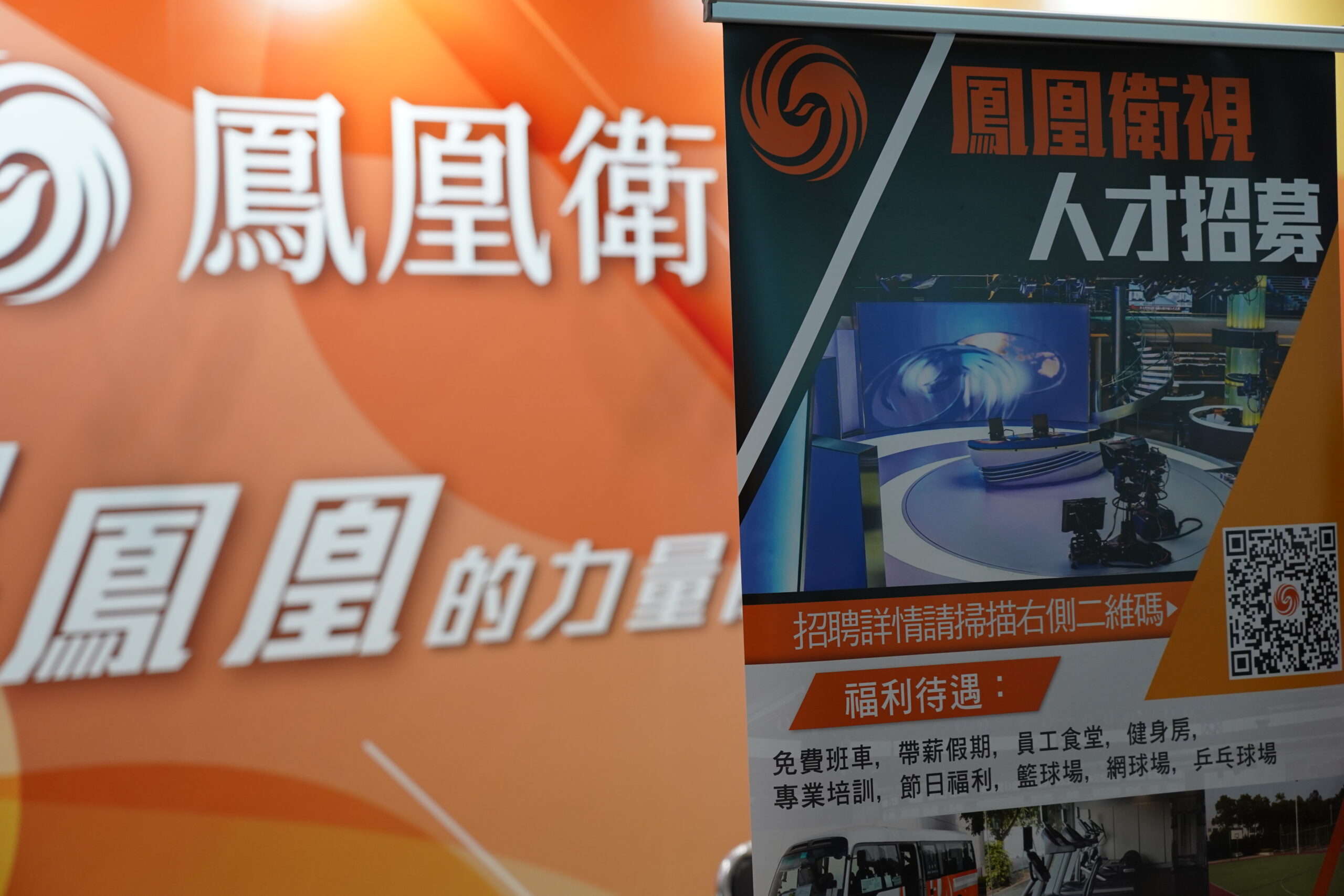
Half wide shot of the billboard at the event.(Source: Liu Xuetao)
At the Hong Kong International Talent Carnival, after receiving job seekers’ resumes, Ta Kung Pao and Phoenix TV’s first question is often, “do you speak Cantonese?” If the answer is “No,” the human resources will note this on the resume and inform the job seeker that if they do not speak Cantonese, they cannot apply for broadcaster or reporter positions but can only apply for editor-related roles. Lin said that it’s less likely for her to stay as a reporter in Hong Kong because she can’t speak Camtonese. She learned that being a reporter in Hong Kong should “at least be proficient in English and Cantonese.”
Job hunting from employers' perspective
Opportunities and challenges for mainland students

Half wide shot of interviewing the HR at the job fair.(Source: Qian Yiwen)
For mainland students seeking jobs in Hong Kong’s media industry, there are still opportunities. According to an HR representative from New Media Group, a Hong Kong-based digital media company, one clear advantage is their familiarity with mainland social media platforms like Xiaohongshu, WeChat, and Douyin. This expertise gives mainland students an edge when it comes to engaging with younger, tech-savvy audiences, especially now, these mainland social media platforms are gradually expanding their influence in Hong Kong.
According to research by social media agency Spread-It, Xiaohongshu now has over 2 million users in Hong Kong, which showcases its increasing popularity in Hong Kong. However, the HR said that language remains a significant challenge to students from mainland. “Even if mainland students are working on platforms like Xiaohongshu, they need to adapt to Cantonese and understand local cultural nuances to succeed in the Hong Kong market,” said the HR.
Interns: A path to full-time roles?
In Hong Kong’s media landscape, opportunities for interns to transition into permanent roles vary by company. At Master Insight, a Hong Kong-based media platform known for its analytical content and thought leadership, the editor Ivan Lau shared that they often hire fresh graduates—not just those with a journalism background but from diverse fields. “We’re open to candidates from other disciplines, and internships are often a stepping stone to permanent positions,” Lau explained. However, not all employers have the same approach.
Olivia Ollie Quiniquini, the associate publisher and editor in chief from Jewellery Media of Informa Markets, expressed a preference for hiring experienced candidates. Jewellery Media of Informa Markets is a leading platform focused on global jewelry market. “I tend to hire people who have already worked in a newsroom,” she said, citing the importance of discipline and the ability to handle pressure. That said, Quiniquini is still open to recognizing exceptional talent among interns. She said that If an intern demonstrates extreme potential, regardless of the department, she will keep them within the company, as long as she has the headcounts.
Sally Wu, the deputy director of Phoenix TV Chinese Channel acknowledged that in local media like Phoenix TV have few job vacancies in traditional sectors like TV station because talent mobility there is relatively stable as “they have been broadcasting news steadily for more than ten years.” However, there’re “increases in recruitments in the new media sector.” “This era determines that there’ll be more jobs for new media than before,” said Wu.

Half wide shot of a student talking to a HR at the job fair.(Source: Liu Xuetao)

Close-up of a student’s hand when talking to a HR at the event.(Source: Liu Xuetao)
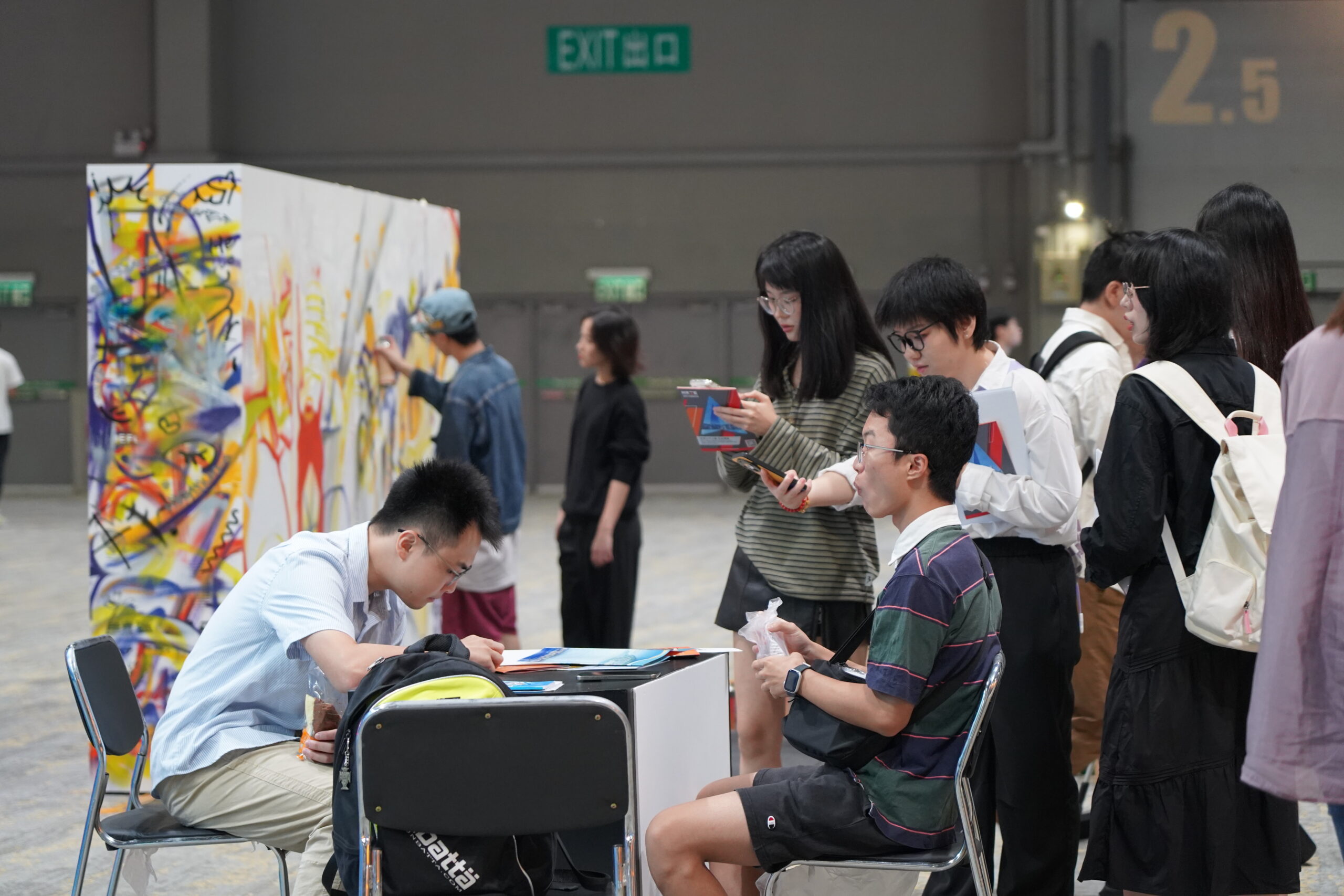
Wide shot of students at the job fair.(Source: Liu Xuetao)
When asked about the pay differences between journalism and public relations, both Lau and Quiniquini acknowledged the disparity. Lau pointed out that roles driven by public relations and commercial interests tend to offer higher salaries due to greater investment. “Content focused on social issues or non-commercial topics typically attracts less investment, resulting in lower pay,” he explained. Quiniquini echoed this sentiment, noting that PR roles, which are often more commercially oriented, are better compensated.
Despite this, she believes there is still a place for serious journalism. “Being a journalist requires more than just the ability to write. It’s about discipline—accuracy, fairness, and objectivity—qualities that remain essential in today’s world,” she said. Wu acknowledged that journalists’ salaries are “not as good as people expected.”
However, she said that beyond salaries, doing journalism has a higher “sense of achievement” than other industries like insurance and finance. We said if students did journalism not for money or parents’ expectations, but for their eagerness to “what happened and why it happened,” they will be “promising talents for journalism.”
For those considering journalism as a long-term career, both Lau and Quiniquini emphasize the importance of passion and persistence, despite the industry’s challenges. “Early in your career, you may not earn much, but as you gain experience, your salary will increase significantly,” Lau shared. “There are distinct stages in the career path—entry-level roles offer modest pay, but the salary growth once you advance can be substantial.”
Quiniquini also underlined the need for commitment. “You have to accept that most of the time it is will, it’s passion and determination that will get you through,” she said.
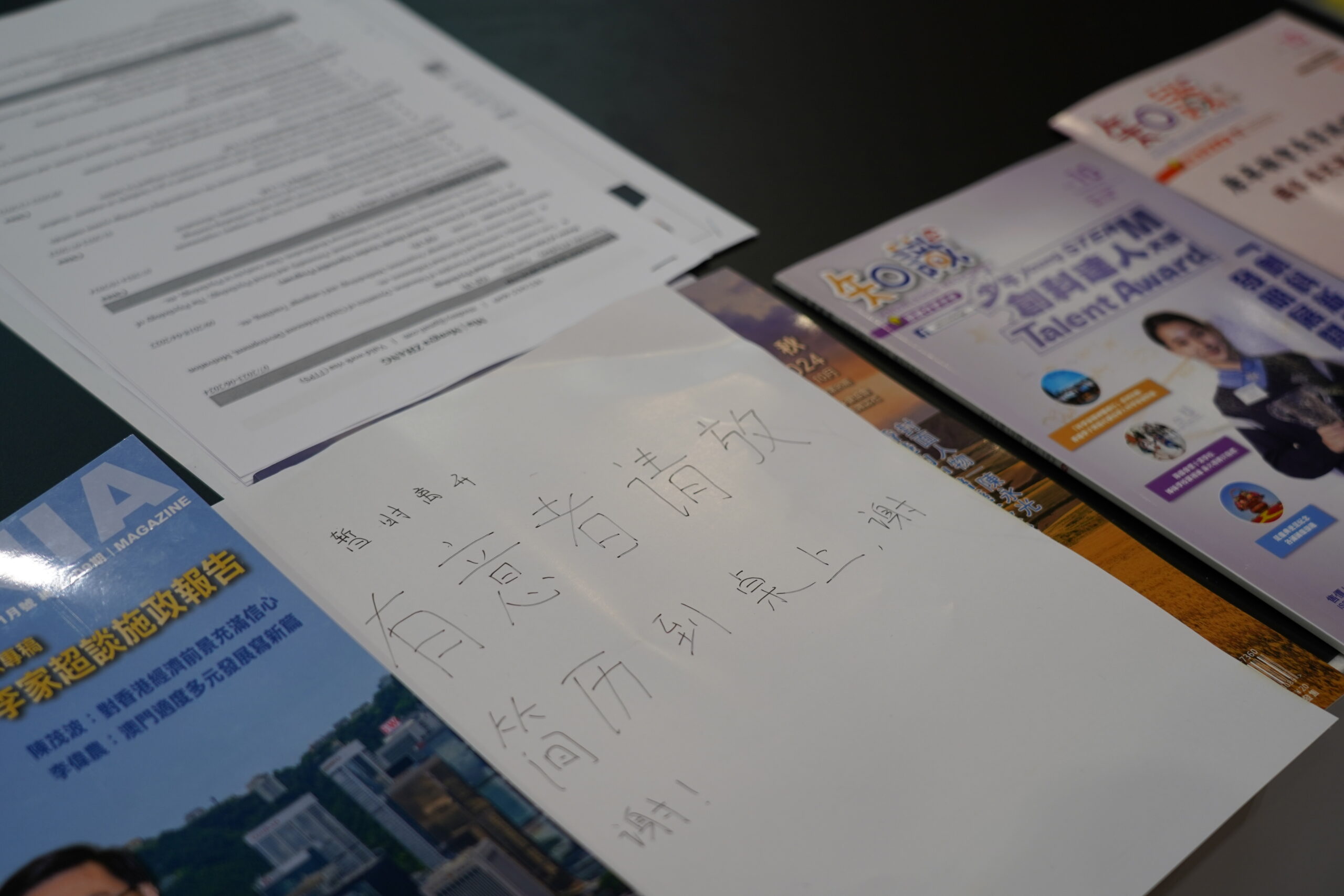
Close-up of some CVs, flyers, message papers at the job fair site.(Source: Liu Xuetao)