
MASTER DIVINATION vs. CYBER FORTUNE
When ancient wisdom meets artificial intelligence, how do we choose our fate?Chinese fortune-telling culture is a blend of tradition and modernity, reflecting the tradition and history. From Wong Tai Sin Temple to emerging fortune-telling studios, these folk beliefs are not only part of the cultural tradition of many Chinese people, but also attracting foreign tourists. These traditions are not merely relics of the past; they are living components of the cultural identity of China, serving as a bridge between generations and a source of comfort in an ever-changing world.
At the same time, AI big models, such as Deepseek are offering young enthusiasts an unprecedented opportunity to delve deeper into the mysteries of birth dates, Bazi, and hexagrams. These digital divination platforms leverage the power of artificial intelligence to analyze vast amounts of data, providing users with personalized insights and predictions that are both intriguing and thought-provoking.
Part I: Unveiling Destiny - Wong Tai Sin
Wong Tai Sin Temple is an honored Taoist sanctuary steeped in over a century of history and profound cultural heritage. Established in 1921, it is located in Wong Tai Sin District, Kowloon East, spanning an area of approximately 18,000 square meters. Alongside the solemn Main Hall, it encompasses numerous structures, such as the Sam Shing Hall, Lin Pavilion, and the Nine-Dragon Wall, forming an imposing ensemble.
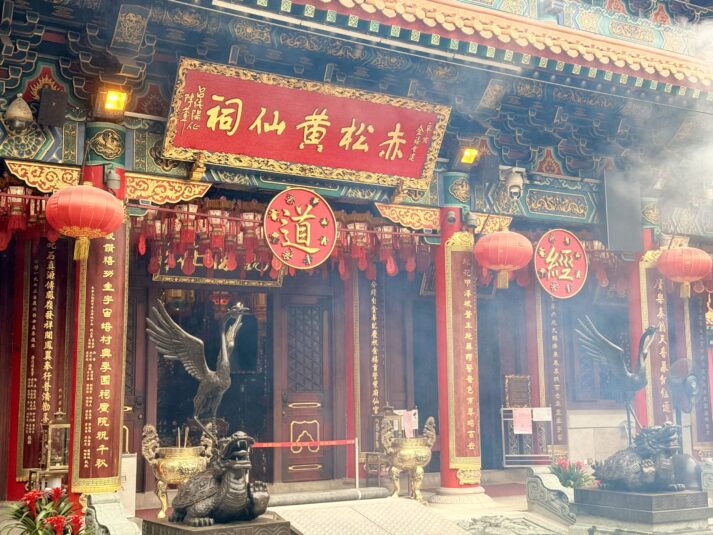
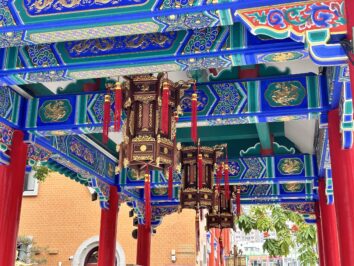

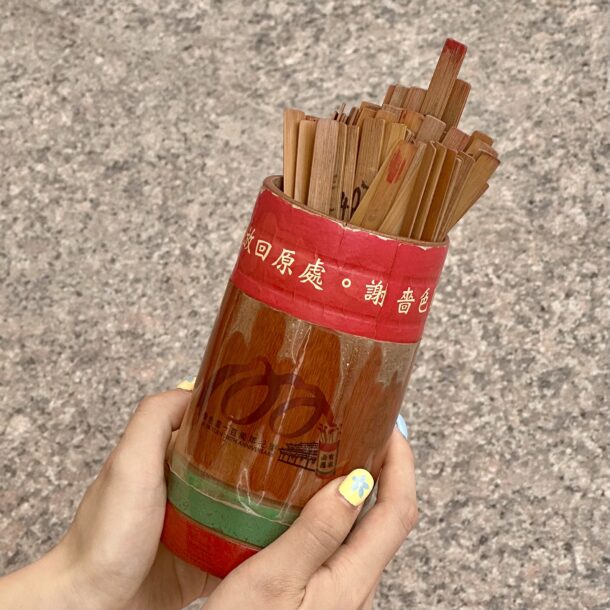

The industry of fortune-telling has been impacted by emerging technologies and social media. We interviewed fortune-tellers from the Wong Tai Sin temple about their observations of the evolving visitors, exploring whether social media and AI have influenced their situation.
Part II: Digital Guidance - AI Algorithm
Yang Wang, one of the deep users who has been using AI fortune-telling tools for 3 years:”I can just open the app and ask directly, and no need to make special appointments or wait for anything, I can get an answer from the AI right away. For me, it’s a form of instant comfort.”
Sometimes, it actually gives the right guidance.
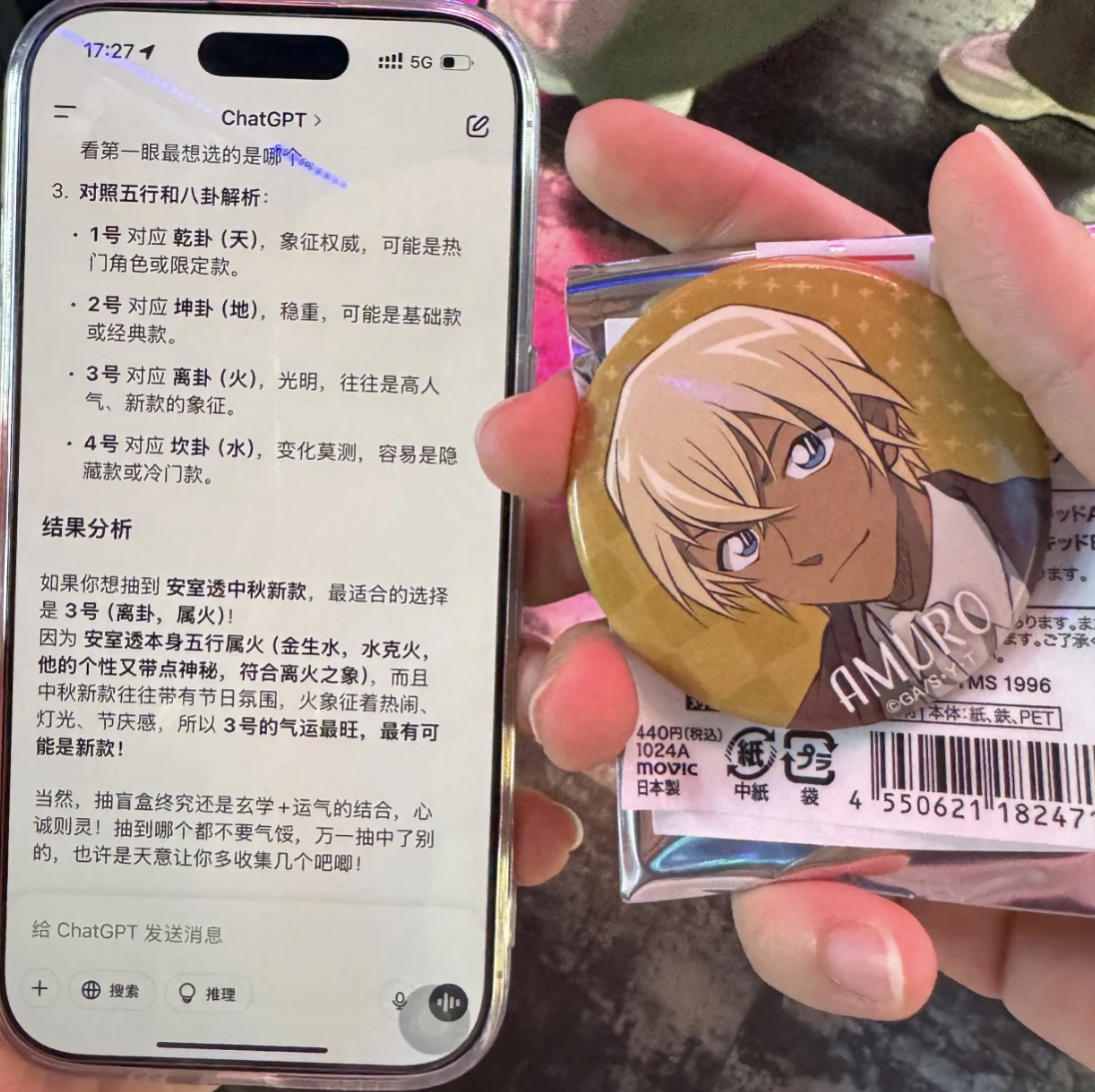
The blind box figure Yang Wang picked with the help of AI — the one she was hoping for.
However, people use AI to do fortune-telling do not completely trust it. We met people stuck in moments – looking for guidance.
Sometimes it’s small stuff:
“Which blind box will get me the figure I want?” – to deeply personal: “Should I switch careers?” “Will this relationship work?”
Jinya Xia, a long-time user of AI fortune-telling tools, shared:“I think this is a self-consolation for me. If the feedback is relatively good, then one’s mindset will also improve.”
Many deep users expressed doubts about the accuracy of AI fortune-telling. While it’s fast and easy to access, the results often feel unreliable. Several users mentioned that it may give completely different answers. Compared to traditional in-person fortune-tellers, they said, AI simply doesn’t feel precise or trustworthy – especially when it comes to more serious, life-defining questions.
“I would think that offline fortune-telling is more reliable than AI fortune-telling, and so is its authenticity”, Jingya Xia said.
While AI fortune-telling makes spiritual advice more accessible than ever – removing the cost, time, and social barriers – this convenience comes with a hidden cost. Many users are out of curiosity, attracted by the ease of asking questions anytime, anywhere. But when the algorithm gives inconsistent or inaccurate answers, it not only hurt the tool’s credibility, it also risks chipping away at people’s belief in the idea of fortune-telling. “When it messes up,” Xia said, “it makes the whole thing feel like a joke.”
Still, the appeal is real. These tools offer what traditional fortune-tellers can’t: privacy, speed, and 24/7 availability. AI becomes a tiny, digital ritual – something that says, “You’re not alone.”
No one fully trust the machine. But most admitted: they’d keep using it. Not for truth, but for comfort.
Part III: Coding Fate - AI Logic
These texts will then be combined with the user’s question into a prompt template and input into the large language model, which will eventually generate a personalized fortune-telling result in natural language.
Different fortune-telling methods, such as Bazi, Tarot cards, and constellations, have their own characteristics. When training the large language model of Deepseek, the team need to create special labels for them, such as the Shishen and Ziwei in Bazi, the cards in Tarot, and the palaces in constellations. With these labels, the model can quickly know which set of rules to use for analysis.
Part IV: Navigating Future - Tradition & Tech
As technology is reshaping our lives, the ancient industry is also facing challenges and transformations. We spoke with Lee Shing-Chak, a doctor of metaphysics, to explore how to preserve and pass down traditional fortune-telling methods in a world increasingly dominated by digital innovation.
Nowadays, AI fortune-telling has emerged with its convenient and efficient features. Because of the powerful algorithms and massive data analysis capabilities, it opens a door for young enthusiasts to delve deeper into the mysteries of birth dates, Bazi, and hexagrams. Users simply need to input relevant information on platforms like Deepseek or ChatGPT, and they can quickly get personalized insights and predictions.
However, despite the convenience of AI fortune-telling, face-to-face fortune-telling still holds great appeal for many people. In face-to-face interactions, people could feel a sense of peace and reassurance rather than AI version. This emotional connection that beyond time and space is something that algorithms and screens cannot provide. Thus, even if cyber fortune-telling is so fast and convenient, master divination still has its irreplaceable advantages.
THANK YOU FOR WATCHING
Website Content Editor: Sienna Jiang, Jojo Tian, Cynthia Yan, Jolene Zhang
Website Builder/ Designer: Cynthia Yan, Jolene Zhang
Digital Sources Collector: Sienna Jiang, Jojo Tian