
Your Silent Confidants
Young Adults’ Emotional Bond to IP Plush Toys
By Molly LIU Huanyi & Yannie HUANG Xiaoyan
At 3 a.m., Anna Li, a 22-year-old senior student studying at university in Beijing, stepped out of a Shanghai hotel and hailed a taxi to Shanghai Disneyland Park. She had taken a high-speed train from Beijing the night before and only rested for three hours at the hotel, but her sole purpose for this trip was clear: to go to Shanghai Disneyland and celebrate the birthday of a purple rabbit named StellaLou. Belonging to the Duffy and Friends IP, StellaLou is a rabbit who loves to dance ballet.
Half an hour later, after repeatedly urging the taxi driver, Anna arrived at the Disneyland entrance, where a long queue had already formed—all there for the same mission. They wore StellaLou’s iconic purple accessories, carried her plush toys, and also brought gifts and even “birthday cakes” for her.
For Anna, who travels over 1,200 kilometers almost every month to visit StellaLou, this scene is far from unfamiliar.
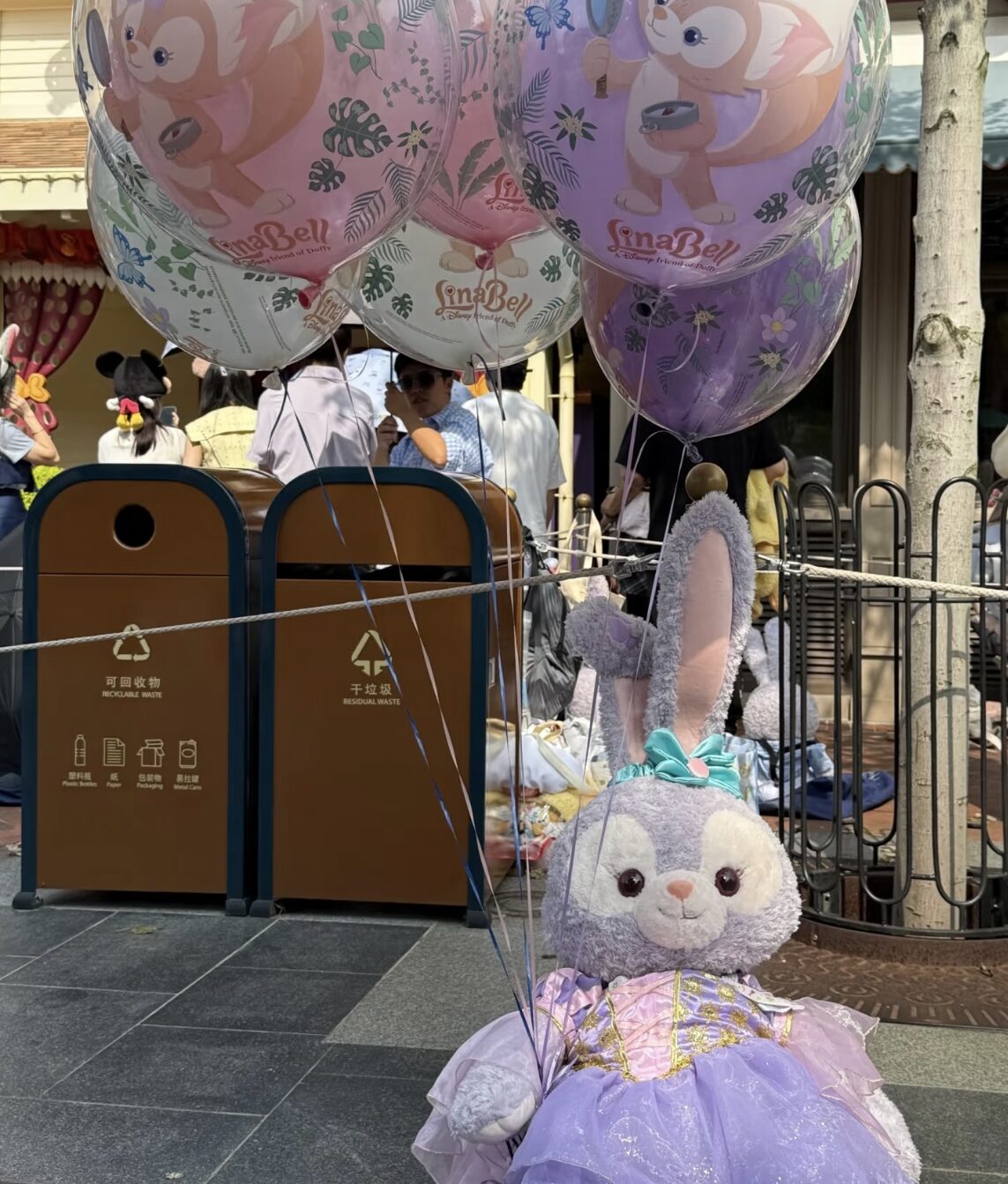
At Shanghai Disneyland, Duffy and Friends is an IP famous for its plush toys. But interacting and taking photos with Duffy and Friends characters often requires waiting in line for over three hours, while queuing for the “top celebrity” Linabell can take five hours or more. To shorten the wait, they often queue through the night at the park entrance before its opening. Then after purchasing an Early Park Entry Pass to enter early, they continue queuing at the interaction spots.
On StellaLou’s birthday, after seven hours of waiting, Anna finally reached the interaction at around 10 a.m. and presented the rabbit with her plush toys and the birthday bouquet she had prepared.
But their lengthy queueing isn’t just about taking a few photos or videos with the character. For them, IP plush toys are far more than fictional characters from a fairy-tale world—they are companions that bring solace in real life.
Buying, Outing, Talking
Nowadays, it’s common for young people to treat static IP plush toys as friends: this behavior often begins with a purchase.
A typical plush toy usually costs around 100 HKD. For Disney’s Duffy and Friends series, they releases different costume designs for different seasons and festivals. Due to their “limited edition” nature, besides the official retail price, their prices in the secondary market can soar to four-digit figures depending on factors like official release quantity and series popularity.
Contemporary young people are not just consumers but also promoters of the “Wellness economy”. Plush toys have become a way for them to pursue inner peace. The rise of the wellness economy has not only changed market trends, but also made society place greater emphasis on the importance of mental health.
This has also become a new economic phenomenon. According to the 2024 Global Wellness Economy Monitor report, mental wellness has become a key component of the wellness economy.
But bringing a plush toy home is just the first step in interacting with it. For young people who love them, they treat these toys like friends or children, caring for them as if they were real infants:
Imitating a child’s voice and calling them “baby”;
Giving them unique names to imprint their personal mark;
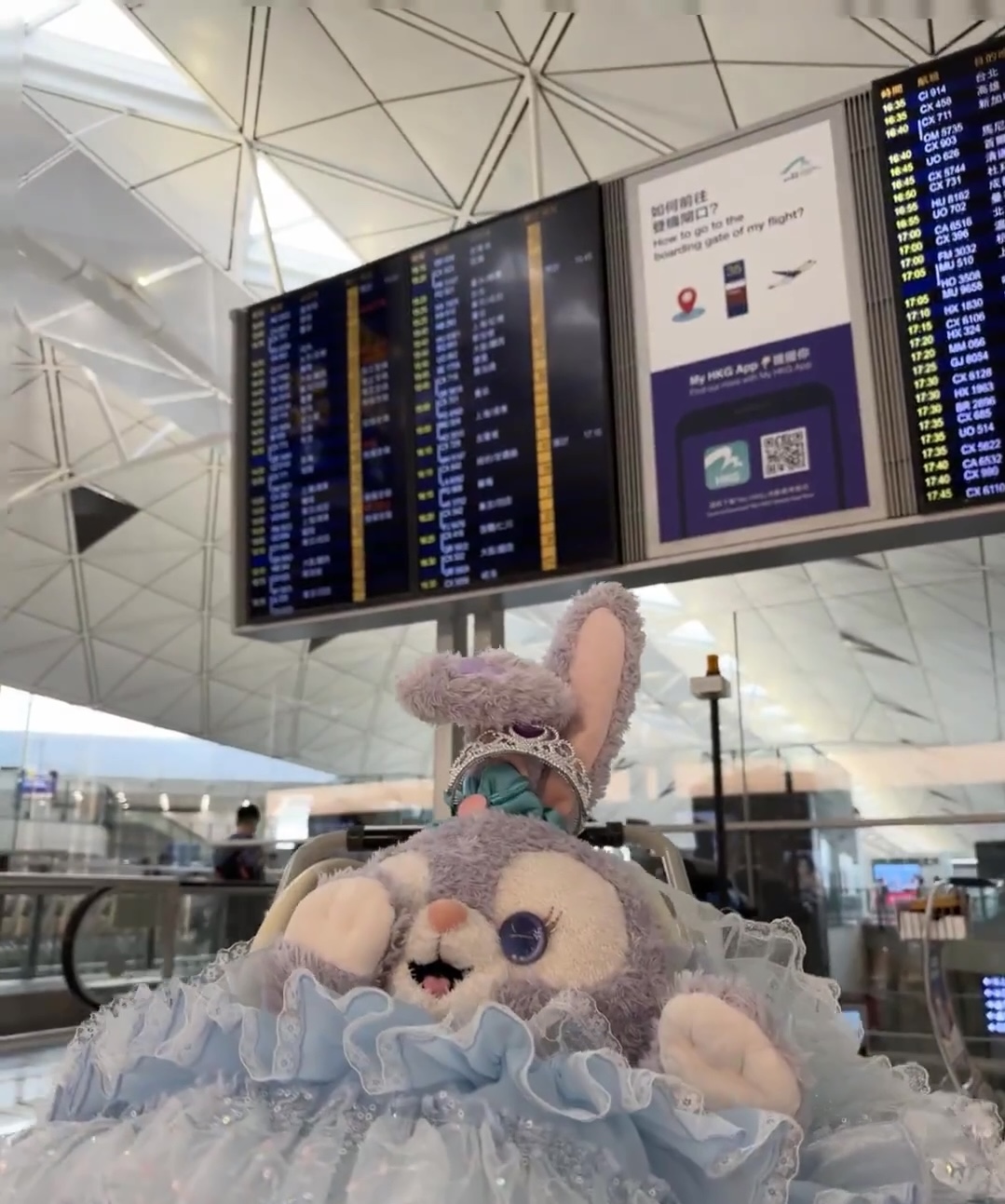
Taking them on trips, checking in at beautiful scenic spots with them and captioning photos “visited here”;
Taking photos with them in front of delicious food, pretending to feed them before enjoying the meal themselves;
Buying or making different clothes and accessories for them, changing their outfits for different times and scenarios. Besides official designs, this has also spawned individual stores that design or make clothes for toys.
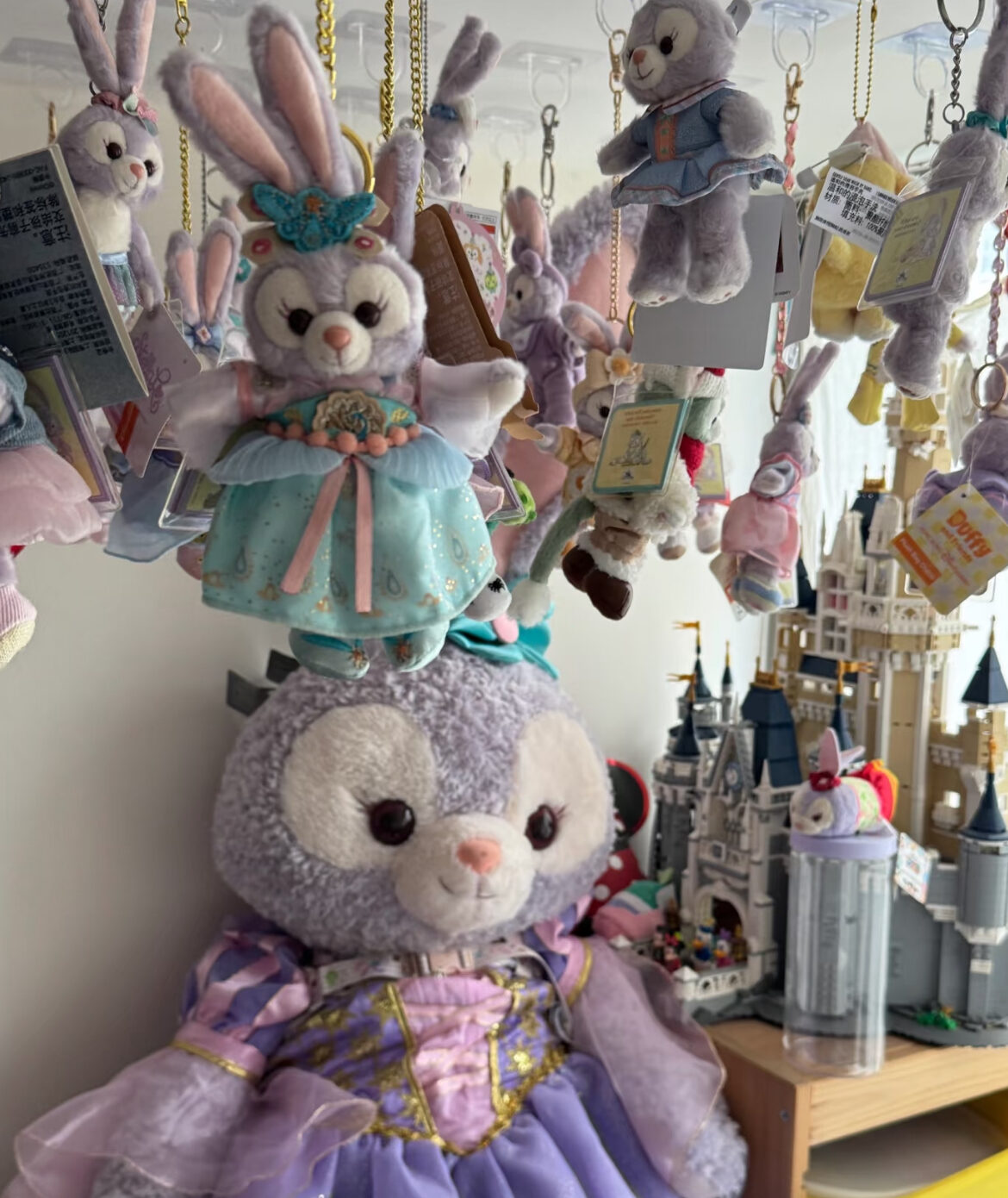
Rebecca Liu, an 18-year-old high school student is another StellaLou enthusiast. She could almost be called a StellaLou collector: she owns an entire wall of keychains.
In addition, she makes special support fans and peripheral products for StellaLou. For her several large StellaLou toys, she gives each a different name and change clothes of different styles and designs for them. On the RedNote platform, Rebecca even created a dedicated account for one StellaLou toys, named it “Jiujiu,” posting first-person perspective photos and texts, making emoticons, and more.
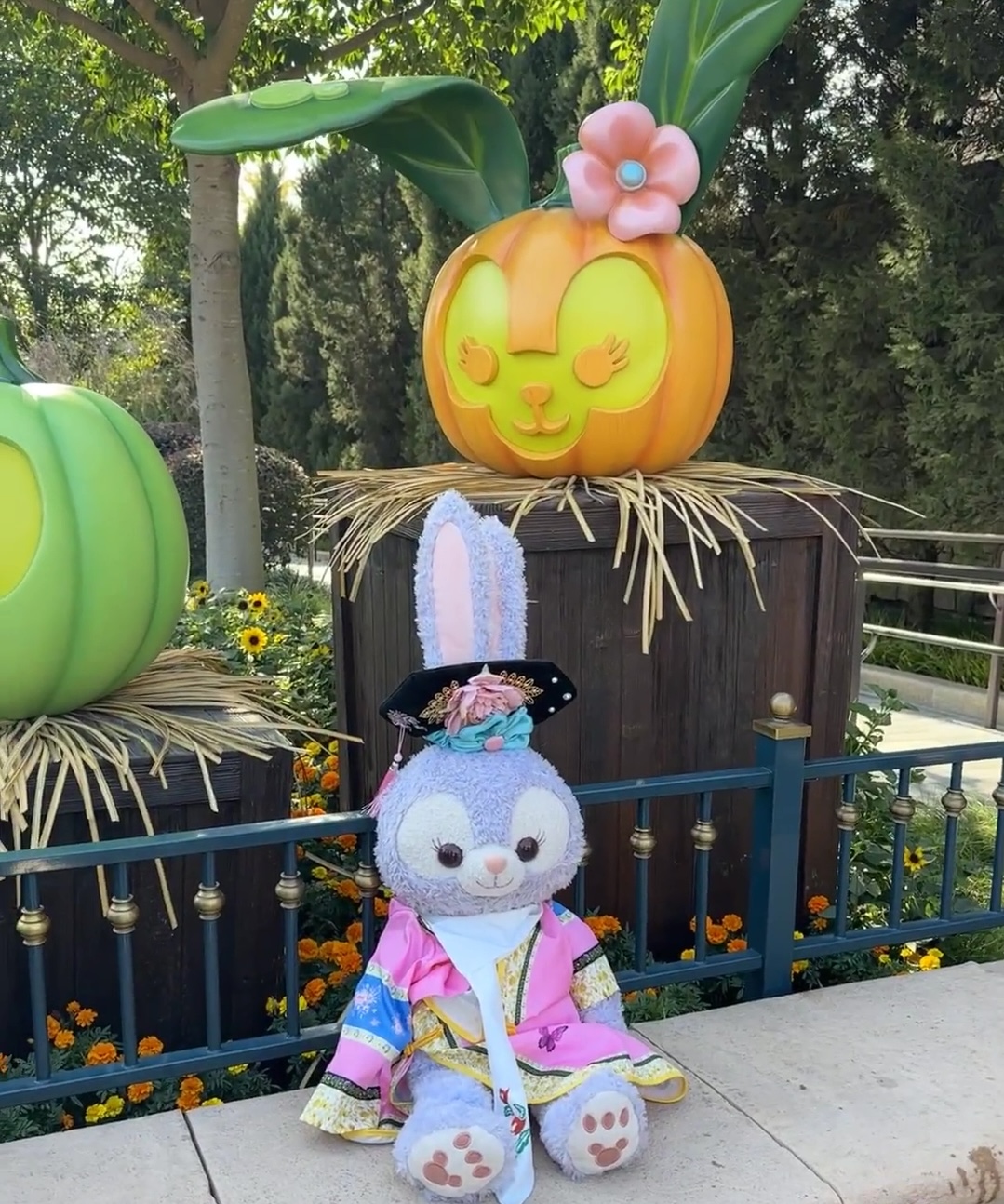
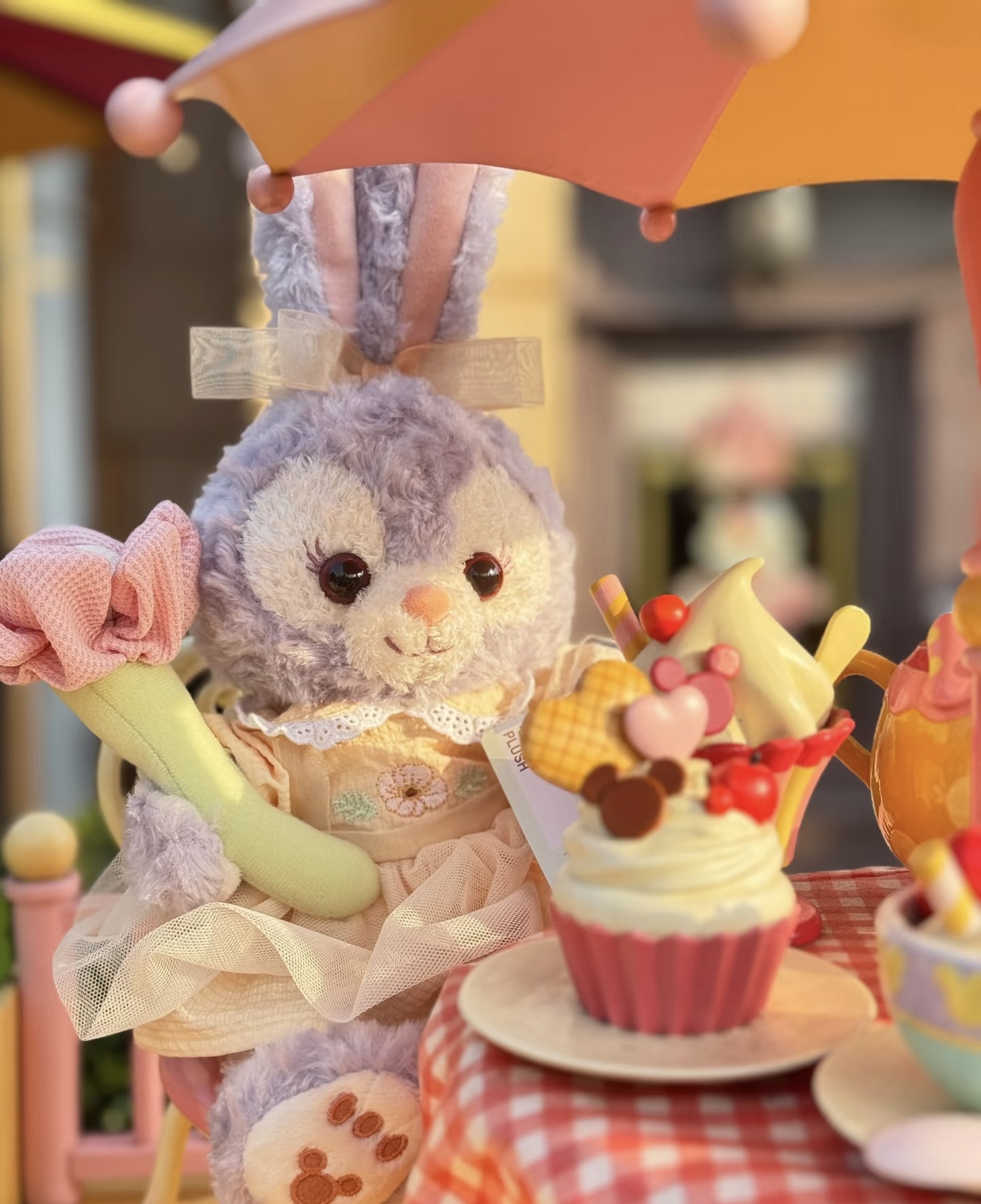
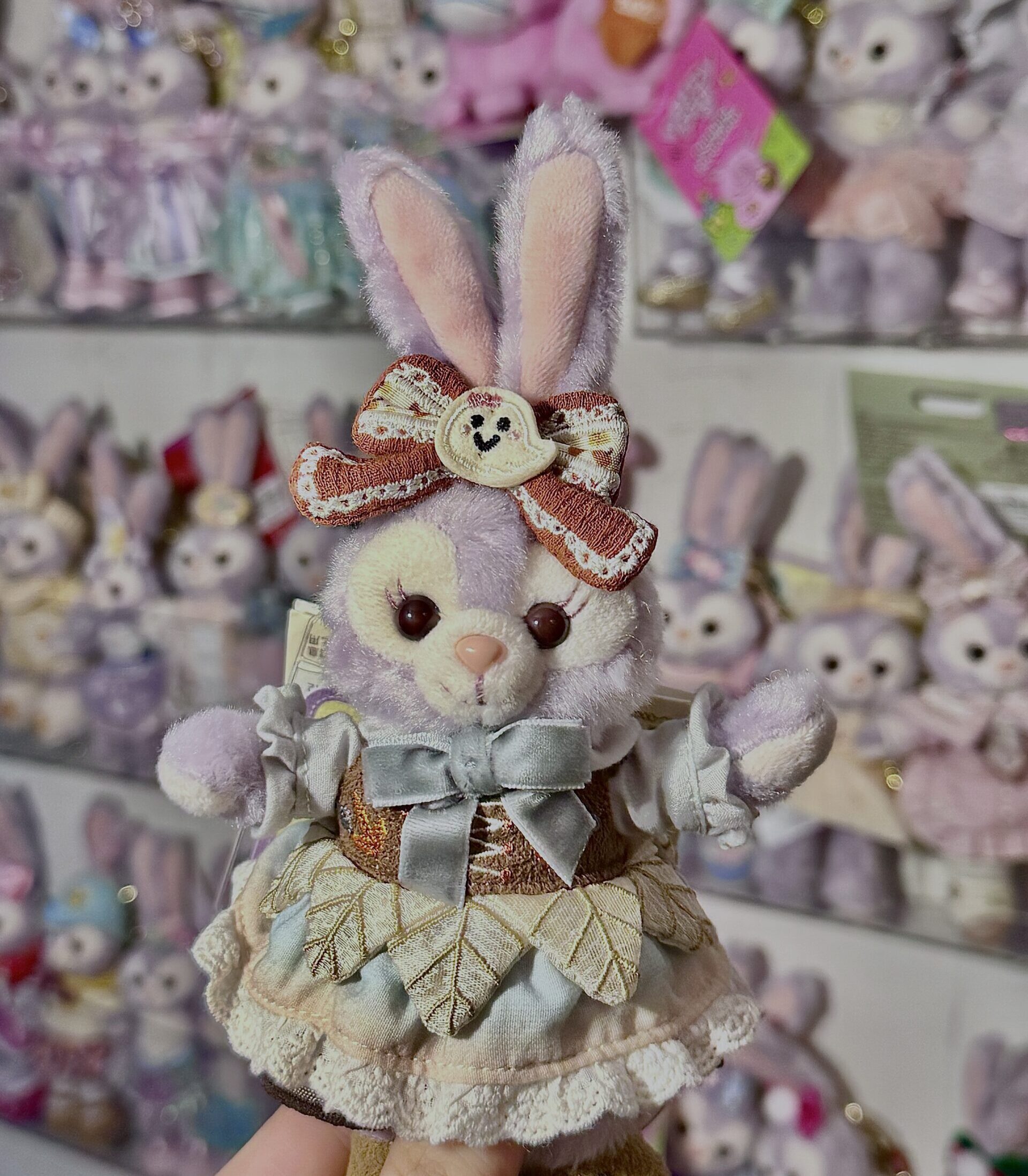
The first outfit she bought for these toys was a baby onesie. “It really gives me the feeling of being a mother,” she said.
But for Anna, her attitude toward plush toys is more about “only buying I love most.” Regarding the fluctuating market prices of Duffy and Friends series plush toys, she added, “It’s really like buying stocks.”
Anna has also bought baby clothes for her toys—a choice that seems “logical” for owners of L-sized toys as they are approximately 70cm tall, just like a real human baby. Although she calls herself StellaLou’s “mother”, in her actual mother’s eyes, she is StellaLou’s “sister”.
But for fans of the Duffy and Friends series IP, besides buying and caring for plush toys to place their emotions, they also have Disneyland Park, the dream factory in reality, where they can interact with the characters.
Interaction mainly involves taking photos, recording videos, and, importantly, hugging. The character performers often take the initiative to open their arms and invite you to hug them, and their touch is really fluffy and warm, giving you the feeling that they are not virtual characters but small animals in real life.
For visitors who have come to interact for many times, they always chat with the character, sharing details of their lives: maybe they ate a delicious snack and want to share it with the character, or they just got through a difficult time and then come to the Disneyland at the earliest opportunity…
From the first time she met StellaLou last May to now, Anna has traveled to Shanghai Disneyland almost every month to see her. Watching a sunrise at the park entrance when queueing overnight, taking “special forces”-style weekend round trips between Beijing and Shanghai—for Li, who dislikes getting up early, these were things she previously wouldn’t have tried. But in the moment of meeting and hugging StellaLou, all the toil of these journeys turns into happiness.
For Rebecca, who lives in Shanghai, Hong Kong Disneyland has fewer tourists and shorter interaction queues, so she travels to Hong Kong specifically to interact with StellaLou. She purchased an annual pass to Hong Kong Disneyland and visited eight times a year, each time buying several Duffy and Friends Playhouse Fast Passes, which allowed her to visit StellaLou more times with shorter waits.
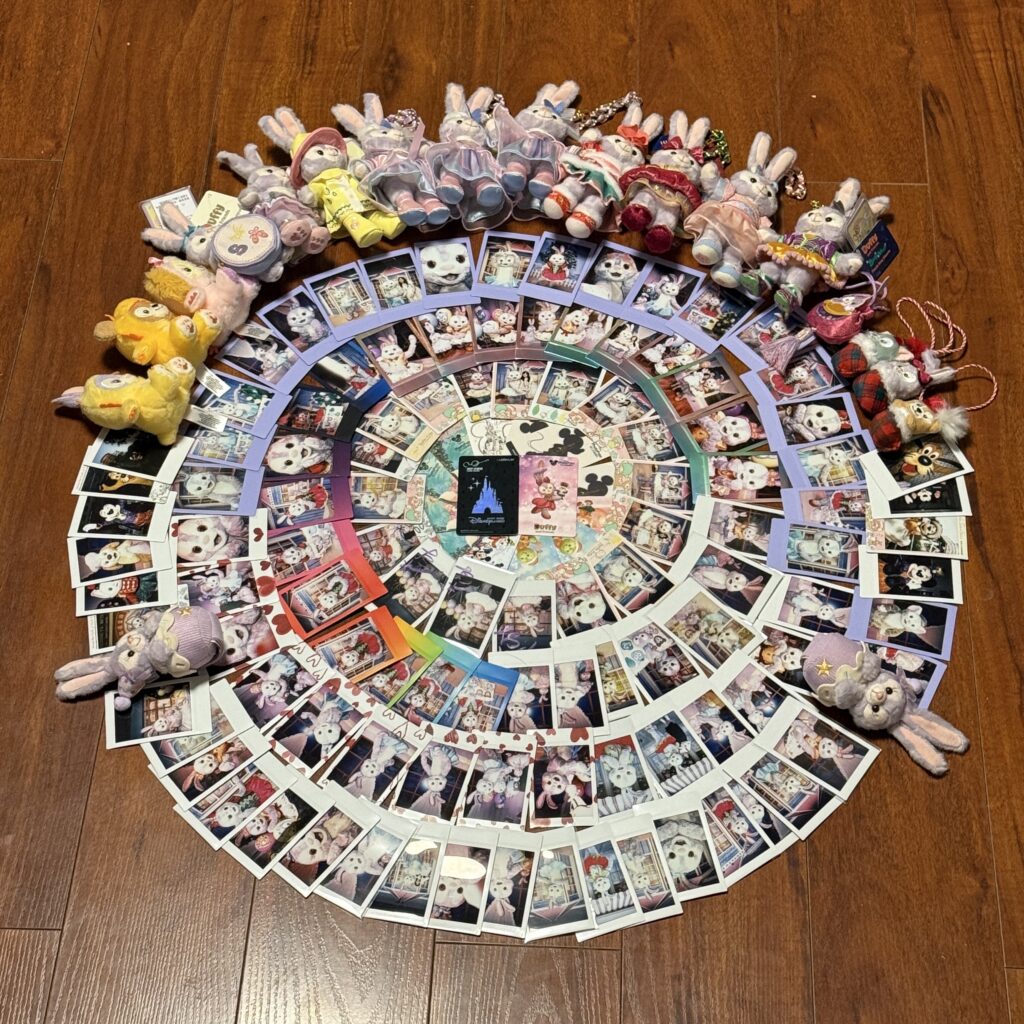
Rebecca’s StellaLou plush toys purchased at Hong Kong Disneyland and the Polaroid photos taken of StellaLou.
Besides taking photos and talking with the character, visitors can also bring little gifts for their favorite characters. Rebecca once brought a large pencil for StellaLou because “children need to do homework.” Since StellaLou is set as a ballet-loving dancer rabbit, Rebecca also gave her a very large powder puff. “She needs to dress up before going on stage,” she explained.
Anna, who travels long distances, has brought StellaLou seashells from Dalian, a costal city in Mainland China; and willow leaves from West Lake in Hangzhou, a city famous for its natural scenery. Although she has a StellaLou-themed purple pain pack, which enables her to take her “babies” wherever she travels, Anna still wants to share every moment of her life with StellaLou. Undoubtedly, these gifts are the best carriers of memories.
For Anna, the last year of undergraduate life has not been easy: preparing her undergraduate thesis, applying for postgraduate school, looking for internships… But getting to know StellaLou still made it all worthwhile. In the acknowledgment section of her undergraduate thesis, she wrote solemnly, “The greatest meaning of liking StellaLou is that it makes me better. Stella, now I have the answer: I am really becoming more and more capable. I want to say to my sad self every time: Don’t be upset, you’re already on your way to see StellaLou.”
Emotional Anchor for Self-Compassion
When talking about the healing that plush toys bring them, many interviewees mentioned the word “cute.”
Emma Zhao, who loves the Duffy and Friends IP, particularly mentioned “childlike innocence” and “the feeling of a fluffy doll.” This “fluffiness” refers not just to visual cuteness, but also to the tactile memory of childhood toys.
So why can they treat StellaLou as a friend, visiting her again and again and pouring out their lives to her? Anna explained, “You can tell her anything and share your life. Although there are friends and family in real life, everyone is often busy, or they can’t always take care of your emotions.”
Amelia Li, who loves the Kuromi character from the Sanrio IP, also mentioned this. Although there is no theme park like the Duffy and Friends series to provide interaction scenes, she still takes her toys out and places it across from her at the table when eating alone.
“When communicating with real people, I expect to get some positive responses from them, but in many cases, that’s not how it is, because they may not understand your situation, or they may not react at all, so I actually don’t like that,” Amelia explained. “But when I talk to Kuromi, I don’t have such expectations. I just feel better after saying it.” She believed that more importantly, calling the toys “babies” is like re-accompanying her childhood self.
But not everyone who buys IP series plush toys has such emotional needs. Sanna Zeng loves Po from the Teletubbies series and spent over 800 yuan on a large decorative figure to place at home. But for her, this is just a decorative item and collector’s piece symbolizing childhood memories, “no different from liking a piece of clothing or a cosmetic.”
Regarding the behavior of treating IP series plush toys as companions and forming emotional connections, Sanna does not understand it but chooses to respect it. “Maybe it’s those with particularly rich emotions, or those with a relatively simple emotional life and fewer confidants around them who project their feelings onto dolls.”
But when talking about herself, she said, “The first reason is that my social circle is wide enough, and the support from family and friends is enough for me to vent and share my emotions. The second is that objects are static—inanimate things. Owning them doesn’t mean I need to form emotional connections with them.”
Beyond Child’s Play: Fluffy Escapes
Dr. Zhi Li, Assistant Professor at the School of Culture and Creativity, Beijing Normal-Hong Kong Baptist University, posited that the emotional bond young adults form with IP plush toys is deeply rooted in the complexities of their real-world relationships.
“Firstly, people are overwhelmed by study and work commitments, leaving little time to nurture social ties. Yet, their need for connection remains unmet,” she explained. “Secondly, ours is an involutionary society where most interpersonal dynamics are competitive rather than built on mutual trust and empathy. This drives young individuals to seek solace in plush toys.”
Addressing the question of why adults develop such bonds—contrary to the conventional view that toys are strictly for children—Zhi offers three key explanations:
Entertainment: Plush toys’ adorable designs inherently evoke joy through their visual appeal.
Escapism: IP-associated narratives transform these toys into portals for imaginative play, similar to cinema. In a time of fast-paced life and increasing pressures, with words like “loneliness”, “social burnout” and “fertility anxiety” being discussed more and more, it’s good to escape into a made-up world for a bit. IP Plush toys thus become accessible tools for emotional regulation.
Self-Expression: Citing the Barbie franchise as an example, Zhi noted how fans subvert canonical narratives—reimagining Ken as gay to advocate for sexual minority groups visibility—to craft personal stories. Similarly, Chinese adults engage in performative parenting on social media, dressing toys, documenting outings, and constructing identities through these acts.
“These practices represent a form of narrative creation and self-expression,” she added. “Social media amplification has further normalized adult engagement with IP plush toys, transforming it into a cultural phenomenon.”
Fluffy friends, Plush Playground
In this fast-paced society, human connections seem to be fading: online messages are gradually replacing face-to-face conversations, and emoji hugs are substituting for real physical contact. For the young people navigating this landscape, plush toys offer not only the fluffy, familiar tactile sensation of childhood, but also a constant confidant who always keeps its arms open.
On social media, many young people not only share photos and stories of their plush toys, but also relish creating various looks, scenes, and accompanying them with unique narratives and emoticons—much like the imaginative “childhood pretend play” games. As Dr. Zhi Li has noted, the emotional bond young people form with plush toys is more than a consumer choice; it’s a narrative choice: they set aside real-life worries and pressures to tell their own stories through these toys.
As we are trying to explore these silent emotional connections through this article, it’s hard not to ask: How much emotional value can such bonds truly offer?
But when our interviewees share their favorite plush toys with smiles or the joy of their Disneyland visit, we believe the happiness provided by these plush toys stems not just from warm touches and cute visuals, but is deeply intertwined with their happy memories. This joy is also transmitted through social media photo play to many others who need it.
Credits
Multimedia Producers: Yannie HUANG Xiaoyan & Molly LIU Huanyi
Advisor: Foon Lee
Thanks to: Dr.Zhi li, Rebecca Liu, Anna Li, Emma Zhao, Amelia Li & Sanna Zeng