
Choose your preferred form and flip to watch video clips!
The decline of the grand palace of Cantonese opera: Sunbeam Theatre
“Five, 4, 3, 2, 1!” At 12:17 a.m., on March 4, 2025, under the synchronized countdown from emotional audiences, the iconic neon sign of Sunbeam Theatre in North Point dimmed for the final time. The soft extinguishing of its lobby’s spherical chandelier, symbolizing the official closure of a cultural landmark that had stood since 1972. The venue evolved into Hong Kong’s “grand palace of Cantonese opera”, hosting legendary performances by countless Cantonese opera stars and preserving the UNESCO-listed art form, Cantonese opera, for over five decades.
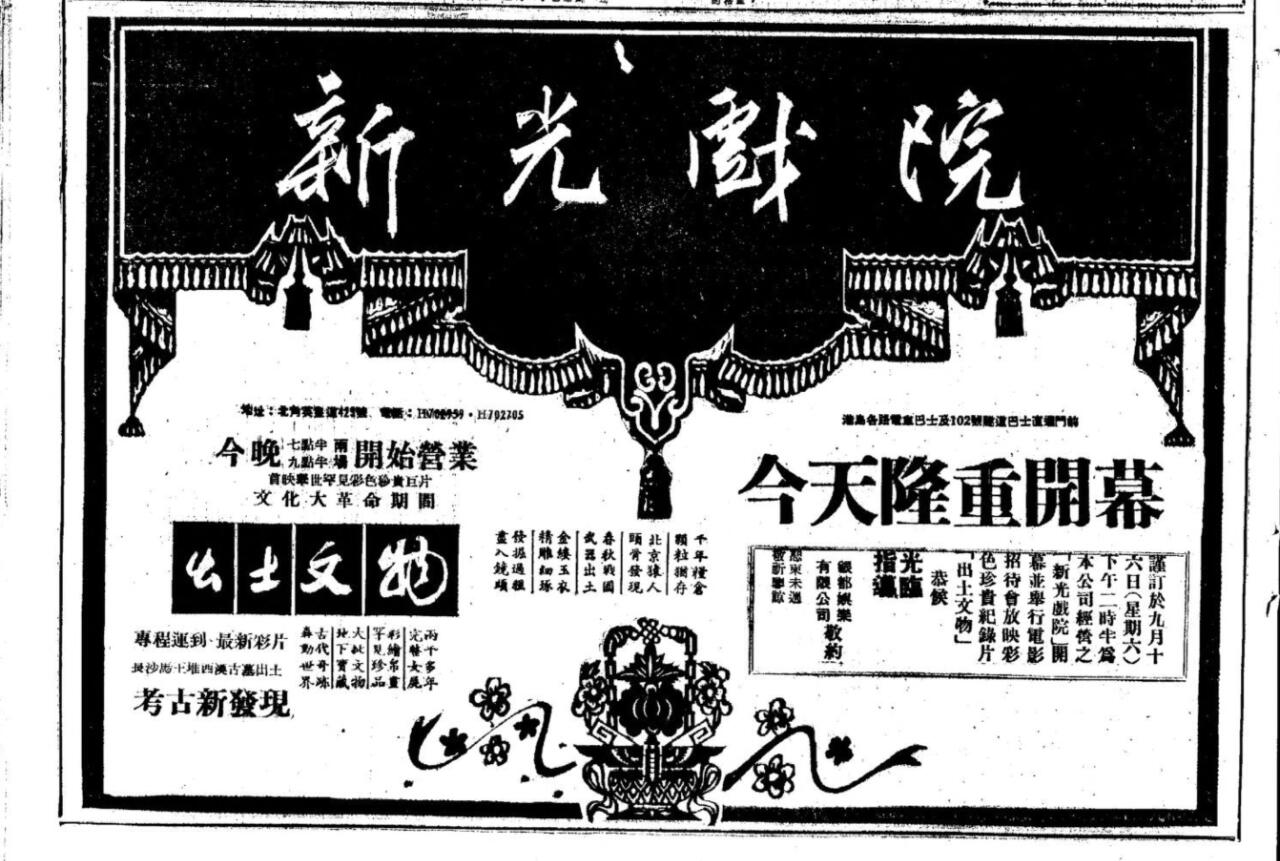
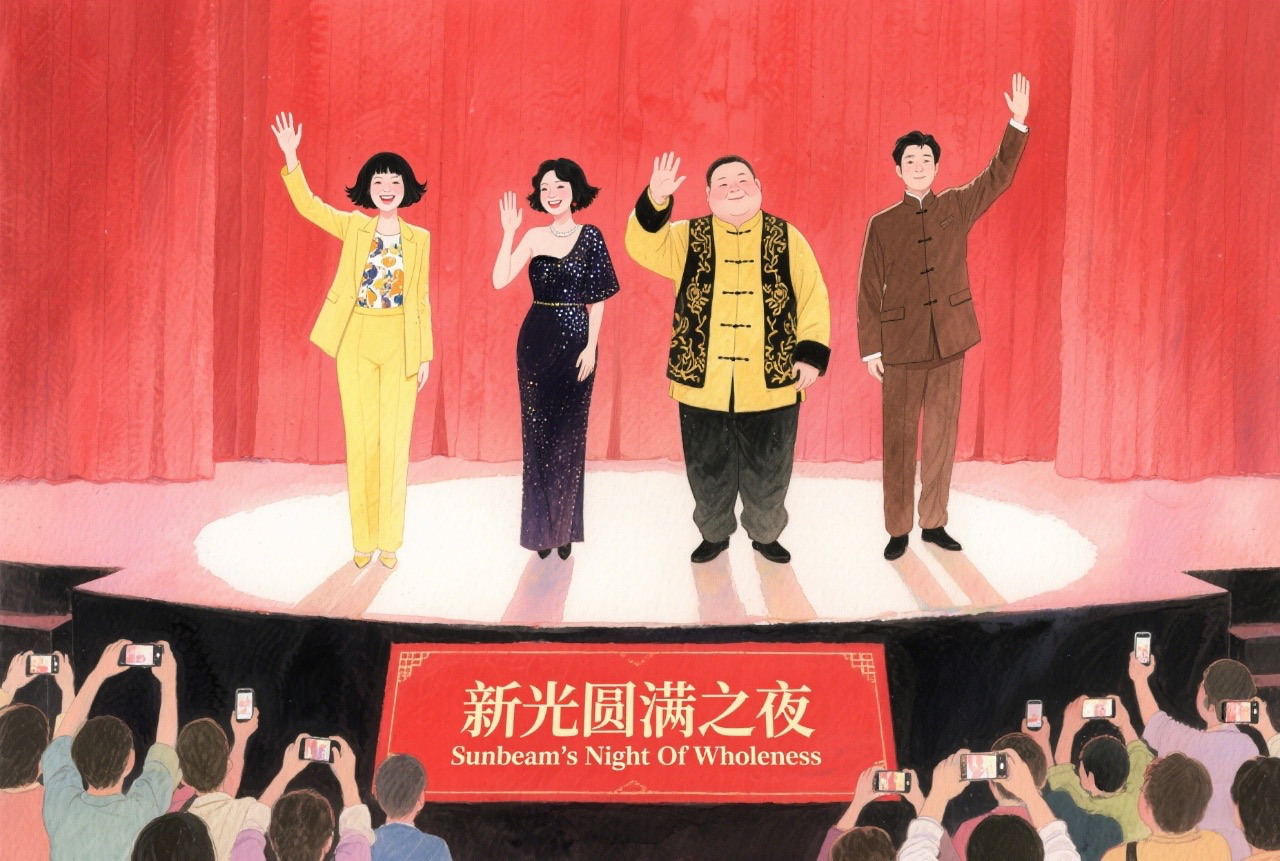
The turning-off ceremony of Sunbeam Theatre, held after the final Cantonese opera performance, “Hello, Xiaoping!”, has attracted many devoted fans and cultural figures. Despite its closure, Sunbeam’s legacy will continue, a new branch, Sunbeam Whampoa, is set to open in June 2025, occupying the former Golden Harvest cinema space. The renewed venue will host Cantonese opera performances, film screenings, and a memorial exhibition. The Chairman Edward Li Kui-Ming emphasized that while Sunbeam Theatre closed, its spirit continues to resonate, ensuring Cantonese opera remains a vibrant part of Hong Kong’s culture.
Syun Zi-Jin, a local psychological counselor, shared on her Facebook,“I’m someone who loves new things but also clings to the old. When I first moved to North Point, every time I passed Sunbeam Theatre, I’d feel grateful that Hong Kong still had a palace of Cantonese opera filled with old culture and nostalgia. It was the soul and landmark of North Point. Though I’m not a die-hard Cantonese opera fan, seeing the ‘Fully Booked’ banners hanging outside whenever there was a performance, and watching elderly fans gather together waiting for the curtain to rise, that sense of warmth and liveliness always touched me. I once believed thought it would stay forever, even become a heritage landmark. But in the end, not even it could outlast the relentless march of time.”
Xu Shuyi, 13, a girl who has learned to play Cantonese opera for seven years, also expressed sadness about the closure of Sunbeam Theater. “It’s the first place I ever watched Cantonese opera, so I felt so sad to lose it. I think it’s a very important part of many Hong Kong people’s identities,” said Xu.
During its 53-year history, the development of Sunbeam Theatre has not always been smooth, and it faced closure twice, in 2005 and 2012. In 2012, when news of its closure came out, Hong Kong Cantonese opera scriptwriter Edward Li Kui-Ming successfully renewed the contract and invested more than HK$10 million in renovations to give Sunbeam Theatre a new look. “Losing Sunbeam would mean erasing a part of Hong Kong’s soul,” Li, now chairman of its management committee, added at the time.
Li also shared the reasons behind his actions, “All my expenditures have only one purpose: to prevent Cantonese opera from dying out in Hong Kong and to keep it alive. I’m just like a doctor, skilled at bringing the dead back to life, just as I don’t want Cantonese opera to die. Now take out 100 Hong Kong dollars and have a look. The Cantonese opera costume on it is precisely because of the persistence of my Sunbeam Theatre that people have discovered that there is such a local culture as Cantonese opera in Hong Kong.”
The development of performing place:
From traditional theaters to modern performance venueThe closure of Sunbeam Theatre, a historic Cantonese opera venue in North Point, highlights the common issue that traditional Cantonese opera theaters in Hong Kong face, as commercial pressures, skyrocketing rents, and aging audiences erode their viability. Over the past half-century, Hong Kong has already lost lots of iconic venues, including Po Hing Theater, one of the earliest traditional Cantonese opera theaters in Hong Kong, which was demolished in 1987 to make way for a hotel.
Hong Kong’s professional Cantonese opera traces its roots to the end of the 19th century, as many Cantonese opera artists from Guangzhou flocked to Hong Kong to perform and make a living at that time. During its heyday from the 1950s to the 1970s, Po Hing Theatre, alongside Sunbeam Theatre and Lee Theatre, were listed as the three major Cantonese theatre venues in Hong Kong, hosting countless legendary performances. The renowned Hong Kong Cantonese opera artist Law Kar-Ying commented that, “Attending theater performances was once a cherished memory for older generations in Hong Kong.”
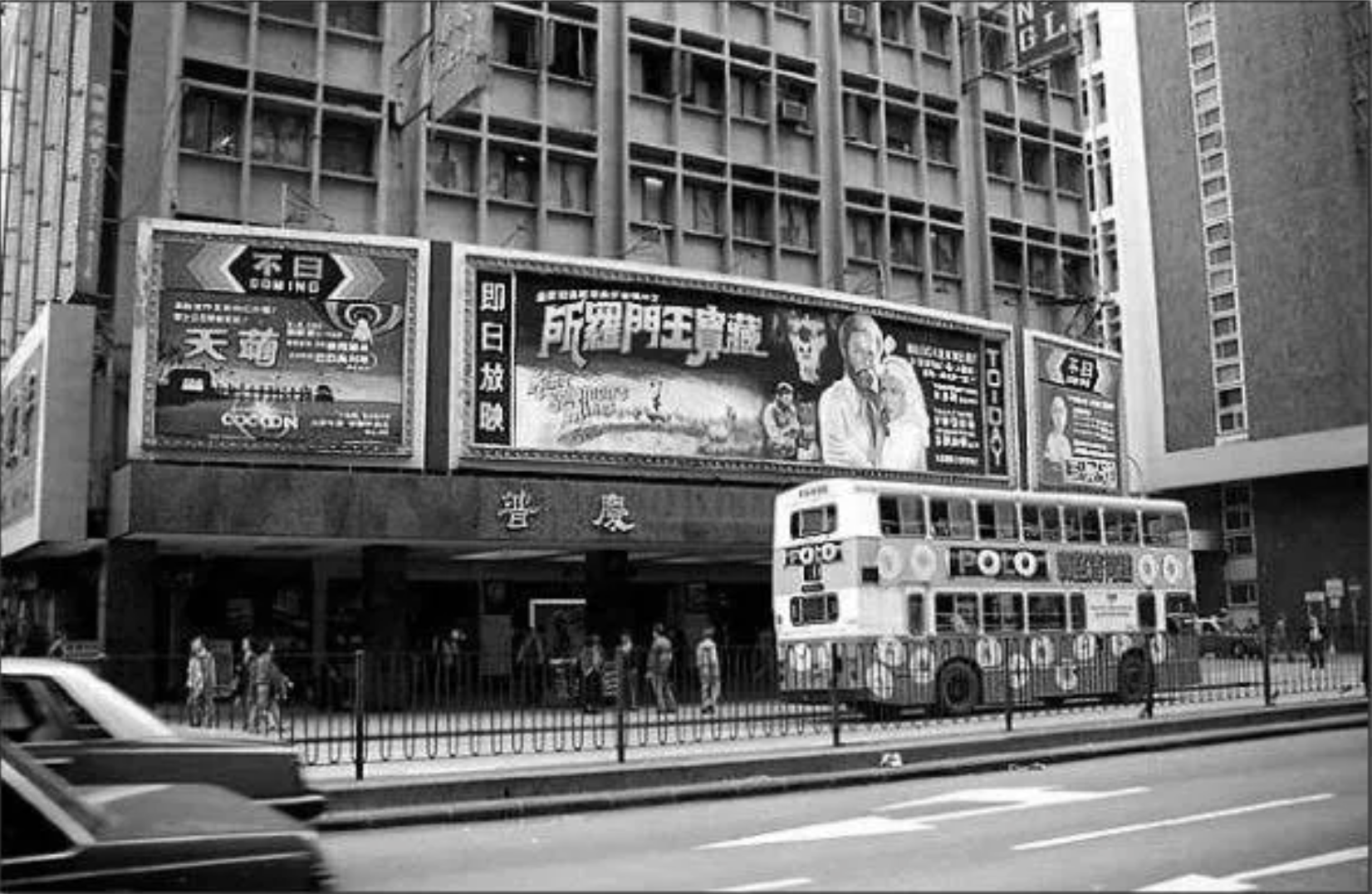
Po Hing Theatre’s appearance in the 1970s
However, by the 1980s, rising property values and shifting entertainment preferences led to the closure of many such traditional Cantonese opera theatres. Click the location points in below map to learn about their built and closure year.

Along with the dying out of traditional Cantonese opera theatres, the first performance venue, the West Kowloon Xiqu Centre, built specifically for traditional opera in Hong Kong, opened in 2019. Located in Hong Kong’s West Kowloon Cultural District, Xiqu Centre reinterprets traditional Chinese opera venues with a modern design. Blending elements like a lantern-inspired street scene with advanced tech, it features a 1,075-seat suspended grand theatre and a 200-seat tea house theatre.
Compared with traditional theatres that focus solely on Cantonese opera, Xiqu Centre promotes cultural diversity by hosting various Chinese opera genres, workshops, and film screenings, while its educational programs and guided tours attract many audiences. Join the virtual tour below to explore and learn more about the Xiqu Centre.
However, the developments of performing places have sparked mixed reactions within the Cantonese opera industry in Hong Kong. Concerns about operational costs, accessibility, and preserving traditional performance practices have emerged, reflecting ongoing debates about balancing tradition with contemporary adaptation.
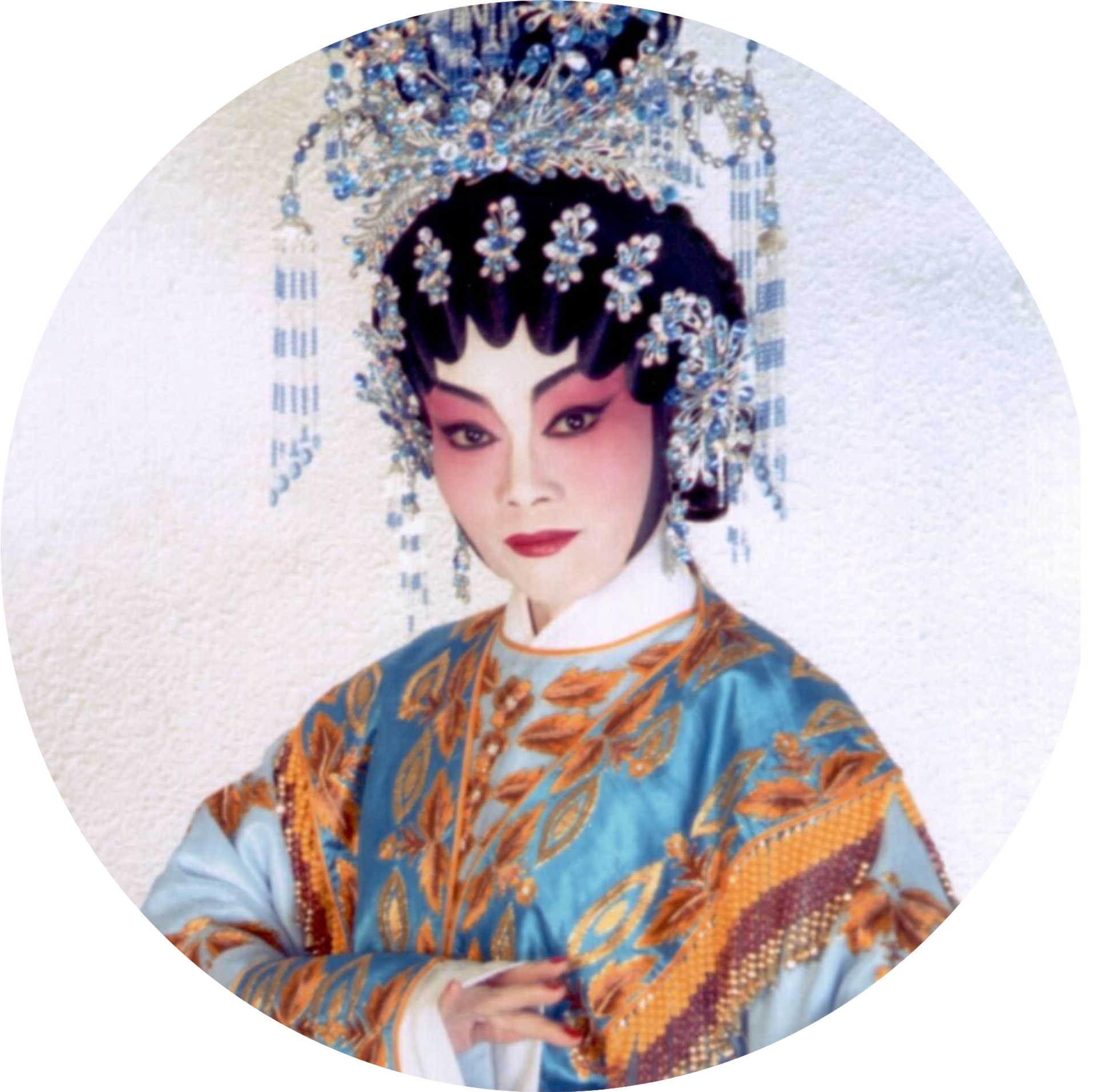
Fong Suet Ying
Chairlady of Sing Fai Cantonese Opera Promotion Association
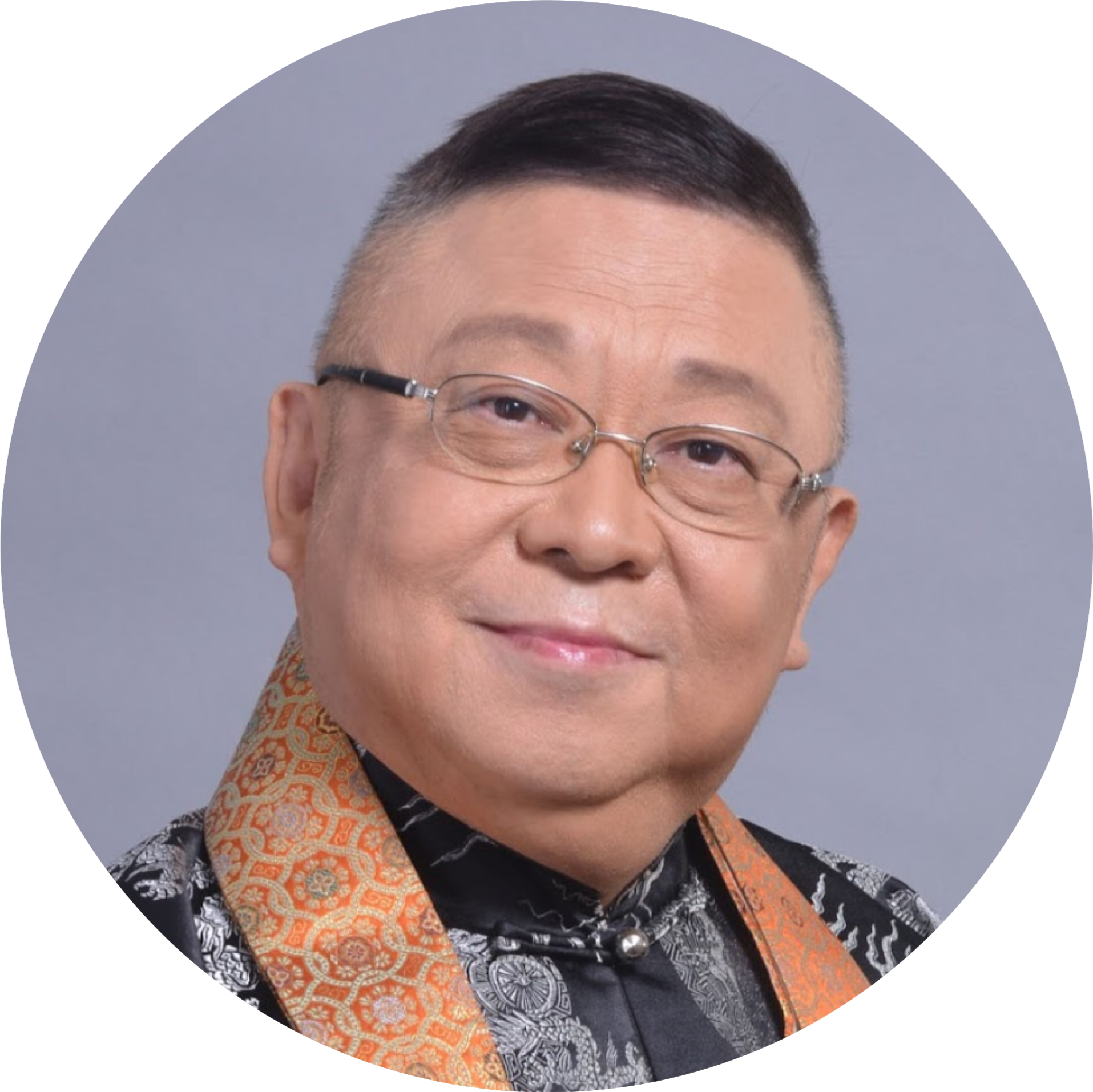
Li Kui-Ming
Chairman of the previous Sunbeam Theater

Dr. CHAN Kar Yue
Director of Ina Ho Cantonese Opera Research Center
The innovative developments of Cantonese opera in Hong kong:
Attract younger audiences by new formsLi’s passion for Cantonese opera took root in childhood, as accompanying his die-hard fan father to watch Cantonese opera performances was a daily routine. The turning point in his identity transformation, from being an audience member to a Cantonese opera scriptwriter, was a conversationwith a senior Cantonese opera actor.
When talking about the inspiration for his multiple current political Cantonese operas, which are quite innovative and bold, Li said, “I think for Cantonese opera to be passed down in Hong Kong, there must be new plays to watch. Moreover, the new plays must not be dull at all. They should have a sense of the times and no longer focus those old-fashioned stories, such as emperors, blind loyalty and filial piety. Therefore, I created political Cantonese operas, to tell stories that audiences have never seen. The younger generation in Hong Kong is generally unfamiliar with modern Chinese history. They may know the names of Mao Zedong and Deng Xiaoping, but they don’t understand their deeds. Wouldn’t it be so interesting to tell their stories through Cantonese opera? ”
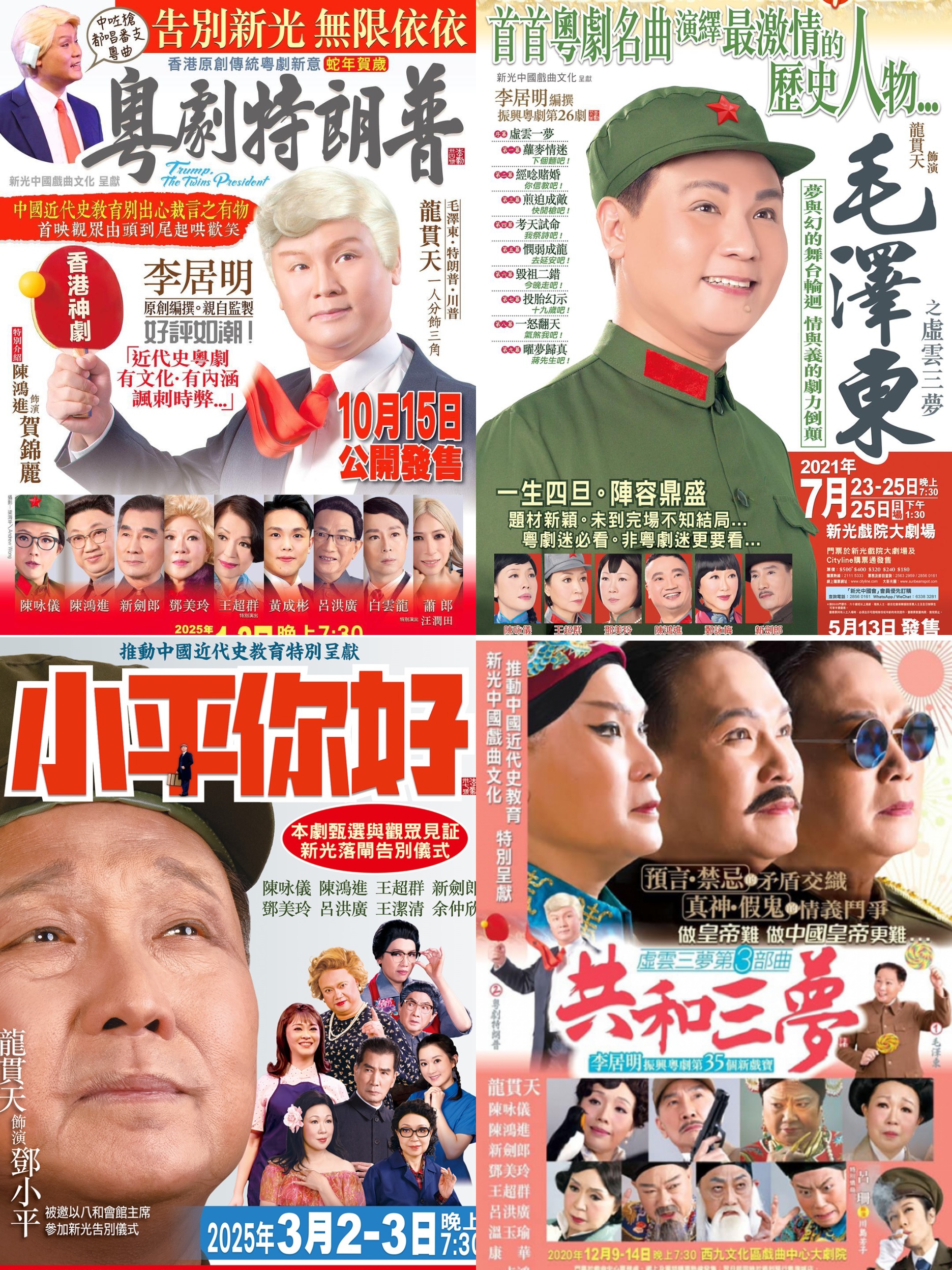
Posters of current political Cantonese operas
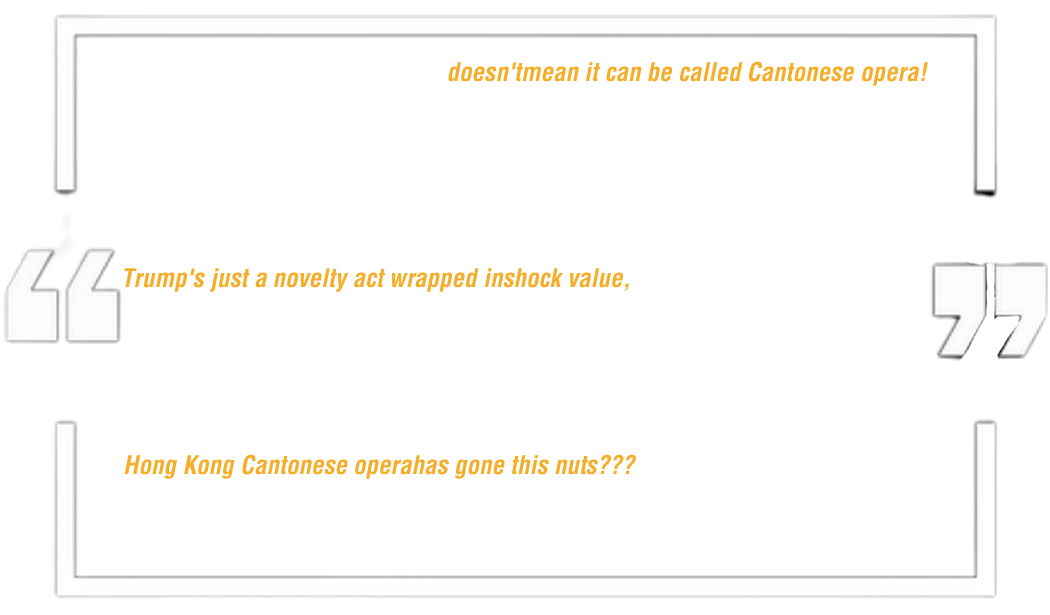
However, the disputes have persisted over whether these works qualify as Cantonese opera, the appeal of their storylines, and other related aspects among both industry professionals and audiences. The image below shows common disputes over Edward Li’s current political Cantonese operas.
Meanwhile, Li was dismissive of those controversies and responded that “Those who dispute the politicization of Cantonese opera have no right to do so if they haven’t watched my play. Take ‘Trump, the Twins President’ as an example, it brings together three generations, young people, their parents, and grandparents, to watch Cantonese opera. The young buy tickets and bring their elders to watch, and after the show, families stay up all night chatting about it. In Hong Kong, it’s almost unheard of for three generations to enjoy the same cultural event together, we’re the only ones doing this, and that’s a huge breakthrough.”
Dr. Chan Kar-Yue, the director of the Ina Ho Cantonese Opera Research Centre, supports such innovative development of Cantonese opera and regards the current political Cantonese opera “Trump, the Twins President” as a needed shock for the decling industry in Hong Kong.
Besides the innovation in themes and content, practitioners in Hong Kong’s Cantonese opera industry have also been making strides in other areas. For instance, the Sing Fai Cantonese Opera Promotion Association has dedicated itself to staging all-child Cantonese opera performances for over two decades. Watch the rehearsal clip below to see the children’s hard work in action.
Founded in 2003, Hong Kong’s Sang Fai Cantonese Opera Promotion Association has been dedicated to cultivating the next generation of Cantonese opera talent. As the Chairlady Fong puts it, “The survival of Cantonese opera hinges on the young generation. If no new blood loves watching and learning this traditional art form, it will eventually die out.”
To avoid such situation, the association pioneered all-child cast performances, a groundbreaking move that blends tradition with youthful energy. And the Chairlady Fong has taken their young performers on various global stages in the past years, including Canada, Singapore, Thailand and more other regions. Their remarkable overseas journey showcases how those young actors are carrying Hong Kong’s cultural legacy worldwide, and their efforts were even rewarded by China’s president Xi Jinping, during their performance in 2017.
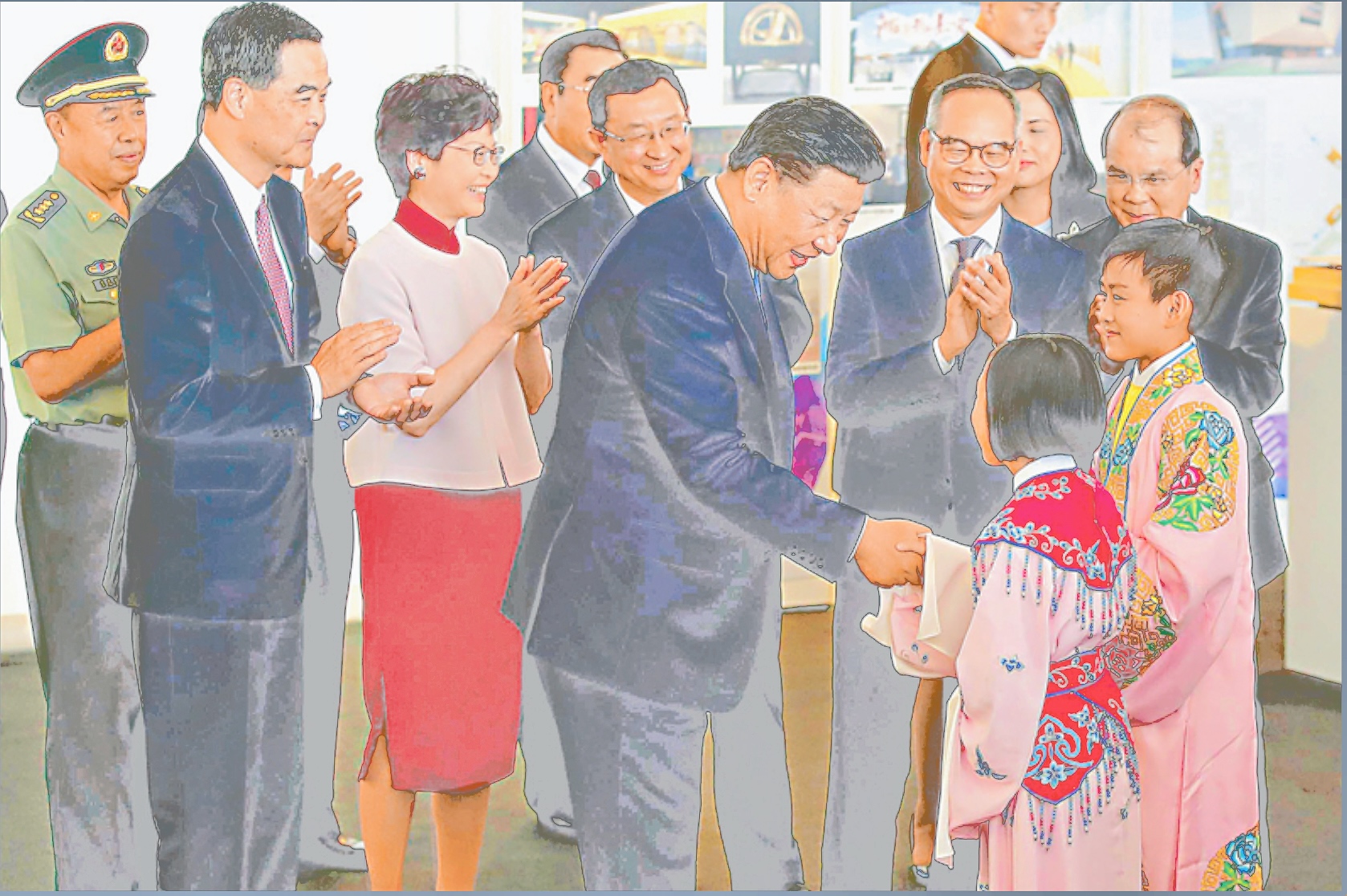
When recalling the most unforgettable moment from their overseas performances, Chairlady Fong shared: “In Vancouver, at the end of our performance, the audience all stood up, shouting, ‘Please don’t go, don’t go! One more, one more!’ Can you imagine that they were begging for an encore? When has Cantonese opera ever gotten that kind of reaction? But my young performers pulled it off.
Before the show, Mr. Lau Jim-Shek invited officials from the local economic and trade office to attend. They initially planned to watch just one show, but after seeing it, we were suddenly invited to perform in three cities in a row. The next morning, we had to catch a 6:30 a.m. flight to Montreal, then on to Los Angeles, back-to-back shows in three places. And when we left, the director of the trade office even came to the airport to see us off!”
“There are two key reasons our all-children Cantonese opera performances resonate so well. First, when audiences watch adult performers, they come with preset standards, they’re ready to judge. But with kids, they walk in with zero expectations. The moment these young actors deliver even slightly above their age level, the approval is enormous. Second, the audiences don’t just clap, they even become advocates for the shows. They’ll call friends and family right after, saying, ‘That child’s performance was incredible, you must come to watch the next show!’ This word-of-mouth magic is why our young performers gain traction so quickly,” said Chairlady Fong.
The existing Challenges & potential solutions for the industry in hong kong
Many traditional cultural heritages face a shortage of young inheritors, and the Hong Kong Cantonese opera industry is no exception. According to a famous Hong Kong artist, Liza Wang Ming-chuen, there are approximately 1,200 to 1,400 Cantonese opera performances in Hong Kong each year, but the number of performing talents available to support this quantity is far from sufficient. “The current talent training system is gradually improving, but it is still insignificant compared to market demand,” said Wang.
Answering the phone call beside to uncover why several young Cantonese opera actors from the Sang Fai Association failed to sustain their careers.
Besides the shortage of young Cantonese opera performers, Edward Li Kui-Ming also emphasizes that the lack of professionalism among actors is an urgent issue.
“Nowadays, young Cantonese opera actors don’t have those showstopping skills or unique performing styles that make the audience think, ‘This is something only they can pull off’. They’re too eager to get on stage without learning from the older generation’s successes. While senior actors take on so many shows at once to make ends meet, they barely have time to rehearse, usually just two run-throughs before going on stage. They have talent, but no higher demands can be placed on them, because no one can spend half a year concentrating on rehearsing a play anymore,” said Li.
According to the West Kowloon Xiqu Centre’s annual report, the average age of Hong Kong’s Cantonese opera audience has been 58 in recent years, with the image beside showing the typical portrait of Cantonese opera audiences in Hong Kong.
Beyond the aging audience problem plaguing this traditional art, there’s another hidden dilemma: years of “free ticket handouts” (免費派飛) have masked the low willingness to pay for Cantonese opera.
Edward Li shard their efforts to deal with such challenge, “My company has already launched a reform: no free tickets except for the press, everyone else must buy tickets. We’re putting an end to the farce of ‘full houses’ where no one outside the venue even knows the show exists”. Li reveled the thinking behind this move in the following video.
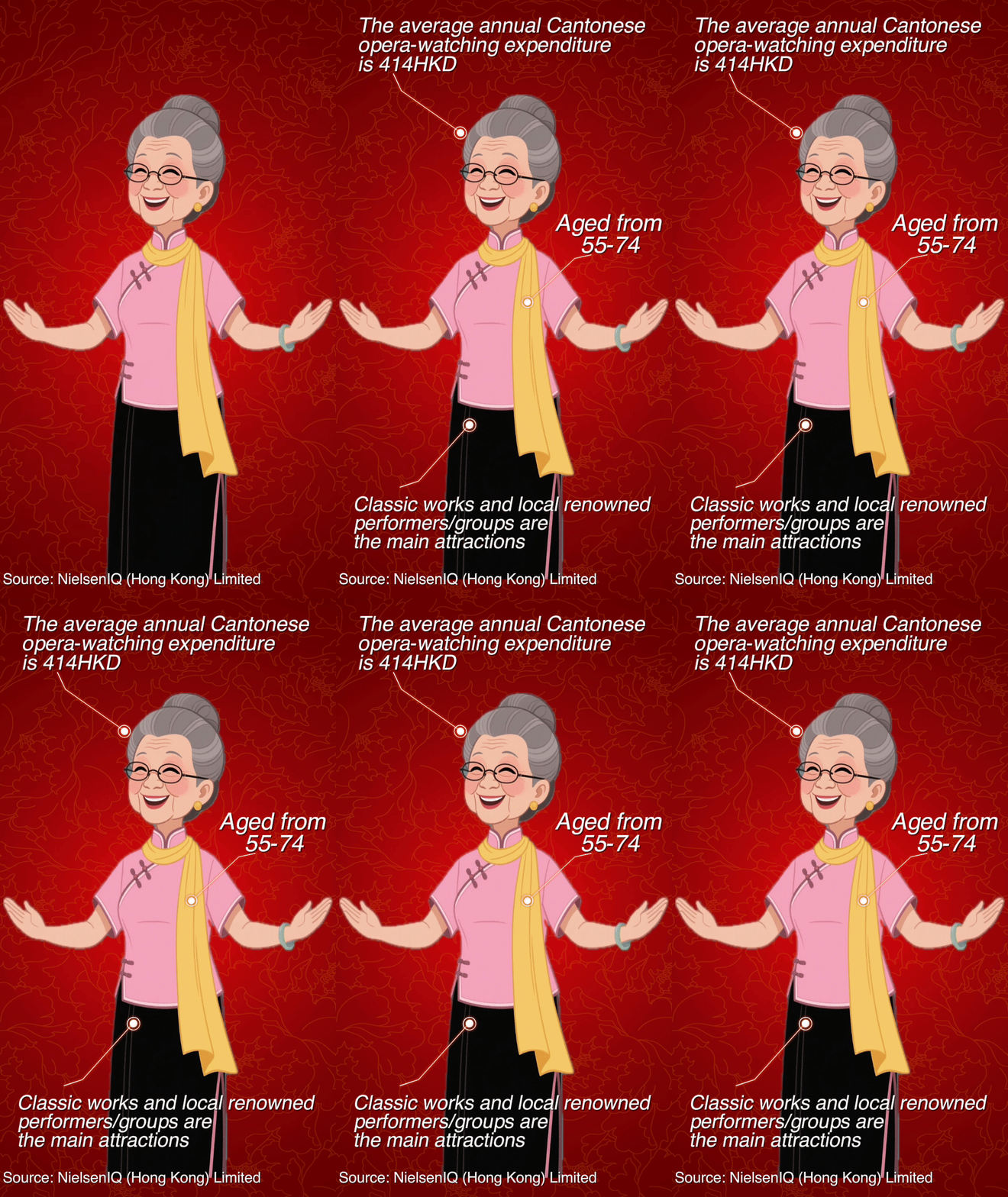
The typical portrait of Cantonese opera audiences in Hong Kong
The Hong Kong government has claimed to bolster Cantonese opera through multiple initiatives in recent years. It established the Cantonese Opera Development Fund in 2005 to finance training programs, performances, and research, with Chief Executive John Lee Ka-Chiu reiterating its role in supporting young talent development at the Chinese Artists Association of Hong Kong in 2024. Additionally, the government has promoted cross-border collaboration, such as the Greater Bay Area Cantonese Opera Inheritance and Development Activities, showcasing regional cultural exchanges and innovative reinterpretations of traditional repertoires.
However, many practitioners from Hong Kong’s Cantonese opera industry argue that tangible outcomes remain limited compared to the government’s rhetoric. And Sang Fai’s Chairlady Fong shared her experience of applying for the Cantonese Opera Development Fund several years ago for one of their overseas performances.
Edward Li also highlighted the superficial government support as the primary issue, and said, “From my 12 years in this industry, the industry barely feels government’s so-called support. They talk about investing millions or staging dozens of shows, but we see no tangible results. That’s why, as a councilor, I’ve proposed forming a special committee to review whether the government has truly fallen short, or if they’re just patting themselves on the back while audiences and practitioners remain untouched, leaving our culture stuck in neutral.”
Since October 2023, Yue opera actress Chen Lijun’s gender-bending performances in New Dragon Inn have gone viral among Chinese netizens. The TikTok clip of her “head tilt kill” received over 1.2 billion views, catapulting the 31-year-old artist into national stardom. Her reinterpretation of the male lead Jia Ting has shattered stereotypes about traditional Yue opera, drawing 78% of Gen Z audiences, who snapped up 500 tickets within three seconds during a Bilibili livestream. The phenomenon extends beyond screens: her national tour My Grand View Garden saw ¥880 premium tickets sell out instantly, with scalpers marking up prices fivefold.
This success mirrors a centuries-old Cantonese opera axiom noted by Edward Li Kui-Ming: female actors in male roles historically dominate popularity. He also highlights how icons like Yam Kim-Fai once captivated audiences with androgynous charm, yet modern Cantonese opera lacks comparable rising stars. “Chen’s crossover appeal proves there’s untapped potential in gender-fluid narratives,” said Li. Such a successful case of traditional opera may signal the future direction for Cantonese opera in Hong Kong.
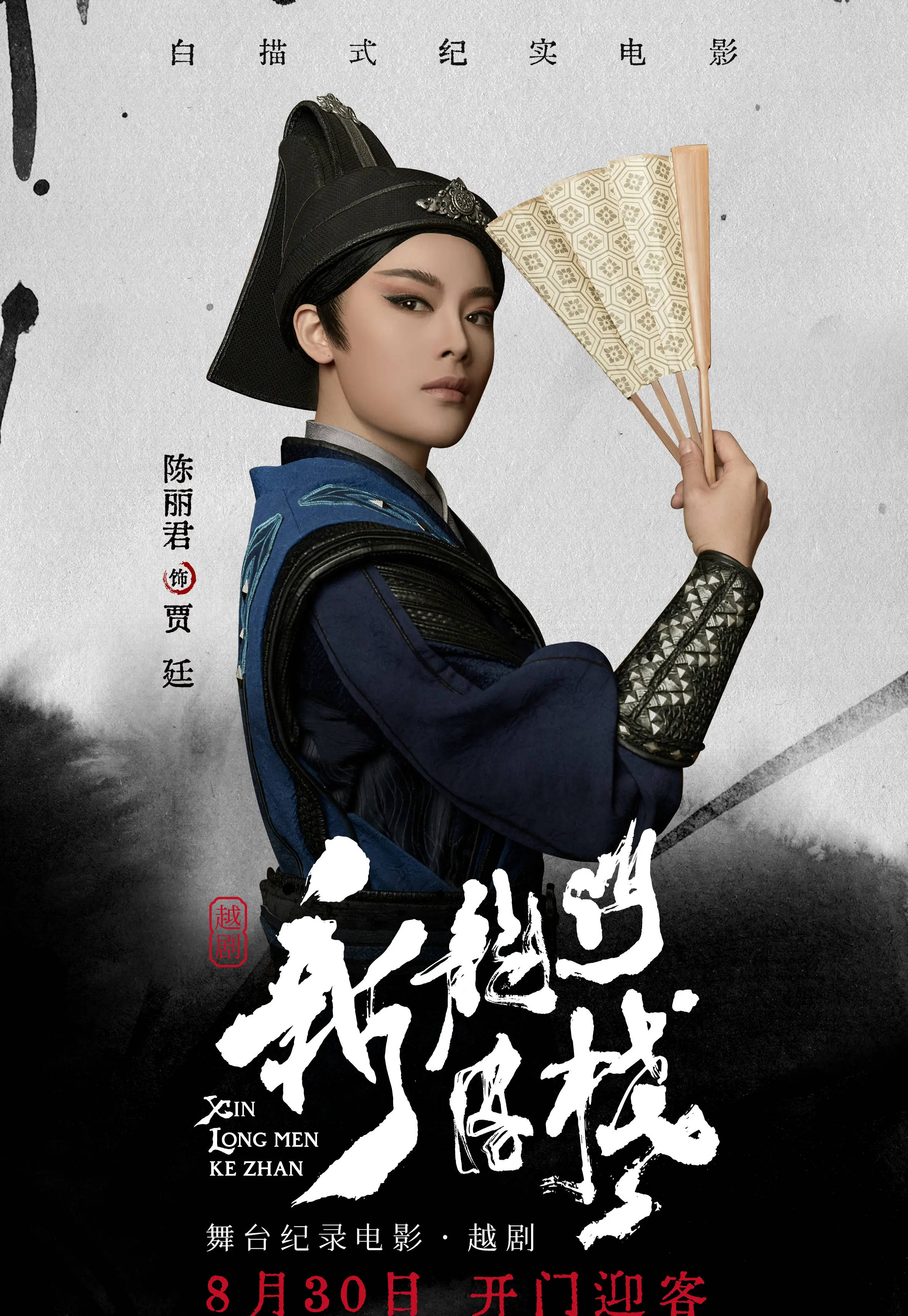
Poster featuring Chen Lijun’s Yue opera stage appearance
Credit
Advisor Foon Lee
Interviewees Edward Li Kui-Ming, Fong Suet-Ying, Kelly Chan Kar-Yue
Producer Elaine, Song Yuning
AI Tools Doubao (image generation), Erinbot (grammar check)
Image/Video Sources Hong Kong Tourism Board, WestK Official Website, Interviewees, Elaine