
FROM NICHE COMMUNITY TO SOCIAL COMMERCE GIANT: THE RISE OF REDNOTE
When the U.S. government moved to ban TikTok in March 2024, millions of American users began searching for alternatives and many turned to another Chinese app—RedNote.
The Chinese social media app RedNote developed by Shanghai’s Xingyin Technology, has experienced a sharp rise in U.S. downloads since January. According to reports from BBC, Reuters and CNN, the surge has been propelled by over 700,000 new American users. Many of them describe themselves as “TikTok refugees,” helping the app climb to the top of the US Apple App Store rankings.
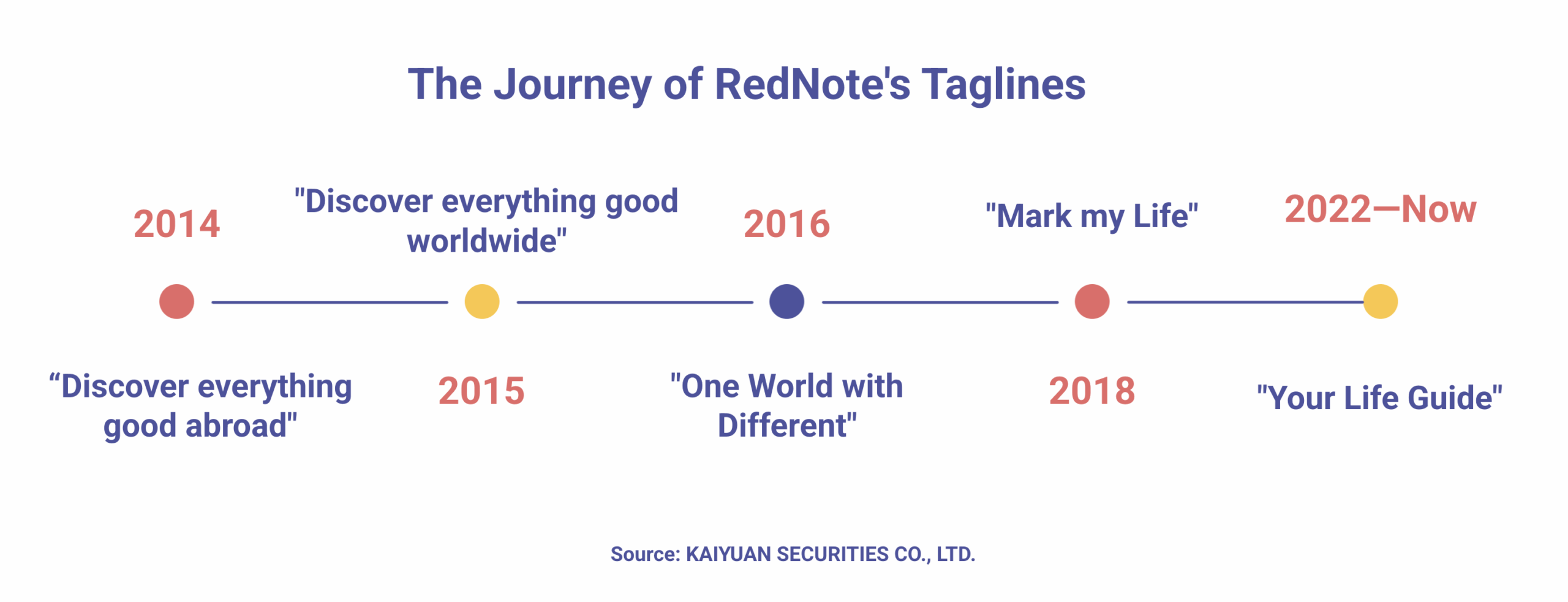
In 2013, RedNote started as a small online community where users exchanged tips on overseas shopping. Over the past 12 years, however, it has grown into a platform blending social media, user-generated content, and e-commerce—a transformation reflecting China’s rapidly evolving digital consumer culture.

According to the 2025 Active User Report by QianGua Data—a specialized analytics and marketing management tool for RedNote—the platform’s user base exhibits three distinct demographic traits: a high female predominance (71.98%), a pronounced youth skew (43% aged 18-24), and concentrated urban affluence (66% reside in China’s Tier-1 and emerging Tier-1 cities).
*Note: City tiers in China are classified based on comprehensive factors such as economy, population, infrastructure, and global influence. The four traditional first-tier cities are Beijing, Shanghai, Shenzhen, and Guangzhou. The concept of “new first-tier cities” was introduced in 2013 by China Business News Weekly, which reevaluates cities based on commercial appeal and population vitality using big data. Currently, the 15 new first-tier cities are Chengdu, Hangzhou, Chongqing, Suzhou, Wuhan, Xi’an, Nanjing, Changsha, Tianjin, Zhengzhou, Dongguan, Wuxi, Ningbo, Qingdao, and Hefei.
Business Mode of RedNote
This user base has generated commercial value for the platform. According to an intern from RedNote’s commercialization department, the platform primarily monetizes through two main avenues: advertising and e-commerce.
Commercialized advertising can be divided into four main categories
Its internal “social discovery shopping” model allows users to make purchases directly after browsing content. This closed-loop ecosystem—”authentic sharing, community interaction, instant consumption”—has become RedNote’s core competitive edge.

Screen recording of RedNote
RedNote has evolved into a dynamic, real-world knowledge engine for China’s younger generations.
Initially celebrated as a hub for beauty trends and lifestyle aesthetics, the platform now thrives as a go-to resource for practical, crowdsourced expertise.
Users increasingly rely on it to solve concrete problems: troubleshooting household emergencies, navigating bureaucratic processes, or planning niche travel adventures. Its content sprawl ranges from step-by-step vaccine booking walkthroughs to unvarnished reviews of remote hiking trails, often delivered in bite-sized videos or bullet-point lists. What sets it apart is the raw immediacy of its user-generated guides—think photos of handwritten hospital signage for first-time patients or screenshots of exact metro exit numbers to save commuters 10 minutes.
This shift reveals a hunger for peer-validated, experience-tested information in an era of algorithmic ambiguity, turning RedNote into both a mirror and a toolkit for urban survival.
Since that’s the case, let’s also take a look at what RedNote users search for on Little Red Book and how they view this recommendation mechanism.
However, it is this blending of seemingly natural, authentic content with business practices that also raises some concerns about the accuracy of the information.
As you explore RedNote, you might notice that many posts include the label “ad” in the lower-right corner. While these posts appear to share personal insights, they sometimes promote products or services. This can lead to concerns about potential misinformation on the platform. For example, there are quite a few posts related to immigrating to Hong Kong that may not fully reflect the realities of the policies. Some immigration agencies take advantage of users’ limited knowledge and occasionally exaggerate certain details, which could mislead readers.
Ms. Guan, a woman who has been working in Hong Kong nearly 7 years and has worked in multiple industries, noticed an advertisement for a “Green Channel for Talent Introduction to Hong Kong” , while she was browsing on her phone. This marked the third time this week, which she mentioned to us when she was interviewed by us in the first week of May. She said she had encountered similar content— designed images of sea-view apartments, “low-threshold Hong Kong Permanent Resident Application Scheme,” and curated comments in the discussion section seeking recommendations. Within the filter bubble created by algorithms, countless individuals like Ms. Guan are being precisely targeted.
This internet platform, celebrated for its “real-life sharing,” is becoming more widely embraced by individuals as part of the growing commercialization trend.
Chris, a creator with 25.5k followers on RedNote, shared, “ Posts on social media are primarily driven by either political or economic motivations. On RedNote, economic motivations are particularly pronounced .” As a content creator with many followers, his perspectives warrant serious consideration. This can reveal the underlying thought processes of information publishers on the current RedNote platform when they opt to release certain types of content.
Under the combined influence of the platform’s “grass-planting” economy, which is an Internet term referring to promoting products or services on social media to stimulate purchasing desire,and algorithmic recommendation mechanisms, this traffic-monetization-driven content incentive system has blurred the boundaries between authentic sharing and commercial promotion. We discovered that searching for the keyword “Hong Kong Permanent Resident Application” yields a homepage dominated by intermediary advertisements, intermixed with misleading claims such as “talent point boosters” and “guaranteed approval packages.”
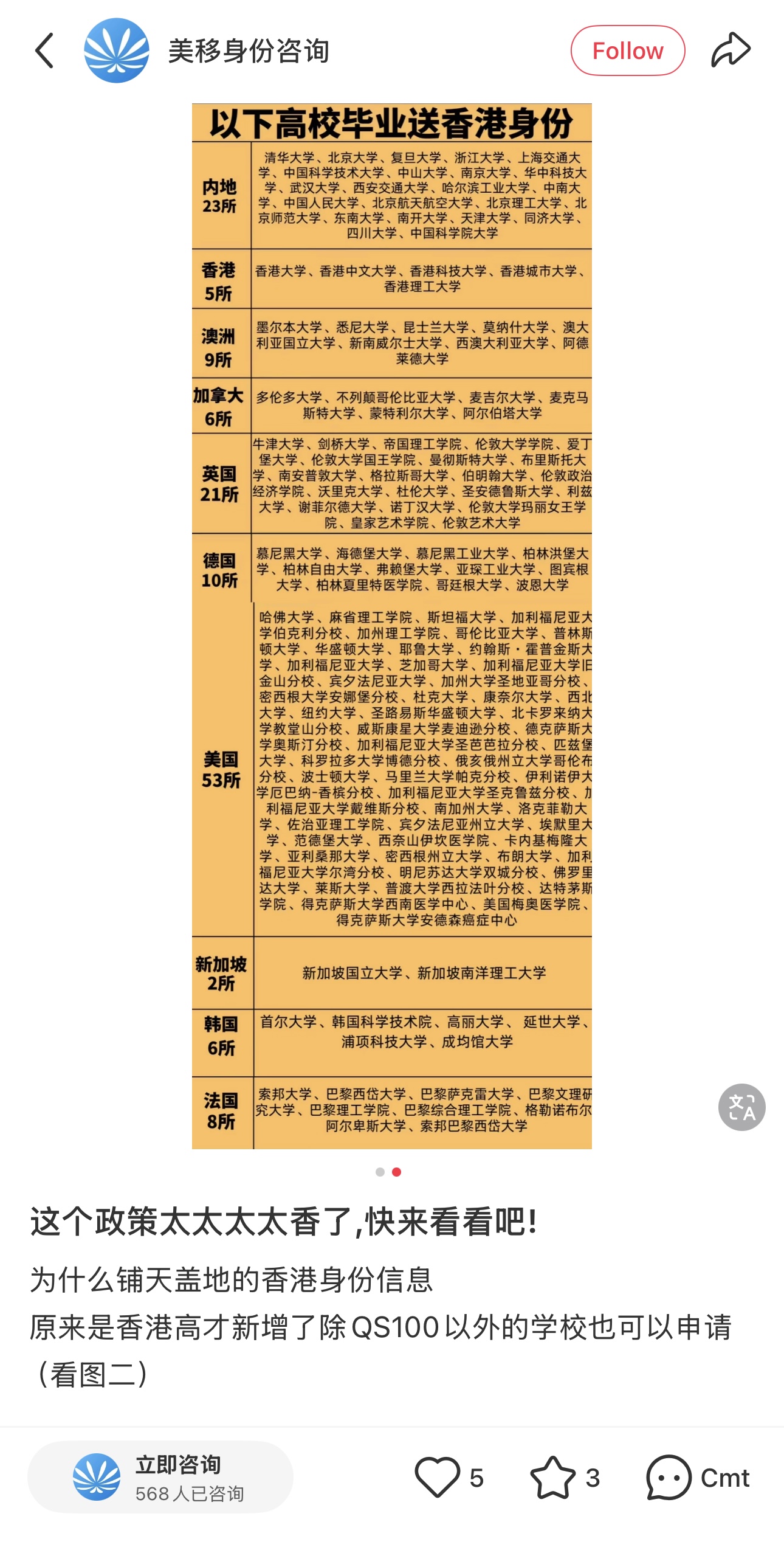
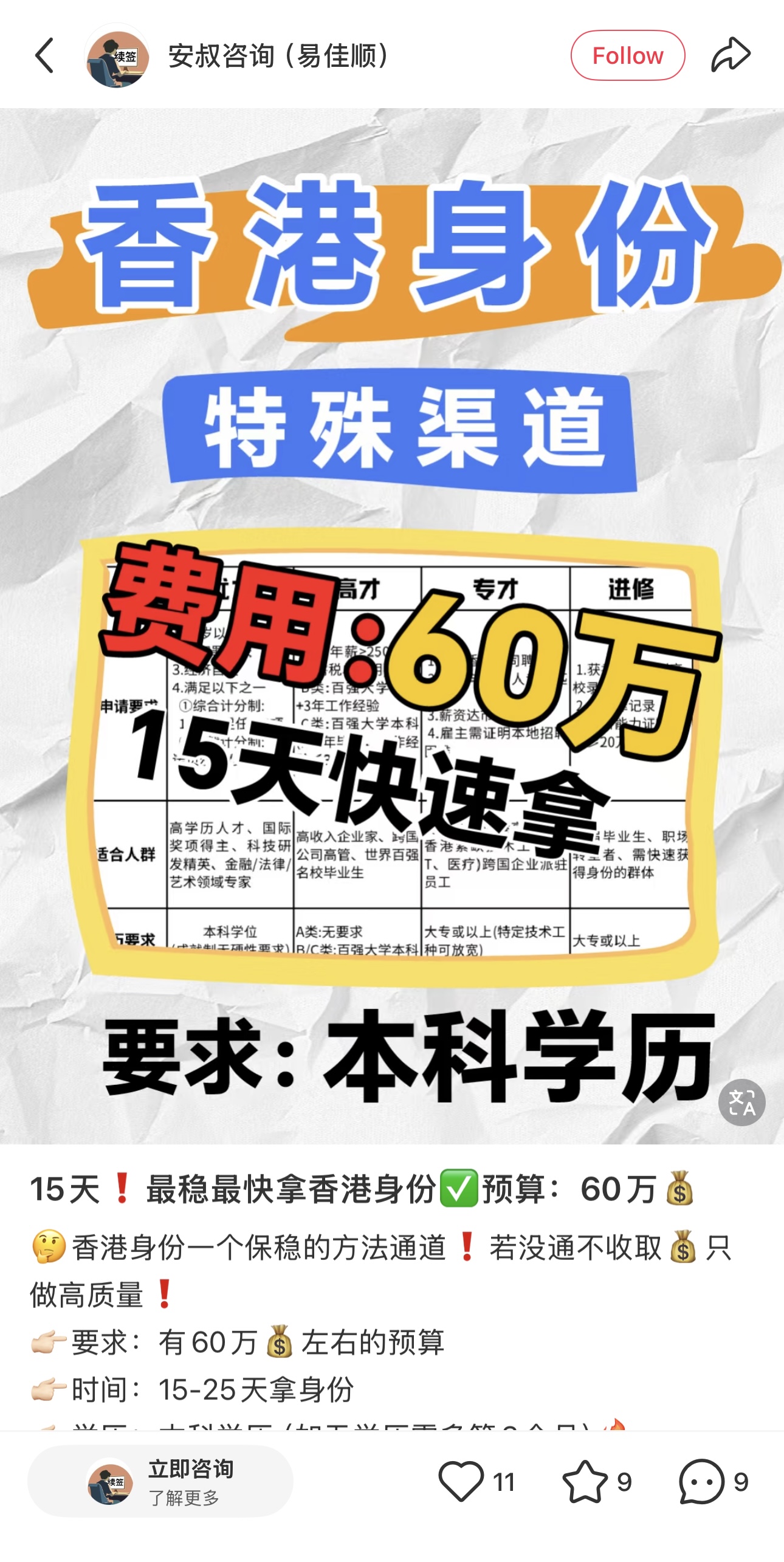
Screenshot of the post on Hong Kong Permanent Resident Application Policy on RedNote
“Now, when I browse through 10 notes, 8 of them are immigration advertisements,” said Ms. Guan. “Note all visa recipients are from the mainland, but many agencies do not clarify the identities and numbers of visa applications approved by the Hong Kong government, making people think that all visa recipients are from the mainland. Such advertisements are particularly rampant.”
“They told me I might qualify for a talent visa, but I didn’t meet any of the requirements. Still, they promised me the visa if I paid 10,000 yuan.” Ms. Zhang, who goes by “Asir Sister” on RedNote, showed the chat history on her phone and said, “I just had this idea and didn’t know much about it at first. Later, after talking to some people and doing more research, I realized it was a scam. So, I teamed up with another person who got scammed too, and we figured out how to get our money back.”
A number of individuals incurred substantial financial losses. After adding the immigration agency “Hai Yixing” as a contact on April 8, 2024, Mr. Jiang submitted an application for the Hong Kong Quality Migrant Admission Scheme via this company. After trying many times to contact the agency by phone and message without success, Mr. Jiang eventually found out in March 2025, through his own efforts, that his application was not approved. Unfortunately, he is still waiting to receive the refund of the agency fee that was originally promised.
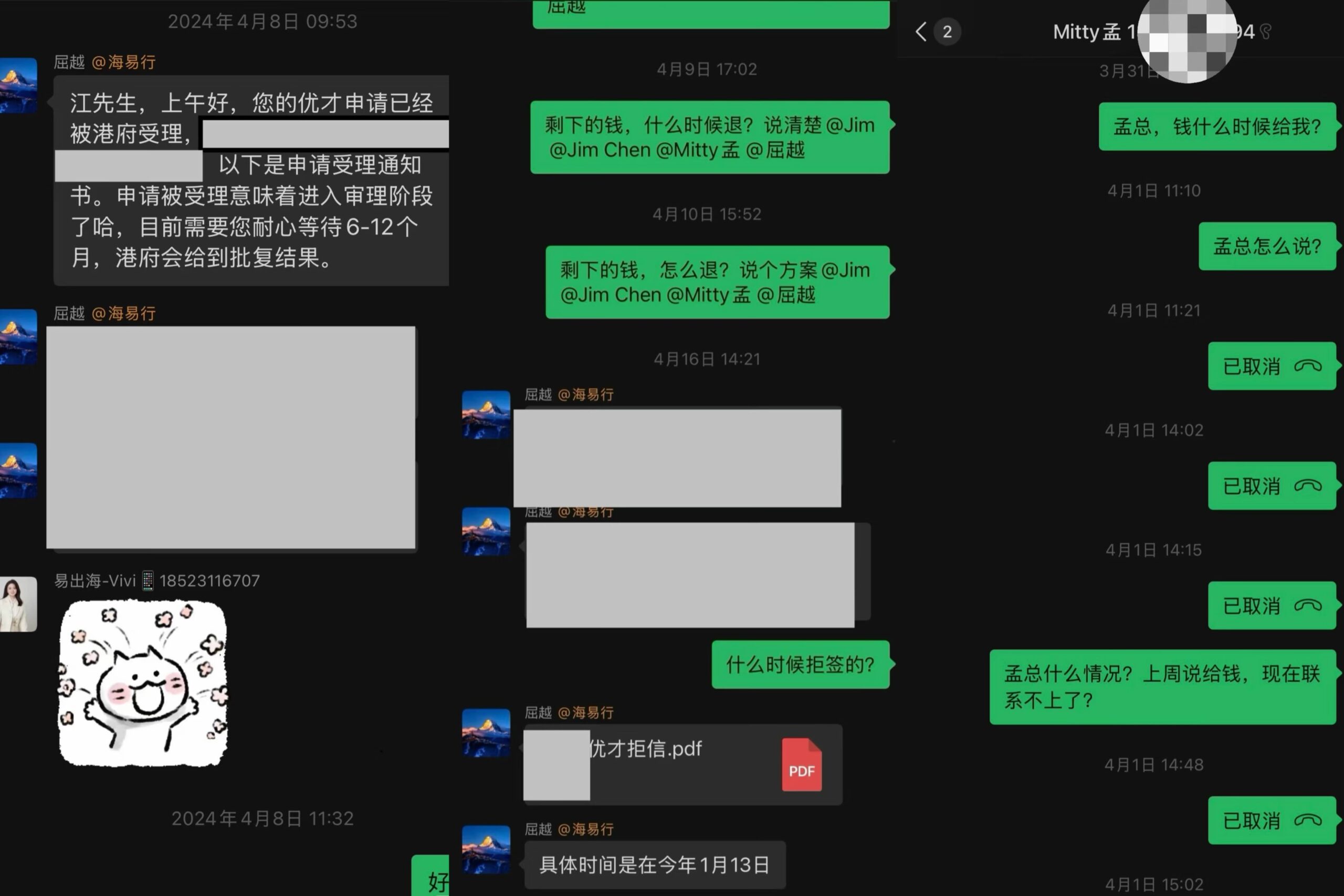
Screenshot of the chat history between Mr. Jiang and the immigration agency
Ms. Guan, an individual who is on the verge of obtaining Hong Kong residency and understands Hong Kong’s Permanent Resident Application policies, expresses a deep appreciation for various aspects of the lifestyle in Hong Kong. Nevertheless, during her time there, she has also identified numerous misconceptions about obtaining permanent residency in Hong Kong.
“Many immigration consultants promote their services over the Chinese social media platforms, unfortunately, some of the posts were rather vague and misleading, with little solid information or policy introduction, slogans like ‘guaranteed extension without being physically staying in Hong Kong ’, ‘5 secrets that you won’t be told for Hong Kong ID’, ‘DM me’… rather than making it crystal clear. ”
When a sharing community becomes commercialized, every algorithm-pushed advertisement carries hidden risks. Yet for the entire platform’s ecosystem, cultivating a positive, constructive atmosphere within its sharing community remains RedNote’s primary objective.
“If users perceive the platform’s recommendations as increasingly less reliable, they’ll stop using RedNote for further searches – that’s detrimental to the platform,” shared Xiaoyu, an intern in RedNote’s commercialization department.
“Our task is to ensure the air in this home (the platform) stays fresh. Only when the home’s environment is wholesome can we attract more people to enter and choose to stay.” Xiaoyu said.

Hold on! Give it a try to test your basic knowledge about Hong Kong’s immigration policies!
“The existing talent admission schemes actively generate new impetus for Hong Kong’s diversified development.”
By HK Immigration Department
In April 2024, the Hong Kong Tourism Board (HKTB) announced a strategic partnership with RedNote to strengthen tourism promotion in the mainland Chinese market. The collaboration will leverage RedNote’s platform resources and advantages to assist the HKTB in promoting Hong Kong as a travel destination.
According to data from the Hong Kong Tourism Board, HKTB partnered with RedNote in various projects to promote Hong Kong’s tourism appeal. The partnership has generated more than 10,000 posts on travelling in Hong Kong and 300 million exposures for the campaign in 2023. Also, RedNote announced that Hong Kong was awarded the prize “Destination Most-loved by Users – Highflyer of the Year”, making it one of the most searched travel destinations by RedNote users.
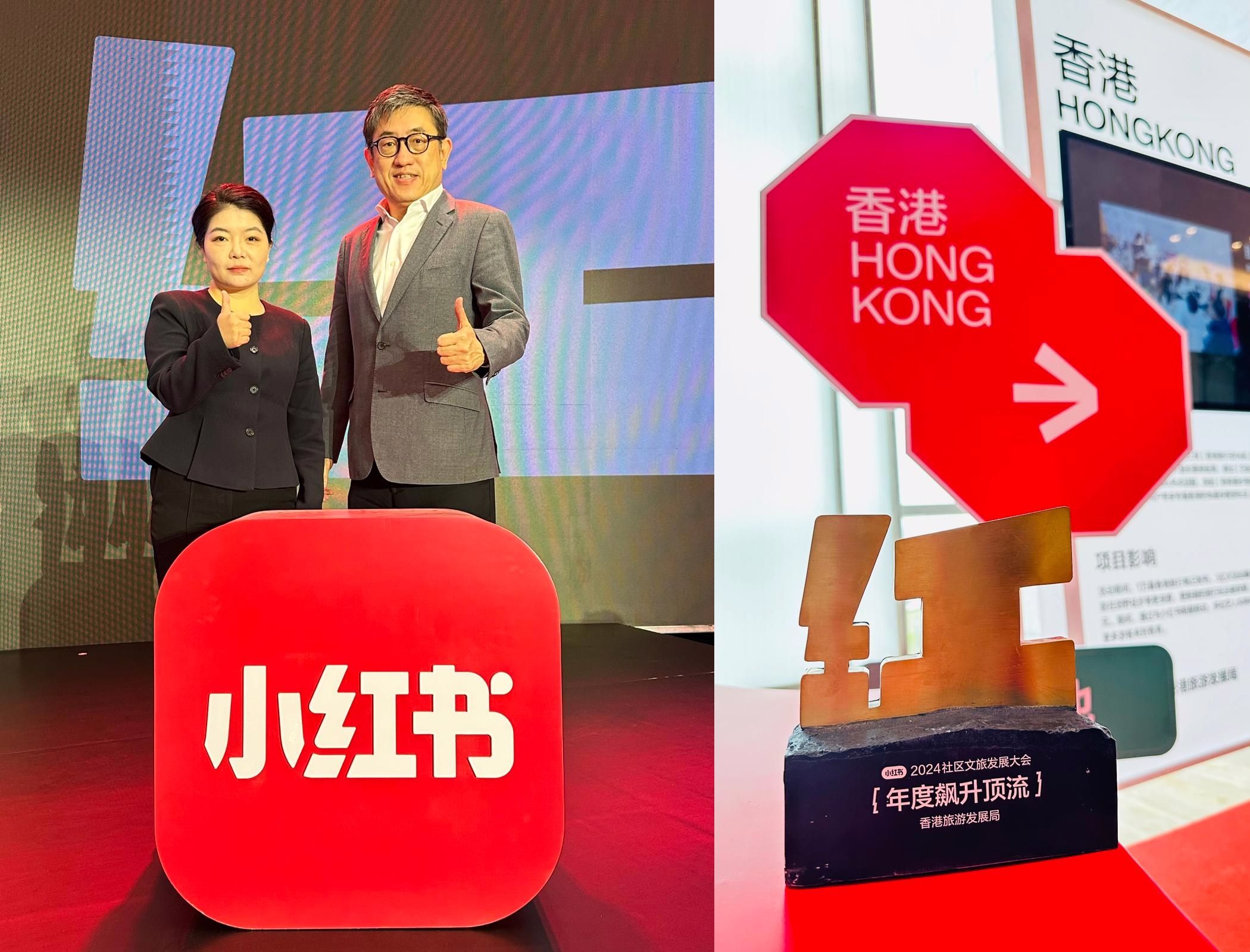
Photo from Hong Kong Tourism Board
According to the news from Hong Kong Tourism Board (HKTB), HKTB and RedNote will share and co-create new content by inviting more Mainland and Hong Kong KOLs to experience Hong Kong’s cultural tourism. The KOLs will reveal novel ways and experiences to explore Hong Kong from their original user-generated content and offer Mainland consumers inspiration on fresh ways to explore Hong Kong, telling good stories about Hong Kong first-hand.
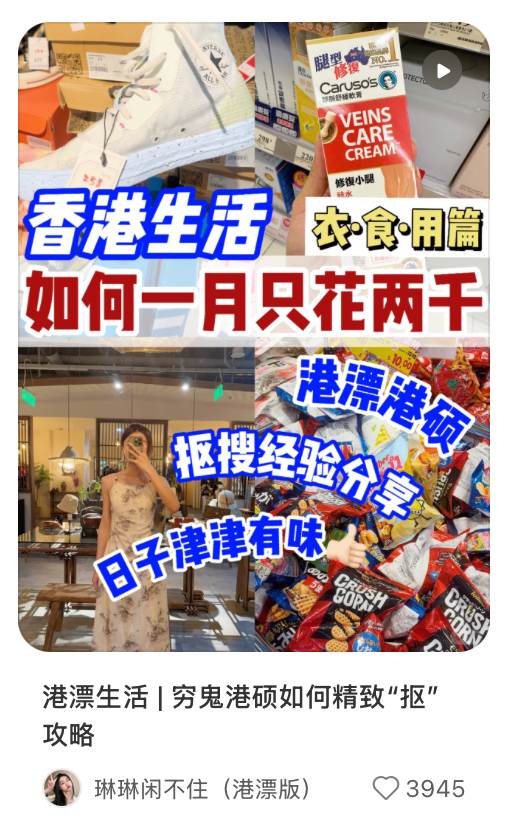

Screenshot by RedNote
@琳琳闲不住 @Kat
Hong Kong influencers have become an active part of the RedNote community, where they share a wide range of local travel guides and recommend “authentic” Hong Kong restaurants worth visiting. This has drawn the attention of many travelers. Additionally, mainland students and workers who have moved to Hong Kong share practical life tips on RedNote, such as how to manage daily utilities like water, electricity, and gas payments, ways to cut living expenses, and advice on purchasing affordable yet high-quality daily essentials.
“I really enjoy reading others’ insights, fashion tips or food recommendations on RedNote. When using RedNote, I always create a special collection for the things that are helpful to me. ” Jayee, a university student visiting Hong Kong, mentioned that she would search for travel guides on RedNote during her trip. During the interview, she and her friend were taking photos in front of the red wall at the Central MTR Station, a popular check-in spot in Hong Kong on RedNote.
Meanwhile, in 2025, an influx of “TikTok Refugee” users migrated to RedNote, boosting its international visibility and highlighting the platform’s vast potential in overseas markets. Subsequently, RedNote announced the establishment of a Hong Kong office, marking a significant step toward expanding its global reach and opening a gateway to international markets.
The Hong Kong Government has also stepped up its efforts to attract a large number of talents to Hong Kong by launching the Top Talent Pass Scheme, which has made a large number of outstanding people choose to target their future development opportunities at Hong Kong.From the dual perspectives of tourism and talent policies, Hong Kong has attracted a number of individuals to relocate to the region.
As a leading lifestyle-sharing platform, RedNote has also become the primary channel for many mainland residents considering visa applications to access relevant policy information. Numerous agencies actively post content about Hong Kong permanent resident application policies on RedNote, while the platform’s personalized algorithmic recommendation mechanism precisely targets potential clients with application requirements.
How does content recommendation in this part works
In an era when content platforms are fiercely competing for users’ attention, RedNote is redefining the rules of content distribution through its unique “mixed arrangement of text, images and videos and dual-column information flow design”
Unlike the single-column top-down browsing mode of common social media platforms, RedNote’s dual-column layout allows users to access up to six posts simultaneously on a single interface. This design enhances the information density, but it also places higher demands on the attractiveness of content creators.
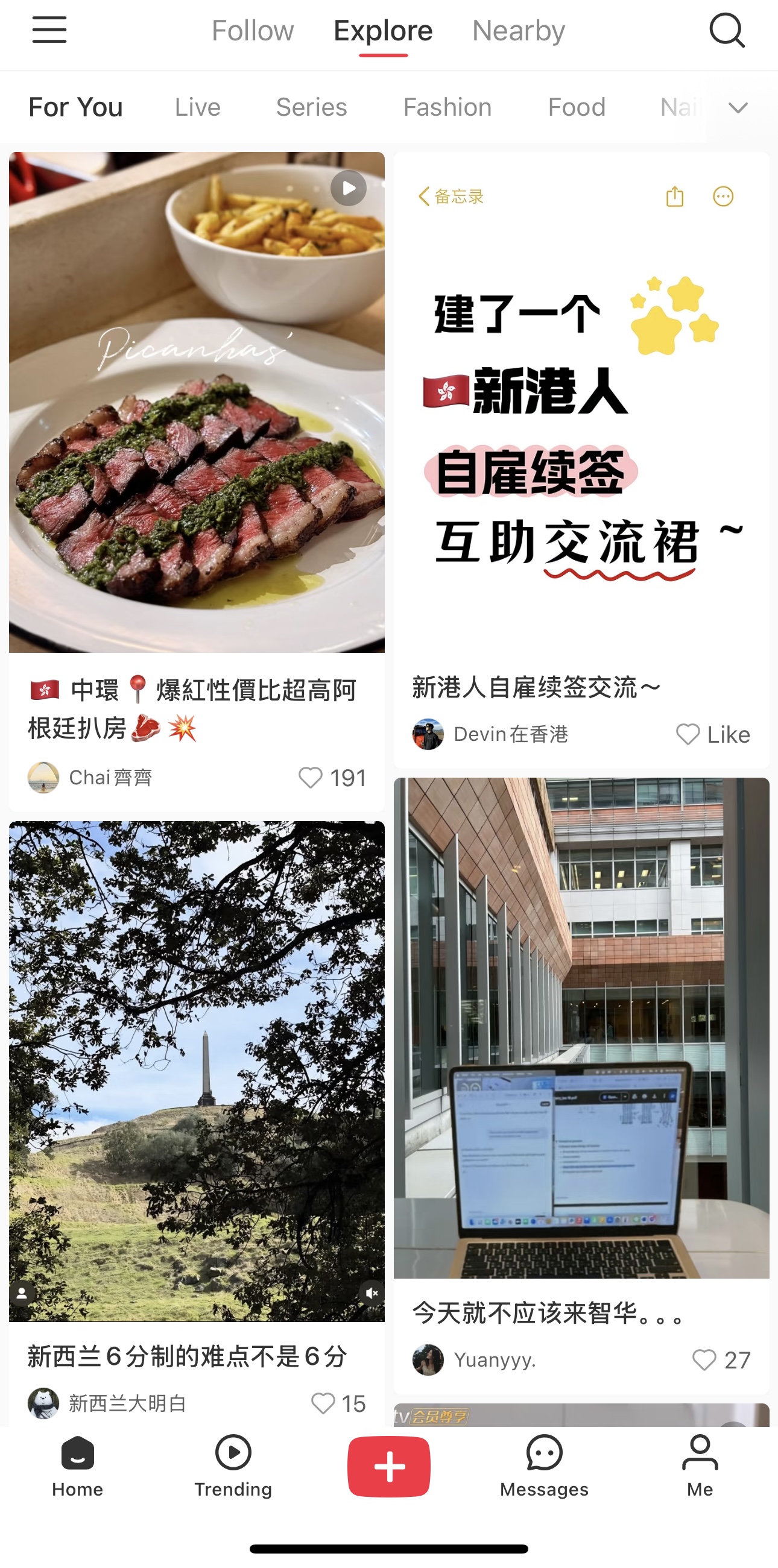
Screenshot of RedNote’s UI
“It’s like giving the choice back to the users,” said Chris, who has 20,000 followers on RedNote. “Compared with single-column information flow displays like Douyin, the layout of RedNote is more difficult to control. Even if you paid promotions, you can’t guarantee that users will choose your notes.”
According to the book “Mastering RedNote in Five Hours” written by Xiajiujiu, the content recommendation mechanism of RedNote is as follows: After a note is published and passes the review, the platform will extract keywords from the content and conduct small-scale distribution tests. This note might initially be recommended to about 1,000 users who are interested in similar topics. Subsequently, the system decides whether to give more exposure based on indicators such as click-through rate, completion rate and engagement rate.
After publication, the main sources of traffic for a note include:
Homepage recommendations
Follow page
Search results
Personal profile visits
External shares and reposts from other platforms
This mechanism may prompt some creators to use exaggerated titles and covers, and even misleading information and other strategies to draw more viewership. User Cara complains, “In a lot of cases you just clicked, but it really did not match the title—it’s a total clickbait.”
Under the dual influence of the dual-column layout and algorithmic recommendation, the competition for content on RedNote is extremely fierce. Some creators use provocative titles or controversial topics to boost click-through rates, which has led to the gradual emergence of misleading information problems on the platform.
Hong Kong’s prominence on RedNote is due to both official cooperation and user-generated content, as well as the platform’s algorithmic distribution mechanism. Yet the platform’s algorithm, optimized for engagement, has also amplified a trend: misleading ads promoting “fast-track Hong Kong permanent residency.”
In this algorithm-driven information maze, tempting promises of “shortcuts to Hong Kong residency” flash like neon signs, drawing in people desperate for solutions. But the real path forward isn’t found in agencies’ slick ads—it starts with your own clarity and critical thinking. When online sharing turns into profit-driven schemes and algorithms boost misleading claims, we all need two tools more than ever: a skeptical mind to question what we see, and the determination to uncover the truth behind the hype.
Click and review the information on HK’s immigration policies that we have meticulously compiled!
ABOUT THIS PROJECT
This project was originally published on May. 09, 2025.
Story Editing and Website Producing by Pan Jiarui and Zhang Ziqi
REFERENCE
DESIGN
ACKNOWLEDGEMENTS
Additional thanks to Advisor Masato Kajimoto and the people who appeared in the video.