
For Rena and her partner, Tia, starting a family in Hong Kong has meant navigating a maze of legal and logistical barriers. Because same-sex couples are barred from accessing in vitro fertilization (IVF) at home, the lesbian couple must travel overseas for every attempt to have a child—juggling work schedules, medical appointments and mounting expenses along the way.
“Our biggest obstacle is we cannot do IVF in Hong Kong. Flying overseas makes everything more complicated,” said Rena, who asked to use an alias.
Rena’s struggle highlights a broader issue: Many same-sex couples and single women in Hong Kong face major barriers to having children. As the city’s birth rate falls to record lows, whether same-sex couples can become parents—through assisted reproductive technology or adoption—will help determine not only whether Hong Kong can become a more inclusive and dynamic society, but also whether it will embrace nontraditional families as part of the solution to the city’s demographic crisis.
Many Would-Be Parents
Some academics and advocates believe that expanding parental rights for same-sex couples and single women could be part of the solution. According to a 2022 academic survey by Dr. Lo Wai-luen and colleagues at Hong Kong Polytechnic University, about half of lesbians in Hong Kong would like to have children, and 92 percent believe same-sex couples should be allowed to use assisted reproductive technology such as IVF. “Seventy percent of Hong Kong residents in same-sex relationships want to get married,” said Suen Yiu-tung, a professor at the Chinese University of Hong Kong.
Recent court decisions in Hong Kong have granted some rights to same-sex couples, such as equal housing and inheritance, but parental rights remain out of reach. Same-sex couples still cannot jointly adopt children or access assisted reproductive technology like IVF.

Partner rights in Hong Kong, compiled by Dear Family Hong Kong, Gay Harmony and Onebookhalf Gender Space
As a result, unmarried women and same-sex couples are forced to seek fertility treatments abroad.
Rena has been with her partner, Tia, who also requested an alias, for more than six years. The couple plans to have two babies at a New York clinic, each carrying the other’s egg so their children share biological ties with both mothers.
“Each attempt requires at least a three-week leave, and it often takes multiple tries. We have to arrange hotels and flights, be precise about the dates to match the hormone cycle, and negotiate with our colleagues for time off. If we could do it in Hong Kong, it would save us so much trouble and disruption to our work,” said Rena.
“Same-sex marriage in Hong Kong is a luxury dream,” said Rena.
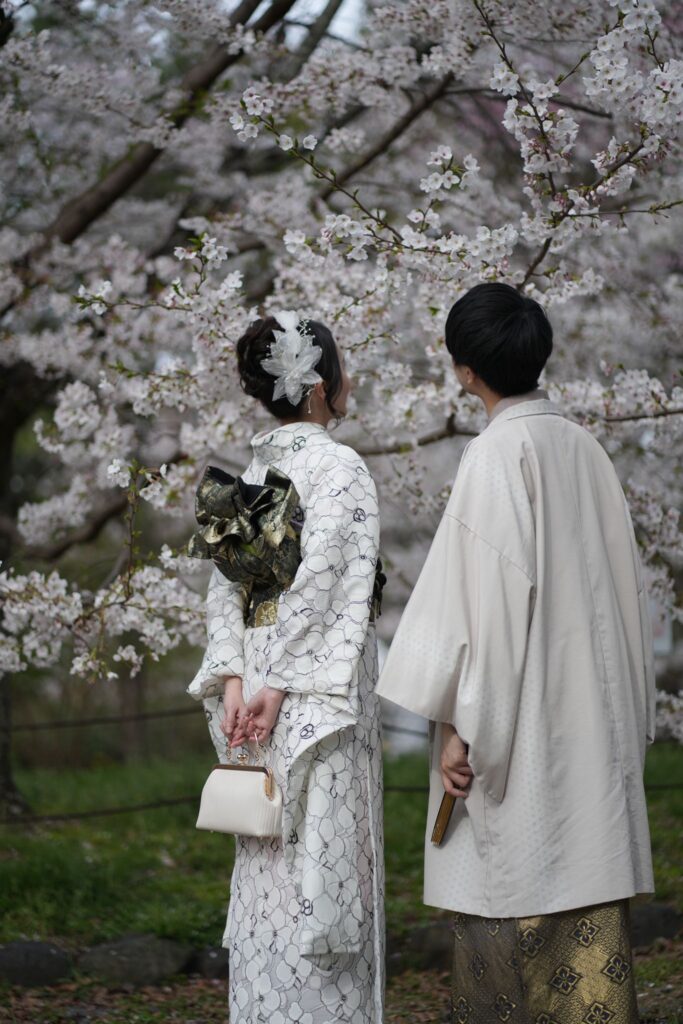
Tia, left, and Rena, right. (Courtesy of Tia and Rena)
Compared with legalizing same-sex marriage, Tia believes legalizing IVF for single women could happen sooner and with less resistance. “The government wants people to have more babies. Single women having babies does no harm.”
According to the World Population Review, Hong Kong’s birth rate in 2025 is 5.43 births per 1,000 people, the second lowest in the world, just above South Korea.
This low fertility rate exacerbates the demographic challenge. Hong Kong’s population is rapidly aging while its workforce shrinks. United Nations projections indicate that by 2050, nearly 35 percent of Hong Kong’s population will be aged 65 or older. Meanwhile, the total population is expected to decline significantly, from about 7.4 million in 2023 to potentially below 6.5 million by 2065. This demographic shift threatens economic growth, strains healthcare and social welfare systems, and increases the dependency ratio—meaning fewer working-age adults will need to support a growing elderly population.
“It is imperative that the government set a firm policy direction to encourage childbearing amid our persistently low birth rate,” Chief Executive John Lee said in his 2023 policy address.
Landmark Legal Case
The Hong Kong LGBTQ+ community’s pursuit of same-sex marriage reached a pivotal milestone in September 2023 with the Court of Final Appeal’s ruling in Sham Tsz Kit v. Secretary for Justice. Jimmy Sham, a Hong Kong permanent resident who legally married his partner in New York in 2013, challenged the government’s refusal to recognize same-sex marriages or provide any legal framework for same-sex couples. The Court ruled by a narrow 3–2 majority that, while same-sex couples do not have a constitutional right to marry under Hong Kong law, the government must establish an “alternative legal framework” within two years—such as civil unions or registered partnerships—that grants same-sex couples rights and protections equivalent to those of marriage.
This landmark decision is significant because it acknowledges that excluding same-sex couples from legal recognition constitutes unconstitutional discrimination under the right to privacy and equality protections enshrined in the Hong Kong Bill of Rights. The ruling obliges the government to provide legal recognition that could include rights related to inheritance, medical decisions and family security—areas where same-sex couples have long faced legal uncertainty and vulnerability.
The Court set a deadline of September 2025 for the government to enact this framework. However, months after the ruling, the government has yet to conduct public consultations or release any draft proposals, raising concerns among advocates about potential delays or inadequate measures.
“I have no expectations for the September legislation. No expectations, no disappointment,” said Jeanne Cheung, a lesbian who wants a baby in the near future.
Her pessimism is not unwarranted. In the months since the court’s decision, local NGOs, academics and lawyers say the government has neither conducted public consultation nor released a draft proposal.
But time is not on Cheung’s side. At 32, she hopes to have a child before her biological window closes. “A woman’s fertility, especially after age 30, can decline dramatically. So if you want a baby, you’d better act early,” said Dr. Huang Lili of Incita IVF Center.
In a group chat called “Baby Project,” Cheung and her LGBTQ+ friends exchange information on navigating the city’s legal and medical labyrinths to build families of their own.

Cheung, right, and her partner, left. (Photo by Yi Luo)
Initially, Cheung considered intrauterine insemination (IUI), a simpler and less expensive fertility treatment compared to IVF. In IUI, doctors place sperm directly into the uterus around the time of ovulation, hoping it will fertilize an egg naturally inside the body. “It does not require surgery or the extraction of eggs. And the cost is much lower. But the success rate is low, only 10 to 15 percent,” said Dr. Huang.
As Cheung’s window narrowed, she switched to IVF for a higher success rate and quicker results, preparing at least HK$500,000 (about $64,000 U.S.) for overseas treatment.
It’s not just the financial burden. The emotional toll can be heavy. Same-sex couples often face a lack of social support, and their families or even hospitals may turn them away.
Cheung said many same-sex couples experience postpartum depression or anxiety about raising a child. “I highly recommend people seek community support and help. For example, spend time with same-sex couples who have children—you’ll feel less intimidated,” Cheung said.
“The world has a lot of fun, so I want to invite my child to enjoy the world and feel joy with me,” she said.
If the September legislation can protect parental rights, such as granting her partner guardianship of their child, Cheung said they would be more likely to register. But left in the current legal limbo, same-sex couples that want to be parents are forced to go to great lengths to start a family.
Two Moms and One Dad
“Giving birth is saving lives. My babies’ father told me that,” said 34-year-old Cais Chan. Unlike most lesbian couples, Chan and her partner want their children to have a father figure.
Chan grew up in a harmonious family, and her heterosexual parents’ loving relationship inspired her lifelong dream of having a happy family of her own.
“When I was 25, seeing my friends’ kids, I was overwhelmed by a strong maternal instinct. They spark so much joy and healing,” she recalls.
Yet, growing up in a traditional culture, Chan once believed she had to follow her parents’ path and marry a man to realize her dream of motherhood. Out of instinct, she began orchestrating a “fake marriage” with gay friends, a common practice among LGBTQ people in conservative environments to satisfy parents and avoid discrimination.
But the process proved far from simple. During her search, she encountered a misogynistic man. “I don’t want my kids’ dad to be someone who hates women,” Chan said. Disputes over child-rearing and the prospect of living under the same roof with somebody she doesn’t love also terrified her.

Hong Kong Cotton Tree Drive Marriage Registry. (Photo by Yi Luo)
Even later, she found a gay friend she got along with. His family discovered the arrangement and blamed her for his sexuality. “You devil, you taught my little brother to be gay,” his sister accused.
Chan realized that such “fake marriages” would never give her children a happy family, and, after eight years of trial and error, she decided last year to have children without marrying a man.
In 2024, Chan met Daniel Bayen, a volunteer sperm donor from Germany. After reviewing his health records and background, Chan had candid conversations with Bayen by video and in person.
She shared her concerns about potential discrimination her children might face. Bayen reassured her: “I grew up with my mom. But I’m still happy and proud.” As it turned out, Bayen’s mother was also a single woman who had him with the help of a sperm donor. Empathetic and caring, Bayen agreed to play the role of father figure, video calling the children and meeting regularly as they grow up.
“My kids will have two moms and a daddy, and it works fine. We all love them so much,” said Chan.
Legal Gaps Remain
Because of a patchwork of court rulings, Hong Kong same-sex couples who married abroad are granted certain rights, such as immigration, tax benefits, housing and inheritance, that were once reserved for heterosexual couples. Yet the most significant gap remains: parental rights.
In Hong Kong, single women and unmarried couples are barred from accessing IVF and other assisted reproductive procedures. Many couples are forced to seek costly treatments overseas, with a single IVF cycle ranging from HK$100,000 to HK$250,000, and success often requires multiple attempts.
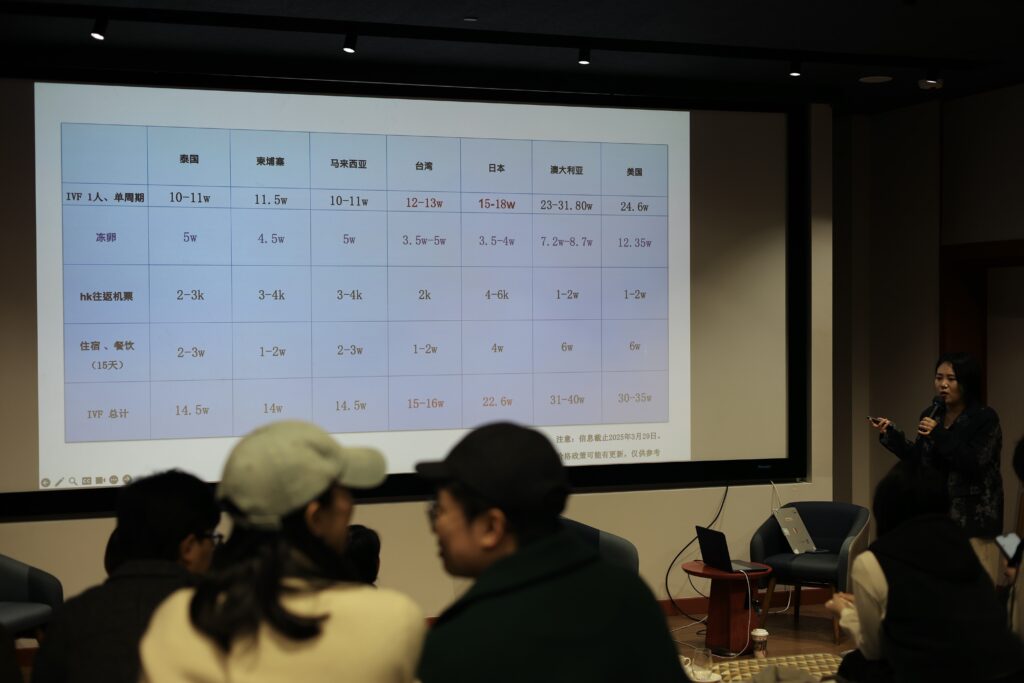
IVF fees in different countries, according to Future Family, an information platform. (Photo by Yi Luo)
Adoption is not a panacea either. Joint adoption by same-sex couples is not allowed in Hong Kong. Adopting as an individual makes the applicant less competitive than married heterosexual couples, as the court considers the child’s interests as the central principle. Even if adopted, that risks the child having only one legal guardian.
A Shifting Public Mood, an Outdated Law
Despite these hurdles, public sentiment is changing. Support for same-sex marriage in Hong Kong has surged from 38 percent in 2013 to 60 percent in 2023, with only 17 percent opposed and 23 percent neutral, according to a study by the University of Hong Kong, the Chinese University of Hong Kong and the University of North Carolina.
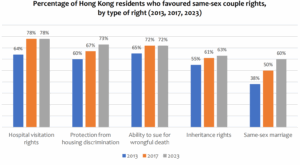
Source: Support in Hong Kong for Same-sex Couples’ Rights Grew Over Ten Years (2013-2023) by the University of Hong Kong, the Chinese University of Hong Kong, and the University of North Carolina
The same survey found that more than 85 percent of residents believe same-sex couples should have at least some of the rights enjoyed by different-sex couples, including hospital visitation and inheritance.
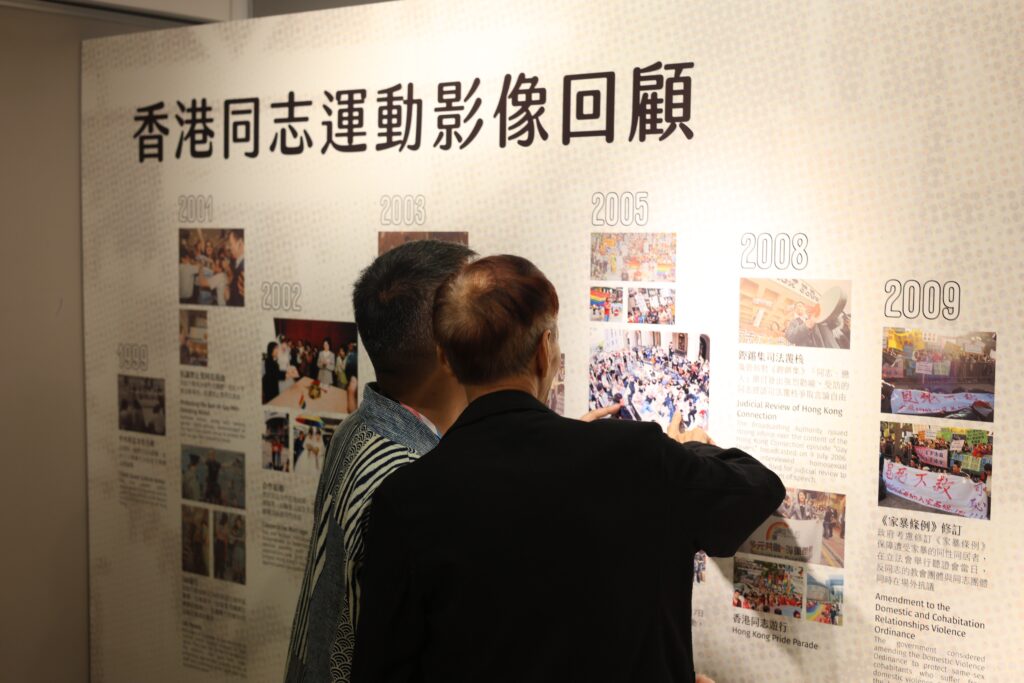
History of HK LGBTQ+ movements, Pride Market 2024. (Photo: Yi Luo)
Yet the law remains frozen in time. Hong Kong’s Marriage Ordinance, last updated in 1971, defines marriage as a union between “one man and one woman,” and even stipulates that marriage can be voided if either party is incapable of “consummation,” which is narrowly defined as penile-vaginal penetration. This not only excludes same-sex couples but also discriminates against heterosexual couples unable or unwilling to have such intercourse.
Conservative Legislature
Lawmaker Junius Ho, known for his critical attitudes toward the LGBTQ community, is a fierce opponent of legalizing same-sex marriage in Hong Kong.
“The monogamous and heterosexual marriage system is protected under the Basic Law and the Hong Kong Bill of Rights. It is the cornerstone of traditional families and must be upheld,” Ho said in a Legislative Council motion debate on Feb. 12, 2025. On that day, Ho moved a motion titled “Upholding the monogamous and heterosexual marriage system in Hong Kong,” which was passed at the meeting. “We cannot allow foreign values like same-sex marriage to undermine our social fabric.”
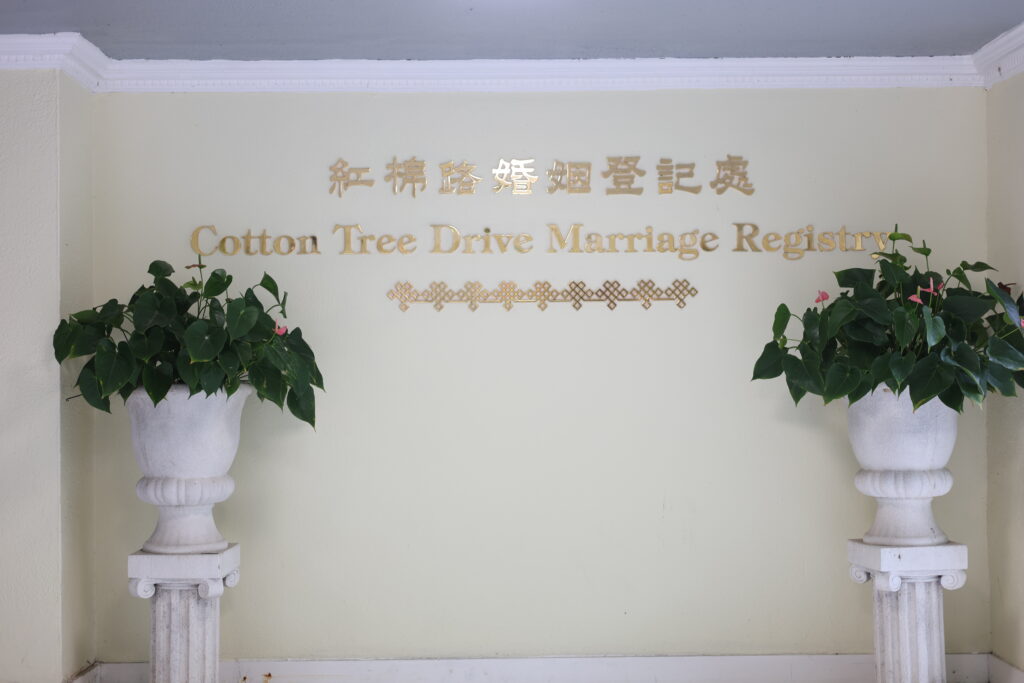
Hong Kong Cotton Tree Drive Marriage Registry. (Photo: Yi Luo)
Lawmaker Regina Ip argues that monogamy is a modern legal principle established after the founding of the People’s Republic of China, not a traditional Chinese value. She cited historical Chinese marriage customs as “one man, one wife, multiple concubines,” emphasizing that polygamy was the norm in ancient China. Yet she cautiously avoids activism. She abstained from voting on the motion.
What’s Next?
Solicitor Jenkins Chan from Daly & Associates law firm said the outcome of the government’s response to the court’s order on legal recognition for same-sex partnerships faces huge uncertainty.
Some observers expect the government to propose a separate civil partnership or registered union system, which would grant some rights without challenging the traditional definition of marriage. This approach technically complies with the court’s order and faces less resistance, as the most pragmatic and politically feasible path.
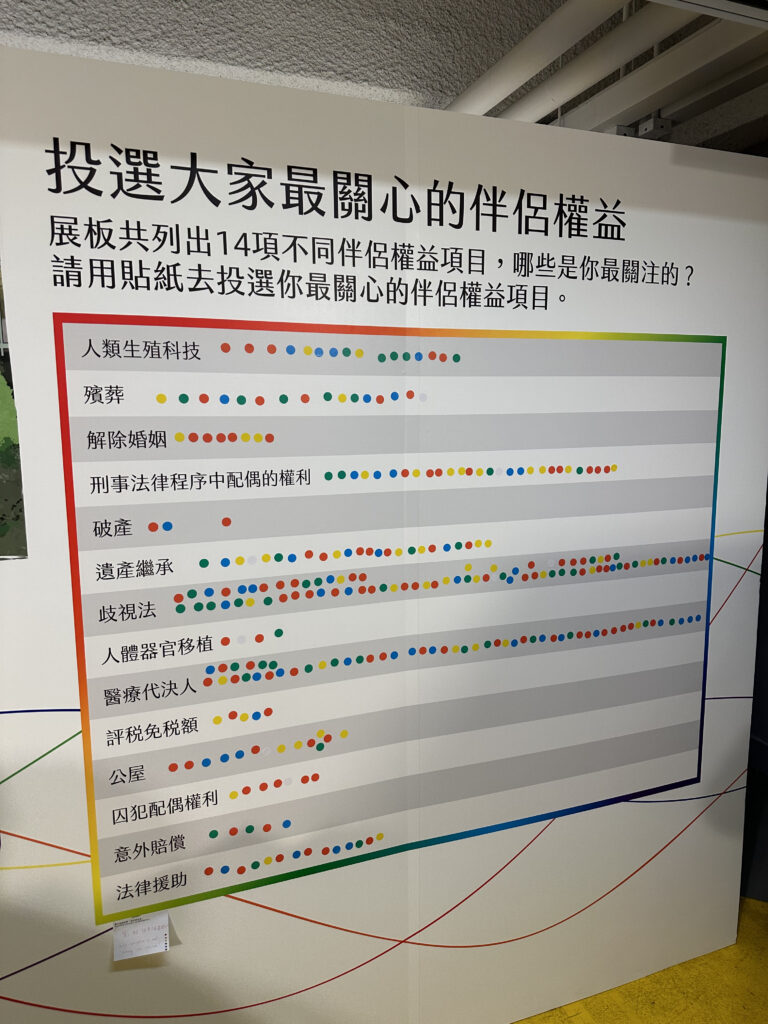
The vote board at Pride Market 2024 shows that the major concerns for the LGBTQ community in Hong Kong are: anti-discrimination laws, participation in medical decisions, spousal rights in criminal proceedings, inheritance rights and the use of assisted reproductive technology. (Photo: Yi Luo)
But measures like civil partnerships have also drawn criticism from some advocacy groups. Hong Kong Marriage Equality believes a separate framework does not have the same social acceptance as marriage, citing countries where couples were denied entry to the hospital room after their loved one was involved in a car accident, even while carrying the paperwork. “It repackages discrimination, rather than eliminates it,” the group argued.
They urge the government to go further and open civil marriage to same-sex couples by redefining marriage as “the lawful union of two persons to the exclusion of all others.” But such a move faces fierce resistance.
There is also the possibility that the government might simply delay reform. This risks triggering renewed litigation.
Beyond Marriage: Rethinking Partnership
Astor Wong of Onebookhalf Gender Space, a social enterprise, suggests that a civil partnership could be more inclusive, potentially covering not only same-sex couples but also transgender, asexual and nontraditional romantic relationships. “The content of the bill matters more than the name of the framework,” she said.
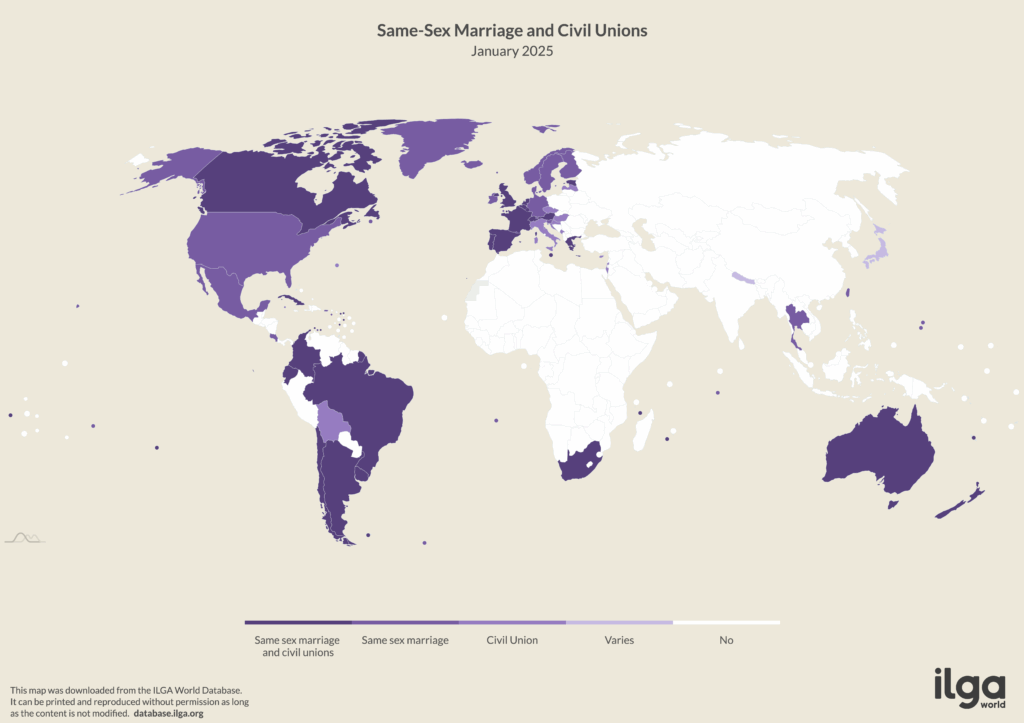
Source: https://database.ilga.org/same-sex-marriage-civil-unions
“I don’t want to enter marriage because the system does not look ideal for me. But it does not mean I have less commitment to my partner,” said Nichole Au, a lesbian who has been with her partner for almost five years.
A Regional Race for LGBTQ Parenting Rights
In Taiwan, same-sex couples have been able to legally adopt children since 2023. Thailand legalized same-sex marriage in January 2025.
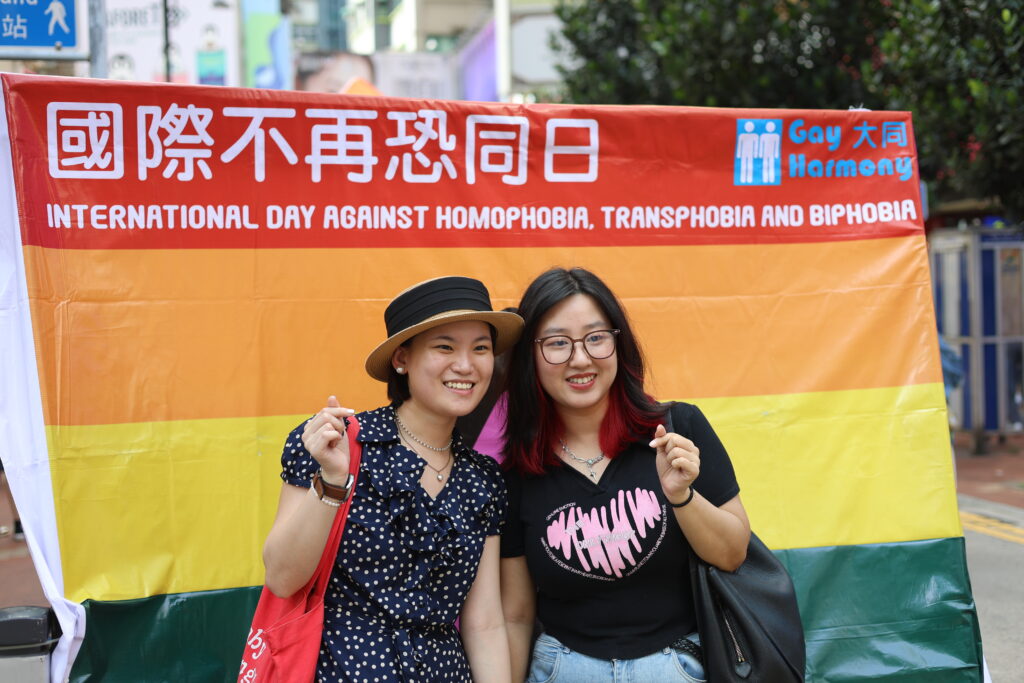
Hong Kong street celebrating 2025 International Day Against Homophobia, Transphobia and Biphobia at Causeway Bay. (Photo by Yi Luo)
Hong Kong’s struggle with a shrinking and aging population is prompting the government to explore a variety of creative solutions. Beyond limited tax breaks and housing incentives for families, recent policy efforts include expanding subsidized child care, piloting flexible work arrangements for parents and making it easier for skilled migrants and overseas graduates to settle in the city. There are also substantial investments in elderly care and community support, aiming to help seniors remain active and reduce the burden on younger generations.
Yet, some experts warn that these traditional approaches may not be enough to reverse the city’s demographic decline. That’s why some policymakers and scholars are urging the government to think more broadly—by embracing nontraditional families, including same-sex couples, as part of the solution.
Allowing same-sex couples greater parental rights—such as access to assisted reproductive technology and joint adoption—could help unlock the family-building potential of thousands of Hongkongers who are currently excluded from parenthood. Removing legal and medical barriers could modestly boost the city’s birth rate, support a more diverse and resilient population, and send a powerful signal that all families are valued. Inclusive family policies could also help attract and retain young talent, both local and international, which is vital for Hong Kong’s long-term economic vitality as its population ages.
“If we could marry where we live, it would be a huge encouragement,” said Angel Leung, a lesbian immigrant planning to marry her partner overseas this year. “Otherwise, we might have to move to a place where our family can truly be recognized.”
Game Not Over
“The September legislation is not the destination. There is still much more to do after that,” said Wong. “Even if same-sex marriage is allowed in September, the rights of transgender, asexual and other minorities still need to be protected.”

Poster of Civil Partnership Forum by Dear Family Hong Kong, Gay Harmony, Onebookhalf Gender Space
As channels for advocacy have been limited, Wong now focuses on public education. “We’re in a transition period. As we increase social recognition and understanding through public education, that’s also paving the way for social progress.”
Others are taking a longer-term view. Francis Tang, founder of Gay Harmony, has been busy organizing more events engaging the general public to raise social awareness.
“The process even matters more than the result itself,” Tang said.