
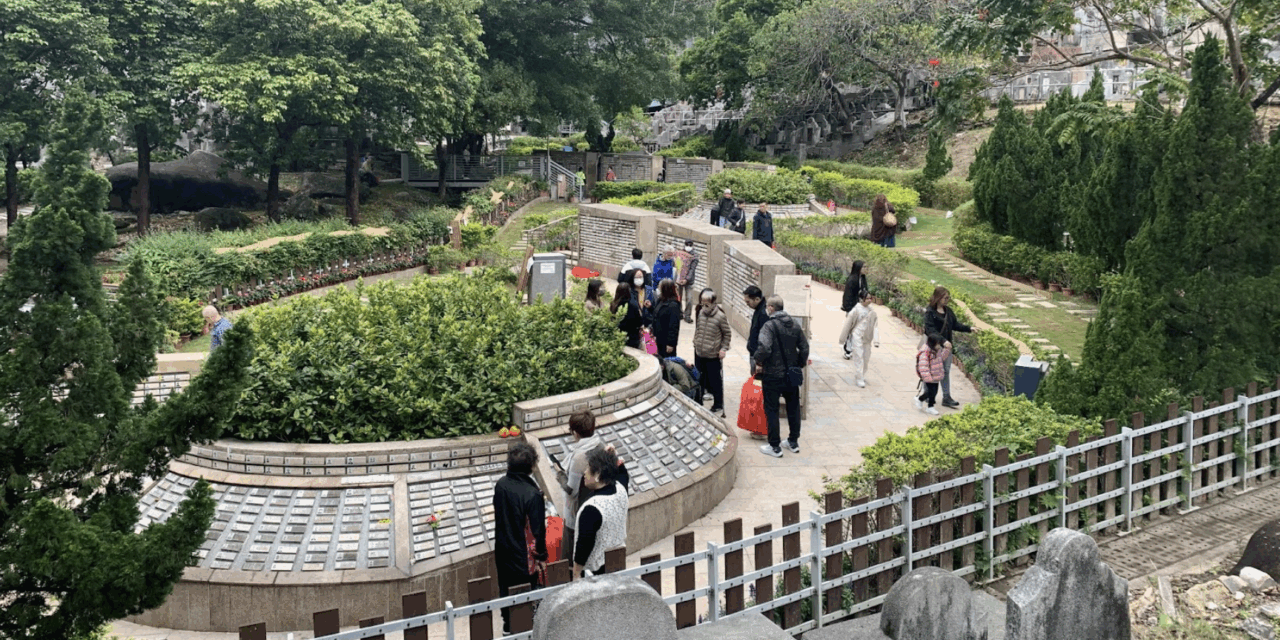
(People paying tributes to the deceased in the Diamond Hill Garden of Remembrance.)
The Choice of Letting Your Loved One Go: Behind Hong Kong’s Push for Green Burials
By Yonger Shen
During his morning hikes half an hour from his neighbourhood in Chai Wan, Elvis Tsang, an accountant, sometimes takes a detour from the trails and steps into the nearby Cape Collinson Garden of Remembrance, one of the garden burial sites Hong Kong is promoting.
Several memorial walls, each bearing hundreds of plaques engraved with names of the deceased, stood on patches of grass no larger than two basketball courts. Behind them was just emptiness. The ashes of the deceased had long been cast into the earth.
His father was one of them.
Four years ago, during COVID-19, Tang’s father was diagnosed with bladder cancer that had already spread at age 87. During one of Tang’s weekly visits to see him at a nursing home, the father suddenly brought up a last wish.
“You may scatter my ashes after I die,” he told his son.
Tang wasn’t expecting to hear it. They had rarely talked about death, not to mention the postmortem arrangement. On February 26, 2022, a few months after the father passed away, Tang, together with his mother and two cousins, scattered the ashes at the Cape Collinson Garden of Remembrance, just as the other 8,436 deceased were buried in Hong Kong that year.
“If he hadn’t said it, I would have followed the traditional way, putting the ashes in a niche,” Tang said.
As a response to the long-standing shortage of public columbarium niches in this crowded city, the Hong Kong’s Food and Environmental Hygiene Department (FEHD) has been vigorously promoting green burials since 2011. According to FEHD’s data, however, as the number of Hongkongers choosing garden burials increased steadily from 3,005 to 8,522 in the past decade, the figure of sea burials hovered around 1,000.
Rituals and conventions around death are often hard to change, for death extends beyond individual’s matter—it is deeply tied to family, religion, and customs. Burials serve not only for the deceased, but also as a space to channel the inexpressible grief of the bereaved. In Hong Kong, despite the fact that columbarium interment remains the dominant practice, the widening gap between garden and sea burials today reveals Hong Kong’s struggle to reconcile enduring customs about memorials with people’s evolving attitudes toward death.
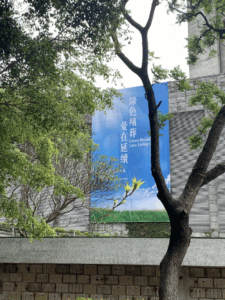
(The FEHD’s promotion of green burials in the Diamond Hill Columbarium.)
A Simple and Quick Handle
In Hong Kong, many families avoid the death talk because mentioning death might bring bad luck as perceived in Chinese culture. Mandy Kung’s grandfather passed away in 2019 without talking about the funeral arrangements beforehand.
Kung’s parents decided to follow a conventional burial, namely, to preserve the ashes in a public columbarium niche after cremation. But after a long wait for a spare position, they only got one at the Tsang Tsui Columbarium, which is 50 kilometres away from her parents’ home in Chai Wan. So they switched to garden burials, eventually casting the ashes in 2020 at the Cape Collinson Garden of Remembrance nearby.
A year later, Kung’s grandmother died. Following the Chinese tradition of burying loved ones together, Kung’s parents scattered her grandmother’s ashes in the same garden, then added her grandmother’s profile to the commemorative plaque they once set up for her grandfather.
It was as small as a mailbox, as Kung described, with a joint photo on it, which was made from the individual pictures of her grandparents.
Kung felt that their consideration of burial options for her grandparents was more of a practical one. She has always learned from the news that there weren’t enough public columbarium niches in Hong Kong, and the private ones were too expensive.
In Hong Kong, private niches could cost from several thousand to tens of thousands of Hong Kong dollars, or even more than a million dollars. Although a public columbarium niche has a much lower price, it often requires a longer wait due to Hong Kong’s shortage of land.
Lok Chung, a funeral director and founder of Peace of Mind Funeral Services, considered the growing adoption of garden burials as a reflection of people’s evolving attitude towards death and funerals. “In the past few years, it seems that people have become less insistent on the conventional funeral culture,” Chung said, “and developed a preference for simple treatment, which needs to be quicker, less troublesome, and also a lower price is better.”
The passage of dealing with death
Every Saturday morning, a free ferry provided by the FEHD will depart for a designated sea area, allowing up to 25 families to scatter ashes. Yet, low cost has not convinced more people to adopt sea burials. The sailing could last for about five hours, from 9 a.m. to 2 p.m., with the uncertainty of being cancelled because of weather conditions.
“We just want the simplest way to dispose of the ashes. Garden burial is the most convenient, since there is no need to wait a long time for a niche, nor does the arrangement have so many restrictions as in the case of sea burials,” Kay Lam said, who scattered her parents’ ashes in the Wo Hop Shek Garden of Remembrance, thinking that there was no use in keeping the ashes.
Lam was a design student, and three years after her dad’s garden burial, she could still draw a vivid sketch of the metal scattering device she held to scatter the ashes, which looks like a silver bucket with a handle controlling the speed of ashes falling.
For her, the hardest part throughout the funeral was to “press the button”—the action which sends off the remains on the catafalque to be cremated. “No matter how I tried, I couldn’t bear to push the button,” said Lam, “pressing that button means I’ll never see them again.”
It took over three months for the cremation and the plaque to be done. Slowly pulling up the handle of the metal scattering device, the gray and white ashes fell on the lawn little by little as Lam walked along the narrow path of the Garden of Remembrance. It was a quick process, only taking less than 15 minutes to finish.
“These rituals were not done for the dead, but for the living to process their family’s death,” Lam said, “for me, I finally came to my parents’ deaths when scattering the ashes.”
Lok Chung got his first garden burial case as a funeral director ten years ago. But letting the ashes fall out of a device seemed a bit cold to him. He preferred people to hold the ashes with bare hands and scatter them into the earth, as a symbolic gesture of letting it go, richer in ritual significance. Some families would accept his advice.
Scattering ashes at sea suits those who prefer “a decisive farewell,” as Chung said. The family just needs to put the ashes in a biodegradable bag offered by the FEHD, then slide the bag down a slender black chute extending into the water. As the bag dissolves on its own, the ashes—as described on the green burials’ website—will “blend with nature and return to nature.”
Joseph Lau, a researcher who has published two books about Hong Kong’s funeral industry, believed that what truly matters in a burial is the “soft moment”—those tender, solemn instants that could linger in people’s hearts longer than the ceremony.
“However, the sea burial ceremony is very simple, and the most challenging point is that for some people, it is not very respectful of the dead,” said Lau, “some people care about their souls after death, and scattering ashes at sea seems like letting a soul drifting with no home to go.”
A Place for Remembrance
On April 3, the day before Ching Ming Festival, the ashes were easily noticed on the sparse lawns of the Tsang Tsui Garden of Remembrance, separated by short white fences and cobblestones along both sides of the pathways.
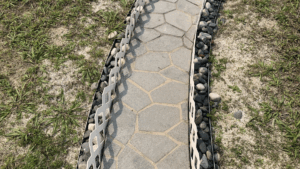
The scattered ashes alongside the pathways in the Tsang Tsui Garden of Remembrance.
The whole garden remained remarkably clean, with no signs of burning incense or candles, nor the usual offerings of fruit or food that would normally appear in Chinese traditional commemoration. If people don’t stay close to see those little commemorative plaques on the memorial walls, they might mistake the place for an ordinary park—quiet, clean, even with a nice view of the sea.
The panoramic view of the Tsang Tsui Garden of Remembrance.But step a little closer, there were tiny bouquets and countless miniatures tucked between the plaques, showing the vibrant personalities of the lives once lived. A small wine pot suggested someone who might love alcohol, and a tiny camera probably indicated that the person had a love for photography. Others included mini Yakult, Komeda coffee cups, dogs, motorcycles, and tiny replicas of delicacies from all over the world, telling stories of those past lives in silence.
“The reason garden burials are more acceptable than sea burials is that garden burials save the tradition of setting up a plaque for the deceased, so that people can come back every year to pay tributes,” said Jennifer Choi, a funeral director. Now, half of the families coming to her would choose garden burials, while she has only received two sea burial cases during her five years working in the funeral industry.
“If you choose your ashes to be scattered at sea, there’s really nothing left,” she said.
Having a settled place for memorial visits was an important rite for Kung and her parents, so they didn’t choose garden over sea burials for her grandparents. They used to bring a large pack of paper-made offerings to the garden and burned them on-site, but with the joss paper burners now requiring booking, they brought only food and flowers this Ching Ming.
Kung’s mother put the flowers in a water bottle and left them on the ground just below her grandparents’ plaque. Following Chinese worship traditions, they placed the food in front of the memorial wall as a sign of respect and love to their ancestors and then took it home with them.
The entire visit lasted no more than thirty minutes, but they came here at every Ching Ming and Chung Yeung Festivals. They rarely spoke, just standing among the memorial walls, blending into the stillness.
Lighting incense and candles has long been a necessary part of the Chinese memorial ceremony. Considering the limited space between memorial walls, burning candles and leaving offerings are prohibited in the Garden of Remembrance, but many people still do so.
On April 8, a staff member surnamed Ng was using a slender spade to scrape away the marks on the ground left by the melted candles in the Garden of Remembrance at Junk Bay Chinese Permanent Cemetery. Then she dragged a big black garbage bag to clear out the bouquets and other offerings left behind. On the day of Ching Ming, she had filled 15 such big garbage bags.
Although Lam believed that the ashes didn’t matter that much, she was still shocked last year when she found the lawn where her mother’s ashes were scattered had been flushed away by the heavy rain.
“I was like, ‘Oh, my mother has been washed away,’” said Lam, “but I clearly knew deep down that my mum’s ashes had gone to who knows where long ago.”
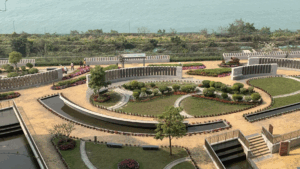
The panoramic view of the Tsang Tsui Garden of Remembrance
New way for grief, or not
The FEHD has provided free ferry rides during the grave-sweeping season since 2014, taking the families to the designated sea areas where their loved ones’ ashes were scattered.
Starting from 2020, the number of these trips doubled from four to eight each year, but still insufficient. Two weeks before this Ching Ming Festival, the green burial website had already noticed that all spots for the memorial sailings had been filled.
But there might be another way to grieve.
Throughout the Cape Collinson Garden of Remembrance, signs directed visitors to a site called “digital worshipping station,” though the facility looked nothing more than a faded green container from the outside. One of the notices on the door read: “Facility damaged, temporarily closed.”
The abandoned digital worshipping station at the Cape Collinson Garden of Remembrance.
“It hasn’t been used in a long time. You can download a mobile app for online memorials,” a staff member said, pointing to a stack of green burial brochures with one page saying, “use internet memorial service, pay tribute anytime, anywhere.”
This referred to the memorial website published by the FEHD in 2010, where people can create memorial pages for their loved ones. Families and friends could write the deceased’s life story and upload photos and videos to these pages, with an option to set it as public or private.
But Lam wasn’t convinced. “It sounds a bit boring,” she chuckled, “if writing online helps, leaving messages for my parents on Facebook is just the same.”
Death in an unbound generation
Mathew Cheng is a funeral director who also founded a social enterprise to sort the belongings of the dead. To him, the growing acceptance of ash scattering indicated a deeper change in Hong Kong: a new generation that values a free and unburdened way of life, even in how they choose to say goodbye to their deceased beloved ones.
In Chinese society, where the concept of family runs deep, the graveyard serves as a physical embodiment of inheritance—a place where the family’s history is grounded in stone and earth.
“But now, after scattering the ashes, people would think that the inheritance lives on in their hearts,” Cheng said, “at the same time, they see themselves and their dead loved ones all as free beings.”
Cheng spotted this feature from the photos that people choose to put on the plaques. Unlike those conventional, serious photos in the past, many people now prefer a more personalised display on their plaque. One of his many garden burial cases, the photo on the plaque showed an elderly couple posing in the Himalayas wearing sunglasses.
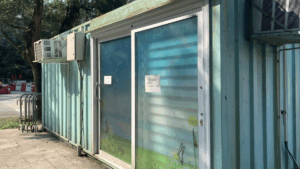
The abandoned digital worshipping station at the Cape Collinson Garden of Remembrance
“These photos reflect a stronger sense of freedom in this new generation,” Cheng said. “They’re not subject to rules; they take life as it comes.”
Like Jake Tsui, who has decided to have sea burials with her parents and brother, death was never a taboo topic in her family since childhood.
Tsui once had an older brother, who passed away at ten months old because a blanket accidentally covered his face, cutting off his breath. The loss was a huge blow to Tsui’s parents, and since then, they have determined to have sea burials together with their first son, for the feeling of being free, not stuck in one place anymore.
When Tsui was around seven years old, one night as her mother was reading the Bible with her, they first talked about the concept of death. Her mother explained that death meant that one day she and Tsui’s father would no longer be there by Tsui’s side.
Tsui remembered herself crying hard that night, but over time, she began to understand.
Her older brother’s ashes were well-kept in a glass cabinet in their house so that “he could always see the family and be part of their daily life,” her parents told her. Next to the urn sat a small photo of her brother, and a red envelope which her parents would change to a new one with a bit of money in it during Chinese New Year and on his birthday.
When her parents told her about their sea burial plans, Tsui recalled: “I told them, ‘Alright, you guys can go travel around the world first. I’ll come find you later.”
To Tsui and her family, the most important thing that life has taught them is to cherish the time with those they love while they are still alive.
“As for after death? Might as well be free,” said Tsui. “Just let the sea carry us.”
Advisor: Wenxin Fan