
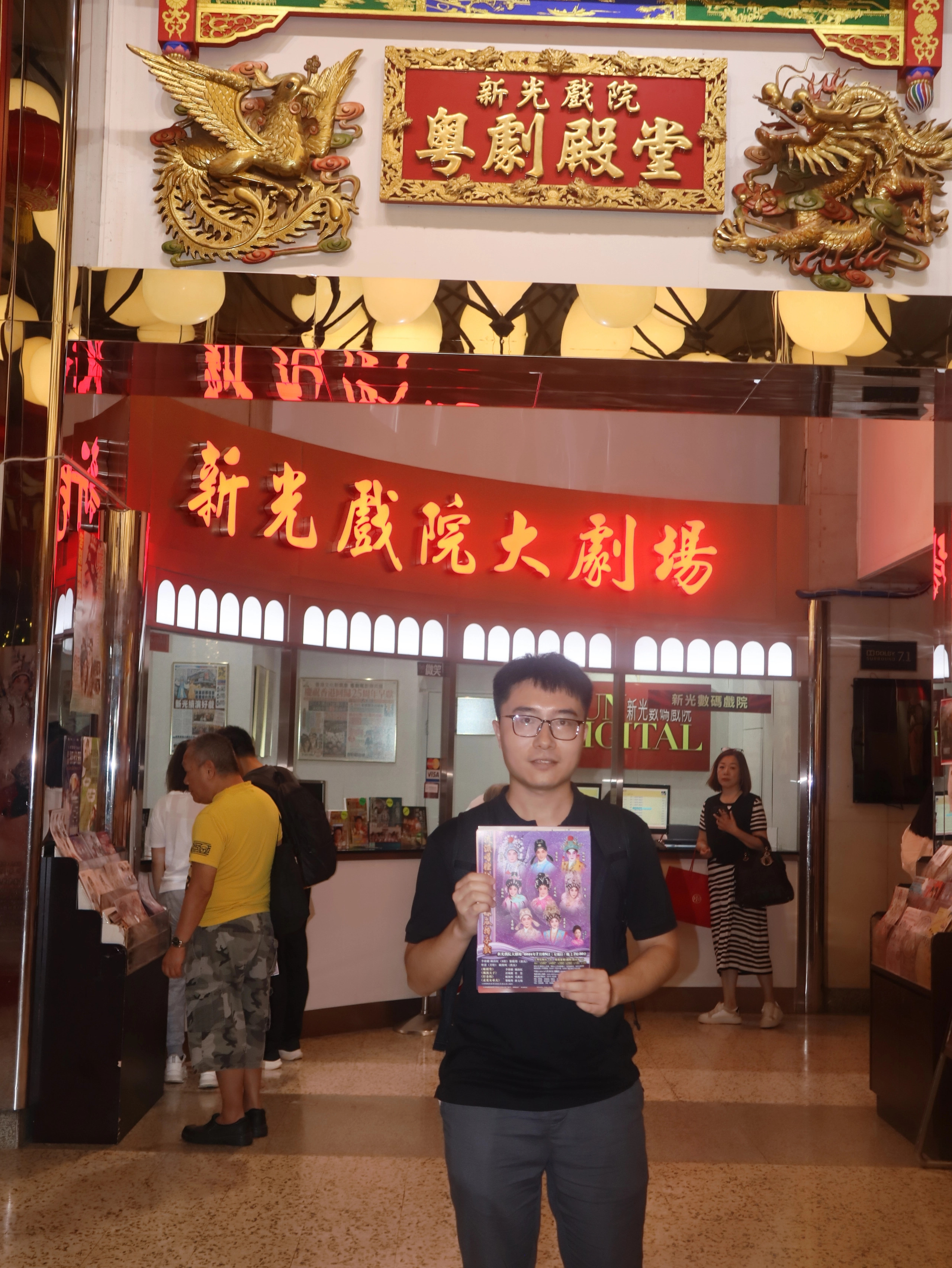
“The first time my mom took me to see an opera since I started learning Cantonese opera was at the Sunbeam Theater…”
At 11 p.m. on March 3, 2025, the Sunbeam Theatre in North Point, Hong Kong, officially closed its gates and turned off the lights, marking the end of its 52-year history as the last privately-run Cantonese opera theater in Hong Kong. When the heavy red velvet curtain came down at the end of the theater’s final production, “Hello, Xiaoping,” it was the end of an era. After the show ended, the audience gave a standing ovation lasting several minutes to show respect. Some fans even attended the final performance multiple times, showing their deep attachment to Sunbeam Theatre. When the neon sign went dark and the metal gate closed, the crowd erupted in cheers mixed with applause and choked sobs.
The Sunbeam Theatre, once a cultural landmark for Cantonese opera in Hong Kong, opened its doors in 1972 during a period of rapid economic growth. This venue became a significant site for the development of Cantonese culture as it transitioned from traditional to modern performances. Initially focusing on film screenings, the theatre evolved into a major hub for Cantonese opera by the 1980s. It has featured renowned actors such as Lam Ka-sing (hailed as a grand master of Hong Kong Cantonese opera) and Pak Suet-sen (a pioneer dedicated to modernizing the art). It has also nurtured rising talents, including Long Guan Tian, the current chairman of the Eight Harmony Association.
As a result, the Sunbeam Theatre stands as a testament to the golden age of Cantonese opera in Hong Kong, earning the recognition as the “temple” of this artistic form, showcasing classic plays and celebrating Cantonese opera stars.
So, what cultural legacy has Hong Kong list the Sunbeam;s demise, and can such a landmark ever be replicated?
Unlike many other theaters that have succumbed to commercial pressures – such as transitioning to hosting other live performances, or screening movies – the Sunbeam Theatre has steadfastly continued its Cantonese opera performances. Over time, it has become the only commercial theatre in Hong Kong that specializes exclusively in Cantonese opera. In 2009, Cantonese opera was inscribed on the list of Important Intangible Cultural Heritage by the United Nations Educational, Scientific and Cultural Organization (UNESCO).
Despite the decline of the Cantonese opera market in Hong Kong from the 1990s to the 2000s, the Sunbeam, resisted pressure and maintained a consistent schedule of performances, thus becoming a stronghold for Cantonese opera performers and enthusiasts.
With the younger generation embracing Cantonese opera, the Sunbeam Theatre played a crucial role in its development and preservation in Hong Kong.
Firstly, it helped sustain the audience and market for this art form. The Sunbeam Theatre provided consistent performance opportunities over the years, allowing performers – especially young ones – to have a stable platforms to home their skills. As the Hong Kong government promotes the preservation of intangible heritage in the new millennium, the theatre also become a central hub for collaboration between government entities and the private sector.
Secondly, while Cantonese opera is an ancient tradition, the Sunbeam Theatre made significant efforts to adapt to contemporary changes. In the 2010s, it embraced modern management practices, introducing features like high-definition live streaming and online ticketing. During the pandemic, the theatre experimented with live streaming its performances, positioning itself as a leader in the digitization of Cantonese opera.
Even before the final curtain came down this year, the theatre had faced the threat of closing down multiple times. It was only through the efforts of a group of cultural figures using their personal funding that the contract could be successfully renewed, allowing Cantonese opera to continue thriving. This closure marks not only the end of an era but also serves as a reminder for the Hong Kong community to keep supporting and paying attention to the heritage and innovation of Cantonese opera.

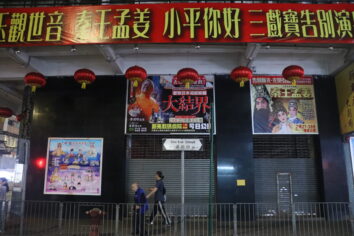

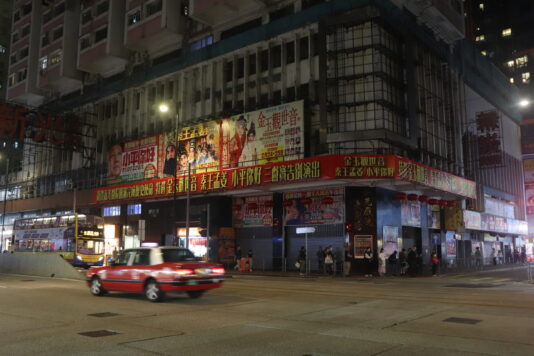
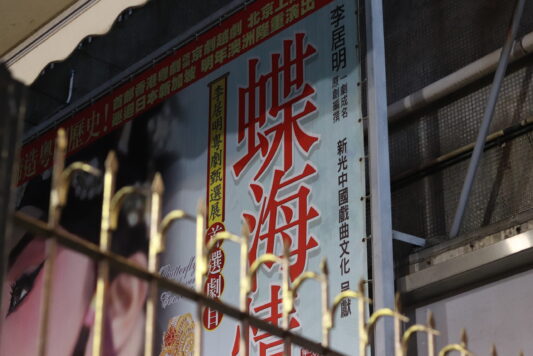
As the curtains rise, the gongs resound, and performers take the stage in vibrant makeup, another Cantonese opera masterpiece begins. This traditional art form, rooted in the Cantonese language, is still performed in Hong Kong and some parts of Mainland China.
The recent closure of the Sunbeam Theatre highlights a pressing issue: Cantonese opera is facing a crisis. There has been a notable decline in the number of audiences attending Cantonese opera performances in Hong Kong, especially compared to the period before the epidemic. The core audience is aging, leading to a succession gap. More importantly, Cantonese opera is closely tied to the Cantonese language; the decline of the language is directly linked to the future of Cantonese opera. This ancient art form urgently needs increased visibility and attention.
Where did Hong Kong’s Cantonese opera originate, and what does its future hold? In light of the stereotype that opera is primarily a pastime for the elderly, how can this ancient art be revitalized for a new era? As the younger generation is increasingly drawn to modern entertainment, what is the future for Cantonese opera?
The closure of the Sunbeam Theatre has significantly changed the performance landscape for Cantonese opera in Hong Kong. Although the government-owned Ko Shan Theatre and Sha Tin Town Hall remain operational as traditional venues, the Opera Centre at the West Kowloon Cultural District (WKCD) Theatre Centre is emerging as a key platform for innovation in Cantonese opera. This shift is aided by government funding and state-of-the-art facilities, including a transformable stage and advanced digital sound technology. According to the Annual Report of the West Kowloon Cultural District Authority for the financial year 2023-2024, the Opera Centre attracted over 20,000 visitors from December 2023 to October 2024, and the Grand Theatre was well-utilized during this period.
It is also worth noting that Cantonese opera is not a grand, unattainable art form. The Leisure and Cultural Services Department (LCSD) actively promotes “Cantonese Opera in the Community” by utilizing venues like the Community Hall in the North District. This initiative not only alleviates the demand for professional performance spaces but also helps to cultivate new audiences. This approach highlights Hong Kong’s efforts to balance the commercialization of Cantonese opera with the preservation of cultural heritage.
Also, temporary bamboo opera stages (locally called Shenggong stages) are built during traditional festivals like Buddha’s Birthday and Tin Hau Festival. These stages have flexible wooden floors, forcing actors to adjust their traditional footwork—a practice that sharpens their basic skills. The performances are often led by second-tier actors, giving young talents valuable hands-on experience.
By incorporating online performances, Cantonese opera is working to expand its audience reach across the region.
The Last Song in the Folds of Time
The neon and LED signs over Victoria Harbour are still shining, the mist is still lightly crowning around Victoria Peak, but the Cantonese opera voices that once dazzled among the beams and pillars is gradually fading away in time. The pulse of Hong Kong is still beating, however, the Cantonese opera, which nourishes the Hong Kong traditional culture, is facing difficulties in passing on the tradition.
Cantonese opera is deeply rooted in Hong Kong history, the development of Cantonese opera also reflects the evolution of this city, which is a vivid landscape of traditional art adapts to the change of era.
In the mid-19th century, Cantonese opera was introduced to Hong Kong by refugee artists and took root and thrived in this place. Traditionally all roles were performed strictly by male actors. However, in 1933, the Governor of the limitation for separating male and female artists, becoming an important turning point in the modernization of Cantonese opera. This reform not only enriched the types of performing, but also demonstrated the art form’s inclusiveness.
From the 1930s to the 1970s, Cantonese opera in Hong Kong entered its golden age. There were many mainland artists came to Hong Kong and brought prosperous art exchange, and the provided suitable venues for performances. The emergence of five major schools of Cantonese opera marked the maturation of artistic creation. Meanwhile, film and Cantonese opera integrated together, not only expanded performing styles, but also expanded audiences.
With the development of society, Cantonese opera faced new challenges and opportunities. After being included in UNESCO’s Intangible Cultural Heritage List in 2009, this art gained more concerns and protections. While the closure of Sunbeam Theatre in March 2025 making people feel sad, but the rise of some new venues and community promotion activities showing that Cantonese opera is seeking to expand development space for itself.
Looking at the evolution of Hong Kong Cantonese opera, we can see that the life of traditional art lies in its constant innovation and adaptation.
According to annual data from the Hong Kong Arts Development Council, the number of Cantonese Opera audience in Hong Kong has shown an overall declining trend, and at the same time, it has also demonstrated a more distinctive phasing characteristics.
Until 2017, the number of Cantonese opera audiences was on an upward trend, even peaked at 639,000 attendances. This upward trend was mainly contributed by the opening of professional venues, such as Ko Shan Theatre, and the continuous increase of free performances. According to official data, the audience with free tickets reached to 144,000 during 2015-2016 season.
Later, the number of audiences started to fall back, and Cantonese opera trapped into bottlenecks. Although the opening of Xiqu Centre in the West Kowloon Cultural District in 2018-2019 boosting the rebound of paid performances, overall audience numbers continued decline. In 2019-2020 season, under the dual impact of covid 19 pandemic and social events, the number of audiences plunged by 30%.
“Nowadays, Cantonese opera is facing an aging audience…”
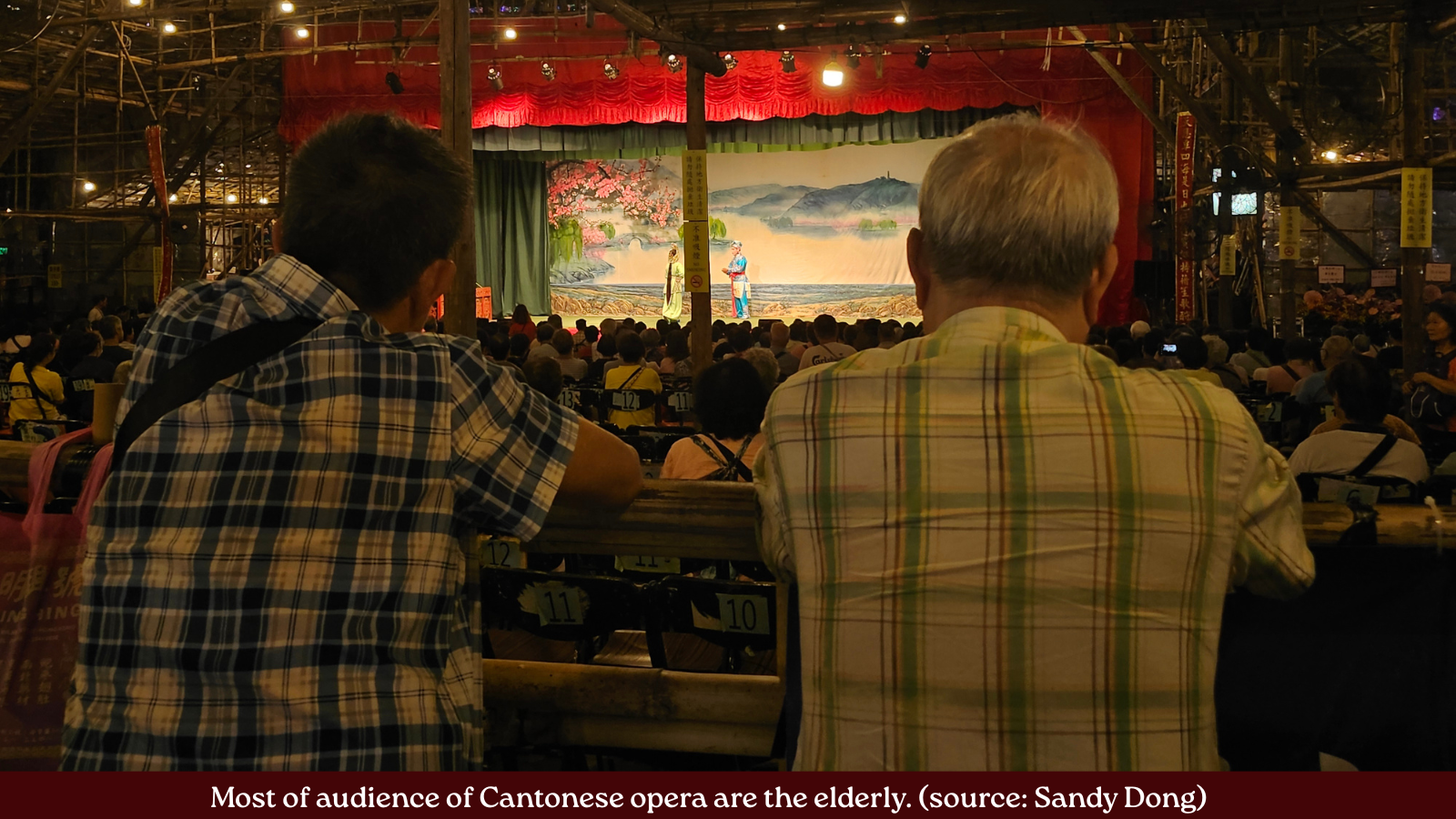
According to the data from a survey conducted by The Education University of Hong Kong, Cantonese opera is facing the problem of “aging audience”, with nearly 40% of core audiences belongs to retirement age group.
It is worth noticing that audience group also demonstrated three characteristics: the number of female audiences higher than male audiences; most of audiences are non-working individuals; and a polarized attendance frequency– 57% of respondents never have habit of appreciating opera,
This survey reflects the current challenges in promotion of and overly relies on the cultural consumption habits of the retired group.
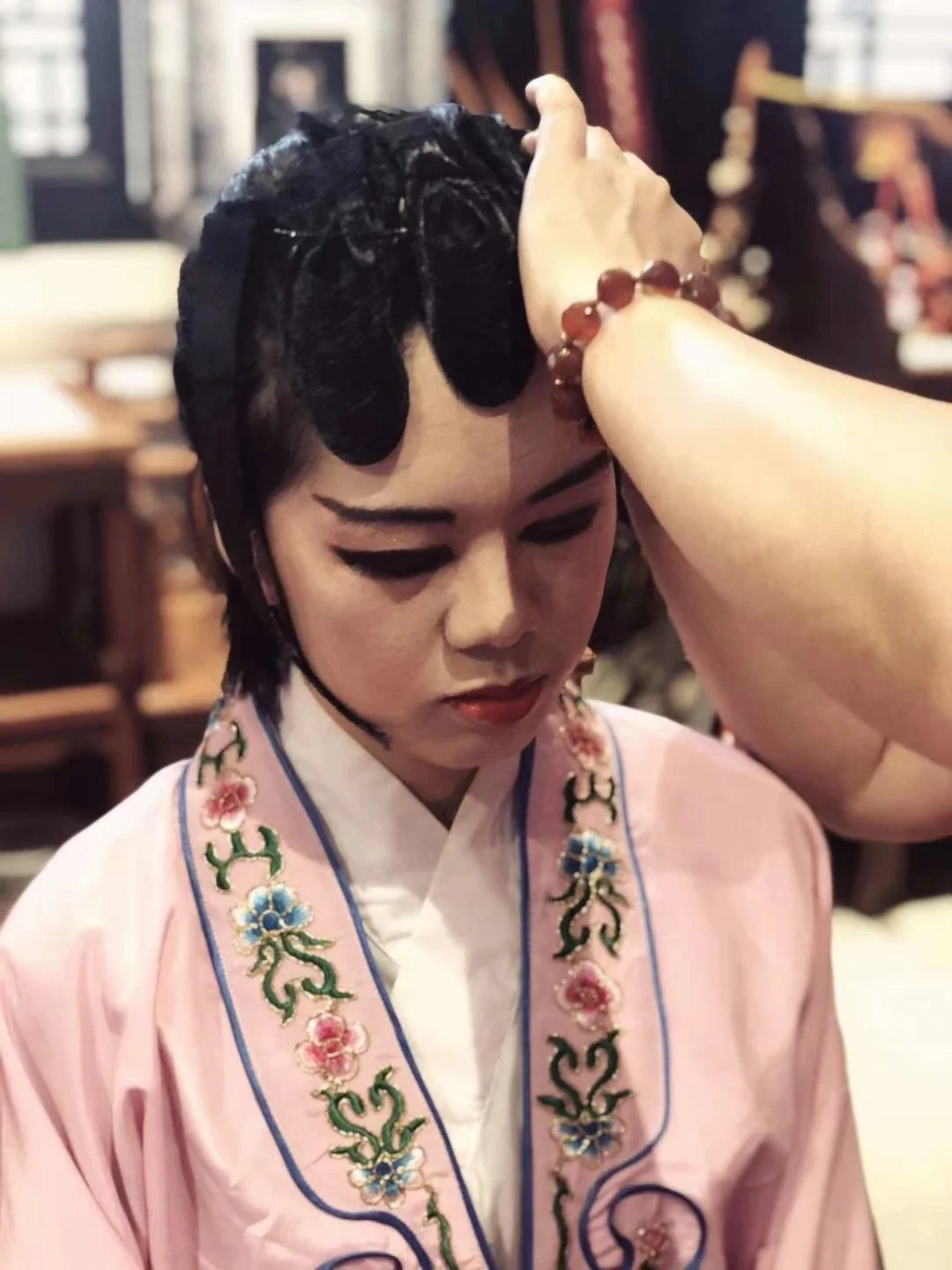
Albow AI is 23 years old. Her grandmother loved Cantonese opera, so she watched it on TV with her grandmother at a very young age. When she was 8 years old, she started to learn how to sing Cantonese opera, which she said has become an important part of her life, but she also talked about the nostalgia that there is almost no one around her in her age group who loves Cantonese opera.
“There are only one or two people of my age around me who love Cantonese opera, which seems very unfortunate to me, because appreciation of Cantonese opera is actually regardless of age, I hope that the culture of Cantonese opera can get more promotion.”
Kevin Chau, who just graduated from university, has also been a fan of Cantonese opera since he was a child. Initially, he was attracted by the colorful costumes and make-up of Cantonese opera, and then fell in love with the ambience of the Cantonese opera theatre, so nowadays whenever he has the time, he will buy a ticket and go to the venue to watch the show. When it comes to the plight of Cantonese opera, he believes that the main dilemma at present is that there is a shortage of young actors.
“I feel that there are fewer and fewer actors nowadays, and it’s not easy to produce talent. The actors of the older generation have basically retired, and the remaining young and middle-aged actors lack a little bit of spirit, so it seems that there is a shortage of young actors and actresses.”
A Symphony of Old and New
Sun Yung, a 33-year-old Cantonese opera actress, was interviewed backstage after portraying Lin Daiyu, a character who becomes immortal after her death in the play. She comforted Jia Baoyu, encouraging him to let go of his feelings of Daiyu.
She was born in a family of artists: her mother had been involved in Cantonese Opera for several generations. Growing up in this environment, she was naturally drawn to Cantonese opera.
When visiting Sung Yung’s Instagram, you’ll often find her sharing her daily routine of performing Cantonese opera alongside other artists. She believes this is a crucial way to attract new audiences. As a young practitioner of Cantonese opera, she notes that many of her peers focus on platforms like Xiaohongshu and Instagram because visuals are the most effective way to engage young people. When they see beautiful costumes and sparkling headdresses, many naturally become interested and choose to learn more about the art form.
Additionally, she highlighted an important direction for innovation in Cantonese opera: the integration of traditional arts with modern cultural elements. This innovation goes beyond merely enhancing performance styles; it also aims to create a new cultural experience. For instance, through co-branding with contemporary brands, classic costume patterns and elements of Cantonese opera can be incorporated into trendy fashion items. For example, the inheritor of a costume factory has brought Cantonese opera costume elements to comic conventions. They launched cultural and creative products that combine traditional patterns with modern style, such as dolls, keychains, and fridge magnets. There is also potential to blend these traditional performances with popular music genres such as electronic music and rap, which appeal to the younger generation. For example, the rap song ‘Great Ambitions(大展鴻圖),’ which recently became very popular on social media like Douyin, samples the classic Cantonese opera ‘The Princess Changping(帝女花)’ in its introduction. This is definitely a successful combination.
Innovations in Cantonese opera need to focus on the younger generation, proactively breaking down their stereotypical image of opera, and using a form they are familiar with as an “entry medium” to Cantonese opera. In fact, there have been successful cases in Mainland China where Peking opera has been co-branded with sports brands, and “national fashion”(國潮)has become the design direction of many products, proving that traditional culture have strong commercial potential. Combining Hong Kong’s local hip brand resources with the characteristics of Cantonese opera may also create a cultural innovation paradigm with a unique Hong Kong style.
“Like fine tea, Cantonese opera needs time to savor its depth…”
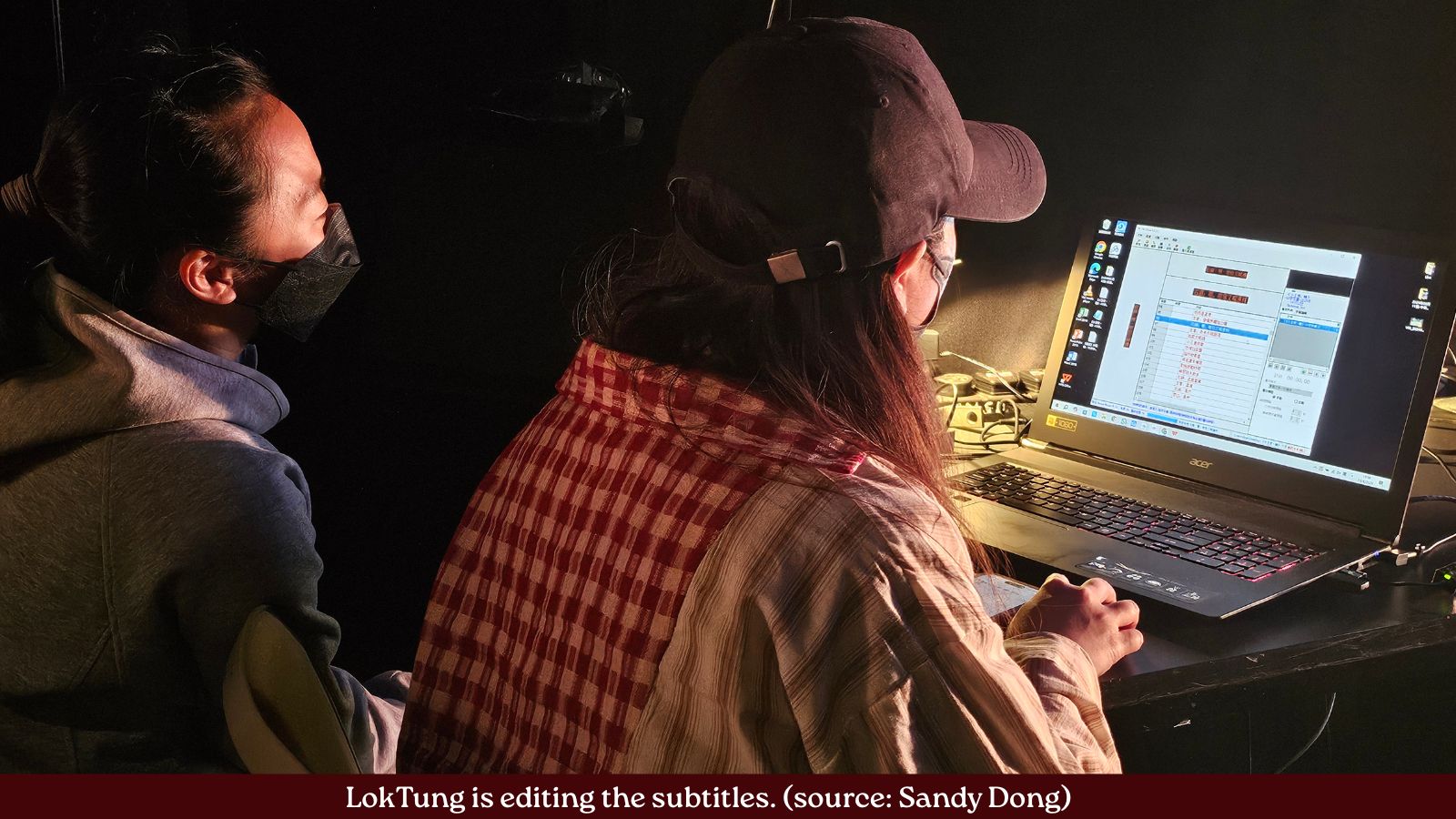
Chow Loktung is a young Cantonese opera actress who is making her debut as a playwright at the Ko Shan Theater. On this particular night, her new play, The Tragedy of Xiaoyu: Legacy, has received a grant from the Hong Kong Cantonese Opera Development Fund, allowing it to be performed for two consecutive nights at the theater. In this, production, she highlights the combination of themes from the recent hit movie “The Last Dance”(破地獄), which introduces a traditional Hong Kong funeral ceremony, aiming to send the dead person into the next world. Chow’s play also features elements of this theme, and introduces an innovative format, as the music director is very familiar with blue screen technology.
As a young scriptwriter, she, along with several colleagues, has been creating Cantonese opera sketches online. Due to the pandemic, the organizers initially launched a live broadcast of Cantonese opera on the Internet, and this format has continued since then. Chow misses such a platform and opportunity, as it helps to expand the reach of Cantonese opera. The story she has complied this time is an extension and elaboration of a previous script.
Chow’s initial encounter with Cantonese opera was accidental. She was originally studying Chinese dance when she unexpectedly discovered Cantonese opera. Intrigued, she continued to pursue it as a hobby. After graduating from university and contemplating her career path, she decided to embrace this passion that she couldn’t let go of. As a result, she pursued an additional degree and has since started her career in Cantonese opera.
Addressing Cantonese opera’s aging audience dilemma, she believes that young people today may come to appreciate its emotions and mindset more as they grow older. However, this doesn’t mean that innovation and promotion of Cantonese opera are unnecessary. It’s important to raise awareness about this art form, which showcases local culture, and to educate them on how to appreciate it while enjoying it.
In terms of innovation methods, it is crucial to effectively utilize social media platforms. She has observed that young people today are not only using Facebook and Instagram but are also engaging with Xiaohongshu and Douyin. Additionally, she is exploring how to leverage live streaming to increase the visibility of Cantonese opera to a wider audience.
She believes that some opera promotions in Mainland China are performing better than those in Hong Kong. For instance, Cantonese opera in Guangdong has produced plays like The Battle of Tiancefu, which incorporates animation elements and has attracted a younger audience. However, it’s important to acknowledge the government support that enables these innovations. Many opera groups in Mainland China receive government funding, while troupes in Hong Kong are self-sustaining. Consequently, many large-scale new productions in Hong Kong are struggling to support themselves, highlighting a deeper dilemma faced by the Cantonese opera scene due to these innovations.
“Some traditional audiences resist new approaches,” Chow acknowledges, viewing innovation and preservation as equally crucial. “Experimental formats help diversify the art and create growth opportunities, but classical repertoire must endure.” She emphasizes Cantonese opera’s linguistic traditions—from its predominantly Cantonese delivery to specific Mandarin-performed conventions—as roots requiring careful preservation. For Chow, innovation represents not radical change, but a delicate balancing act between heritage and evolution.
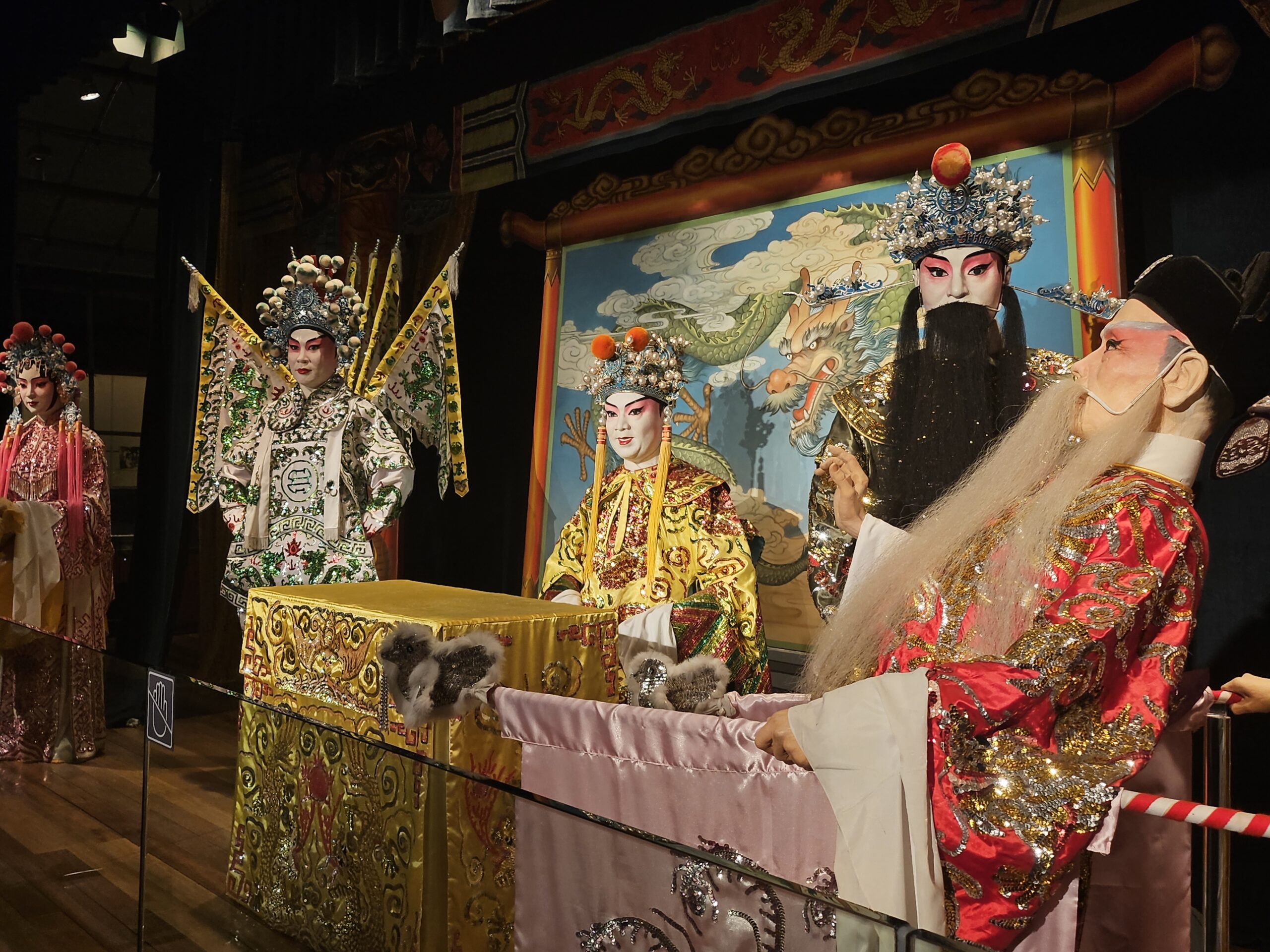
Cantonese Opera Exhibition in the Hong Kong Heritage Museum (source: Ivy Chen)
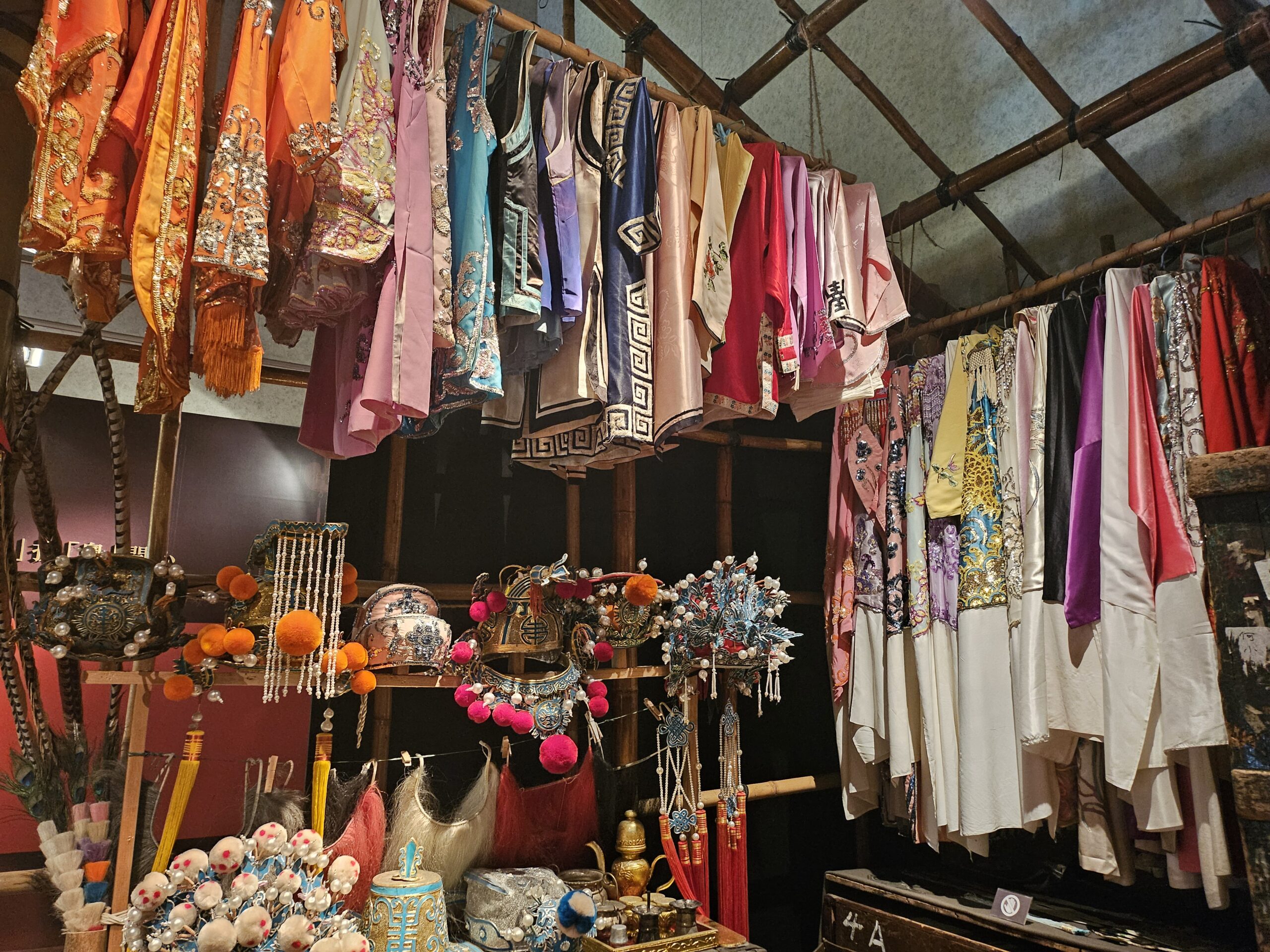
Cantonese Opera Costumes at the Hong Kong Heritage Museum (source: Ivy Chen)
The sustainable development of Cantonese opera is not only a solo effort by troupes and performers, and the Hong Kong Government has adopted a multi-pronged approach. Through the Cantonese Opera Development Fund, the Hong Kong Government provides financial support for the nurturing of Cantonese opera talents and artistic innovation. For example, in the 2022/23 Budget, the government added 100 million Hong Kong dollars to the Cantonese Opera Development Fund to support the long-term development of the Cantonese opera community. The priority booking policy reserves 70 performance days a year for professional troupes in major public venues. Most importantly, Cantonese opera is included in the Blueprint for Cultural and Creative Industries to ensure continued policy and financial recognition of Cantonese opera as an intangible cultural heritage.
When Language Becomes Melody
Hong Kong is a place for Cantonese to exist, when Cantonese is gradually declining on the Chinese mainland nowadays.
According to Hong Kong Census and Statistics Department, the status of Cantonese “super-core language” in Hong Kong society didn’t being attacked significantly, with 90% of residents having proficiency for daily communication. Besides, self-evaluation of Cantonese proficiency of 6-65 years old people increased notably, and the ratio of people who regarding themselves master Cantonese very good increased from 85.9% in 2012 to 94.4% in 2021.
Overall, as a symbol of Hong Kong traditional art, Cantonese still serves a robust function in cultural identity.
However, although data is positive, Cantonese faces crisis. According to Hong Kong’s Education Bureau 2023 “Primary and Secondary School Curriculum Guidelines”, currently, over 70% of public primary schools and 40% secondary school adopt Mandarin as main teaching language, which increase by 35% and 18% respectively compared to 2015. This policy sparked intense societal discussion. Linguist Professor Li Chucheng highlighting that changes in instructional language will directly affect linguistic habits of next generation.
More importantly, UNESCO’s 2022 “Atlas of Endangered Languages” categorized Cantonese as a “vulnerable” language, citing dual threats of “institutional squeeze” and “broken intergenerational transmission.”
This crisis not only exist in educational area, but also extend to cultural creation. Legislative Council member Mr. Ma Fung-kwok, Chairman of the Cultural Affairs Committee, has repeatedly emphasized the inseparable link between language education and cultural preservation, pointing out how removing a language from mainstream education and artistic creation erodes its cultural foundations.
Cantonese opera relies on the Cantonese, while simultaneously revitalizing the language through artistic innovation. Their fates are fundamentally interrelated and inseparable.
First of all, the tonal system of Cantonese gives Cantonese opera a unique singing style.
Cantonese opera has highly varied tones, with a total of nine distinct tones, five more than Mandarin. This rich diversity in pitch is directly reflected in the composition of its vocal melodies. Originally, Cantonese opera did not employ the Cantonese language but instead used “theatrical Mandarin” (戲棚官話, Xìpéng Guānhuà), a stage dialect resembling Guilin Mandarin. After transitioning to Cantonese, performers had to adapt to the language’s low-pitched nasal tones and intricate tonal system, leading to the development of the distinctive pinghou (平喉) singing method—a natural vocal style that utilizes chest voice.
Moreover, the special rhymes of Cantonese, as well as the pronunciation of certain words, require that the lyrics of Cantonese opera strictly follow its phonetic laws, forming a unique lyric structure.
As a form deeply rooted in its linguistic tradition, Cantonese opera extensively employs the Cantonese dialect in its scripts and lyrics. This practice not only preserves archaic Chinese vocabulary, such as tai (睇, “to look”) and keoi (佢, “he/she”), but also reinforces the dialect’s grammatical structures and idiomatic expressions through staged performances. For instance, folk narrative-singing forms like nanyin (南音, Cantonese balladry) and muyu (木魚, wooden fish chanting) integrated into Cantonese opera are directly adapted from Cantonese regional ballads, further solidifying the cultural prominence of the dialect.
Furthermore, the jargon and dialectal features of Cantonese opera have driven the popularization and enrichment of the Cantonese language.
Languages evolve through everyday usage, and numerous Cantonese colloquialisms originate from opera-specific terminology. Examples include baau duk (爆肚, improvising dialogue) and sa fa gong (耍花槍, flirtatious banter)—terms that transitioned from the stage to daily vernacular, becoming widespread expressions in Cantonese-speaking communities.
On a deeper level, the interaction between Cantonese and Cantonese opera is, in fact, shaping the identity of the Cantonese community, and the inclusion of Cantonese opera on the United Nations’ list of non-heritage sites in 2009 has reinforced the international influence of the Cantonese language as a cultural vehicle.
Moreover, academic research has also confirmed the interactions between the Cantonese language and Cantonese opera over time. For example, the University of Hong Kong’s analysis of the sound system of “theatrical Mandarin” has verified that the language of Cantonese opera includes elements of Ming and Qing dynasty Mandarin, Cantonese dialect, and other Chinese variants, demonstrating the interwined and mutually reinforcing development of Cantonese opera and the language.
As evidenced above, Cantonese and Cantonese opera are inextricably interwined, forming a deeply interconnected bond across all dimensions. This raises a critical question: Does such interdependence imply that only Cantonese speakers can fully appreciate the artistry of Cantonese opera? Is proficiency in spoken and written Cantonese the primary barrier to its broader dissemination?
The Show Must Go On
Cantonese opera, as a form of drama with a long history, has shone brilliantly across centuries, holding profound cultural influence and identity-shaping significance for Hong Kong and the broader Cantonese-speaking world.
However, as technological advancements reshape entertainment preferences, particularly among younger generations, the 2025 closure of Hong Kong’s Sunbeam Theatre reflects multiple crises: an aging audience base, the loss of the younger generation, and the marginalization of Cantonese opera in the education system. These shifts, like relentless waves, continuously erode the sustainability of this traditional art form.
Cantonese opera practitioners and various organizations are working to address the challenges faced by the art form. They are increasingly utilizing social media platforms to engage younger audiences with vibrant visual effects. Additionally, they are incorporating modern and cinematic elements into traditional performances to attract more interest in Cantonese opera. Innovations in digital technology at major theaters are enhancing stage effects, and the Hong Kong government is providing support through funding schemes and favorable policies.
However, it is important to note that a careful balance between innovation and preservation must be maintained. Excessive commercialization may dilute traditional characteristics, while rigidly adhering to established conventions makes it difficult to attract new audiences. The future of Cantonese opera also depends on deeper issues: how to maintain Cantonese as a cultural foundation in the context of globalization, and how to encourage the younger generation not only to “see” Cantonese opera but to actively participate in its inheritance. The answers to these questions may require more support, allowing this art form to endure and evolve through challenges in the long road ahead.
Ultimately, the crisis facing Cantonese opera is fundamentally a modernity dilemma of traditional culture. Its survival concerns not only the art form itself, but also how Hong Kong, as a city, defines its cultural identity. In this international metropolis, the Cantonese opera lyrics echoing between the theater’s beams and pillars are still urgently seeking ways to engage in dialogue with the new era.
Credits
Advisor: Neil Gough
Multimedia Producers: CHEN Xuhan & DONG Jie
Thanks to: Sun Yung, Chow Loktung, Albow AI & Kevin Chau