
According to the Hong Kong population projections from 2022 to 2046 released by the Hong Kong Government Statistics Department, it is estimated that by 2026, the population aged 65 and above will account for 26% of the total population, and will increase to 31% by 2031.
As the population ages, more medical and social care will be necessary to meet the needs of the elderly. According to the Elderly Services Plan issued by the Elderly Commission, “aging in place” is the government’s policy and the wish of the elderly. However, as far as long-term care services are concerned, the waiting list for residential care services is currently much longer than the waiting list for community care services.
The above plan also mentioned that it is expected that about 64,000 residential care service places will be required by 2030, and when demand reaches its peak in 2051, there should be about 98,000 residential care service places. Considering the shortage of land and manpower, and the time it takes to plan and put subsidized hostel places into service, it is difficult to meet the above needs.
With the advent of the COVID-19 pandemic, Hong Kong’s elderly care services and the elderly themselves have been severely affected. During the pandemic, elderly care services could not be carried out, and the elderly were isolated at home and unable to go out, which led to psychological problems.
As reported by the Hong Kong Jockey Club Centre for Suicide Research and Prevention, the suicide rate in Hong Kong is highest among people aged 60 and above. Factors that cause suicide among the elderly include mental health problems such as depression and anxiety.
To solve the problems faced by the elderly in their care, the government adopts a comprehensive approach to promote their physical and mental health, providing services including prevention, early identification and timely intervention, treatment and rehabilitation services for those in need. Government and non-government organizations are working hard to improve elderly care services, but they face various challenges in the development process.
To help elderly persons continue living in the community and lead a more active life, the Social Welfare Department of the Hong Kong government has upgraded most of the multi-service centers and social centers for the elderly into District Elderly Community Centers and Neighbourhood Elderly Centers from 2003.
These centers provide elderly persons and their carers with a comprehensive range of support services. They can access various services here, such as health education, meal services, social activities, and more.
For elderly individuals in worse health who may require additional services and care, the Social Welfare Department also has a subsidized program called Long Term Care Services. However, only those assessed with moderate or severe impairment can join the waiting list for Community Care Services and Residential Care Services.
Elderly with moderate or above impairment who don’t want to leave home usually choose Community Care Services. According to data from the Social Welfare Department, by the end of March 2025, the average waiting time for Day Care Centres is six months, while for the other two types of services, it’s 11 months. Even those with mild impairment have to wait about 6 months for basic home care support.
This systemic gap leaves many seniors without timely assistance. As Mary Yan, founder of Aging Grace Care Service, explained, “Many seniors don’t meet the assessment criteria, but that doesn’t mean they don’t need support.” Her organization provides paid services to help these people.

Mary Yan and some members of the Amaing Grace Care Service (Source: Amaing Grace Care Service)
The charges for elderly services given by these self-financing organizations are relatively high, ranging from HK$62 to HK$160 an hour, based on the Consumer Council’s research. But they offer quicker and more flexible services, which helps ease the pressure on waiting lists and care facilities.
Aging Grace, for instance, combines meaningful conversation, cognitive training, and elderly exercise to combat isolation-driven deterioration.
Yan emphasized the importance of their work, “COVID and migration have intensified loneliness. Many elderly people get used to staying at home and avoiding socializing. They stop moving around, and their physical health deteriorates.” She aims to alleviate the situation through early intervention and personalized support.
One special feature of the organization is that all the services are provided by registered social workers who are over 50 years old. Yan introduced, “Many of them are retired, so they don’t have much financial pressure. They usually have experience taking care of their older parents, which allows them to handle situations and establish relationships with the elderly more easily.
“Moreover, as these individuals are entering their later years, they are more likely to understand the physical and emotional needs of our clients.”

The organization won an award from the Jockey Club 50+ Co-Creation of Abundance Program (Source: Amaing Grace Care Service)
Ling Wong joined Aging Grace three years ago, and she said, “Doing this not only helps others but also helps myself. It gives me more opportunities to communicate and interact with people. While doing activities with the elderly, both my body and mind are also strengthened.”
The regular process of Wong’s service (Sources: Xinyue Tang & Xindi Xie)
But this approach brings some challenges for Aging Grace’s continuous operation. Yan said, “Our colleagues’ health also requires regular check-ups, and their workload shouldn’t be too heavy. In addition, some of them need to enjoy their retirement life. For example, they might travel, so we have to hire more people and adjust the team accordingly.”
According to Yan, it is also difficult for them to insist on preventive work because families often don’t realize the urgency until it’s too late. She said with a sigh, “They may not be aware of the need for assistance and are hesitant to pay for extra services. But prevention is really better than treatment.”
In this case, public education becomes essential. Yan often collaborates with the community to hold talks for caregivers, reminding them about the importance of prevention.
As she has mentioned on many occasions, “It’s dangerous to assume that as elderly people age, they are bound to have poor memory or they are just complaining when they feel down. Both cognitive and emotional issues should be addressed as early as possible. This helps delay the progression to more severe conditions and, in turn, reduces the strain on the overall system.”
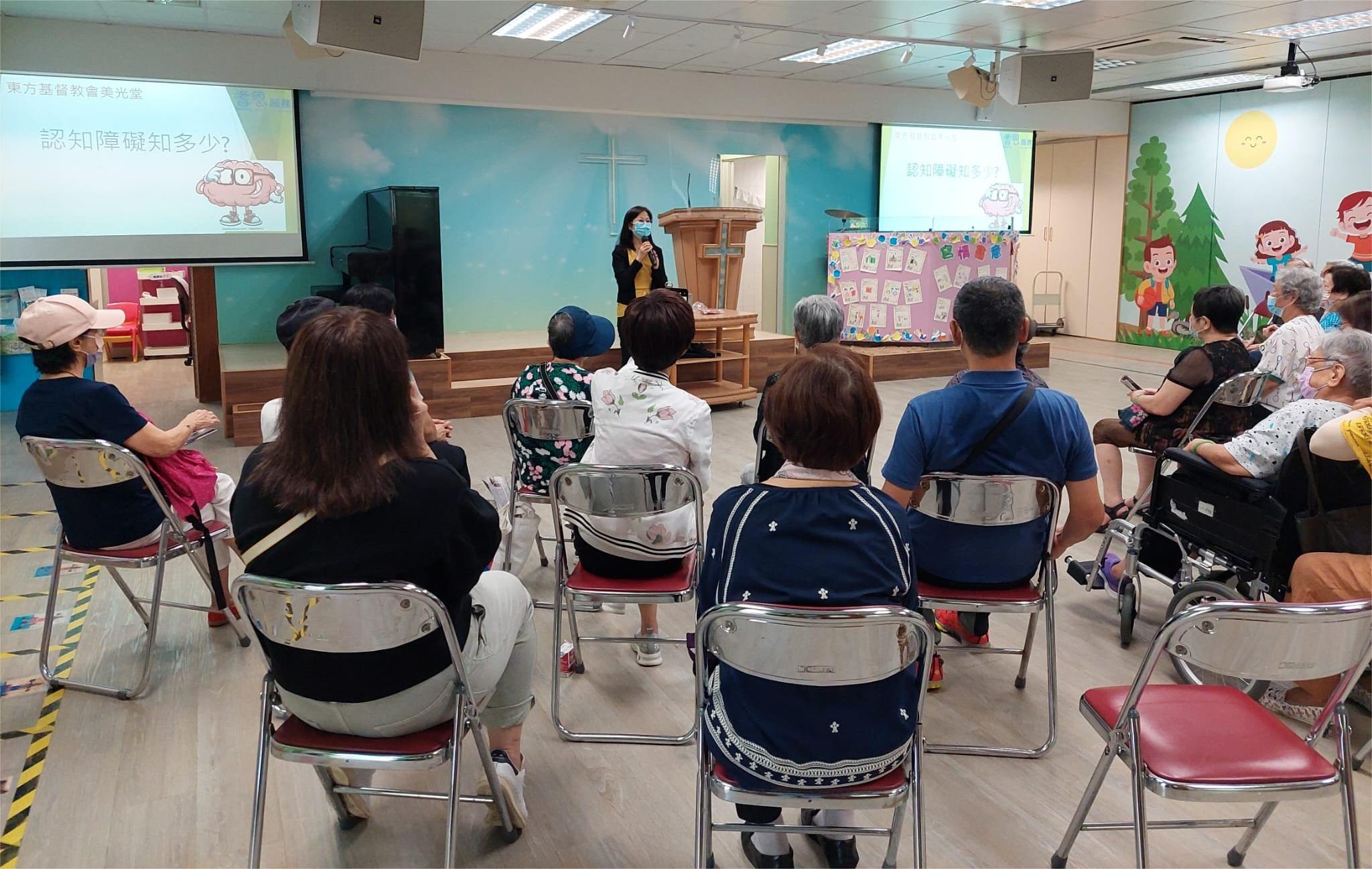
Yan is giving a lecture on “How much do you know about cognitive disorders?” for the elderly and their caregivers (Source: Amazing Grace Care Service)
Elderly persons aged 60 or above, who have passed the “Uniform Assessment for Elderly Care Services” and are eligible, can apply for and wait for government-subsidized elderly care services. If the elderly are assessed to have moderate impairment or above, they can choose whether to live in a residential care home for the elderly (RCH).
RCHs can be divided into public and private. Elderly people who are assessed as moderately impaired and unable to take care of themselves will be recommended to care and attention homes, while those who are assessed as severely impaired will be referred to nursing homes.
“Many cases are that the elderly may have fallen and been hospitalized, and when they return home, their family members cannot take care of them, so they go directly to the nursing home,” said Chan Yeuk-Ping, a health worker at a private nursing home named Best Smart. “Or the elderly are seriously ill, in the later stages of their illness, and they need care.”
Elderly people in nursing homes are usually in stable health, but still need basic medical and nursing care. To better care for the elderly, Chan and her colleagues have been learning relevant knowledge and receiving training. The Social Welfare Department also conducts regular assessments on them.
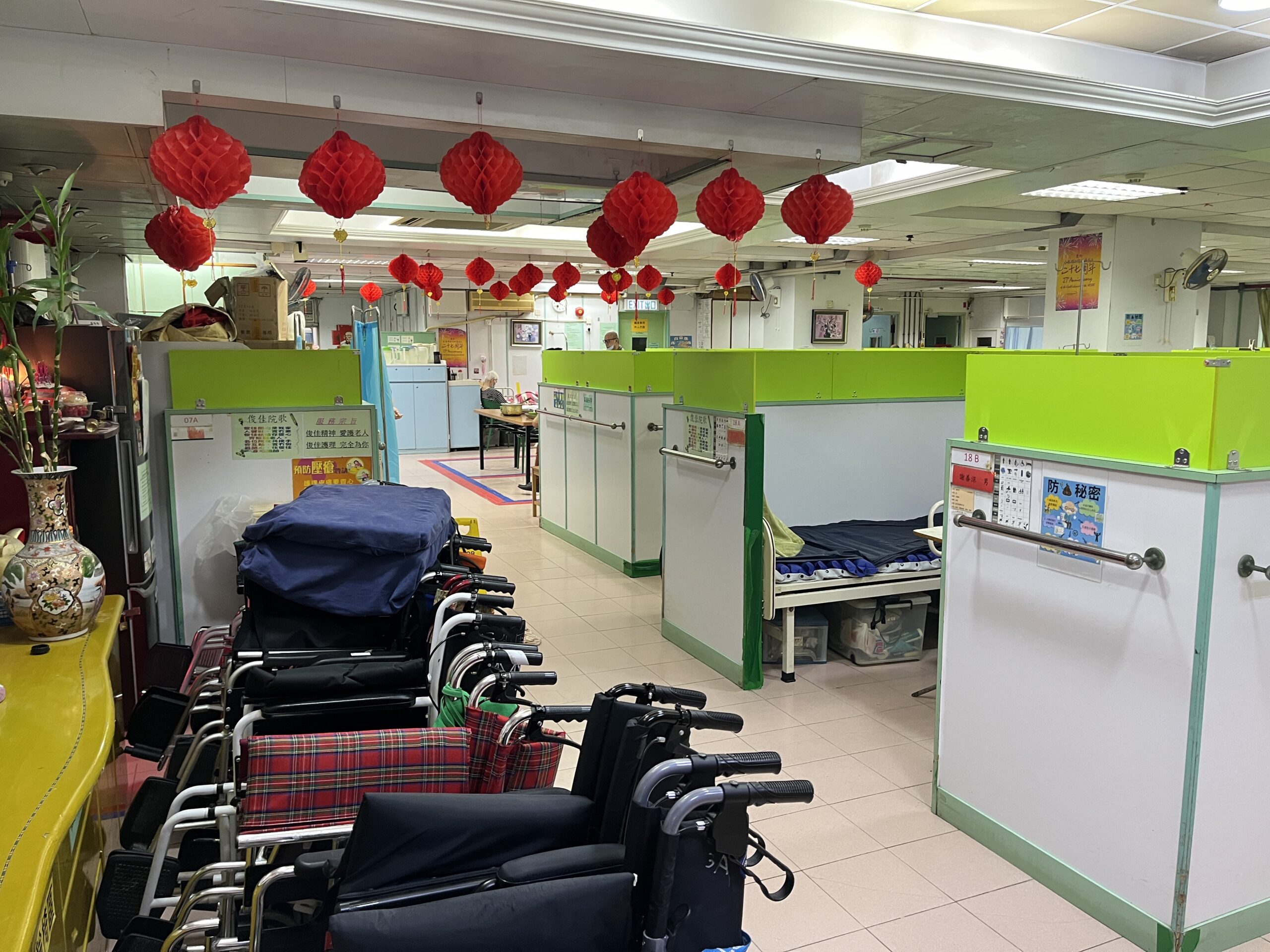
The place where the elderly live inside Best Smart (Source: Xinyue Tang)
After the COVID-19 pandemic, Hong Kong has increasingly paid attention to the mental health problems among the elderly caused by the epidemic. Best Smart also received outreach services for “Long COVID”. “This service is designed to monitor the recovery of the elderly in the later stages of the COVID-19 pandemic, including any psychological or health issues brought on by the pandemic,” said Wong Hei, another health worker at Best Smart.

“There was once an activity where I played a video and then led the elderly to do it together. After the videos were handed in, they rated different RCHs, just like a competition. Another activity is that social workers come to the elderly regularly to help them exercise.”
“There is also a monthly video consultation by the psychiatric nurse, which is not only for elderly people with mental problems, but also encourages other elderly people to participate.”
In addition to the above activities, Best Smart continues to participate in other psychological counseling activities. Wong mentioned that after the pandemic, some elderly people showed signs of depression and became unhappy. After realizing this problem, the nursing home slowly resumed some social activities to help the elderly vent their emotions. “But psychological counseling activities are mostly done by social workers”, said Wong. “They offer both individual and group activities every month, which include handicrafts and food preparation, and we also had hotpot together during the Spring Festival.”

Awards received by Best Smart Nursing Centre for participating in various psychological counselling activities (Source: Xindi Xie)
As a nursing home, Best Smart also accepts some elderly people with milder mental illnesses, so Wong and Chan have both learned specialized nursing knowledge to care for them. To comfort and care for the elders in the absence of psychiatric nurses. “For elderly people with depression, we will regularly give them a short depression scale to assess their level of depression and make them take their medication on time”, said Wong.
For the elderly with mental problems in the nursing home, Best Smart will also contact psychiatric nurses to provide consultation. This is an outreach service and is free of charge. But there is a problem: the elderly may need to wait.
“I need to fill out an application form and hand it to the social worker”, said Wong. “After being accepted, the elderly still need to queue up because one therapist may be responsible for many nursing homes, and it depends on whether the therapist can handle it.”
Hong Kong and its people have suffered from a shortage of psychiatry doctors for a long time. As reported by The Hospital Authority, since 2018, the ratio of doctors to patients has remained over 1:700. This is also a significant problem for the elderly with mental health issues. By now, among the 19 public hospitals equipped with psychiatry clinics, only 11 provide services specifically for the elderly.
Professor Terry Lum from The University of Hong Kong’s Sau Po Centre on Ageing commented, “My research team is advocating for a more primary-focused mental health care system, rather than relying on a specialist-driven system. Specialist capacity should be reserved for people with severe mental disorders, and gatekeeping can be handled more by a wider range of professionals, such as social workers, counselors, or general practitioners.”
Suicide Prevention Services is an NGO specifically provides emotional support and relieve for the elderly. It was first established in 1995 to provide hotline service for people with emotional disturbance or suicidal tendency.
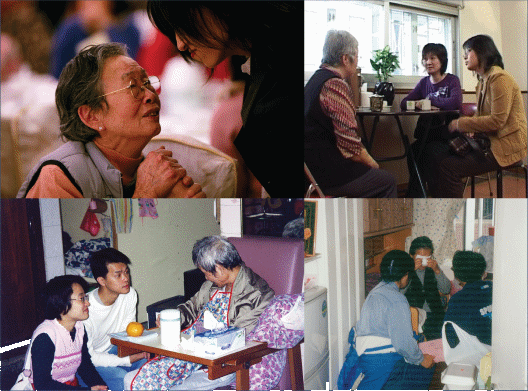
After discovering the severe suicidal situation among the elderly with a group of scholars, the organization launched Hong Kong’s first suicide prevention outreach service for them in 1998.

(Source: Suicide Prevention Services)
According to the Suicide Prevention Services’ 2024 annual report, they handled 124,323 calls in the year, with 14% of the callers aged 61 or above. The program manager, Leung Wing-Tong, explained the relatively low utilization among the elderly: “In traditional values, family shame should not be made public. It is very difficult for elderly people to suddenly pick up the phone and ask for help. Unless they reach a point where they can’t handle it on their own anymore.
“Besides, older generations may not have access to much information, so they don’t know the existence of this kind of hotline. This is why the outreach service became necessary. Instead of waiting for elderly people to call us, we offer support through referrals or visit them proactively. In this way, they are in a familiar and safe environment and are more willing to disclose their struggles.”
Volunteers make regular calls and visits to build long-term relationships with the elderly. They can introduce different services or resources to help solve the elderly people’s problems, but Leung emphasized that the more important thing is to listen and accompany them.
He said, “Elderly people have many problems, and not to mention us, even doctors might not be able to address them. However, that doesn’t mean we can’t help. Just by talking, they may shift their focus away from the illness.” Some elders even refer to them as “painkillers without side effects.”
Leung shared his throught about the standard of a “successul” service (Sources: Xinyue Tang & Xindi Xie)
The organization will also hold workshops for the elderly, not only to educate them on various ways of relieving emotions but also to encourage them to rebuild their social networks. Leung revealed that they have to constantly update their activities because, with the improvement in living standards and education among the elderly, their expectations have increased.
“A few years ago, we noticed that more and more younger elderly people were seeking new and more fashionable services. We realized that the traditional way wasn’t enough. So, we started organizing activities like phone photography workshops or coffee gatherings,” said Leung
In response to the estrangement of elderly from their families or impact of emigration, Suicide Prevention Services developed a mobile application called Heart Online, hoping the elderly can stay more connected with their family and friends. Its functions include instant video calls, emotion assessment, life information, location inquiry, and more.
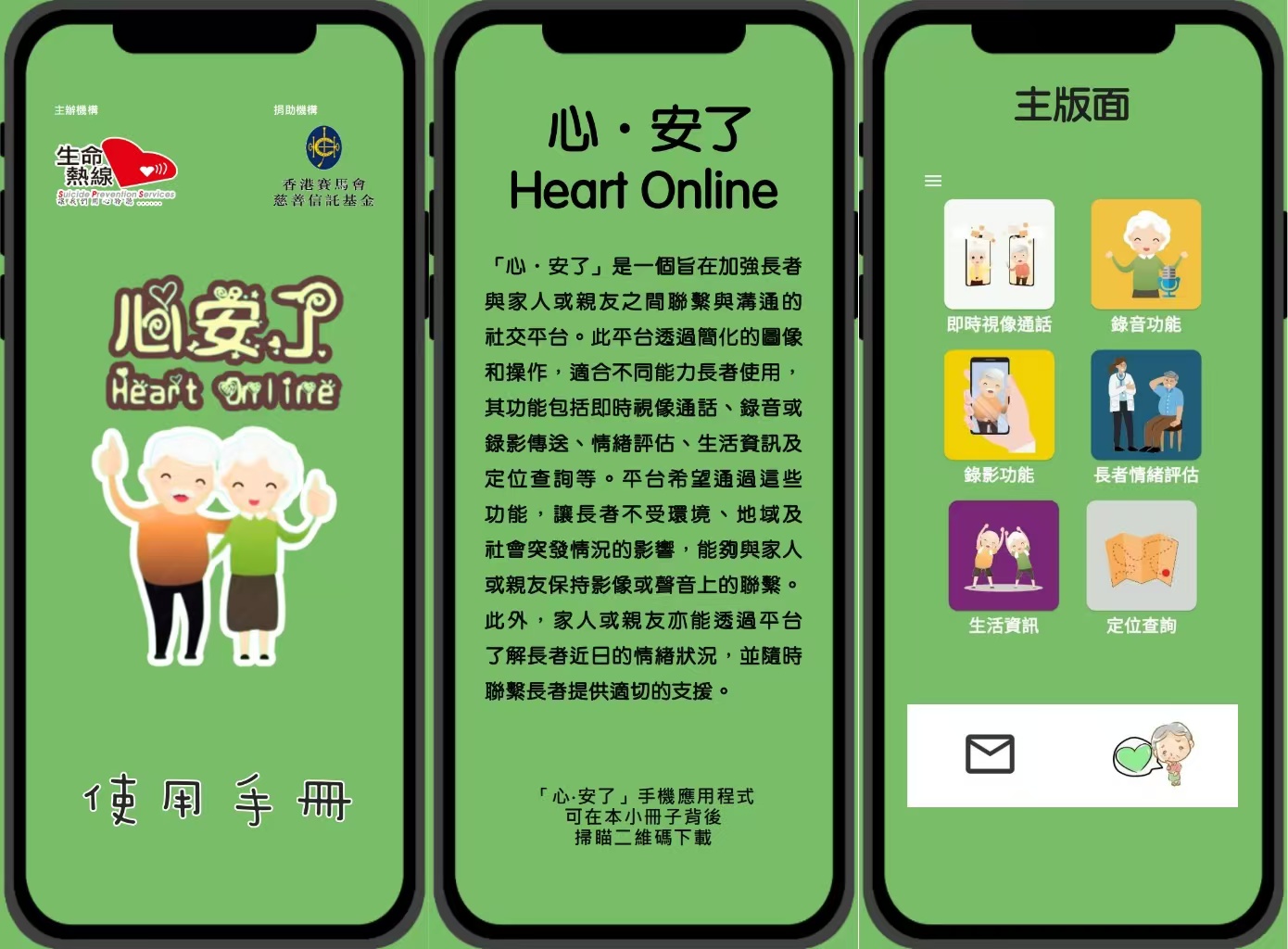
(Source: Suicide Prevention Services)
Although Hong Kong has established a comprehensive elderly care support system, it still faces various problems, from the shortage of medical resources to mental health concerns, from the imbalance between supply and demand of community care to the long wait for institutional care. The epidemic has further highlighted the isolation and vulnerability of the elderly in illness.
Fortunately, the government and non-governmental organizations are doing their best to ensure that the elderly receive the care they deserve, which reflects the warmth of Hong Kong.
BANKGROUND IMAGE SOURCES
Cover Image: South China Morning Post
Community Section: Amaing Grace Care Service
Carehomes Section: Xindi Xie
Minds Section: Suicide Prevention Services
Created by Xindi Xie and Xinyue Tang
Advised by Yolanda Ma