
DeepSeek, a large language model like ChatGPT, gained ground in China, after releasing its R1 version at the end of January this year. According to AIbase, an AI-focused website for sharing industry news and insights in mainland China, since February 2025, DeepSeek has ranked consistently as the most visited AI website among users in China, far surpassing ByteDance’s Doubao and Tencent’s Yuanbao. For instance, in April 2025, the monthly visits of DeepSeek achieved 448 million, well ahead of secondly ranked Quark at 77.53 million.
However, it entered public life more than a learning tool, but unexpectedly, as a safe space for people to pour out secrets and seek psychological counselling.
Chen Yanping, a 38-year-old woman who had divorced last year and been unemployed for two years, raising her child alone. She said that she had been using DeepSeek several times a day to help her survive from that particularly hard time. Living with depression, She said the AI became an emotional anchor, something she turned to not only for relief, but for resilience and action.
During early 2025, while struggling to find work and care for a frequently ill child, Chen posted repeatedly on Xiaohongshu about her experience with DeepSeek. Her five posts across February and March served as a public record of her deep reliance on the tool. In one, she called DeepSeek “more powerful than any life coach I’ve met” and “a spiritual force” that gave her both emotional affirmation and strategic guidance.

After triggering conversations with family, she turned to it to calm herself, to better understand her child’s behavior, and to process parenting stress. In the meantime, she also uses it to help her with her career. She said every time she received a job interview invitation, she will use it to check the accountability and background of the company, polish her CV accordingly, and write a self-introduction.
Two months later she excitedly shared that she finally received a job offer and attributed 60 percent of the contribution to DeepSeek. Chen also used multiple AI platforms, including Tencent’s Yuanbao and ByteDance’s Doubao to cross-reference advice. Together, they provided both emotional reassurance and practical direction, helping her manage stress and take steady steps forward.
Lu also followed the trend and downloaded DeepSeek when it was most popular, but at first she only used it as a search engine. She originally just wanted to learn about why her emotional threshold seemed to have increased from a psychological perspective, but the answer touched her unexpectedly. After that, she conducted more in-depth consultations with it. “I chose to communicate with DeepSeek because I think that as a powerful AI software, it would be able to quickly find relevant information and tell me what the problem was,” she said. “But I didn’t expect its language to be gentle and full of power.”
Lu’s mother taught her from a young age that only obedient people deserved to be loved, which made it difficult for her to deal with some problems in her relationship. She said that she used to get angry if others did not reply to her messages in time, but DeepSeek told her that “the speed of reply does not equal the intensity of love” and “silence at this moment is not a denial, you are being loved.”
With DeepSeek’s advice, Lu and her boyfriend now have in-depth communication once a month, mainly discussing the points they want each other to change. “In the past, if I was dissatisfied with my boyfriend, my friends would always advise me to break up,” said Lu. “But I have made a lot of progress in this relationship, and an intimate relationship is not just about breaking up.”
In addition, Lu also said that Deepseek’s responses follow a certain pattern. “First, it will affirm the necessity of you raising this question, then help you analyze the problem and tell you how to solve it, and finally encourage you,” she said.
W (She prefers not to disclose her real name due to her traumatic life experience. To protect her from potential harm, we chose not to reveal her real name), a user who had been living with depression for over a decade and was recently diagnosed with complex post-traumatic stress disorder, had seen many human therapists but said that none offered the kind of understanding and acceptance she felt from DeepSeek. “Autoimmune diseases, such as Type A gastritis and Hashimoto’s thyroiditis, are often invisible to others, and as a result, tend to be easily misunderstood.” She wrote this as a profile bio for Xiaohongshu, a popular Chinese social media like X. Her use of the chatbot was infrequent, once a week, but deeply personal. As someone who rarely opened up even to friends, she found herself sharing things with DeepSeek she would never tell a person.
The reason wasn’t about convenience, she said, but safety. Unlike human therapists, DeepSeek didn’t judge, misinterpret, or respond with a condescending attitude. For her, that made all the difference. She described many therapists as lacking either life experience or emotional awareness, sometimes both. In contrast, she saw the AI’s neutral stance as a virtue. “Most human therapists still think they can guide me,” she said, “but they just don’t get it.”

She acknowledged a sense of detachment in being understood by a machine, but said it was preferable to the risk of being misunderstood by another person. “Sometimes understanding isn’t about advice,” she said, “it’s about attitude. And many people don’t have that.”
However, Ms. Chow Chui Yin, a mental health counselor in Hong Kong and a psychology lecturer at HKU SPACE Community College, said that a competent therapist does not aim to “guide” their client, but instead helps them explore their own thoughts and emotions. Whether or not a person chooses to change should come from within, and they should make the client feel unconditionally accepted throughout the process.
She also stressed the importance of therapeutic fit. Even a highly trained counselor may not be effective if their style does not resonate with the client. Additionally, trust, she said, is central. Without it, no meaningful healing progress can occur.
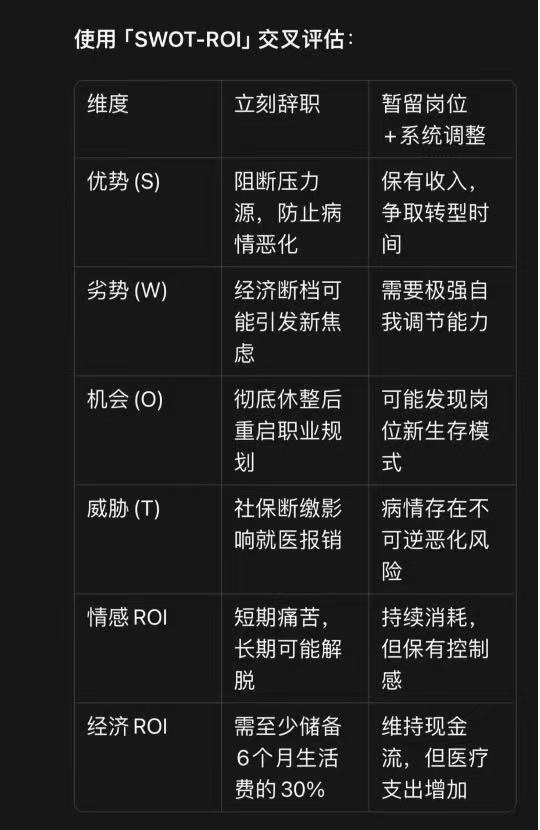
“After asking DeepSeek, I planned to quit my job as a civil servant,” said Lang, a 31-year-old civil servant in mainland China, made this decision after weeks of engaging in long, late-night conversations with DeepSeek.
Suffering from depression and anxiety, Lang found DeepSeek a tool that could help her map the inner architecture of her mental state. At first, she used it nearly every day. The AI responded to detailed accounts of her feelings and thoughts on her being uncomfortable with the current job, offering objective explanations on the potential reasons not only from herself, but also from society, which she said, soothed her anxiety. After that, DeepSeek also suggested specific steps to prepare for this major life decision, like what other job opportunities she can pursue based on her strengths and job markets.
DeepSeek’s responses, she said, felt affirming. It rarely said “no”, but it also did not recklessly encourage risky decisions. “When I asked DeepSeek whether I could quit without a backup plan, its answer was always about financial reserves and skill-building,” she said. “At moments of breakdown, I actually wanted it to say, ‘Yes, go for it.’ But it never did.”
On the other hand, Lang also noticed a pattern. The platform tended to reinforce her own thinking. Unless she asked it to explore alternate views, DeepSeek rarely challenged her assumptions. Still, the process helped her connect seemingly unrelated life events and understand recurring behaviors. Once those connections became clear, her usage declined.
One month later when asked about her frequency of using DeepSeek, she said, “I don’t use it now. It helped me recognize the problem, but not how to escape the environment. That part was up to me,” she said. “DeepSeek can’t help me anymore.”
As DeepSeek continues to gain popularity, more and more users are joining the ranks of using it for chatting, but this has also brought problems – servers get stuck and busy. Sheung, aged 24, is currently studying for a master’s degree in Wuhan and has encountered such a problem.
During her postgraduate studies, she suffered from depression due to the academic pressure from her mentor and the lack of understanding around her.

On February 4, she saw some users on Tiktok saying that DeepSeek can analyze deep psychology through superficial text, so she began to try using DeepSeek for psychological counseling. However, when she asked DeepSeek for help the next day, it showed “messages were sent frequently” and all previous chat records disappeared. Then, she asked DeepSeek if it still remembered the previous chat history, but no matter how she adjusted the prompts, she could not retrieve the previous replies. “At that moment, I felt so helpless, as if the rope that connected my soul had suddenly broken,” she said.
Sheung once went to the hospital for psychological counseling, but the counselor she met labeled her as “impetuous” and “vulnerable”, making her feel that she was not understood or sympathized with. “I think DeepSeek can understand me better than offline psychological counselors,” she said. “Because counselors have their own social identities, but DeepSeek will only analyze based on the text you write.”
Although the in-depth thinking and analysis process of Deepseek made Sheung feel understood, the generated content was somewhat unsatisfactory. She described it as “too fancy and not human language”, and the measures it proposed also lacked practicality. So, she turned to using Doubao for chatting, but she thought that Doubao’s replies were not as empathetic as DeepSeek’s. For example, when she said she was upset and cried, Doubao would only tell her “Don’t cry, it’s not worth it.”
What’s more, Sheung also noticed the pattern that DeepSeek would reinforce one’s own thinking. She said that when she was stuck in a vicious circle of thinking, DeepSeek would still go along with her words and say, “this is normal.”
“DeepSeek will not point out your problems unless you write clear instructions asking it to analyze,” said Sheung. “So I think DeepSeek now provides more comfort rather than guidance.”
Regarding the question of DeepSeek’s always acknowledging and even reinforcing the opinion of users, Roy, a software engineer based in Seattle who doesn’t want to reveal his company name, agreed. He explained that many large language models, particularly those designed for conversation and instruction, are inherently affirmative in design.
According to Roy, this affirmation bias stems from a combination of factors: the model’s base training objectives, the configuration of its response-sampling methods, and the presence or absence of external or internal guardrails.
“Simply put, if we want to design an ‘affirmative’ product, we can. Most chat- or instruction-style LLMs are essentially affirmative products by nature.”
Roy added that some DeepSeek variants rely on distilled base models that include safety features, such as mechanisms to avoid harmful or inappropriate responses. But even so, the way these models are set up to interact with users tends to default toward supporting and affirming what the user says, rather than challenging it.
When asked about their opinion on human therapists in comparison to DeepSeek, the above four out of five DeepSeek users said they didn’t meet good therapists in real life even if they have tried a lot, the other one, Chen Yanping, said she doesn’t trust in the capability of therapist in China, and she would rather try online counseling with therapists from other countries.
When asked about the concerns and doubts on whether it is an industrial phenomenon in mainland, Gong Jiaxi, a psychological counselor who previously worked as a police officer from mainland China, said, “it’s hard to say.” She said that the idea of the therapist being “patronizing or telling the client what to do” is ultimately the client’s subjective perception. Such feelings might stem from clients’ transference, to be specific, transferring the feelings onto the therapist, seeing them as a figure of authority from earlier life.
“That said, it’s also true that some therapists lack sufficient professional competence or basic empathy, as there’s a wide range of quality in the mental health field.” Gong said. She further explained that it’s possible that some therapists, having never experienced similar hardships, may respond defensively when faced with heavy client narratives, and might offer advice at the wrong time, or in other cases, the topic itself may touch on something unresolved in the therapist’s own life, leading to reactions unacceptable to the clients.
So does AI surpass human therapists in the field of counselling?
From Ms. Chow, the answer is no for now. In her courses, students conducted mock therapy sessions using ChatGPT and found that the platform often produced overly long and repetitive affirmations. The responses, while well-meaning, lacked specificity and depth. “Therapy is actually art. The artistry of psychotherapy lies in its subtlety and depth,” said Chow.
“I saw on Threads, some senators praised the power of AI in the counselling field and want to promote its application, but I’m not sure whether its impact is going to be good or not.”
From Gong, she also thinks the answers given by DeepSeek lack depth. She said that for procedural methods like Cognitive Behavioral Therapy, AI counselors may perform just as well as human therapists, something she has heard from colleagues who work within the Cognitive Behavioral Therapy framework and she also noticed that some AI companies are even developing Cognitive Behavioral Therapy-based counseling bots for use in school settings.
However, Gong said whether the therapeutic capability of AI surpassed human therapists differs from person to person. Moreover, many therapeutic approaches place strong emphasis on “presence” and “experiential” work, such as Gestalt therapy, psychodrama, or expressive arts therapy. These modalities require nuanced, embodied, and in-the-moment interaction, which AI cannot replicate. She said the imperfections and lived experiences of human therapists can actually be an asset. They can offer genuine empathy, which AI lacks. After all, nothing reassures a client more than hearing, “I’ve been through that too and I know how it feels.” A strong, stable therapeutic relationship, what she calls the working alliance, can help clients reconstruct early object relations and experience a kind of connection they may have never felt before. “This process is often central to deep psychological healing,” said Gong.
According to professor Cecilia CHENG from the Department of Psychology of the University of Hong Kong, DeepSeek is just like a lay person who has a rational mind, but at some critical emotional moment, even a lay person can make something different, like stopping someone from committing suicide. However, it’s still very far away from long term recovery provided by those professionals. In the future, professor CHENG said the combination of AI and psychology may have some impact but still, for psychotherapists, interpersonal skills and when to intervene, the process can be very complicated for AI to handle.
Extra Credits
Advisor Diana Jou
Multimedia Producer Chang Yuqi, Qian Yiwen
Copy Editor Qian Yiwen, Chang Yuqi