
Temples Over Trends
Hong Kong’s Wong Tai Sin Temple Attracts Stressed Chinese YouthFAN Xinyu, stands in front of the God of Wealth main hall at Wong Tai Sin on a regular Sunday, hoping that she could be luckier in gaining wealth.
This 25-year-old newcomer in her career works at a big international company in Shenzhen. As a regular traveler between Shenzhen and Hong Kong, she is familiar with the view at Victoria Harbor, the Peak, and the Disneyland.
But this time, she came specifically for a temple, after seeing the recommendation posts about Wong Tai Sin on Xiaohongshu.
Constructed in 1921 and opened completely to the public in 1956, this 104-year-old historic temple is attracting more and more young tourists from mainland China like FAN Xinyu, and gaining itself at least over 6,800 posts as a check-in spot on Chinese biggest social media platform Xiaohongshu.
Why is this historic place becoming a trendy topic on social media platform? Why is Wong Tai Sin becoming more attractive to young tourists from mainland China? What are these young people seeking in this most famous Taoism temple in Hong Kong? Here are some of their stories.
According to the data published by the Hong Kong Tourism Board, Hong Kong’s appeal to mainland tourists is gradually diminishing. In 2018, the number of mainland tourists reached around 50.8 million, but in 2019, it saw a year-on-year decline of 14.16%. The amount of mainland tourists rebounded in 2025, with the total number of visitors during the not-long-before Labour Day “golden week” holiday reaching about 1.1 million, but the figure was still a far cry from the levels before the COVID-19 pandemic and 2019 anti-government protests. This reflects the gradual weakening of Hong Kong’s appeal to mainland tourists.
This does not come for no reason. Complaints about the experience of traveling in Hong Kong are rising on social media platforms like Xiaohongshu.
Wong Tai Sin Temple, one of Hong Kong’s most renowned temples, venerates Confucianism, Buddhism, and Taoism. The Taoist deity Wong Tai Sin is famed for healing the sick, offering salvation, and promoting virtuous deeds. It is said that Wong Tai Sin “grants every wish,” and the temple’s divination sticks are reputedly highly accurate. It wasn’t until August 1956 that Wong Tai Sin Temple received official approval from the government to fully open its doors to worshippers.

Among the 10 interviewees who are all young tourists from mainland China, 8 out of 10 (80%) said that they came after seeing the posts on Xiaohongshu.
Hong Kong has become the first outbound travel destination to forge a strategic cultural and tourism partnership since April 2024, with Xiaohongshu.
Xiaohongshu, is a powerhouse in the social media world, with 300 million users logging in every month, most of them young people, half are from the post-95 generation and a third are from the post-00 generation. It is many young people’s first choice that comes up in their mind if they want to seek recommendations of travelling tips, restaurants and newly-opened trendy spots. The fact that Xiaohongshu opened a new office in Hong Kong’s Causeway Bay in February speaks volumes about how close-knit its ties with the region are becoming.
This April marks a year since the Hong Kong Tourism Board teamed up with Xiaohongshu to promote the city as a prime travel spot. So far, the content tagged with “Wong Tai Sin” has drawn in 45.26 million views and features over 6,800 posts on Xiaohongshu, including various contents like the most efficient route to visit Wong Tai Sin, the tips of drawing lots in the temple, and the procedures of how to bless at the temple.
GAN Yuyao, a good friend of FAN Xinyu, proposes to accompany her to the temple together after seeing the posts about drawing fortune stick at Wong Tai Sin on Xiaohongshu. As a person who never tried drawing fortune sticks, she wants to come and give a try out of curiosity.click to listen

According to a survey conducted by Nandu Data Research Institute, 82.22% of mainland youth respondents have noticed the recent trend of young people keen on “temple tours.” Moreover, a significant 78.33% of these respondents have visited temples to burn incense. After visiting famous mainland temples like the Yonghe Temple in Beijing, Lingyin Temple in Hangzhou, and Putuo Temple in Guangdong, these young tourists are now extending their temple-hopping enthusiasm to Hong Kong’s Wong Tai Sin.
Among the 5 mainland interviewees who we conducted a deep interview with at Wong Tai Sin, four of them (nearly 80%) described that they felt “peaceful” when they were burning incense for blessings at the temple.
Miss Fan’s experience is not unique.
According to the Ministry of Education, more than 12 million young people are set to graduate this year, an increase of more than 430,000 compared to last year. Official numbers pointed out that the unemployment rate in 31 major cities in China was 5.2 percent in February, the highest in half a year.
Facing the pressure of the sluggish job market, young people are feeling that “they have already done what they can do,” and the left is “not something that they can control on their own.”
Miss Gan, a 26-year-old teacher who works in Chengdu, comes together with Miss Fan, said: “I feel that with folk spiritual practices having developed to this extent nowadays, young people are increasingly embracing it. There’s this sense that people truly can’t make breakthroughs in the real world anymore, so they have to try their luck with these practices, resorting to worship and prayers.”Click to listen
As Miss Gan observed, young visitors flock to this temple with their diverse aspirations for career advancement, academic success, personal health, and romantic relationships.
Four of five interviewees mentioned that it is special to see “a large scale of people drawing fortune sticks” at the temple. Wong Tai Sin’s fortune-telling sticks (kau cim) appeal to both spiritual seekers and curious travelers. There are over 120 dedicated stalls offering kau cim (fortune-telling stick) consultations in Wong Tai Sin, each manned by experienced interpreters charging a standardized rate of HKD 30 per reading. For mainland visitors, this setup feels unique, for temples in China rarely offer dedicated spaces for public divination or openly advertise such services, making Wong Tai Sin’s transparency and accessibility a major draw.
Miss Lee, a 28-year-old who works at a state-owned enterprise in Hangzhou, said she was “amazed” to see “such a large crowd drawing fortune sticks here.”
“The temples I’ve visited in mainland China never had dedicated divination spaces of this scale,” added Lee. Click to listen
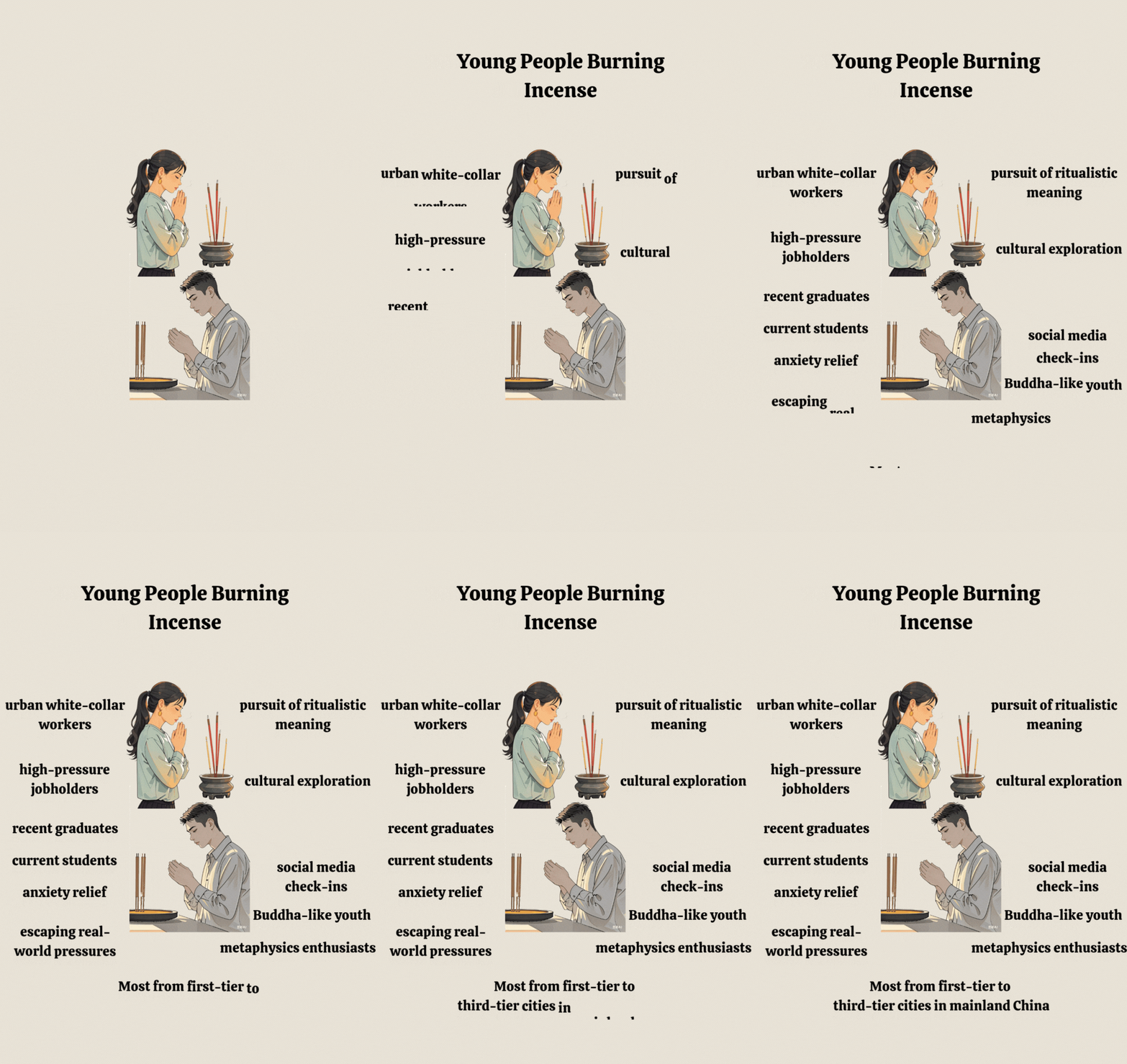
People Daily previously reported the phenomenon that young people, torn between working hard and moving up in life, now find themselves lighting incense at altars. But this shows instead of merely resigning to fate, young people, facing pressures in their lives, still have hopes and something that they long for.
Isabella (who refused to give her full name), a former reporter at BBC writing stories about Hong Kong, who was born in Asia but stayed overseas for many years, came to the temple as a tourist herself, said: “Psychologically, it’s a remedy for people who sort of experience loss or happiness.”
“I think it’s more like psychological support from someone who is not around you, but you feel they around you, like mentally and spiritually, and at the same time, if you really believe that’s part of your culture and tradition, it will bless you,”added Isabella.Click to listen

As one of the most iconic temples in Hong Kong, Wong Tai Sin is enhancing its comprehensive visitor experience to add more appeal to tourists, and eventually rebrand itself as a cultural tourism destination.
According to Mo Jiajie, a member of the Wong Tai Sin District Council, in an article published in Kowloon Post in January 2025, the temple is improving visitor facilities such as multilingual smart signage for self-guided tours, shuttle services connecting the temple to nearby attractions, and a range of souvenirs featuring Taoist designs. Also, a local market community will create a blend of spirituality and commerce that boosts the economy, with Temple Mall being the biggest mall near the temple.
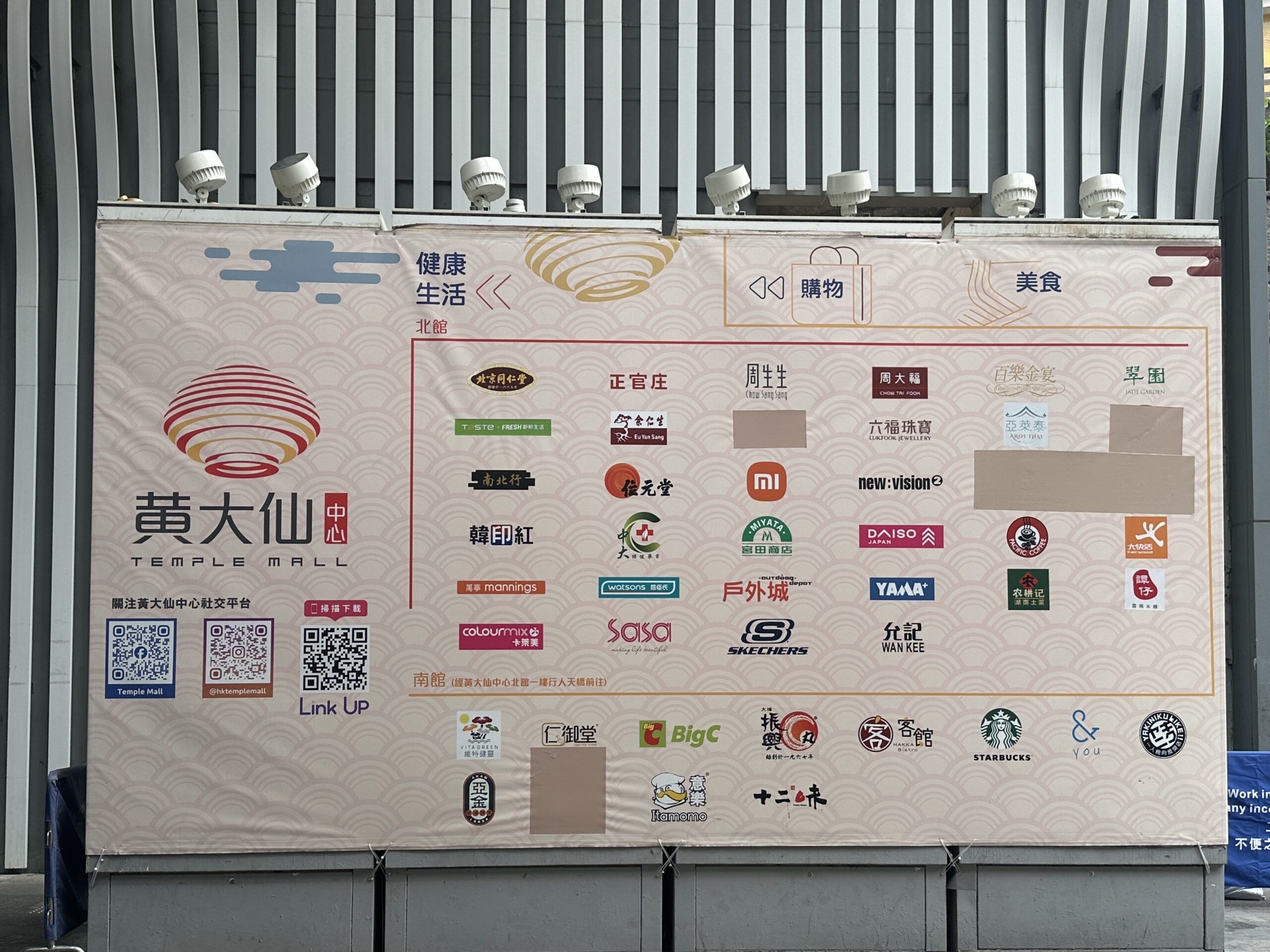
Right next to Wong Tai Sin, Temple Mall serves as a place for tourists to have meals and do simple shopping, with brands like Chow Sang Sang, LUKFOOK Jewellery, DAISO, Mannings, and Starbucks. After being interviewed, Miss Gan and Miss Fan said that they would go to Wong Tai Sin Centre for a stroll, have a meal and take a break. Many tourists, like Miss Gan and Miss Fan, will go to Wong Tai Sin Centre for meals and consumption before and after paying their respects.
The staff and volunteers at Wong Tai Sin Temple include both mainland Chinese and local Hong Kong residents. Most are fluent in Cantonese, with basic proficiency in Mandarin and English, allowing them to accommodate visitors from diverse backgrounds.
The General Office at Wong Tai Sin offers both simplified and traditional Chinses versions’ brochures for tourists to look into the map and the origin, procedures for blessing, and cultural notices for tourists. Miss Li, one of the interviewees, said this design is very friendly to people from mainland China.
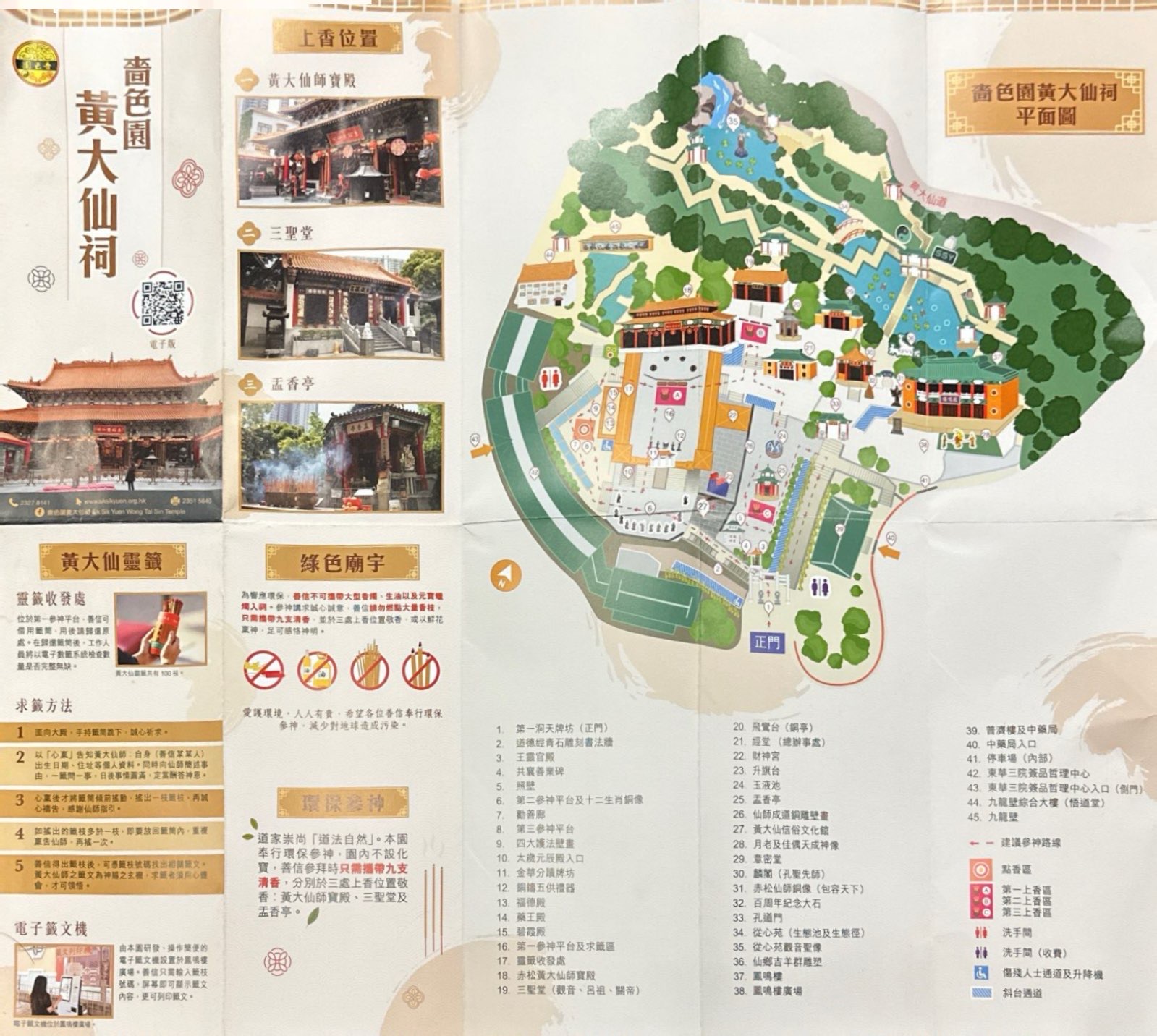
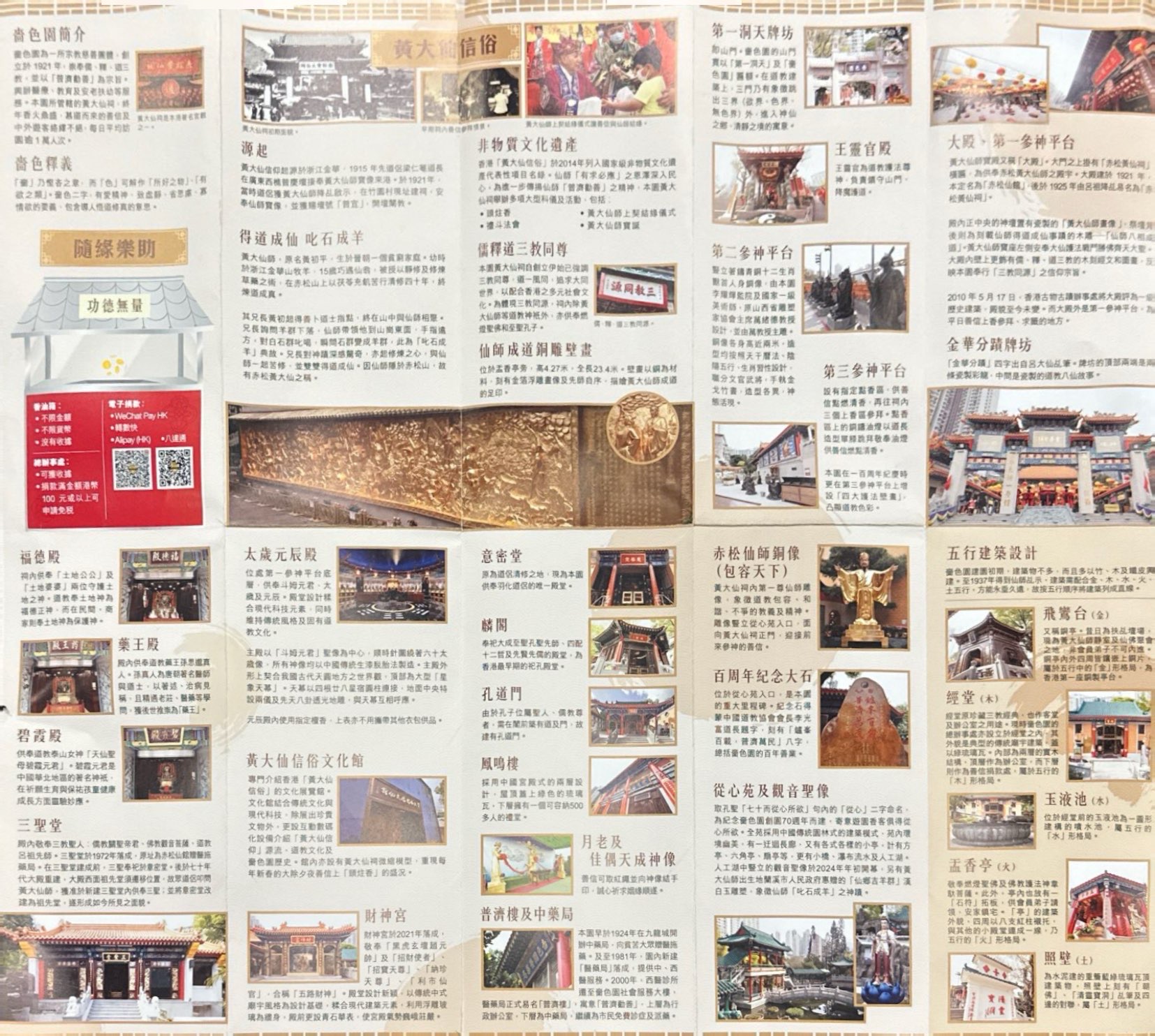
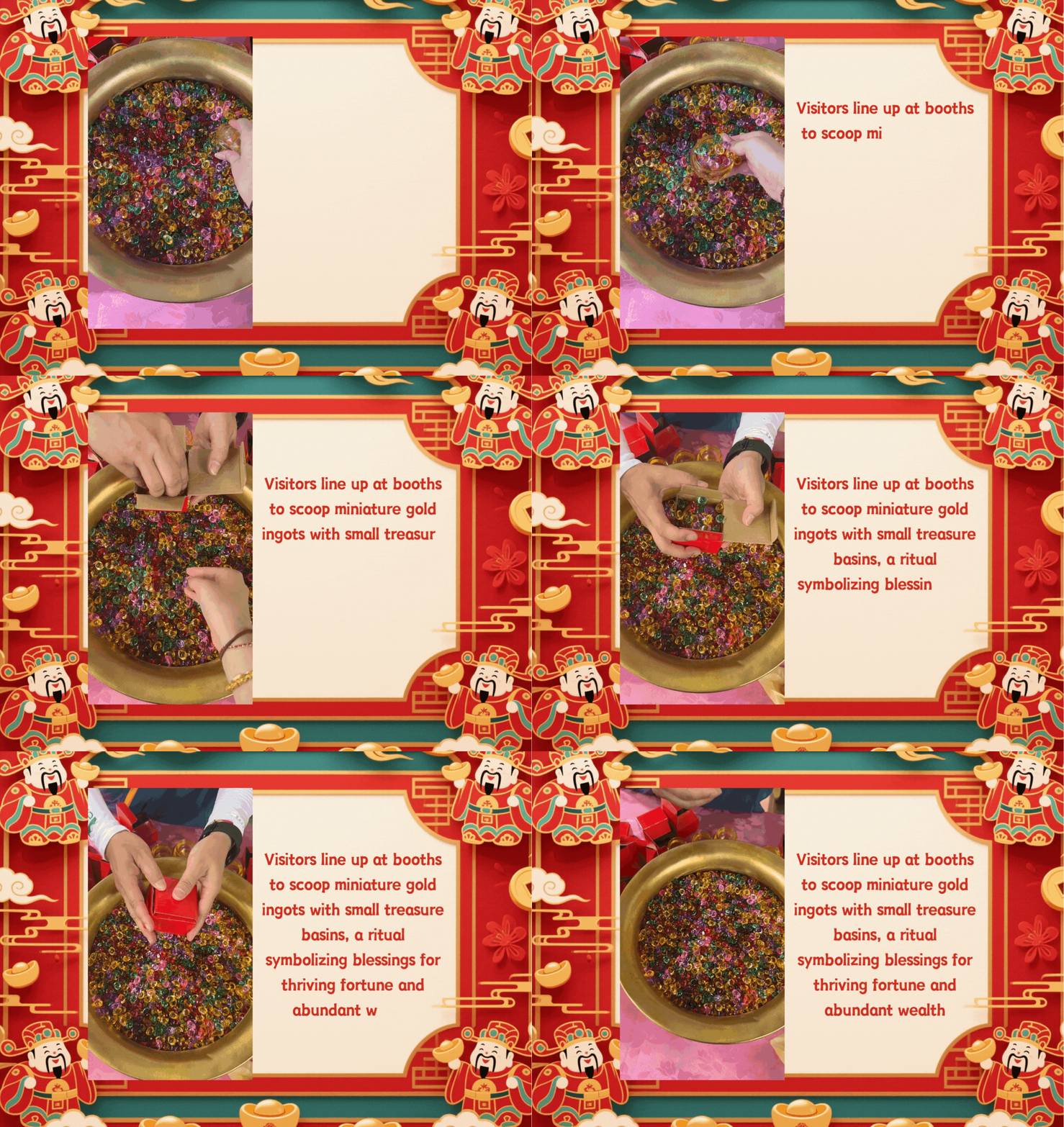
tourists from worldwide
Visitors from across Asia are discovering the influence of Wong Tai Sin beyond mainland China. In our interviews, we encountered many tourists from countries and regions like Thailand, Taiwan, and Japan who shared how the temple has made an impression in their own regions. Many mentioned that they decided to visit Wong Tai Sin based on recommendations they saw on their favorite social media platforms. Click to listen to their stories and learn more about the temple’s impact.
The rising popularity of Wong Tai Sin Temple among young tourists is the result of a combination of precise social media promotion, the emotional needs of the younger generation, and enhancements to the visitor experience at the temple itself. No matter how times change, spiritual comfort and inner peace are always what people seek.
“Doesn’t matter how international Hong Kong is going to be, or any city is going to be, people need to have that sort of spiritual support, regardless of what happens to them,” said Isabella, the former reporter at BBC covering Hong Kong cultural stories.
“Everyone is suffering somehow which is important to them, and that’s very individualized. So to find a place where you can individualize your seeking of blessings is a simple blessing itself. Having a place like this is a blessing to people as well,” added Isabella.
Hong Kong, as an international metropolis, and a destination for young tourists from mainland China and all over the world, offers far more and beyond than the glorious night view at Victoria Bay, and iconic cha chaan teng diners. The city is offering another option for young tourists, to tell them that there is always a corner, with the incense and blessings, for the young to seek their inner peace, and rediscover the gentle poetry in life.
Author Team & Acknowledgments
Author Team (Alphabetically Sorted)
Email: [email protected]

Email: [email protected]
Special Thanks to:
Wong Tai Sin
All interviewees
Great Thanks to:
Ma Jinxin Yolanda
Lee Foon Shing