
In Pursuit of Certainty
How does AI affect the practice and popularity of fortune telling?
By Wendy Wu
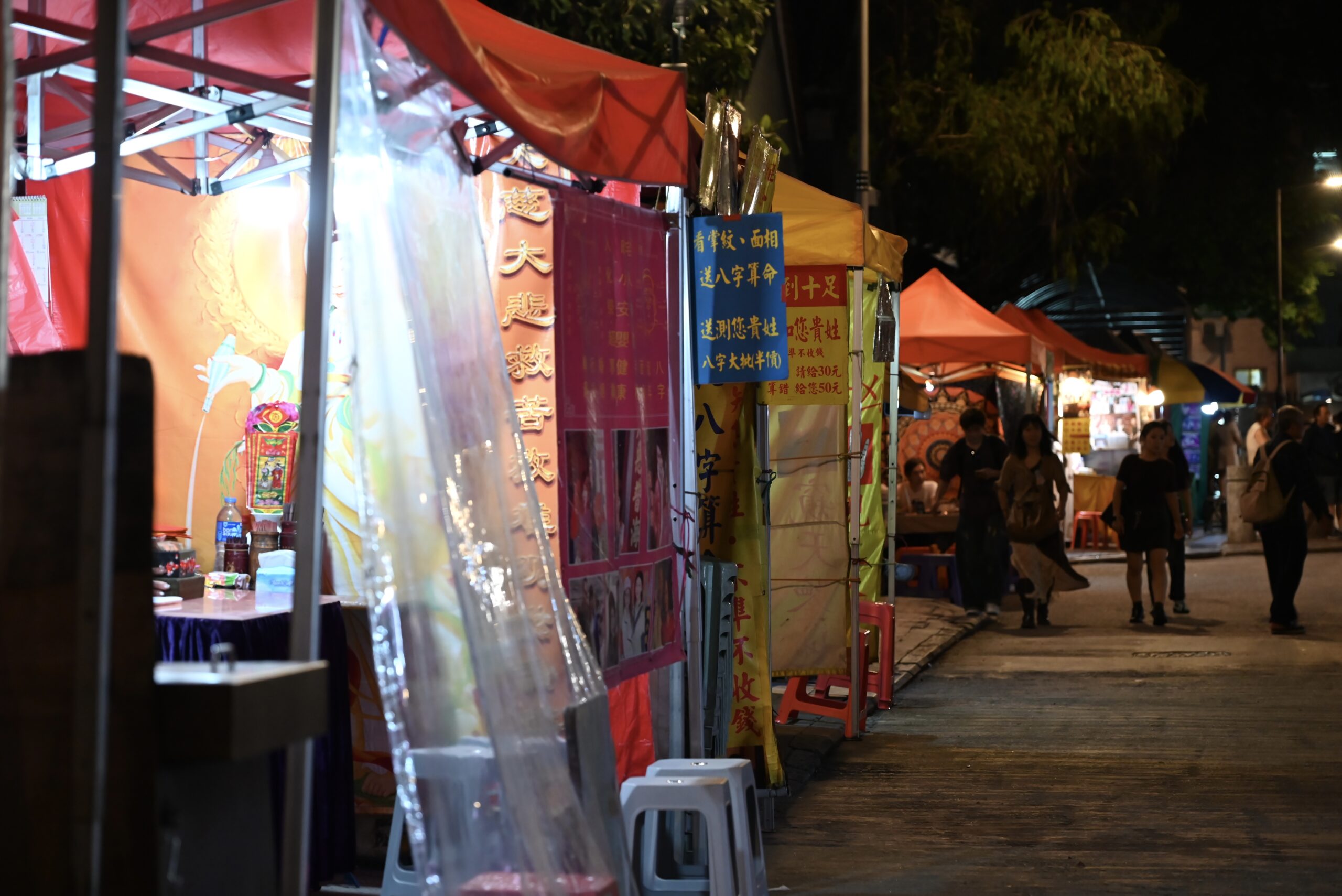
As night falls and the city grows quiet, Temple Street starts to come alive. Along the path near the Tin Hau Temple, rows of red tents light up one after another. Fortune tellers take their seats, read palms, interpret tarot cards or Bazi for customers. The pages of tarot cards and ancient fortune-telling books are turned, and an interpretation of destiny unfolds.
Fortune telling, Feng Shui reading, divination and tarot reading, all of these time-honored metaphysical practices remain rooted in ancient rituals in places like Temple Street or Wong Tai Sin Temple, attracting a steady stream of customers seeking guidance on love, career, and future choices. However, beyond these traditional venues and settings, many new forms are also emerging.
Modern development of fortune telling
Thierry Chow is a second-generation Feng Shui master who entered the metaphysics industry under the influence of her father, Chow Hon Ming, a well-known traditional Feng Shui master. On her Instagram account, she reinterprets traditional Feng Shui concepts through modern contexts like fashion and everyday outfits, attracting over 12,000 followers. Having studied illustration and fine art at university, she said she is now seeking to integrate her long-standing interest in art, color, and fashion into her work.
Mentioning the growing use of AI in fortune-telling and Feng Shui readings, Thierry Chow said she is open to it, as long as a balance is maintained. She also believes that AI’s overall impact on the industry is positive. “It makes more people understand what Feng Shui is and learn about the basic philosophy behind it,” she said.
“I do encourage clients to learn how to use AI and understand the basics of Feng Shui,” she added. “But I also advise them to be cautious, as the information is not always fully up to date.”
As night falls and the city grows quiet, Temple Street starts to come alive. Along the path near the Tin Hau Temple, rows of red tents light up one after another. Fortune tellers take their seats, read palms, interpret tarot cards or Bazi for customers. The pages of tarot cards and ancient fortune-telling books are turned, and an interpretation of destiny unfolds.
Fortune telling, Feng Shui reading, divination and tarot reading, all of these time-honored metaphysical practices remain rooted in ancient rituals in places like Temple Street or Wong Tai Sin Temple, attracting a steady stream of customers seeking guidance on love, career, and future choices. However, beyond these traditional venues and settings, many new forms are also emerging.
Modern development of fortune telling
Thierry Chow is a second-generation Feng Shui master who entered the metaphysics industry under the influence of her father, Chow Hon Ming, a well-known traditional Feng Shui master. On her Instagram account, she reinterprets traditional Feng Shui concepts through modern contexts like fashion and everyday outfits, attracting over 12,000 followers. Having studied illustration and fine art at university, she said she is now seeking to integrate her long-standing interest in art, color, and fashion into her work.
Mentioning the growing use of AI in fortune-telling and Feng Shui readings, Thierry Chow said she is open to it, as long as a balance is maintained. She also believes that AI’s overall impact on the industry is positive. “It makes more people understand what Feng Shui is and learn about the basic philosophy behind it,” she said.
“I do encourage clients to learn how to use AI and understand the basics of Feng Shui,” she added. “But I also advise them to be cautious, as the information is not always fully up to date.”
Young people’s practice of fortune telling
In a survey of 102 young people conducted for this report, 85% of respondents(based on 92 valid responses) indicated that they had engaged in at least one form of metaphysical practice, with traditional Chinese fortune-telling, divination, and Feng Shui ranking among the most common.


In addition to consulting masters in traditional hubs like Temple Street and the Wong Tai Sin Temple, the younger generation is also highly engaged in digital fortune telling, using AI tools or divination apps for metaphysics practices. The reporter’s survey shows that among young people with experience in metaphysical practices, over 40% frequently use apps or websites for self-assessment fortune-telling, while 78% have tried AI-powered fortune-telling.

Emily Wang, a 28-year-old student from Hong Kong, said she has gradually replaced going to temples with apps and AI fortune telling. “Since AI came along, I go to temples less often,” she said. “It’s convenient and always provides more information than a real fortune teller.”
She now uses a variety of apps, from those offering instant divination results to those generating interpretations based on personal information. She also feels less restricted using AI or apps for divination, as she doesn’t need to worry about whether the questions are “proper to ask.”
Some users described different appeals. Lin Yong-xi , a 23-year-old student at Hong Kong Baptist University, said face-to-face readings can feel intrusive. “In-person divination requires a spiritual exchange, which sometimes makes me uneasy,” she said. “I don’t want my future completely exposed.”
Another interviewee, 22-year-old Lam Wing-kwan , said she prefers astrology websites and apps for similar reasons, adding that consulting a human fortune teller can feel as though “they see through you too much.” In this case, she feels her life “is being frozen into a fixed path”.
Online platform trends are also influencing how these practices are being conducted. Lin likes to watch tarot card reading videos and follows discussions about AI fortune-telling in her daily life, often trying prompts shared by other users. “I’ll copy the prompts into my AI chatbots with my own questions for fortune telling,” she said, “if I write the prompts myself, the results might not be what I expect.”
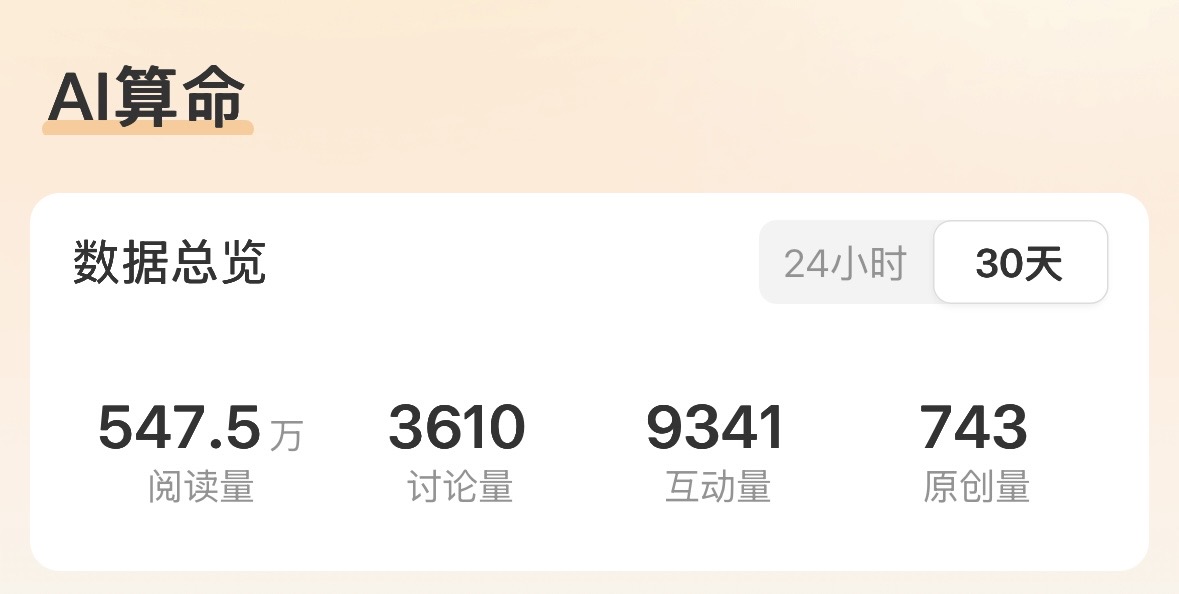
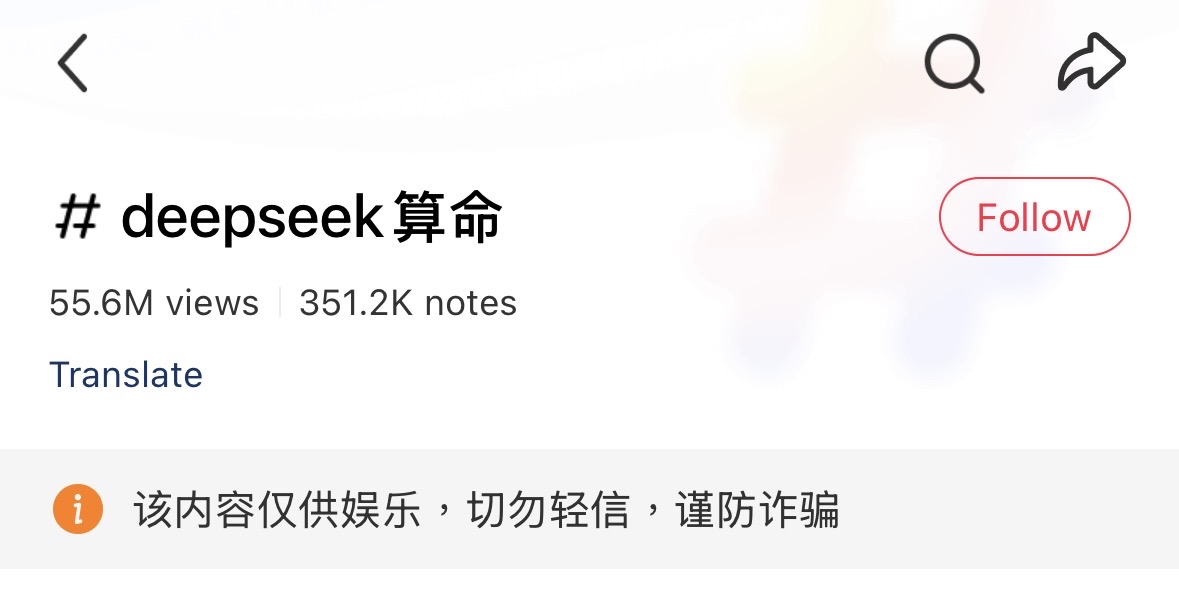
As of May 15, in social media platform RedNote (also known as Xiaohongshu), the hashtag #deepseekfortuentelling has garnered over 55,600,000 views and 351,200 notes; related topics on Weibo have received 5,475,000 views.
Young people’s practice of fortune telling
In a survey of 102 young people conducted for this report, 85% of respondents(based on 92 valid responses) indicated that they had engaged in at least one form of metaphysical practice, with traditional Chinese fortune-telling, divination, and Feng Shui ranking among the most common.
In addition to consulting masters in traditional hubs like Temple Street and the Wong Tai Sin Temple, the younger generation is also highly engaged in digital fortune telling, using AI tools or divination apps for metaphysics practices. The reporter’s survey shows that among young people with experience in metaphysical practices, over 40% frequently use apps or websites for self-assessment fortune-telling, while 78% have tried AI-powered fortune-telling.
Emily Wang, a 28-year-old student from Hong Kong, said she has gradually replaced going to temples with apps and AI fortune telling. “Since AI came along, I go to temples less often,” she said. “It’s convenient and always provides more information than a real fortune teller.”
She now uses a variety of apps, from those offering instant divination results to those generating interpretations based on personal information. She also feels less restricted using AI or apps for divination, as she doesn’t need to worry about whether the questions are “proper to ask.”
Some users described different appeals. Lin Yong-xi , a 23-year-old student at Hong Kong Baptist University, said face-to-face readings can feel intrusive. “In-person divination requires a spiritual exchange, which sometimes makes me uneasy,” she said. “I don’t want my future completely exposed.”
Another interviewee, 22-year-old Lam Wing-kwan , said she prefers astrology websites and apps for similar reasons, adding that consulting a human fortune teller can feel as though “they see through you too much.” In this case, she feels her life “is being frozen into a fixed path”.
Online platform trends are also influencing how these practices are being conducted. Lin likes to watch tarot card reading videos and follows discussions about AI fortune-telling in her daily life, often trying prompts shared by other users. “I’ll copy the prompts into my AI chatbots with my own questions for fortune telling,” she said, “if I write the prompts myself, the results might not be what I expect.”
As of May 15, in social media platform RedNote (also known as Xiaohongshu), the hashtag #deepseekfortuentelling has garnered over 55,600,000 views and 351,200 notes; related topics on Weibo have received 5,475,000 views.
AI fortune telling in fortune tellers’ eyes
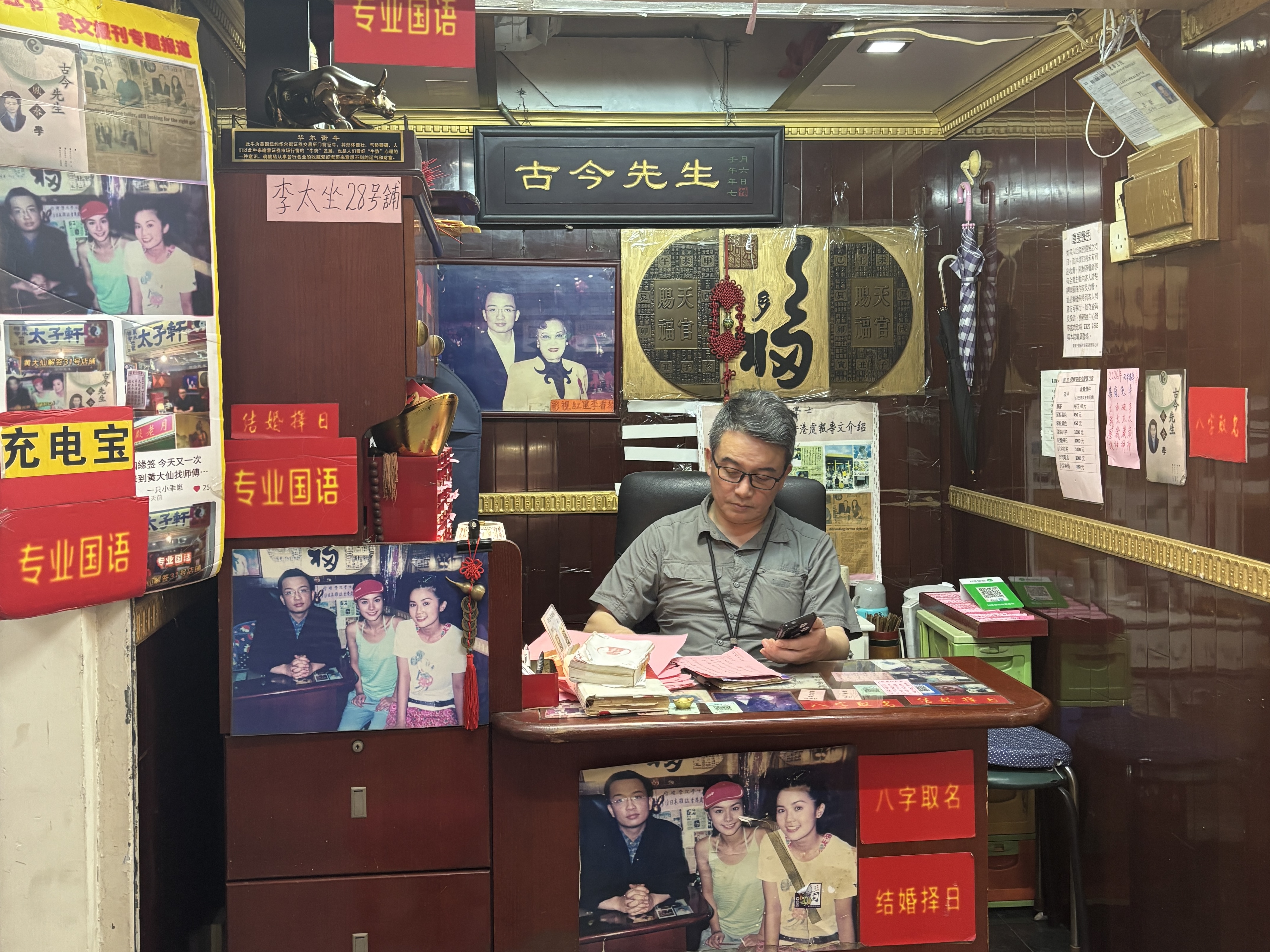
At Wong Tai Sin Temple, fortune-telling follows a ritual that has remained largely unchanged for over a century. Visitors begin by silently reciting their names, birth dates, and the questions they want to ask in their minds and kneel to pray, and then shake a bamboo cylinder filled with numbered sticks until one falls out. Each number on the fortune sticks corresponds to a written fortune, which are mainly classic Chinese poems. The slip that falls out is believed to offer guidance or an answer to the question.
Master Ken, a fortune teller at the temple, said interpreting the written fortune requires more than simply translating the text. In his view, AI-generated readings often remain too broad to capture the nuances of an individual’s situation. He gave an example: for the fortune slip titled “Tao Yuanming Admiring Flowers,” AI might interpret it broadly as “happiness and bliss,” categorizing it as a good sign. However, in reality, the meaning can vary depending on the question posed by the seeker.
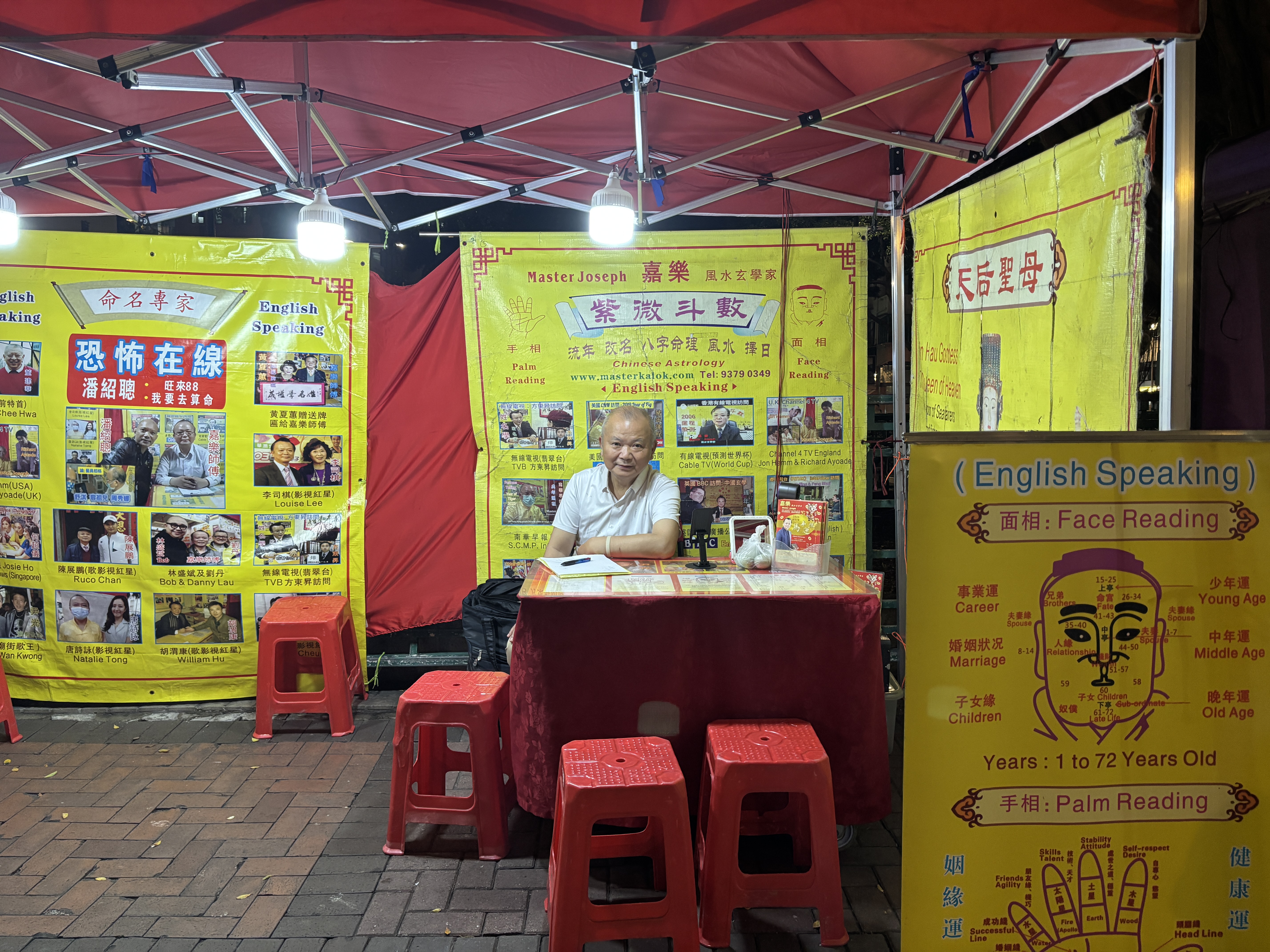
Master Joseph has been working in the fortune telling industry for over 30 years. He believes that though AI possesses basic fortune telling knowledge, its accuracy can only reach 60-70% of that of a real fortune teller.
He explained “For example, if I ask an AI what my fortune will be like based on my birth chart, it can only consider the birth chart itself, without taking into account my palmistry or facial features.” He said, “It cannot provide a comprehensive view of one’s fortune.”
Like Thierry Chow, Lilian Yuen is among a new generation in the metaphysics field. She developed an early interest in tarot and joined the divination field after graduating from university. She is now a certified tarot master by the China Tarot Association.
In contrast to Chow, Yuen takes a more cautious view of AI. “AI responses tend to cater to users’ preferences and habits,” she said, explaining that such readings “cannot truly address problems or improve one’s situation.” Also, she expressed that current AI interpretations are too conventional to capture the deeper relationships between tarot cards.
But as the technology is evolving, she believes AI has the potential to improve. “AI models will continue to absorb more knowledge, which could make interpretations more refined,” she said. “So I think the future development is promising.”
In addition, Lilian mentioned the impact of AI on the industry, namely its use as a tool to optimize works, making their content more attractive and influential. However, she also stated that while AI’s dissemination of divination has attracted some clients, it has also led to the loss of some offline clients.
“And the immaturity of AI interpretation technology might create a negative perception of divination,” she said, “which may affect the industry’s reputation.”
Young generation’s perception on fortune telling
Master Joseph has encountered many young clients. In his view, the younger generation’s perspective on fortune-telling differs from that of the older generation.
“They have acquired a lot of knowledge. Thus, when they come for palm reading or fortune-telling, they do not regard it as superstition, but rather as a form of statistical analysis,” Master Joseph observed. “When they come to ask questions, they assess whether the insights they receive align with their own expectations, thereby utilizing them as a point of reference.”
This reporter’s survey found that, about 93% of respondents have trust in fortune telling results to some extent. And among reasons for engaging in fortune-telling, the most commonly selected were “stress relief” , followed by “feeling lost or uncertain about life” and “just for fun” among young respondents.


“My expectation before the divination is to get some kind of guidance,” Emily Wang said. “But generally, I turn to fortune-telling out of a sense of uncertainty. I am actually looking for a kind of certainty, a sense of direction in life from these practices.”
For the past three years, she has visited Wong Tai Sin Temple or Man Mo Temple annually to draw fortune sticks. What surprised her is that she had the same fortune slip on all three occasions. As someone with a long history of scientific education, she finds this difficult to explain.
Wang said that consistently drawing this fortune slip gave her some confidence, especially during a difficult period when she needed to bury herself in work, she always used this slip to encourage herself.
A similar sense of psychological comfort is also expressed by Yongxi Lin, who approaches fortune-telling in a more conditional way. She participates in fortune-telling mainly for psychological comfort, especially during periods when she feels lost and uncertain about her direction in life.
“But it depends on whether the answer really resonates with me or convinces me, I then decide whether I take it seriously.” she said. “Whether the suggestion makes me feel actionable, whether it is creative, and whether it fits my expectations, I take all of these into account.”
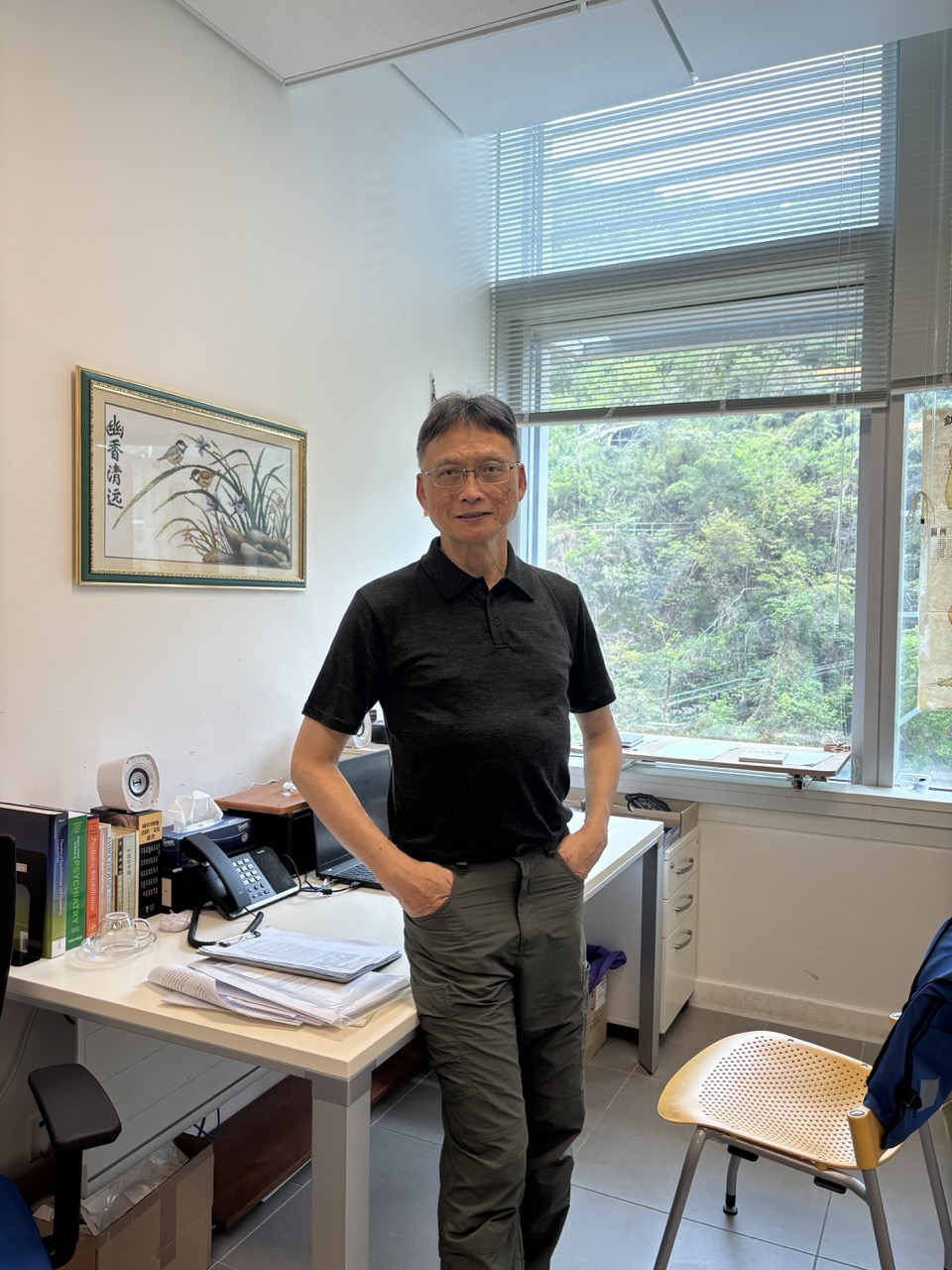
Professor NG Siu Man from the Department of Social Work and Social Administration at the University of Hong Kong, said contemporary fortune telling connects with psychological needs such as stress relief. He noted that uncertainty exists across all stages of life, from childhood to old age.
“Science cannot explain all uncertainties, and there is often a gap between people’s abilities and their expectations. So many people engage in fortune-telling,” he said. “Therefore, this culture will continue.”
He encouraged young people not to bottle up their stress, suggesting that communicating with friends and family can be helpful.
However, he also warned against excessive involvement in fortune-telling and similar activities, as there are potential risks, such as encountering scams. He also pointed out the psychological impact of excessive fortune-telling. “It could lead to obsessive-compulsive disorder, an inability to stop repeating a behavior,” he said. “It could also lead to escapism, avoiding facing what one should be facing.”
As night deepens, the lights of Temple Street continue to glow as usual. Some patrons sit beneath the red tents, listening intently as masters interpret their palm lines or fortunes. Yet among the waiting crowds, some young people lower their heads over their phones, scrolling through apps and typing prompts into AI chatbots in search of guidance. Although the methods and forms of fortune-telling continue to evolve, the desires and expectations behind them remain unchanged. Whether seeking counsel from a traditional master or answers generated by AI, people are still searching for the same thing in this uncertain world: certainty, comfort, and a sense of direction in life.
AI fortune telling in fortune tellers’ eyes
At Wong Tai Sin Temple, fortune-telling follows a ritual that has remained largely unchanged for over a century. Visitors begin by silently reciting their names, birth dates, and the questions they want to ask in their minds and kneel to pray, and then shake a bamboo cylinder filled with numbered sticks until one falls out. Each number on the fortune sticks corresponds to a written fortune, which are mainly classic Chinese poems. The slip that falls out is believed to offer guidance or an answer to the question.
Master Ken, a fortune teller at the temple, said interpreting the written fortune requires more than simply translating the text. In his view, AI-generated readings often remain too broad to capture the nuances of an individual’s situation. He gave an example: for the fortune slip titled “Tao Yuanming Admiring Flowers,” AI might interpret it broadly as “happiness and bliss,” categorizing it as a good sign. However, in reality, the meaning can vary depending on the question posed by the seeker.
Master Joseph has been working in the fortune telling industry for over 30 years. He believes that though AI possesses basic fortune telling knowledge, its accuracy can only reach 60-70% of that of a real fortune teller.
He explained “For example, if I ask an AI what my fortune will be like based on my birth chart, it can only consider the birth chart itself, without taking into account my palmistry or facial features.” He said, “It cannot provide a comprehensive view of one’s fortune.”
Like Thierry Chow, Lilian Yuen is among a new generation in the metaphysics field. She developed an early interest in tarot and joined the divination field after graduating from university. She is now a certified tarot master by the China Tarot Association.
In contrast to Chow, Yuen takes a more cautious view of AI. “AI responses tend to cater to users’ preferences and habits,” she said, explaining that such readings “cannot truly address problems or improve one’s situation.” Also, she expressed that current AI interpretations are too conventional to capture the deeper relationships between tarot cards.
But as the technology is evolving, she believes AI has the potential to improve. “AI models will continue to absorb more knowledge, which could make interpretations more refined,” she said. “So I think the future development is promising.”
In addition, Lilian mentioned the impact of AI on the industry, namely its use as a tool to optimize works, making their content more attractive and influential. However, she also stated that while AI’s dissemination of divination has attracted some clients, it has also led to the loss of some offline clients.
“And the immaturity of AI interpretation technology might create a negative perception of divination,” she said, “which may affect the industry’s reputation.”
Young generation’s perception on fortune telling
Master Joseph has encountered many young clients. In his view, the younger generation’s perspective on fortune-telling differs from that of the older generation.
“They have acquired a lot of knowledge. Thus, when they come for palm reading or fortune-telling, they do not regard it as superstition, but rather as a form of statistical analysis,” Master Joseph observed. “When they come to ask questions, they assess whether the insights they receive align with their own expectations, thereby utilizing them as a point of reference.”
This reporter’s survey found that, about 93% of respondents have trust in fortune telling results to some extent. And among reasons for engaging in fortune-telling, the most commonly selected were “stress relief” , followed by “feeling lost or uncertain about life” and “just for fun” among young respondents.
“My expectation before the divination is to get some kind of guidance,” Emily Wang said. “But generally, I turn to fortune-telling out of a sense of uncertainty. I am actually looking for a kind of certainty, a sense of direction in life from these practices.”
For the past three years, she has visited Wong Tai Sin Temple or Man Mo Temple annually to draw fortune sticks. What surprised her is that she had the same fortune slip on all three occasions. As someone with a long history of scientific education, she finds this difficult to explain.
Wang said that consistently drawing this fortune slip gave her some confidence, especially during a difficult period when she needed to bury herself in work, she always used this slip to encourage herself.
A similar sense of psychological comfort is also expressed by Yongxi Lin, who approaches fortune-telling in a more conditional way. She participates in fortune-telling mainly for psychological comfort, especially during periods when she feels lost and uncertain about her direction in life.
“But it depends on whether the answer really resonates with me or convinces me, I then decide whether I take it seriously.” she said. “Whether the suggestion makes me feel actionable, whether it is creative, and whether it fits my expectations, I take all of these into account.”
Professor NG Siu Man from the Department of Social Work and Social Administration at the University of Hong Kong, said contemporary fortune telling connects with psychological needs such as stress relief. He noted that uncertainty exists across all stages of life, from childhood to old age.
“Science cannot explain all uncertainties, and there is often a gap between people’s abilities and their expectations. So many people engage in fortune-telling,” he said. “Therefore, this culture will continue.”
He encouraged young people not to bottle up their stress, suggesting that communicating with friends and family can be helpful.
However, he also warned against excessive involvement in fortune-telling and similar activities, as there are potential risks, such as encountering scams. He also pointed out the psychological impact of excessive fortune-telling. “It could lead to obsessive-compulsive disorder, an inability to stop repeating a behavior,” he said. “It could also lead to escapism, avoiding facing what one should be facing.”
As night deepens, the lights of Temple Street continue to glow as usual. Some patrons sit beneath the red tents, listening intently as masters interpret their palm lines or fortunes. Yet among the waiting crowds, some young people lower their heads over their phones, scrolling through apps and typing prompts into AI chatbots in search of guidance. Although the methods and forms of fortune-telling continue to evolve, the desires and expectations behind them remain unchanged. Whether seeking counsel from a traditional master or answers generated by AI, people are still searching for the same thing in this uncertain world: certainty, comfort, and a sense of direction in life.
Extra Credits
Advisor
Jennifer Deayton
Editor in Chief
Clarisse Choo
Creative Directors
Syrena Jin
Cheryl Xie
Serena Zhou
Managing Editor
Jiachen Li
Copy Editor
Andy Huang
Visual Producer
Isco Zhang
Author

Tags: AI, Bazi, Fengshui, Fortune telling, Metaphysics, Tarot, Young people