
As AI Actors Take the Stage, Audiences Long for Human Imperfection
by Zhu Jiale & Tang Yunqi
As the twilight settled over the palace eaves, she slowly turned around. Strands of hair fell across her shoulders, her earrings swayed gently, and even the fine texture of her skin was clearly visible.
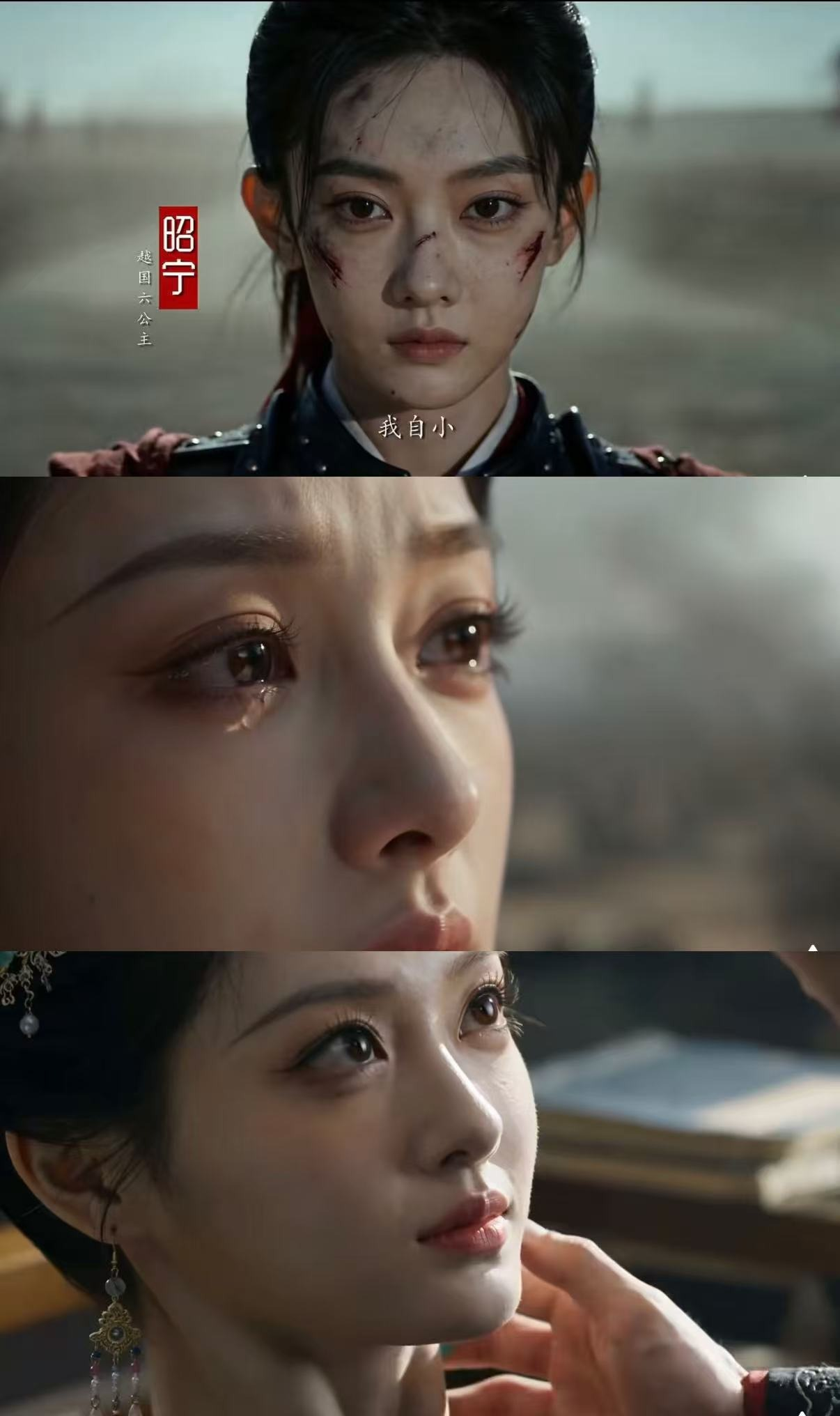
Screenshots from “Lure the Enemy”. (cr. “Lure the Enemy” EP01)
The scene, from the AI-generated short drama “Lure the Enemy”, looks almost indistinguishable from a live-action production. But the character on screen is not a real actor. Her expressions, movements and emotions are all generated by a model.
At 6 a.m., hundreds of kilometers away from any digital set, Amy Chen was waiting for a very different kind of scene.
The 20-year-old had been working as a short-drama actress for just over a year, mostly in minor roles like stand-ins, background parts, the kind of characters that rarely get names. On better months, she could make 5,000 to 6,000 yuan. On worse ones, barely half of that.
In the past three months, however, she has only been called in once, just for an extra role. “It’s basically no income now,” she said.
So what changed? As AI-generated short dramas expand rapidly across Chinese platforms, actors like Chen are finding themselves with fewer and fewer places to stand.
AI-generated short dramas have expanded rapidly across Chinese platforms over the past year, driven largely by lower production costs and faster production cycles. As video platforms and studios experiment with AI-generated actors, virtual sets and automated editing tools, parts of the traditional short-drama workflow are beginning to shrink.
ByteDance said in a February 2026 announcement that it had released Seedance 2.0, an AI video-generation model designed for short-form content creation. The company said the tool could generate videos using text, images, audio and video references.
At the iQIYI World Conference in Beijing on April 20, 2026, iQIYI announced the launch of an “AI talent library”. iQIYI said at its World Conference that more than 100 performers had already joined the initiative. The company added the system would allow creators to build reusable digital doubles using facial expressions, voice patterns and motion data.
As the twilight settled over the palace eaves, she slowly turned around. Strands of hair fell across her shoulders, her earrings swayed gently, and even the fine texture of her skin was clearly visible.
Screenshots from “Lure the Enemy”. (cr. “Lure the Enemy” EP01)
The scene, from the AI-generated short drama “Lure the Enemy”, looks almost indistinguishable from a live-action production. But the character on screen is not a real actor. Her expressions, movements and emotions are all generated by a model.
At 6 a.m., hundreds of kilometers away from any digital set, Amy Chen was waiting for a very different kind of scene.
The 20-year-old had been working as a short-drama actress for just over a year, mostly in minor roles like stand-ins, background parts, the kind of characters that rarely get names. On better months, she could make 5,000 to 6,000 yuan. On worse ones, barely half of that.
In the past three months, however, she has only been called in once, just for an extra role. “It’s basically no income now,” she said.
So what changed? As AI-generated short dramas expand rapidly across Chinese platforms, actors like Chen are finding themselves with fewer and fewer places to stand.
AI-generated short dramas have expanded rapidly across Chinese platforms over the past year, driven largely by lower production costs and faster production cycles. As video platforms and studios experiment with AI-generated actors, virtual sets and automated editing tools, parts of the traditional short-drama workflow are beginning to shrink.
ByteDance said in a February 2026 announcement that it had released Seedance 2.0, an AI video-generation model designed for short-form content creation. The company said the tool could generate videos using text, images, audio and video references.
At the iQIYI World Conference in Beijing on April 20, 2026, iQIYI announced the launch of an “AI talent library”. iQIYI said at its World Conference that more than 100 performers had already joined the initiative. The company added the system would allow creators to build reusable digital doubles using facial expressions, voice patterns and motion data.
DataEye Research Institute’s January 2026 ranking shows that AI-simulated human dramas took 38 spots on Douyin’s top 100 trending “manju” — a Chinese term for motion-comic dramas — up from just 7 percent a year earlier. It further estimates the user base for AI-generated motion comics and related short dramas will rise from around 120 million in 2025 to 280 million in 2026.
But producers say the transition has been gradual rather than sudden.
“The shift did not happen overnight,” said Fay Wang, a producer whose studio has spent the past year experimenting with AI-generated short dramas. Wang was a director for short dramas for five years. Before, she shot most series with human actors.
“In traditional shoots, everything costs money — actors, makeup, locations, lighting,” she said. “With AI, sometimes one person with one computer can finish a project within a week.”
Wang estimated that AI production costs can be nearly 20 times lower than comparable live-action projects.
Yet as AI-generated productions become more efficient and visually convincing, both audiences and industry workers are beginning to question what might be lost in the process.
In an informal test conducted by the reporter, five viewers were asked to distinguish between AI-generated clips and human-performed ones. While the test was not scientific, participants said the differences were often difficult to detect at first glance, with skin texture, lighting and facial movements appearing nearly identical. Even when they selected an answer, some said they hesitated, describing the images as “too smooth” or “slightly unnatural,” without being able to clearly explain why.
Online, reactions to AI-generated short dramas show a similar pattern. Some viewers praise the improved visuals, saying the productions look more polished even with small budgets.
Others focused less on appearance and more on performance and the emotions behind acting.
They argue that high-end visuals can’t fully replace the “lived-in” feel of a real one. Many viewers feel that while the characters are undeniably good-looking, their features are so similar that “face blindness” has become a serious issue. In a highly liked Xiaohongshu comment posted on April 12 under a clip of “Lure the Enemy,” reviewed by the reporter on April 25, user “宇宙能量听我召唤” (“Cosmic Energy, Hear My Call”) said: “None of the characters really leave an impression. I can’t remember them at all. Plus, from different angles, the same character sometimes looks like a different person.”
The same user added: “If you take away the plot, I couldn’t care less about these AI characters. Some of them actually feel pretty creepy.”
The comment was similar to others reviewed by the reporter under Xiaohongshu posts about AI-generated short dramas, where viewers said that watching a show is not only about following a plot but also about noticing subtle human cues such as micro-expressions and eye contact. The fleeting look of exhaustion or a subconscious flicker of emotion from a real actor is often what viewers said resonates most.
Similar concerns were also raised by Chen after she watched several popular AI-generated dramas that had spread widely online.
On one hand, she acknowledges their strengths: “The visuals are more polished, and it’s much faster to produce.”
But she also pointed out the missing emotions. “They can be stiff. There’s no real emotion. Some details are still not as natural as a real actor.”
On most days now, Chen still keeps her schedule open, waiting for casting calls that come less and less often.
At the same time, she has started to look beyond the set. Recently, she has been trying to learn post-production like editing. She has also been experimenting with AI tools to create content herself, hoping they might offer another way to help her stay in the industry.
Around her, many colleagues are making similar choices. Some are leaving, while others are shifting into new roles shaped by AI. For Chen, it does not quite feel like a voluntary turn, but rather more like being pushed along.
“I’ll try to adapt,” she said. “After all, there are fewer chances for real actors now.”
DataEye Research Institute’s January 2026 ranking shows that AI-simulated human dramas took 38 spots on Douyin’s top 100 trending “manju” — a Chinese term for motion-comic dramas — up from just 7 percent a year earlier. It further estimates the user base for AI-generated motion comics and related short dramas will rise from around 120 million in 2025 to 280 million in 2026.
But producers say the transition has been gradual rather than sudden.
“The shift did not happen overnight,” said Fay Wang, a producer whose studio has spent the past year experimenting with AI-generated short dramas. Wang was a director for short dramas for five years. Before, she shot most series with human actors.
“In traditional shoots, everything costs money — actors, makeup, locations, lighting,” she said. “With AI, sometimes one person with one computer can finish a project within a week.”
Wang estimated that AI production costs can be nearly 20 times lower than comparable live-action projects.
Yet as AI-generated productions become more efficient and visually convincing, both audiences and industry workers are beginning to question what might be lost in the process.
In an informal test conducted by the reporter, five viewers were asked to distinguish between AI-generated clips and human-performed ones. While the test was not scientific, participants said the differences were often difficult to detect at first glance, with skin texture, lighting and facial movements appearing nearly identical. Even when they selected an answer, some said they hesitated, describing the images as “too smooth” or “slightly unnatural,” without being able to clearly explain why.
Online, reactions to AI-generated short dramas show a similar pattern. Some viewers praise the improved visuals, saying the productions look more polished even with small budgets.
Others focused less on appearance and more on performance and the emotions behind acting.
They argue that high-end visuals can’t fully replace the “lived-in” feel of a real one. Many viewers feel that while the characters are undeniably good-looking, their features are so similar that “face blindness” has become a serious issue. In a highly liked Xiaohongshu comment posted on April 12 under a clip of “Lure the Enemy,” reviewed by the reporter on April 25, user “宇宙能量听我召唤” (“Cosmic Energy, Hear My Call”) said: “None of the characters really leave an impression. I can’t remember them at all. Plus, from different angles, the same character sometimes looks like a different person.”
The same user added: “If you take away the plot, I couldn’t care less about these AI characters. Some of them actually feel pretty creepy.”
The comment was similar to others reviewed by the reporter under Xiaohongshu posts about AI-generated short dramas, where viewers said that watching a show is not only about following a plot but also about noticing subtle human cues such as micro-expressions and eye contact. The fleeting look of exhaustion or a subconscious flicker of emotion from a real actor is often what viewers said resonates most.
Similar concerns were also raised by Chen after she watched several popular AI-generated dramas that had spread widely online.
On one hand, she acknowledges their strengths: “The visuals are more polished, and it’s much faster to produce.”
But she also pointed out the missing emotions. “They can be stiff. There’s no real emotion. Some details are still not as natural as a real actor.”
On most days now, Chen still keeps her schedule open, waiting for casting calls that come less and less often.
At the same time, she has started to look beyond the set. Recently, she has been trying to learn post-production like editing. She has also been experimenting with AI tools to create content herself, hoping they might offer another way to help her stay in the industry.
Around her, many colleagues are making similar choices. Some are leaving, while others are shifting into new roles shaped by AI. For Chen, it does not quite feel like a voluntary turn, but rather more like being pushed along.
“I’ll try to adapt,” she said. “After all, there are fewer chances for real actors now.”
Extra Credits
Advisor
Wang Feng
Editor in Chief
Clarisse Choo
Creative Directors
Syrena Jin
Cheryl Xie
Serena Zhou
Managing Director
Jiachen Li
Copy Editor
Andy Huang
Visual Producer
Jingyi Huang
Extra Credits
Advisor
Wang Feng
Editor in Chief
Clarisse Choo
Creative Directors
Syrena Jin
Cheryl Xie
Serena Zhou
Managing Director
Jiachen Li
Copy Editor
Andy Huang
Visual Producer
Jingyi Huang
