
New Law, Old Problems
Hong Kong's Gig Worker Crisis
by Li Chi & Zhang Yining
Kiki Ling, 22, began a part-time job as a service assistant at a Central tea restaurant in December 2025. She worked five days a week, starting at 1 p.m., spending at least four hours each shift preparing food, washing dishes and delivering meals.
In late December, Ling took two days of sick leave for a fever. “You don’t get sick leave,” her manager told her. “You’re not an employee.”
Over the four weeks, Ling worked 70 hours, but only 14 in the final week. That four-hour shortfall meant she failed to meet the requirements of the former “418 continuous contract”. Under that rule, an employee must work at least 18 hours per week for four consecutive weeks to qualify for statutory benefits such as sick leave and paid holidays.
“Getting sick is hard to avoid,” Ling said in the online interview with us. “I’m working every day, but legally, it’s as if I don’t even exist.”
Kiki Ling, 22, began a part-time job as a service assistant at a Central tea restaurant in December 2025. She worked five days a week, starting at 1 p.m., spending at least four hours each shift preparing food, washing dishes and delivering meals.
In late December, Ling took two days of sick leave for a fever. “You don’t get sick leave,” her manager told her. “You’re not an employee.”
Over the four weeks, Ling worked 70 hours, but only 14 in the final week. That four-hour shortfall meant she failed to meet the requirements of the former “418 continuous contract”. Under that rule, an employee must work at least 18 hours per week for four consecutive weeks to qualify for statutory benefits such as sick leave and paid holidays.
“Getting sick is hard to avoid,” Ling said in the online interview with us. “I’m working every day, but legally, it’s as if I don’t even exist.”
Under the new regulations, employees qualify for benefits if they work for the same employer for at least four weeks and either complete 17 hours per week or accumulate 68 hours over a four-week period.
Under the new rule, Ling would have qualified for sick leave, meaning her manager would be required to approve her sick leave.
The Secretary for Labour and Welfare Chris Sun, said in an interview with Hong Kong Radio Station that the reform was designed to stop employers from cutting workers’ hours in the fourth week to deny benefits.
In Hong Kong, gig workers typically find jobs through labor agencies, personal referrals, social media groups and direct registration on delivery platforms such as Keeta and Foodpanda. According to a study by Lingnan University official statistics, there are approximately 700,000 gig workers in Hong Kong, accounting for about 13.2% of the total workforce. This group includes delivery riders, freelancers, part-time restaurant servers and individuals engaged in temporary, part-time, or on-demand services characterized by high flexibility.
The government’s new “468 Rule” aims to bring more employees under the protection of the law. Sun estimates that approximately 11,400 employees will benefit, with employers expected to incur an additional annual expenditure of HK$150 million.
Under the new regulations, employees qualify for benefits if they work for the same employer for at least four weeks and either complete 17 hours per week or accumulate 68 hours over a four-week period.
Under the new rule, Ling would have qualified for sick leave, meaning her manager would be required to approve her sick leave.
The Secretary for Labour and Welfare Chris Sun, said in an interview with Hong Kong Radio Station that the reform was designed to stop employers from cutting workers’ hours in the fourth week to deny benefits.
In Hong Kong, gig workers typically find jobs through labor agencies, personal referrals, social media groups and direct registration on delivery platforms such as Keeta and Foodpanda. According to a study by Lingnan University official statistics, there are approximately 700,000 gig workers in Hong Kong, accounting for about 13.2% of the total workforce. This group includes delivery riders, freelancers, part-time restaurant servers and individuals engaged in temporary, part-time, or on-demand services characterized by high flexibility.
The government’s new “468 Rule” aims to bring more employees under the protection of the law. Sun estimates that approximately 11,400 employees will benefit, with employers expected to incur an additional annual expenditure of HK$150 million.
To earn more money to be self-reliant, 23-year-old Wang Congjun juggles multiple gig jobs simultaneously. He might be found at the Kai Tak Cruise Terminal handling passenger reception, donning a chef’s uniform to wash dishes and prep ingredients at a tea restaurant in Tsim Sha Tsui, carrying cement bags at the construction site in Tai Wai, or packing and boxing goods at a dried fruit factory in Tsuen Wan.
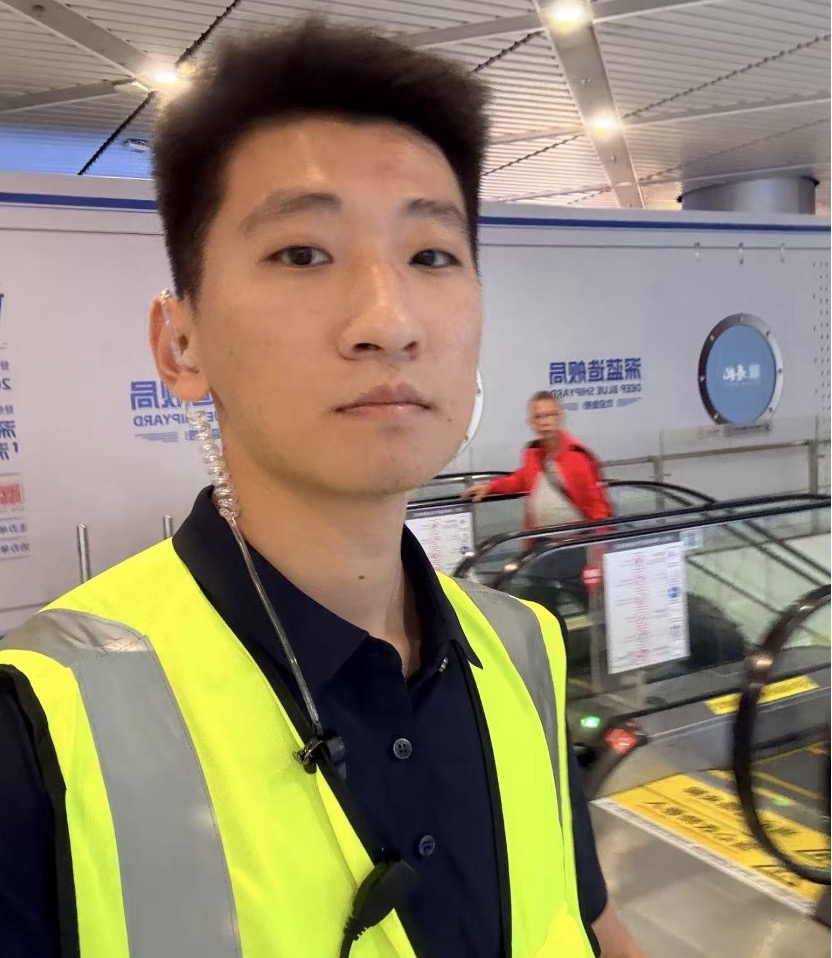



Wong’s life (From Wang Congjun)
His cumulative weekly working hours often exceed 50, and his total over four weeks far surpasses 160 hours, which is a workload virtually comparable to that of a full-time employee. However, because he is not tied to a single employer, the protections he receives remain severely limited.
Labor advocates say this is no accident but a predictable result of employers trying to limit labor costs.
“Rather than allowing gig workers to qualify for continuous contracts, employers will simply expand their pool of casual staff and swap them out the moment they are near the statutory time limit.” Speaking from the perspective of business owners, Yeung Wai-sing, chairman of the Association for Hong Kong Catering Services Management, revealed in a TVB interview that the catering industry has already established these clear countermeasures to navigate the new policy.
“To circumvent this system, people will employ every trick in the book and do whatever it takes, all to avoid falling into the legal trap (of bearing long-term benefit costs),” Yeung said.
He frankly acknowledged that from an employer’s perspective, this constant turnover of staff increases the operational and management costs of a business, and inevitably impacts the quality of catering services. To avoid providing employee benefits, businesses are forced to hire more staff and implement more convoluted scheduling to meet operational demands. The frequent churn of personnel also makes workforce training and management significantly more difficult.
Chris Sun noted that, within the bounds of the law, employers retain the right to continue hiring staff on a “gig” basis. However, the new policy aims to increase the cost of this choice, meaning employers will have to recruit more new staff while losing out on experienced veteran workers.
To earn more money to be self-reliant, 23-year-old Wang Congjun juggles multiple gig jobs simultaneously. He might be found at the Kai Tak Cruise Terminal handling passenger reception, donning a chef’s uniform to wash dishes and prep ingredients at a tea restaurant in Tsim Sha Tsui, carrying cement bags at the construction site in Tai Wai, or packing and boxing goods at a dried fruit factory in Tsuen Wan.
Wong’s life (From Wang Congjun)
His cumulative weekly working hours often exceed 50, and his total over four weeks far surpasses 160 hours, which is a workload virtually comparable to that of a full-time employee. However, because he is not tied to a single employer, the protections he receives remain severely limited.
Labor advocates say this is no accident but a predictable result of employers trying to limit labor costs.
“Rather than allowing gig workers to qualify for continuous contracts, employers will simply expand their pool of casual staff and swap them out the moment they are near the statutory time limit.” Speaking from the perspective of business owners, Yeung Wai-sing, chairman of the Association for Hong Kong Catering Services Management, revealed in a TVB interview that the catering industry has already established these clear countermeasures to navigate the new policy.
“To circumvent this system, people will employ every trick in the book and do whatever it takes, all to avoid falling into the legal trap (of bearing long-term benefit costs),” Yeung said.
He frankly acknowledged that from an employer’s perspective, this constant turnover of staff increases the operational and management costs of a business, and inevitably impacts the quality of catering services. To avoid providing employee benefits, businesses are forced to hire more staff and implement more convoluted scheduling to meet operational demands. The frequent churn of personnel also makes workforce training and management significantly more difficult.
Chris Sun noted that, within the bounds of the law, employers retain the right to continue hiring staff on a “gig” basis. However, the new policy aims to increase the cost of this choice, meaning employers will have to recruit more new staff while losing out on experienced veteran workers.
They are unable to enjoy benefits under traditional employment relationships, such as Mandatory Provident Fund (MPF) employer contributions, paid sick leave and employees’ compensation insurance.
This February, while looking for a part-time job at a Wan Chai restaurant, Ling was asked to sign a “self-employment agreement.” “You’ll earn more as a self-employed contractor,” the employer told her.
She hesitated but reasoned that there wouldn’t be much difference, given that her duties including serving, setting tables and clearing dishes were low-risk. The higher take-home pay was a big draw.
Furthermore, Hong Kong delivery platforms such as Keeta and Foodpanda also sign self-employment contracts with their riders. Both platforms provide “Group Personal Accident Insurance.”
“Platform workers are aware they are excluded from general labor protections, paid sick leave, and other professional benefits, and they accept this fact,” Au-Yeung Tat-chor, a professor at Lingnan University, said during a Zoom interview. “However, given their high-risk work, they mainly worry that current insurance is insufficient for traffic accidents or on-the-job injuries.”
They are unable to enjoy benefits under traditional employment relationships, such as Mandatory Provident Fund (MPF) employer contributions, paid sick leave and employees’ compensation insurance.
This February, while looking for a part-time job at a Wan Chai restaurant, Ling was asked to sign a “self-employment agreement.” “You’ll earn more as a self-employed contractor,” the employer told her.
She hesitated but reasoned that there wouldn’t be much difference, given that her duties including serving, setting tables and clearing dishes were low-risk. The higher take-home pay was a big draw.
Furthermore, Hong Kong delivery platforms such as Keeta and Foodpanda also sign self-employment contracts with their riders. Both platforms provide “Group Personal Accident Insurance.”
“Platform workers are aware they are excluded from general labor protections, paid sick leave, and other professional benefits, and they accept this fact,” Au-Yeung Tat-chor, a professor at Lingnan University, said during a Zoom interview. “However, given their high-risk work, they mainly worry that current insurance is insufficient for traffic accidents or on-the-job injuries.”
The case reflects a broader problem in Hong Kong’s gig economy, where the boundary between employment and self-employment has become increasingly blurred under a rigid legal framework. As Prof. Au Yeung noted, Hong Kong’s Employment Ordinance remains confined to a binary classification of “employee” and “self-employed,” leaving many gig workers without statutory protection regardless of working-hour thresholds. “Whether the threshold is 18 hours or 68 hours is largely secondary,” he said, “this is an issue of power.”
He explained that while redefining the time threshold theoretically expands policy coverage, employers maintain the primary authority in defining work models. They can unilaterally adjust working hours, modify shift schedules or require workers to sign “self-employment agreements” to manage additional labor costs.
At the same time, digital platforms exert significant control through algorithms, which dictate delivery routes, enforce performance metrics and manage order allocation.
While Hong Kong continues to adjust hour-based thresholds under its Employment Ordinance, Singapore, another Asian financial hub, has taken a markedly different approach.
In Singapore, under the Platform Workers Act 2024, platform workers are recognized as a separate legal category rather than being forced into the traditional employee-or-contractor divide. Instead of relying on working-hour thresholds or single-employer requirements, the law ties core protections such as work injury compensation and pension contributions to platform activity itself — namely, accepting orders and generating income.
Prof. Au Yeung noted that Singapore’s regulatory model directly reflects how platform work actually operates. The model suggests that meaningful reform may require rethinking how gig workers are legally classified, rather than exclusively revising working-hour calculations.
The case reflects a broader problem in Hong Kong’s gig economy, where the boundary between employment and self-employment has become increasingly blurred under a rigid legal framework. As Prof. Au Yeung noted, Hong Kong’s Employment Ordinance remains confined to a binary classification of “employee” and “self-employed,” leaving many gig workers without statutory protection regardless of working-hour thresholds. “Whether the threshold is 18 hours or 68 hours is largely secondary,” he said, “this is an issue of power.”
He explained that while redefining the time threshold theoretically expands policy coverage, employers maintain the primary authority in defining work models. They can unilaterally adjust working hours, modify shift schedules or require workers to sign “self-employment agreements” to manage additional labor costs.
At the same time, digital platforms exert significant control through algorithms, which dictate delivery routes, enforce performance metrics and manage order allocation.
While Hong Kong continues to adjust hour-based thresholds under its Employment Ordinance, Singapore, another Asian financial hub, has taken a markedly different approach.
In Singapore, under the Platform Workers Act 2024, platform workers are recognized as a separate legal category rather than being forced into the traditional employee-or-contractor divide. Instead of relying on working-hour thresholds or single-employer requirements, the law ties core protections such as work injury compensation and pension contributions to platform activity itself — namely, accepting orders and generating income.
Prof. Au Yeung noted that Singapore’s regulatory model directly reflects how platform work actually operates. The model suggests that meaningful reform may require rethinking how gig workers are legally classified, rather than exclusively revising working-hour calculations.
“I’m working every day, but legally, it’s as if I don’t even exist,” Ling said, reflecting the frustration many gig workers say remains unresolved under the new rules.
“I’m working every day, but legally, it’s as if I don’t even exist,” Ling said, reflecting the frustration many gig workers say remains unresolved under the new rules.
Advisor
Feng Wang
Editor in Chief
Clarisse Choo
Creative Directors
Syrena Jin
Cheryl Xie
Serena Zhou
Managing Editor
Jiachen Li
Copy Editor
Evelyn Tao
Visual Producer
Jingyi Huang
Advisor
Feng Wang
Editor in Chief
Clarisse Choo
Creative Directors
Syrena Jin
Cheryl Xie
Serena Zhou
Managing Editor
Jiachen Li
Copy Editor
Evelyn Tao
Visual Producer
Jingyi Huang
