
“I was like talking to a robot,” said Lau Lok-hung, an experienced Taobao user.
Lau is struggling with communicating with Taobao’s robotic customer service again to prove that she had never received a lost parcel – which is a common situation encountered by many cross-border online shoppers in the after sales process.
Under the technological era, the development of cross-border e-commerce has created a global platform for businesses to break through geographical restrictions and efficiently expand into overseas markets.
Taobao, a prominent Chinese e-commerce platform under Alibaba, announced its market expansion to Hong Kong in 2024 by introducing a free shipping service to the city. The other two major mainland e-commerce giants, Pinduoduo and JD.com, have also quickly followed suit by introducing free shipping to Hong Kong services to seize the Hong Kong market.
For example, since the expansion of its free shipping service in Hong Kong last October, Taobao Hong Kong has seen double-digit year-on-year growth in both gross merchandise volume (GMV) and order numbers.
Taobao users now make up half of Hong Kong’s total population, said Ye Jianqiu, general manager of Tmall Taobao World, a unit of Alibaba’s International Digital Commerce Group, while the number of new users has more than doubled compared to the same period last year.
Zhuang Shuai, the founder and chief analyst at e-commerce consultancy Bailian said, “Listing on Hong Kong’s e-commerce platforms can help their brands boost their popularity among Hong Kong and foreigner.”
From the customer’s perspective, the free shipping allows them to conveniently purchase items at a low price from mainland e-commerce platforms when staying in Hong Kong.
Although they can enjoy the lower price to purchase different items, their consumer rights have not been guaranteed. According to the Consumer Council, they received 1,088 cases related to cross-border online shopping in 2024 (including Hong Kong consumers shopped with non-local online platforms, and overseas consumers shopped with Hong Kong online shops):
These complaints highlight systemic challenges, such as inconsistent logistics, misleading product descriptions, and inadequate dispute resolution mechanisms.
In light of this growing trend, this report examines the implications of mainland e-commerce’s rapid expansion into Hong Kong, focusing on its impact on local businesses, consumer protection, and the broader retail landscape.
According to the report by the Census and Statistics Department of HKSAR, the total value of online retail sales in 2024 reached HKD 31.6 billion, accounting for 8.4% of total retail sales. As the e-commerce giants Taobao and JD.com announced to invest more than 1 billion to increase their market share in Hong Kong, the local retail industry may find itself challenged by mainland competitors.
By evaluating regulatory gaps and potential solutions, the reports will provide actionable insights for shoppers navigating this evolving landscape.
Lau Lok-hung, a 60-year-old housewife, has spent over CNY¥225,000 on Taobao over the past 10 years. She began using the platform’s free shipping service last year but noted that additional charges sometimes occurred after her purchases arrived at the warehouse.
“There is no reminder during the checkout process,” said Lau, highlighting that the final bill only becomes visible after all items have arrived at the warehouse.
Lau also added that one of her purchases, a plastic pipe plug, went missing when she unpacked the parcels, but she did not receive adequate support from the customer service. She first contacted the staff at the self-pickup point, but was replied that they had never received the parcel. Then, Lau tried to escalate the issue to Taobao’s customer service.
“I was like talking to a robot,” said Lau. “I kept repeating that I did not receive the parcel, but the customer service just repetitively asked me to check if my family or friends had taken it.”
Lau eventually gave up her lost parcel and bought the same product from the same online store again. “I have no choice. I can’t find any local store selling the same plug,” she said.
Sue, a Pinduoduo user who only gives her first name, was also charged an additional fee. The platform was supposed to send a notification to her once the purchased items had arrived at the self-pickup point. However, the logistics company, SF Express did not inform Sue to take her items, leading to an additional charge of HKD$40 due to late pick-up penalty.
“Of course I was angry,” said Sue. “It’s unreasonable for them to charge me without notifying me to get the items.”
Eventually, Sue decided to return the purchased product, which only cost below HKD$20. “I don’t want to waste time and energy on something that costs just a few dollars, so I’ll just pass on it.”
Another Taobao user Keung Kun-ching purchased a pack of beef balls from a seller that had the promotion label clearly displayed on the product page.
However, after completing the payment, The seller said that the order would not be delivered. The merchant replied to her that they don’t recommend you buy this.” Keung added,“The product didn’t meet the delivery policy, but it was still marked with the free delivery label. On top of that, their customer service had a clear regional bias.”
When she contacted Taobao’s official customer service, she was told that some goods, including prohibited, overweight, or oversized items, could not be shipped through their transshipment service.
“If an item can’t be shipped, but it’s not listed among prohibited goods, consumers are told to contact the logistics provider directly to confirm,” she added.
“I’m speechless. I’m definitely upset. Taobao has always had this issue, while the official customer service and the merchant push the responsibility back and forth. This kind of after-sales problem has been going on for more than a decade between Hong Kong and the mainland.”
Since Chinese e-commerce platforms provide better cross-border shipping service, it attracts more and more Hongkongers to shop there.
According to our survey, over 95% of people have used the “Free Shipping to Hong Kong” option. Nearly 90% said it was one of the main reasons they chose to shop on mainland platforms.
“Many products don’t state clearly if they include shipping to Hong Kong or if there’s a minimum order,” Samuel Sun Liang, a 27-year-old student said.
“By the time you figure it out, you could’ve already bought it on Pinduoduo, which clearly shows ‘Free Shipping to Hong Kong’.”
Sun said JD.com gives the best service.“The delivery is fast. Couriers call you in advance and even take a photo if they leave the package at your door,” he said.
In our survey, over 80% of JD.com users agreed, saying they liked its fast delivery, easy-to-use app, and helpful return service.
However, JD.com is more expensive and has fewer products than PDD.“I don’t use it often now,” Sun said. “But if I’m buying something big, like a mattress, I’ll still choose JD.com.”
Pinduoduo is his first choice now.“They sell everything — even fruit. It’s cheaper, there’s no delivery or minimum order fee, and shipping usually takes about five days. That’s acceptable compared to Hong Kong prices,” he said.
Over half of PDD users in our survey said they were happy with it. They liked the low prices (44%) and easy shopping experience (24%). But 5.62% had problems like slow delivery or unclear tracking.
Sun only uses Taobao when he can’t find something on PDD or JD.com. “Sometimes Taobao has it, but you often need to pay shipping. It doesn’t have many snacks either,” he said.
More than 55% of Taobao users reported satisfaction with its free shipping service from our survey result. However, others raised concerns about hidden charges and slower delivery times compared to private shipping agents.
So how can you avoid these pitfalls? Want to shop smart? Follow these steps to compare the three platforms and make better choices.
Step 1: Compare Key Features of Three Platforms
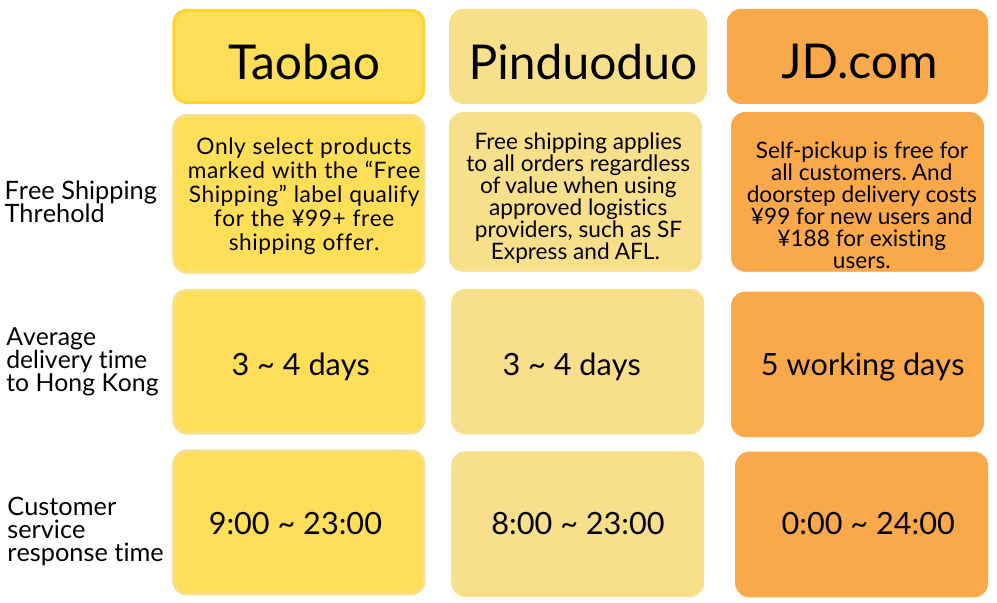
Step 2: Know What You Can’t Ship
Some items are restricted or banned for cross-border delivery. If you buy these, the warehouse may reject them, and the courier will return the parcel to the seller. Check out the table of commonly misunderstood items to avoid costly mistakes:
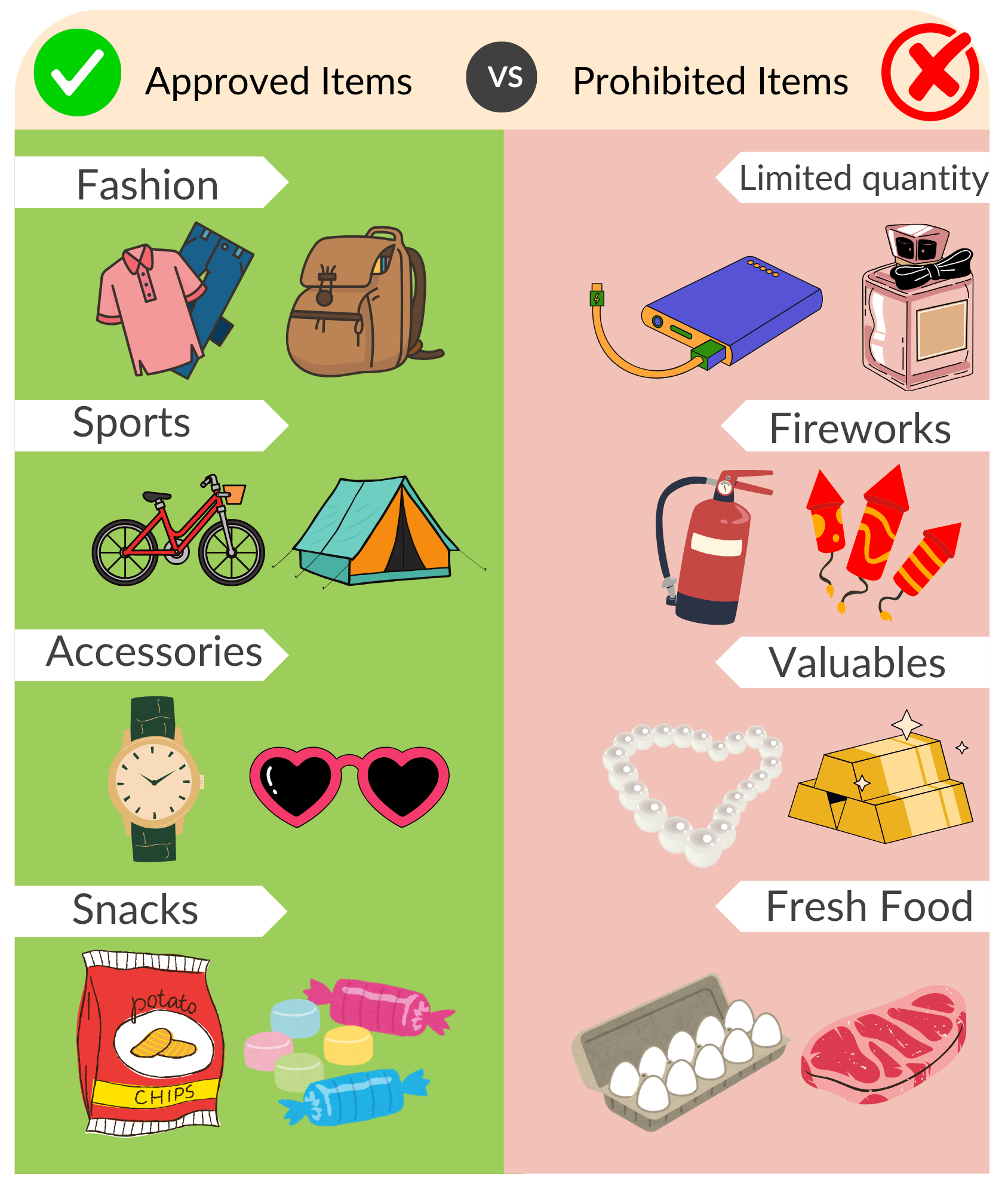
Think you’re ready?
Try helping Amy spot the blocked items!
Step 3: Level Up with Smart Shipping Hacks
Before You Buy: Use a Checklist
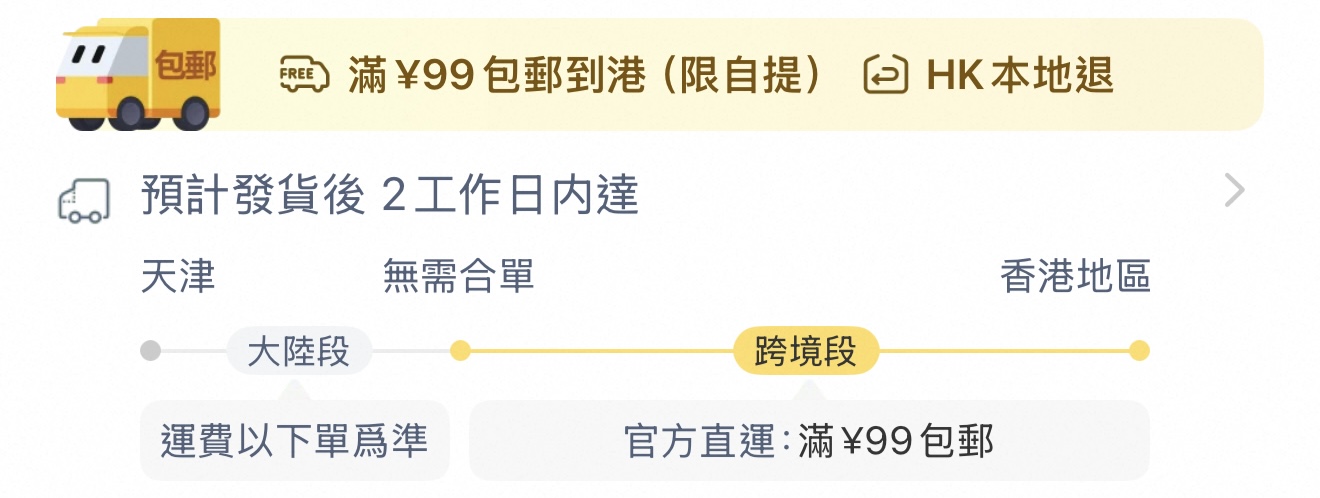
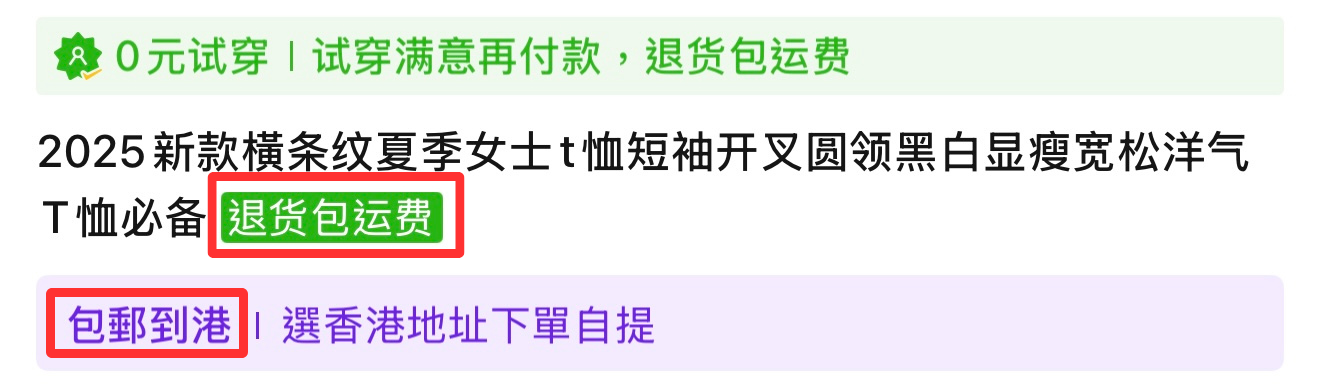
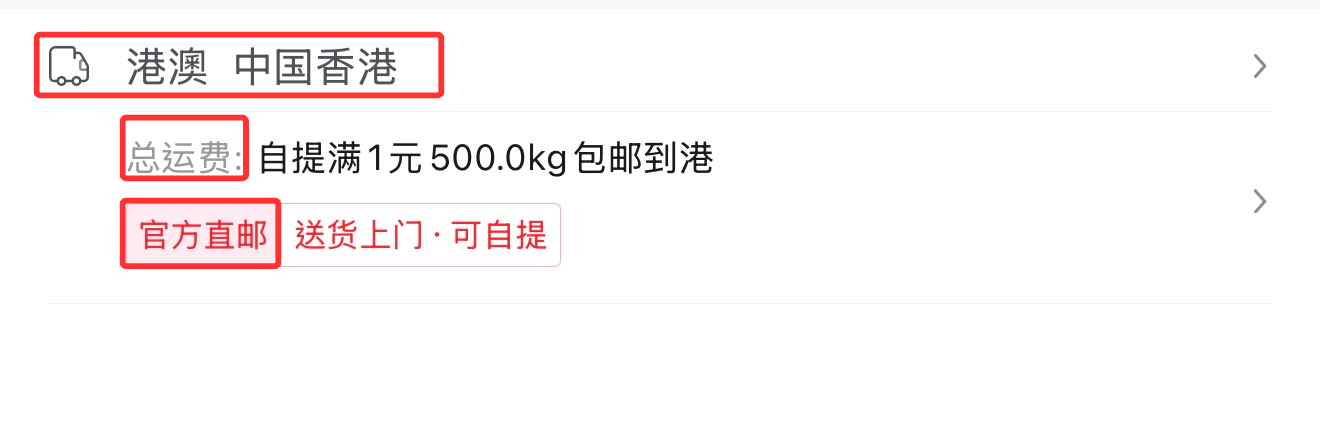
Ask sellers directly:
1. Is this item eligible for free shipping to HK?
2. Who pays for return shipping if customs rejects it?
3. What’s your policy on transit damage?
After You Buy: Keep Records
1. Product page (showing free shipping and policies
2. Checkout page with full pricing breakdown
3. Order confirmation details
Unboxing tip: Record a video!
1. Start filming before opening the package
2. Show the intact shipping label and box
3. Reveal the contents slowly and clearly
4. Compare the item to original photos
Step 4: Complain Like a Pro
If things go wrong, explain your case clearly to customer service:
1. “The product page showed free shipping to HK and no restrictions.”
2. “I encountered unexpected shipping fees of ¥XX / order cancellation / confiscation due to undisclosed restrictions.”
Then request appropriate compensation:
1. A full refund
2. A free reshipment
3. A coupon for inconvenience
After reading this guide, you’re ready to shop like a pro on Chinese e-commerce platforms!
The convenience of free shipping from Mainland platforms comes with trade-offs especially when it comes to delivery logistics.
After making purchases on Taobao, Joyce Lee Wing-yin, a 26-year-old accountant said:
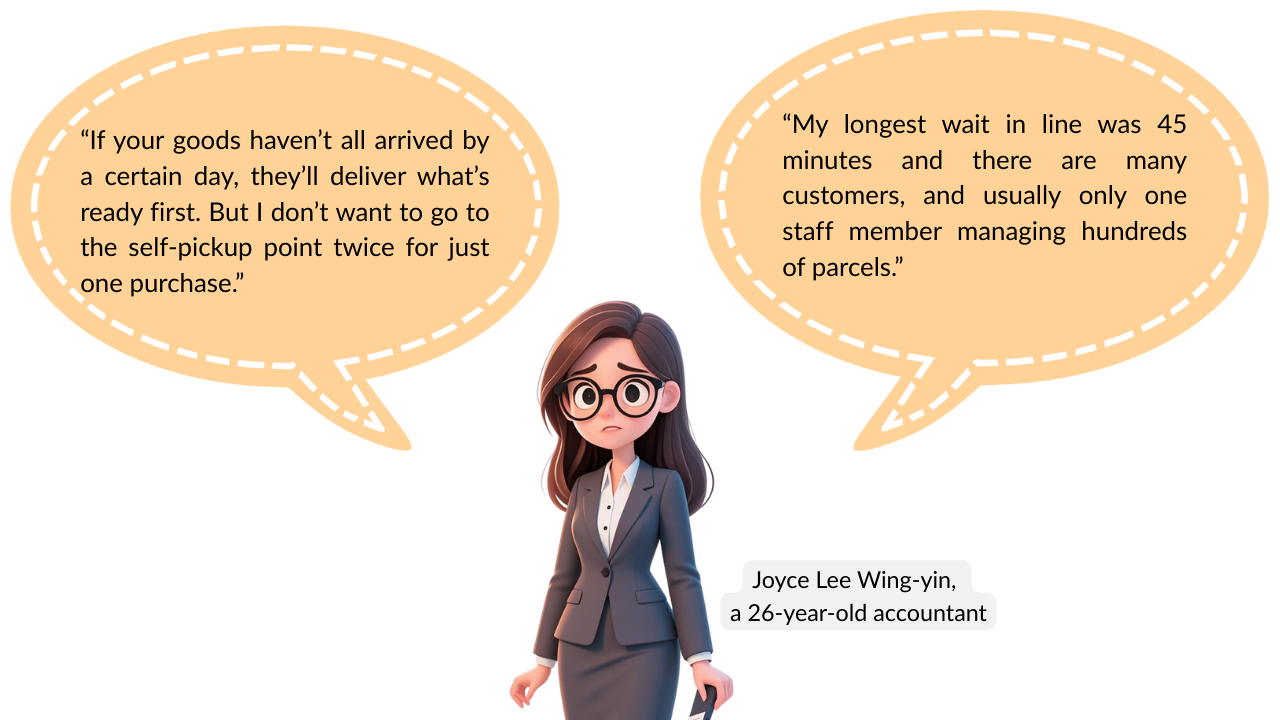
Her experience shows a common complaint among Hong Kong consumers: limited control over delivery timing and crowding at self-pickup points.
While consumers voice concerns, the self-pickup point operators at the center of the logistics chain are under their own strain. As Taobao, Pinduoduo and JD.com expanded their markets to Hong Kong by free shipping, the local self-pickup point owners have faced new challenges from the mainland e-commerce giants.
The owner of E memory collection, Matthew T., is cooperating with one private shipping company currently. Their business has decreased by 50 per cent since Pinduoduo expansion to Hong Kong.
“For many people, they can buy at a lower price on these platforms, but it is like a sugar-coated poison for the Hong Kong economy,” said Matthew. “Many small businesses have thus closed down.”
He mentioned that business has slightly improved this month because there are fewer 99 free shipping products on Taobao.
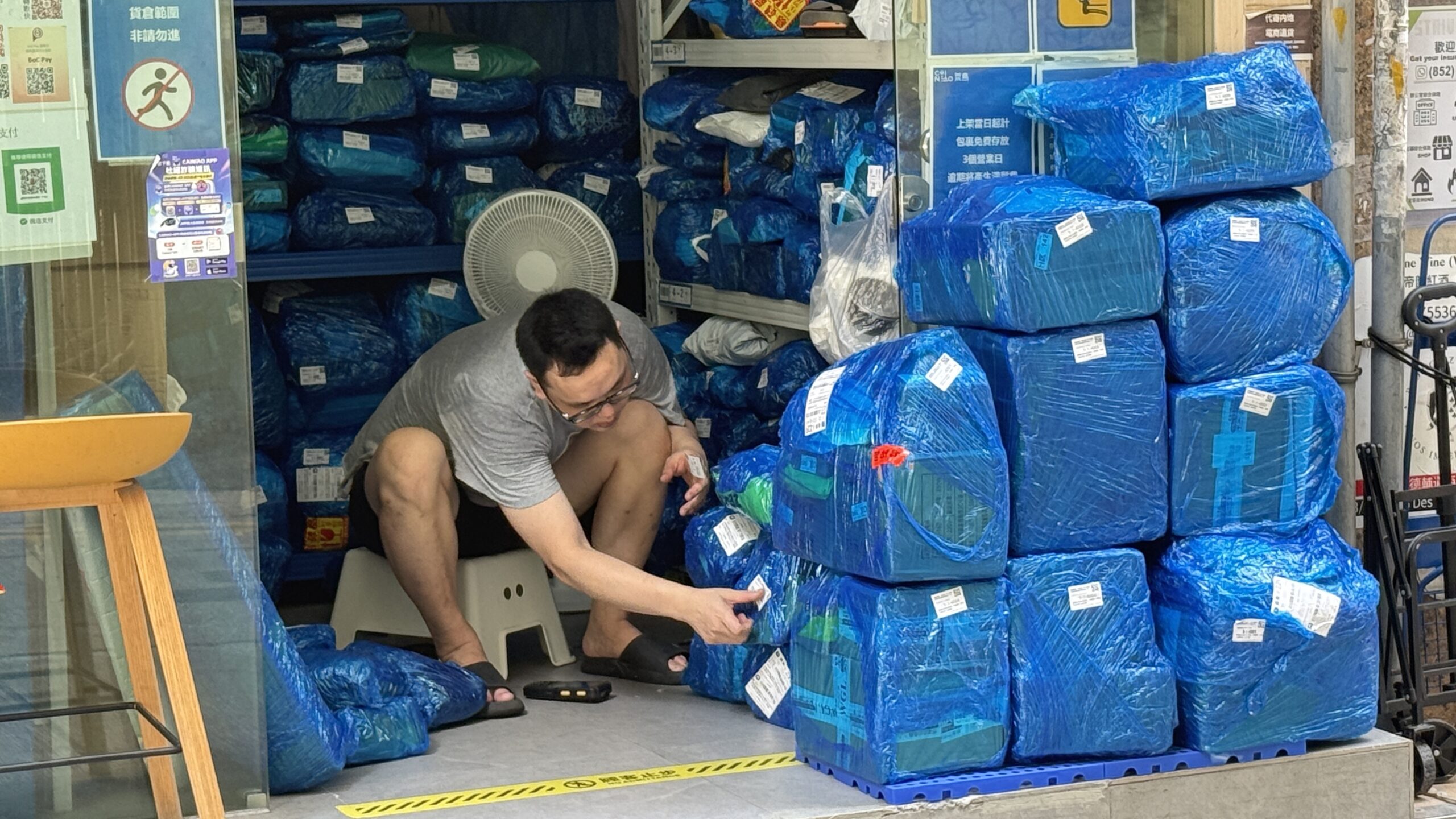
Only one staff member working even many packages there.
“Each package can only earn a small commission,” said Matthew, adding that more employees and space is needed in order to accommodate more packages. “One employee needs to handle up to 300 to 400 items.”
On the contrary, Hannah, another self-pickup point owner who is contemplating a collaboration with Cainiao said: “It’s a good thing to have multiple e-commerce platforms entering Hong Kong instead of a monopoly,” she said. “If the commission is too low, you can always consider partnering with a different platform.”
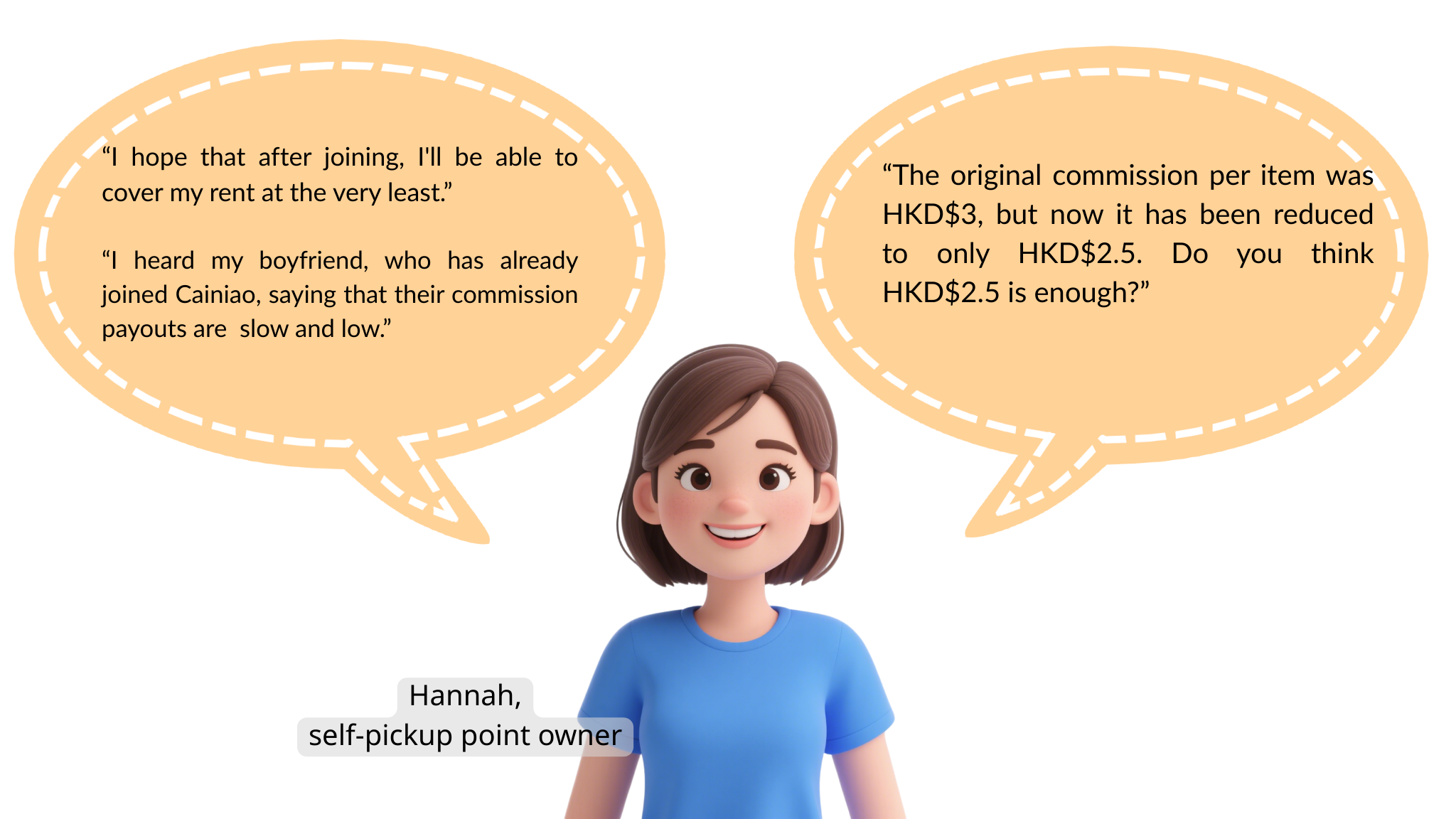
Hannah is not the only one struggling in the industry, but also Nick Yeung who operates a self-pickup point that works with multiple platforms.
According to the interviews with different self-pickup points’ owners, many of them mentioned large e-commerce platforms stipulate that self-pickup points cannot cooperate with both Cainiao and Pinduoduo at the same time in order to compete with their rivals, which leads to the self-pickup point owners having to choose between the two.
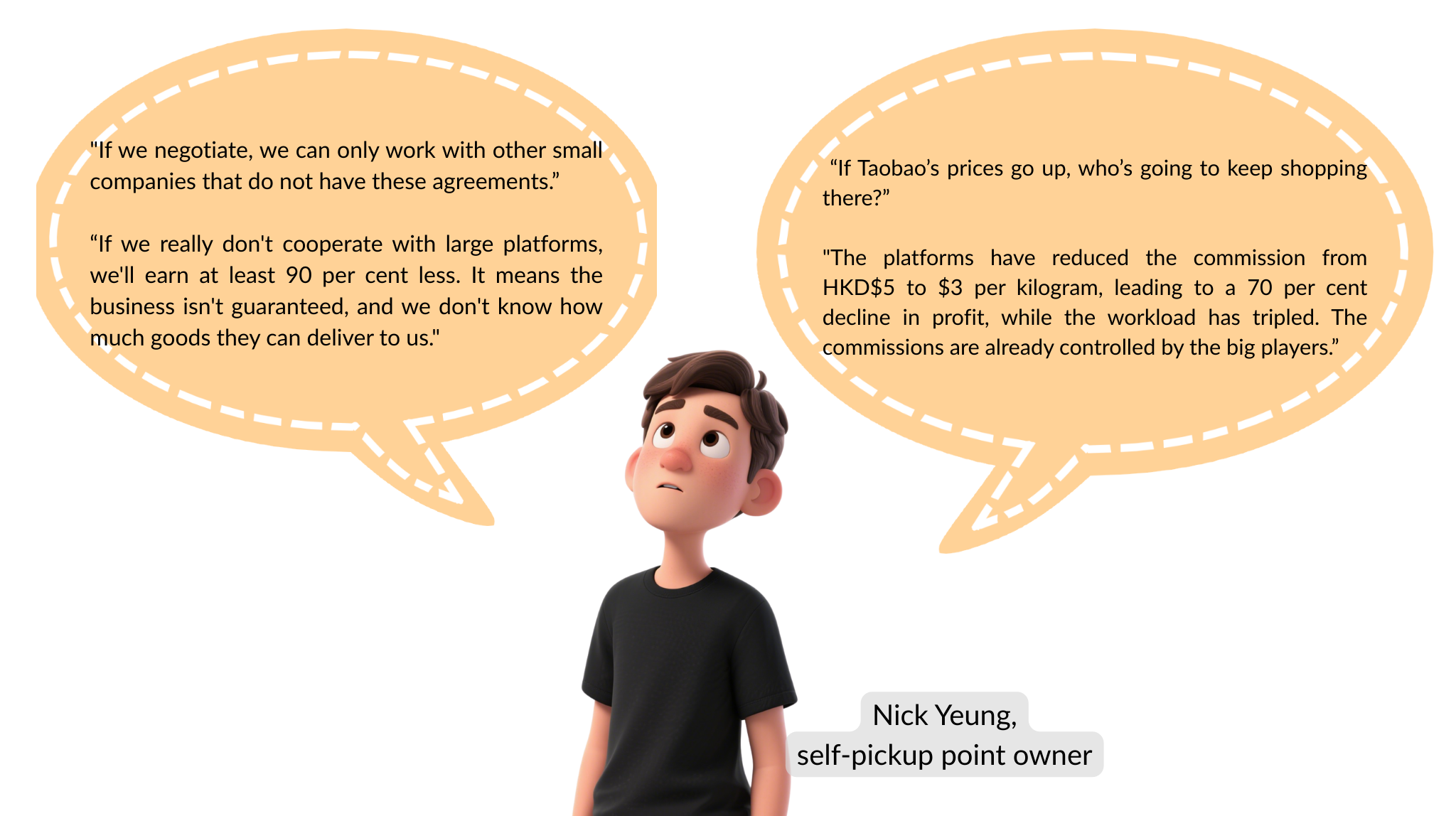
Another common issue is delayed or withheld payments from logistics companies. Yeung said he shorted a few hundred dollars. But, some of his peers have reported losses in the tens of thousands.
“The platforms are the instigators. There is no way they will help us with all those issues,” said Yeung.
In response to the cooperation agreement with the owners of the self-pickup points, the spokesperson for Cainiao stressed that the company values user experience and logistics timeliness, and has established a wide network of self-pickup points in Hong Kong, collaborating with local partners in an open manner.
A self-pickup point owner, Tim Leung, pointed out that their operation of the self-pickup point mainly relies on whether the platforms will assign goods to them, so they can earn a commission from the parcels.

For Hong Kong consumers, mainland e-commerce platforms like Taobao, Pinduoduo, and JD.com are hard to resist, while discounted goods and free shipping straight to doorstep make cross-border shopping more attractive.
But behind the promotions lies a more complicated reality such as hidden fees, delayed deliveries and a lack of accountability when things go wrong.
Our survey found that some have faced unexpected charges or long waits for their orders to arrive. The real problem is nearly impossible to seek help when something goes wrong.
Much of the confusion starts with misleading promotions. Take Taobao’s “Free Delivery on Orders Over RMB99” campaign as an example. It sounds simple until the consumers get to the checkout.
Some items are eligible for free shipping, but others aren’t. Consumers are often forced to choose between paying 10 yuan (depending on the weight of the products) or selecting consolidated shipping, where the final cost isn’t revealed until the package reaches the warehouse.
This lack of transparency raises concerns about compliance with Hong Kong’s Trade Descriptions Ordinance, which prohibits false or misleading claims. While Hong Kong Customs says that sellers operating locally could be held accountable, enforcement remains weak.
Even though Section 21(A) of the Ordinance allows Hong Kong-based traders to be penalized for unfair practices—even when targeting consumers outside Hong Kong—mainland platforms like Taobao fall outside these legal boundaries. Transactions happen across the border, meaning Hong Kong buyers are left with little to no protection if sellers disappear, deliveries fail, or fees suddenly increase.
The Consumer Council advises shoppers to resolve disputes directly with sellers or logistics providers, but that often leads nowhere – as experienced by one of our aforementioned interviewees, Lau Lok Hung. In such situations, the platform, self-pickup point or seller might shift blame onto each other in order to avoid losses, especially when Lau lacked evidence to prove non-receipt of the package.
To fix this, the Consumer Council suggests that platforms take responsibility for clearly listing all key information—including shipping policies, terms, and any limitations. Free shipping offers should be explained in plain language, with clear conditions stated upfront on product pages, while shipping fees should also be itemized at checkout.

Zhuang Shuai, the founder and chief analyst at e-commerce consultancy Bailian.
“The trend of cross-border online shopping in Hong Kong is sure to continue, just as they have been operating in the mainland for over 20 years, ” Zhuang said.
To tackle the influence brought by the e-commerce platforms, Zhuang suggested the retail industry should “localize the service” and “differentiate the products”.
“Categories like baking, cooked food, and fresh produce are all difficult for e-commerce to provide higher quality,” Zhuang added. “For example, offering services such as food tastings, personalized tailoring services can help address competition in e-commerce.”
In the long run, Zhuang believed that the expansion of mainland e-commerce platforms to Hong Kong is good for Hong Kong.
“Progress comes from competition. I believe that it can boost local consumption in Hong Kong and promote the upgrading of some local industries.”
Many thanks to:
Interviewees
Zhuang Shuai
Lau Lok Hung
Sue
Keung Kun-ching
Samuel Sun Liang
Joyce Lee Wing-yin
Matthew T.
Hannah
Nick Yeung
Tools
豆包AI
ChatGPT
Canva
Genially
Flourish
Project Advisor
Neil Gough
Authors
Charlotte, Lam Kei Tung
Winnie, Wong Wing Chun