
AI Is Reviving Chinese Heritage
—But Is It Real?
By Huang Ziyu & Zhao Linrui
Choose Your Role
University Lecturer
Designer
Photographer
Advertising Creative Planner
As morning light filters through the coffee courtyard of a pocket park in Kaili, Guizhou province, the darkroom of Que Niao’s film club still glows with last night’s dim light. The team members, who have spent years documenting the transformation of the local Miao embroidery market, are now discussing how to co-create with intangible cultural heritage (ICH) inheritors using generative AI, turning everyday scenes and cultural details into vivid images to draw more visitors to this southwestern Chinese city. Meanwhile, Lin Chen, a former university lecturer known online as Tudou Man, is refining details for a digital ICH mixed reality (MR) exhibition – a year after winning a landmark AIGC copyright lawsuit that has drawn international attention from Singaporean and British teams.
Against the backdrop of Douyin’s digital push for intangible cultural heritage, former advertising and filmmaking professionals are redefining their roles online, shifting from traditional content producers to AIGC creators focused on heritage preservation. Based on online interviews, these creators use AI tools to reimagine traditional culture in the digital space, illustrating how social media platforms are driving new creative identities and trends in heritage communication.
I. The Transformation Wave: Traditional Creatives’ Collective Shift
According to the 2025 Douyin Traditional Culture Content Trend Report and the 2025 Douyin AIGC Creation Annual Report, the collision of AIGC and ICH on Douyin is sparking a profound industry transformation. Between March and November 2025, AI content submissions on the platform surged 185%, with high-quality AI submissions skyrocketing 1,430% and views jumping 478%. Douyin has rapidly become the primary platform for AI content creation and distribution, marking a shift from quantitative growth to qualitative improvement.
According to the 2025 Douyin Traditional Culture Content Trend Report, over the past year, the number of AI-generated ICH videos on Douyin increased 1,625%, and the number of creators grew 1,155%. AI technology is helping ICH break through cultural circles and reach wider audiences.
Lin Chen, Que Niao, CC and Chi Jingyu are among the countless creators making this transition. These creators have years of experience in traditional creative industries, and their shift is driven by both the pain points of traditional sectors and the opportunities presented by Douyin’s AI ecosystem. The 2025 Douyin AIGC Creation Annual Report shows that 97% of Douyin users are receptive to AIGC videos, and 62% are drawn to their innovative themes and fresh ideas – creating a fertile environment for these creators. For them, AI is a “magic pen ” that breaks the limitations of traditional creation.
Each creator brings unique skills from their previous careers. Lin was a visual communication lecturer and advertising agency partner, witnessing the bottlenecks of the traditional creative industry. Que Niao is rooted in Kaili, specializing in traditional documentary filmmaking. CC has a background in scenic and stage design, excelling in visual presentation. Chi Tata is a former advertising creative planner, skilled in cultural symbol extraction and communication. These traditional industry experiences form the core of their success in the AI+ICH track on Douyin, allowing them to accurately grasp cultural essence and quickly gain attention.
A key factor in their transformation was their early adoption of AI tools. All four began experimenting with AI at the start of the generative AI wave, combining their traditional creative experience with technology and leveraging Douyin’s distribution advantages.
Widespread pain points in traditional creative industries such as low salaries, limited career advancement, high production costs and low efficiency, were the main drivers of their shift. AI technology and Douyin’s platform support have helped address these challenges.
“Traditional 2D animation would take an eight-person team one to two months to complete. With AI, it only takes three days, saving more than 90% of costs, ” Chi Jingyu said in an online interview with us. “I was originally in advertising creative planning. To be honest, becoming an AIGC creator was forced by the situation, but in a narrow sense, it’s fulfilling my creative dreams on a low budget. It’s amazing!”
1. Data Context: Mapping China’s National Intangible Cultural Heritage Inheritors
Behind the viral AI reinterpretations of traditional culture is backed by a state-supported ecosystem of living heritage. China’s sixth batch of nationally recognised ICH representative inheritors includes 942 masters spread across 31 provincial-level regions giving a clear picture of where cultural preservation efforts are concentrated. Zhejiang (76), Jiangsu (69) and Beijing (61) lead in density, reflecting both historical cultural endowment and sustained policy investment. But western provinces like Guizhou, Yunnan, Xinjiang, Tibet also feature prominently, a sign of China’s commitment to safeguarding ethnic minority traditions through institutional recognition.
Crucially, these inheritors are not the same as Douyin’s AIGC content creators. The former are state-designated custodians who preserve authentic techniques through decades of practice; the latter are digital storytellers who amplify cultural visibility through algorithmic tools.
Figure 1. MDistribution of the 6th Batch of National Intangible Cultural Heritage Inheritors by Province, China.
2. Data Analysis: The Rise of AIGC-Powered Intangible Cultural Heritage Content on Douyin
To map the evolving landscape of AIGC-driven intangible cultural heritage content, we analyzed the top 200 Douyin videos tagged with “AI ICH” published in the 180 days before May 12, 2026, using the Coze agent workflow. The sample size of 200 was chosen to balance three key considerations: it captures nearly all high-impact content in this niche without including excessive low-quality long-tail videos, stays within platform data access limitations, and provides enough volume to support both word frequency and trend analysis.
The word cloud, generated from the video descriptions, reveals the core themes and creative approaches dominating the space. The most prominent terms are “creation,” “video,” “ICH,” “tutorial,” and “Douyin,” reflecting three dominant traits: the platform’s role as a primary hub for such content, the prevalence of how-to and instructional videos, and the centrality of heritage themes. Secondary keywords highlight common creative directions: traditional crafts like shadow puppetry and embroidery, visual and aesthetic styles such as “guochao” and “Oriental design,” and geographic references to Dunhuang and Shaanxi, indicating the genre’s growing focus on local culture.
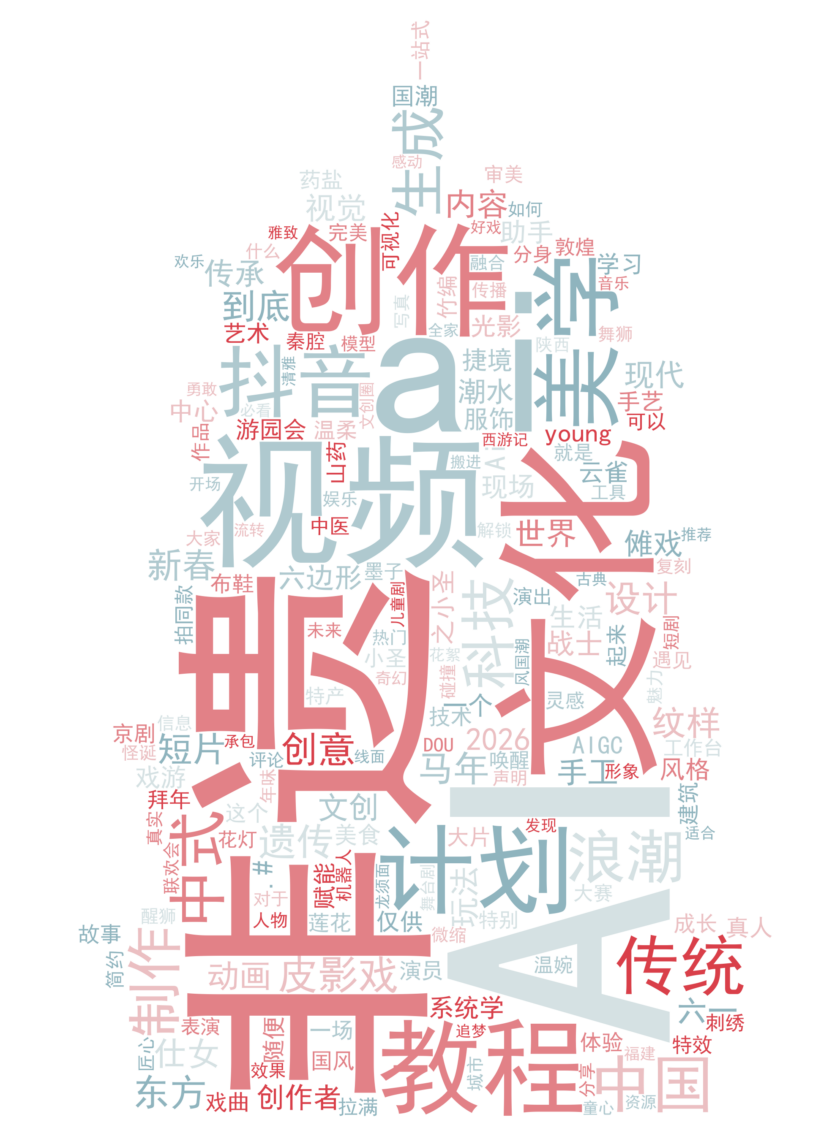
Figure 2. This word cloud visualizes key themes in Douyin’s ICH-related creative ecosystem, highlighting core terms like creation, video, AIGC, and traditional culture
Source: Data crawled from Douyin via Coze agent workflow. Visualization created with Python.
Figure 2. Monthly trends in the release volume (red line) and engagement metrics (blue line) of ICH-themed AIGC content on Douyin, October 2025–May 2026.
Source: Data crawled from Douyin via Coze agent workflow. Visualization created with Python.
The line chart further contextualizes these trends by tracking monthly release volume and audience engagement over the same period. From October 2025 to May 2026, the volume of new videos rose steadily, from just two releases in October 2025 to a peak of more than 35 videos in May 2026. The sharpest growth occurred between December 2025 and January 2026, nearly quadrupling the monthly output and signaling a wave of creator interest in the topic.
Audience engagement did not follow the same upward trajectory. Interaction, defined as the sum of likes, comments, and shares, totaling 1,994,103 across all videos, saw a dramatic peak in January 2026, exceeding 1 million interactions before fluctuating downward in subsequent months. This divergence shows an important trend: more videos do not automatically mean more viewers. Instead, the data suggests that high-quality, culturally rooted content like that produced by the creators featured in this story is what truly drives sustained engagement in the space. Together, the word cloud and trend chart illustrate how AIGC ICH content blends education, aesthetics, and regional storytelling, while also highlighting the growing divide between quantity and quality in this fast-evolving genre.
As morning light filters through the coffee courtyard of a pocket park in Kaili, Guizhou province, the darkroom of Que Niao’s film club still glows with last night’s dim light. The team members, who have spent years documenting the transformation of the local Miao embroidery market, are now discussing how to co-create with intangible cultural heritage (ICH) inheritors using generative AI, turning everyday scenes and cultural details into vivid images to draw more visitors to this southwestern Chinese city. Meanwhile, Lin Chen, a former university lecturer known online as Tudou Man, is refining details for a digital ICH mixed reality (MR) exhibition – a year after winning a landmark AIGC copyright lawsuit that has drawn international attention from Singaporean and British teams.
Against the backdrop of Douyin’s digital push for intangible cultural heritage, former advertising and filmmaking professionals are redefining their roles online, shifting from traditional content producers to AIGC creators focused on heritage preservation. Based on online interviews, these creators use AI tools to reimagine traditional culture in the digital space, illustrating how social media platforms are driving new creative identities and trends in heritage communication.
I. The Transformation Wave: Traditional Creatives’ Collective Shift
According to the 2025 Douyin Traditional Culture Content Trend Report and the 2025 Douyin AIGC Creation Annual Report, the collision of AIGC and ICH on Douyin is sparking a profound industry transformation. Between March and November 2025, AI content submissions on the platform surged 185%, with high-quality AI submissions skyrocketing 1,430% and views jumping 478%. Douyin has rapidly become the primary platform for AI content creation and distribution, marking a shift from quantitative growth to qualitative improvement.
According to the 2025 Douyin Traditional Culture Content Trend Report, over the past year, the number of AI-generated ICH videos on Douyin increased 1,625%, and the number of creators grew 1,155%. AI technology is helping ICH break through cultural circles and reach wider audiences.
Lin Chen, Que Niao, CC and Chi Jingyu are among the countless creators making this transition. These creators have years of experience in traditional creative industries, and their shift is driven by both the pain points of traditional sectors and the opportunities presented by Douyin’s AI ecosystem. The 2025 Douyin AIGC Creation Annual Report shows that 97% of Douyin users are receptive to AIGC videos, and 62% are drawn to their innovative themes and fresh ideas – creating a fertile environment for these creators. For them, AI is a “magic pen ” that breaks the limitations of traditional creation.
Each creator brings unique skills from their previous careers. Lin was a visual communication lecturer and advertising agency partner, witnessing the bottlenecks of the traditional creative industry. 2Que Niao is rooted in Kaili, specializing in traditional documentary filmmaking. CC has a background in scenic and stage design, excelling in visual presentation. Chi Tata is a former advertising creative planner, skilled in cultural symbol extraction and communication. These traditional industry experiences form the core of their success in the AI+ICH track on Douyin, allowing them to accurately grasp cultural essence and quickly gain attention.
A key factor in their transformation was their early adoption of AI tools. All four began experimenting with AI at the start of the generative AI wave, combining their traditional creative experience with technology and leveraging Douyin’s distribution advantages.
Widespread pain points in traditional creative industries such as low salaries, limited career advancement, high production costs and low efficiency, were the main drivers of their shift. AI technology and Douyin’s platform support have helped address these challenges.
“Traditional 2D animation would take an eight-person team one to two months to complete. With AI, it only takes three days, saving more than 90% of costs, ” Chi Jingyu said in an online interview with us. “I was originally in advertising creative planning. To be honest, becoming an AIGC creator was forced by the situation, but in a narrow sense, it’s fulfilling my creative dreams on a low budget. It’s amazing!”
1. Data Context: Mapping China’s National Intangible Cultural Heritage Inheritors
Behind the viral AI reinterpretations of traditional culture is backed by a state-supported ecosystem of living heritage. China’s sixth batch of nationally recognised ICH representative inheritors includes 942 masters spread across 31 provincial-level regions giving a clear picture of where cultural preservation efforts are concentrated. Zhejiang (76), Jiangsu (69) and Beijing (61) lead in density, reflecting both historical cultural endowment and sustained policy investment. But western provinces like Guizhou, Yunnan, Xinjiang, Tibet also feature prominently, a sign of China’s commitment to safeguarding ethnic minority traditions through institutional recognition.
Crucially, these inheritors are not the same as Douyin’s AIGC content creators. The former are state-designated custodians who preserve authentic techniques through decades of practice; the latter are digital storytellers who amplify cultural visibility through algorithmic tools.
Figure 1. MDistribution of the 6th Batch of National Intangible Cultural Heritage Inheritors by Province, China.
2. Data Analysis: The Rise of AIGC-Powered Intangible Cultural Heritage Content on Douyin
To map the evolving landscape of AIGC-driven intangible cultural heritage content, we analyzed the top 200 Douyin videos tagged with “AI ICH” published in the 180 days before May 12, 2026, using the Coze agent workflow. The sample size of 200 was chosen to balance three key considerations: it captures nearly all high-impact content in this niche without including excessive low-quality long-tail videos, stays within platform data access limitations, and provides enough volume to support both word frequency and trend analysis.
The word cloud, generated from the video descriptions, reveals the core themes and creative approaches dominating the space. The most prominent terms are “creation,” “video,” “ICH,” “tutorial,” and “Douyin,” reflecting three dominant traits: the platform’s role as a primary hub for such content, the prevalence of how-to and instructional videos, and the centrality of heritage themes. Secondary keywords highlight common creative directions: traditional crafts like shadow puppetry and embroidery, visual and aesthetic styles such as “guochao” and “Oriental design,” and geographic references to Dunhuang and Shaanxi, indicating the genre’s growing focus on local culture.
Figure 2. This word cloud visualizes key themes in Douyin’s ICH-related creative ecosystem, highlighting core terms like creation, video, AIGC, and traditional culture
Source: Data crawled from Douyin via Coze agent workflow. Visualization created with Python.
Figure 2. Monthly trends in the release volume (red line) and engagement metrics (blue line) of ICH-themed AIGC content on Douyin, October 2025–May 2026.
Source: Data crawled from Douyin via Coze agent workflow. Visualization created with Python.
The line chart further contextualizes these trends by tracking monthly release volume and audience engagement over the same period. From October 2025 to May 2026, the volume of new videos rose steadily, from just two releases in October 2025 to a peak of more than 35 videos in May 2026. The sharpest growth occurred between December 2025 and January 2026, nearly quadrupling the monthly output and signaling a wave of creator interest in the topic.
Audience engagement did not follow the same upward trajectory. Interaction, defined as the sum of likes, comments, and shares, totaling 1,994,103 across all videos, saw a dramatic peak in January 2026, exceeding 1 million interactions before fluctuating downward in subsequent months. This divergence shows an important trend: more videos do not automatically mean more viewers. Instead, the data suggests that high-quality, culturally rooted content like that produced by the creators featured in this story is what truly drives sustained engagement in the space. Together, the word cloud and trend chart illustrate how AIGC ICH content blends education, aesthetics, and regional storytelling, while also highlighting the growing divide between quantity and quality in this fast-evolving genre.
II. Four Distinct Paths: Diverse Explorations in AIGC+ICH
While all four creators transitioned from traditional industries to focus on AIGC and intangible cultural heritage, they have carved out four distinct paths. Their different motivations, core strengths and practice models form a diverse ecosystem for AIGC ICH communication, demonstrating the infinite possibilities of technology-enabled cultural revitalization. Some creators also place strong emphasis on growing their presence on Xiaohongshu, as they believeits user base is mainly made up of high‑income women living in first‑ and second‑tier cities in China.
Lin Chen (Tudou Man, 34): The Industry Rule-Breaker
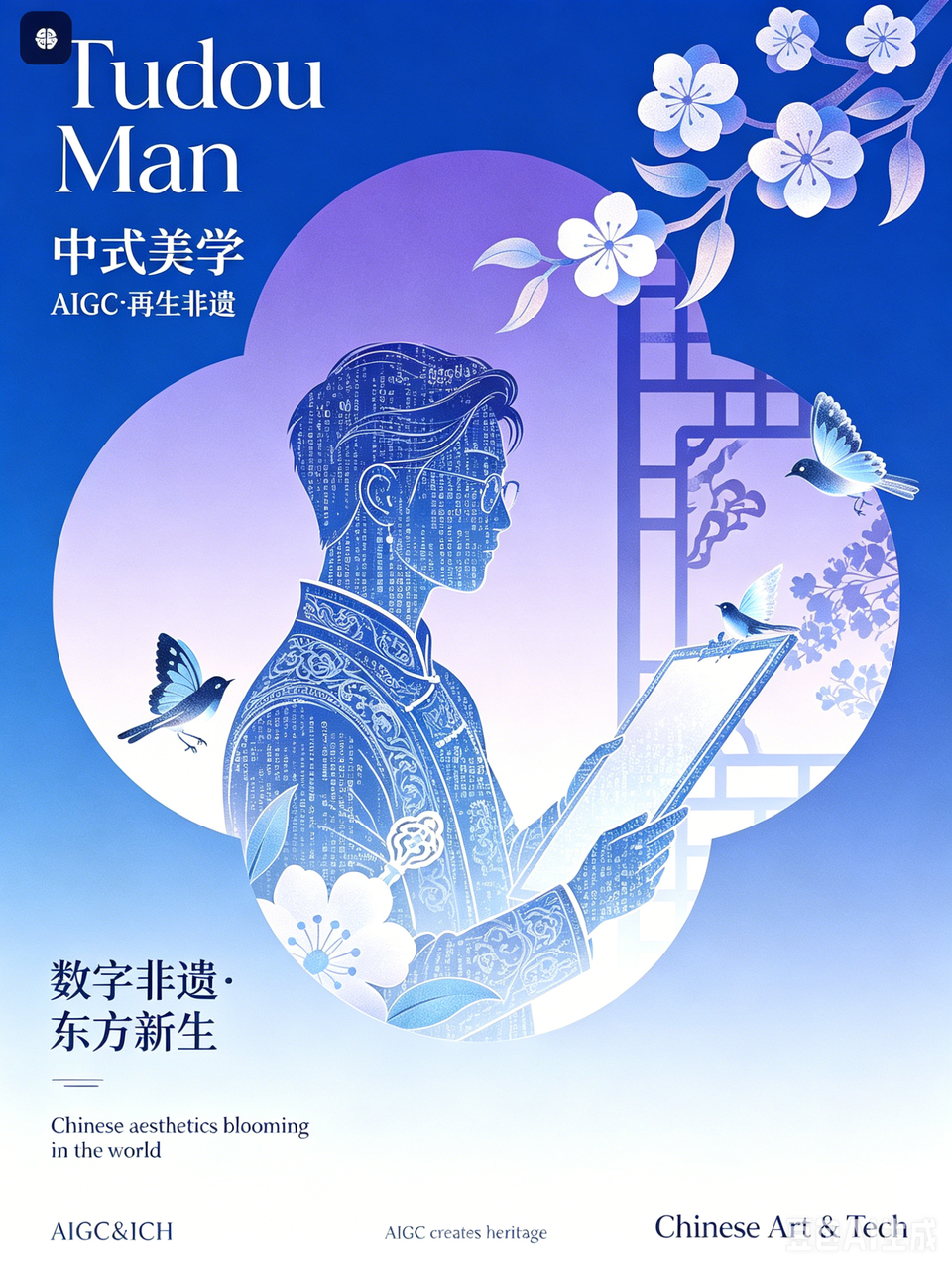
AI-generated portrait of Tudou Man.
Source: Illustration by Dreamina AI / Doubao.
“Using art to counter the value dilution brought by AI is what I aim to do. ” Lin said in an online interview with us.
Douyin ID: 690938498 | Followers: 8,589 | Likes: 107,000
Lin’s transformation is the most radical among the four. After graduating from university, he taught visual communication for two years before joining the advertising agency, neone, where he worked his way up from graphic designer to partner over seven years. Recognizing the disruptive impact of AIGC on the advertising industry, he abandoned his high-paying partner position to dive into the then-uncertain field of AIGC art. Today, he focuses not only on content creation but also on shaping industry rules, positioning himself as a digital artist, curator and pioneer in AIGC copyright protection.
Lin’s work centers on the core philosophy of “using art to counter AI-induced value dilution. ” He founded the “Regeneration Art Museum,”, which uses “human abandoned objects (trash) and forgotten things (ICH)” as artistic carriers. He invited 15 creators from different fields to create digital reinterpretations, responding to the common criticism that “AI has no soul. ” He also plans to combine digital ICH with MR technology to create immersive exhibition experiences, allowing audiences to “step into ” the scenes using Vision Pro.
His influence extends beyond content creation. In 2024, he sued and won a case in Changshu People’s Court, Jiangsu province, after his AI-generated work “Companion Heart ” was used commercially without permission. The case has been included in textbooks and attracted international attention — Singapore’s CNA conducted an exclusive interview, and a British delegation to China will hold a seminar specifically on his case. His victory established a foundation for copyright protection in the AIGC creative industry and raised awareness among creators. Lin’s ultimate goal is to build his personal IP and turn AIGC works into long-term assets, using them to enhance his brand value rather than pursue immediate monetization.
Chen Lei(Que Niao, 36): The Local Culture Ferrymen
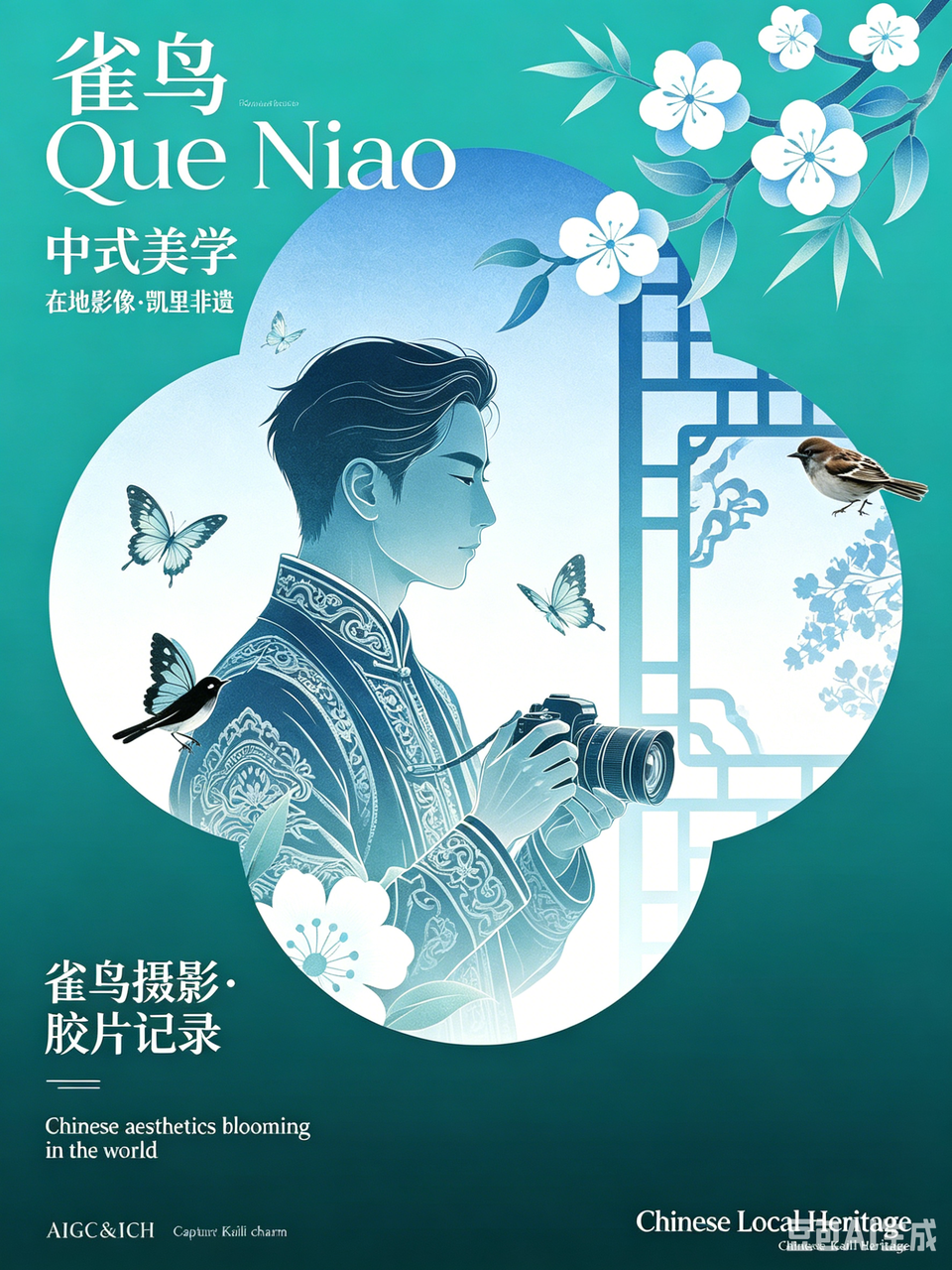
AI-generated portrait of Que Niao.
Source: Illustration by Dreamina AI / Doubao.
“We are people who grew up in Kaili, Guizhou. We have deep feelings for our hometown and an endless supply of local ICH materials. ” Chen Lei said in an online interview with us
Douyin ID: w2412661 | Followers: 4,083 | Likes: 29,000
Xiaohongshu ID:W2412661 | Followers: 9339|Likes & Collections:42,000
Chen Lei is a member of team Que Niao, and he is now thirty six years old. Unlike the other three individual creators, Que Niao is a local collective rooted in Kaili. Their core advantage is “locality”. As native Qiandongnan people, they have grown up immersed in local culture, allowing them to capture the warmth and details of ICH without the cultural disconnect that often plagues outsider creators. They identify as local documentary filmmakers and Guizhou tourism ambassadors, adhering to the philosophy of “not making content for outsiders.”
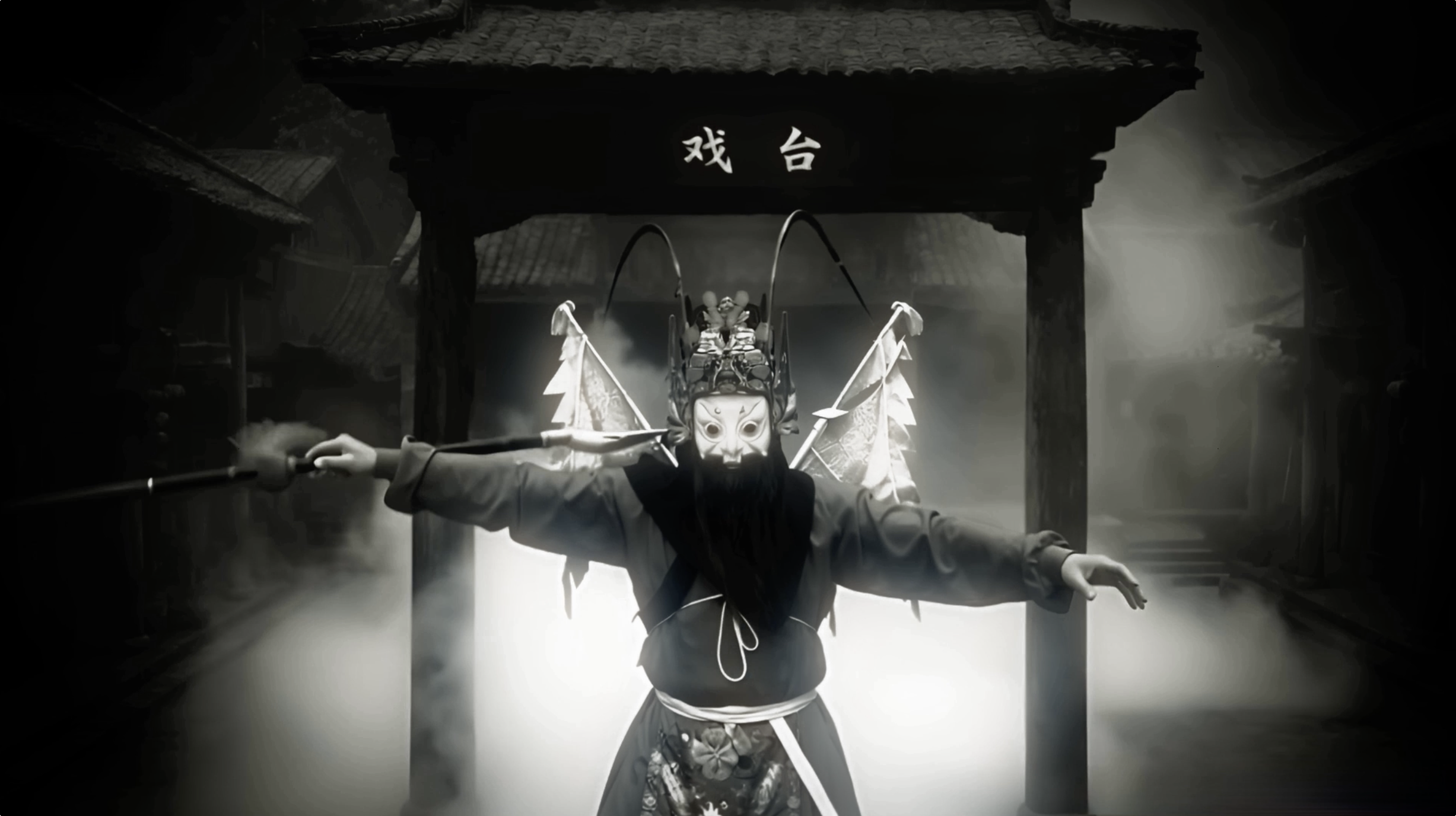
The team’s work Master Of Face Masks, set against the backdrop of Anshun Dixi – a form of local opera –won the silver award in the Chinese ICH category at an AI film competition co-hosted by CCTV-6 and Bilibili, beating 5,800 other entries. AI assisted the visual generation and production workflow, while the team led the field research, script development, direction, music decisions and cultural verification.This process required extensive pre-research.
The team collected numerous ICH interview data, makeup and costume materials, and stories of forgotten inheritors, carefully refining each character’s image and personality. They spent significant computing power and time manually adjusting AI-generated characters that had Guangdong-style features to make them more authentic to Guizhou locals. They also polished costume and mask designs to avoid color clashes and stylistic similarities, striving to present the dual identity of “ordinary father offstage, martial artist onstage.”
Que Niao’s exploration extends beyond online content. Through their Que Niao Film Club, they have built an offline community, organizing street photography walks and sharing sessions to introduce more people to Kaili’s old streets and local culture. This year, they plan to launch an AI study tour program to attract more “Kaili drifters ” (migrant workers and creators in Kaili) and enrich ICH communication through diverse perspectives. As Kaili’s tourism ambassadors, they have integrated AIGC creation with local cultural tourism, exploring a unique “AI+ICH+Tourism+Community ” development model that injects new vitality into local ICH preservation.
CC Chishaya, 26: The Trendsetter of the Traffic Era
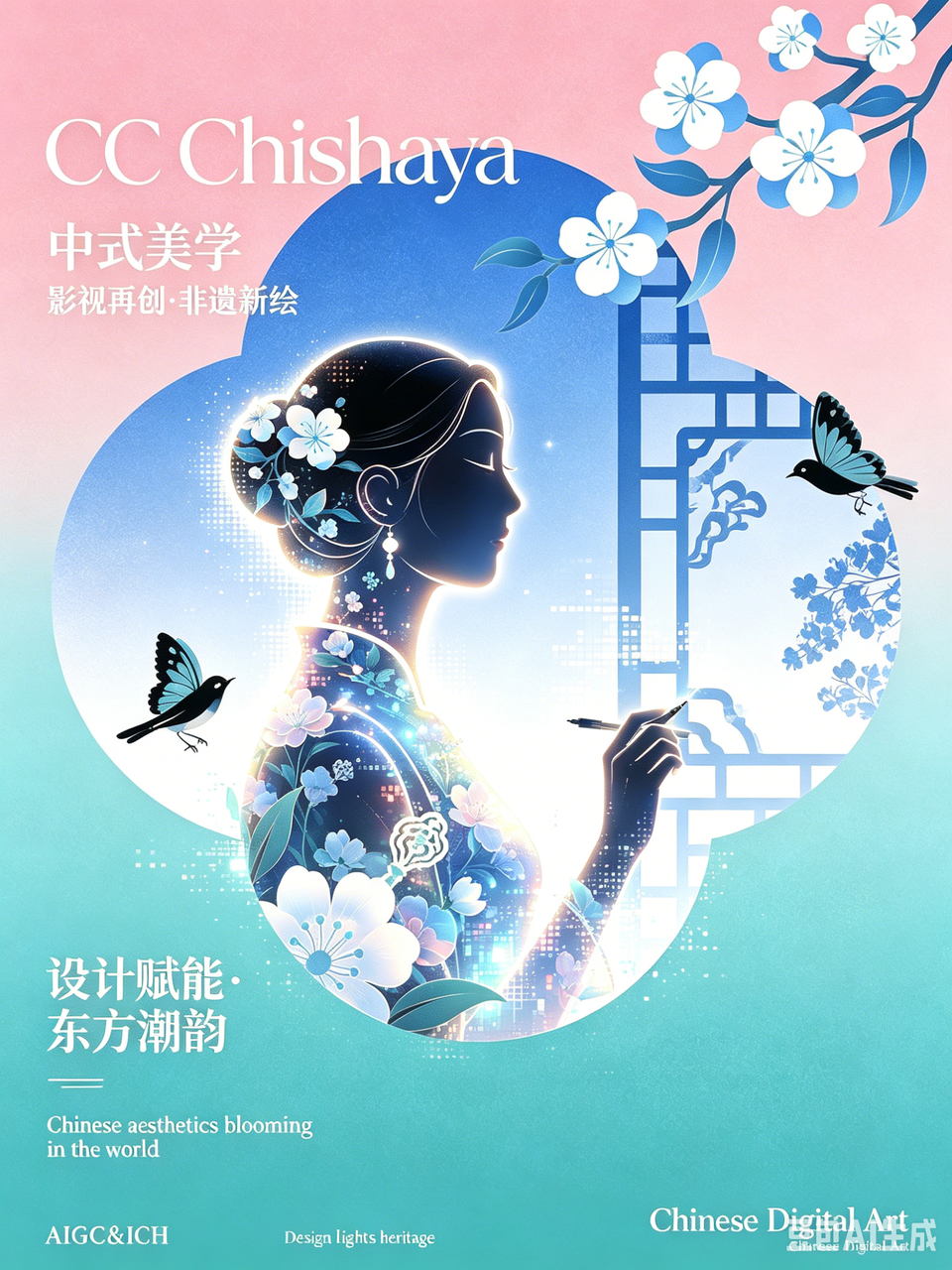
AI-generated portrait of CC Chishaya.
Source: Illustration by Dreamina AI / Doubao.
“I feel much more fulfilled now. The instant feedback is great, and creating in less time means more people are willing to try ICH short videos. ” CC said in an online interview with us
Douyin ID: wuhuuuu96055 | Followers:more than 21,000 | Likes: more than 3,112,000
Xiaohongshu ID:269240056 | Followers: 38,000|Likes & Collections:840,000
CC has a strong background in scenic design, with a bachelor’s degree in environmental design and a master’s degree in stage design. She even received an offer from the Central Academy of Fine Arts’ experimental art doctoral program. Before her transformation, she worked on festival-themed scenic design for large amusement parks, accumulating solid experience in visual presentation and scene construction.
CC had been following AI technology since Midjourney’s launch but was too busy with graduate studies and job hunting to delve deeper. As her career progressed, she became frustrated with the limitations of the traditional design industry: stagnant development, low salaries and limited advancement opportunities.
She turned to AIGC to find new creative possibilities. As an art student, she excels at overall aesthetics and composition but struggles with detailed refinement — a gap AI fills perfectly, allowing her to generate high-quality materials quickly and focus more on creative and aesthetic expression.
She became a full-time AIGC blogger in early 2025 and quickly rose to become a top creator in Douyin’s film and television adaptation track. Her work follows a “visual-first, data-driven ” approach that aligns with short video communication rules.
CC’s signature style combines ICH elements with popular film and television adaptations to create visually striking short videos. She selects highly visual ICH themes and uses AI to integrate these elements with film plots, attracting both entertainment fans and introducing ICH culture to a wider audience in an accessible way. She has also partnered with Guizhou culture and tourism authorities to promote local intangible cultural heritage, creating the AIGC short video “Guizhou · Zhenning ” to showcase embroidery traditions of Zhenning, Guizhou. She acknowledges that in the short video era, “you have to grab the audience’s attention in the first few seconds, ” so she optimizes editing rhythm to avoid slow narratives and ensure her works gain sufficient traffic.
Her income has grown far beyond expectations since transitioning from traditional scenic design. Unlike the traditional design industry’s “client-paid, per-project ” model, her income is directly tied to her work’s performance. “Good data means higher quotes; even if your work is great, no traffic means no high quotes, ” she said. She believes the self-media industry is relatively fair: “As long as your work is good, you can get good data even without followers. ” Her success has inspired peers to follow suit — her shadow puppetry animation for “Hidden Sea Legend ” became an industry benchmark, with many bloggers creating similar content and indirectly promoting shadow puppetry culture.
Chi Jingyu (Chi Tata, 30): The Cultural Core Explorer
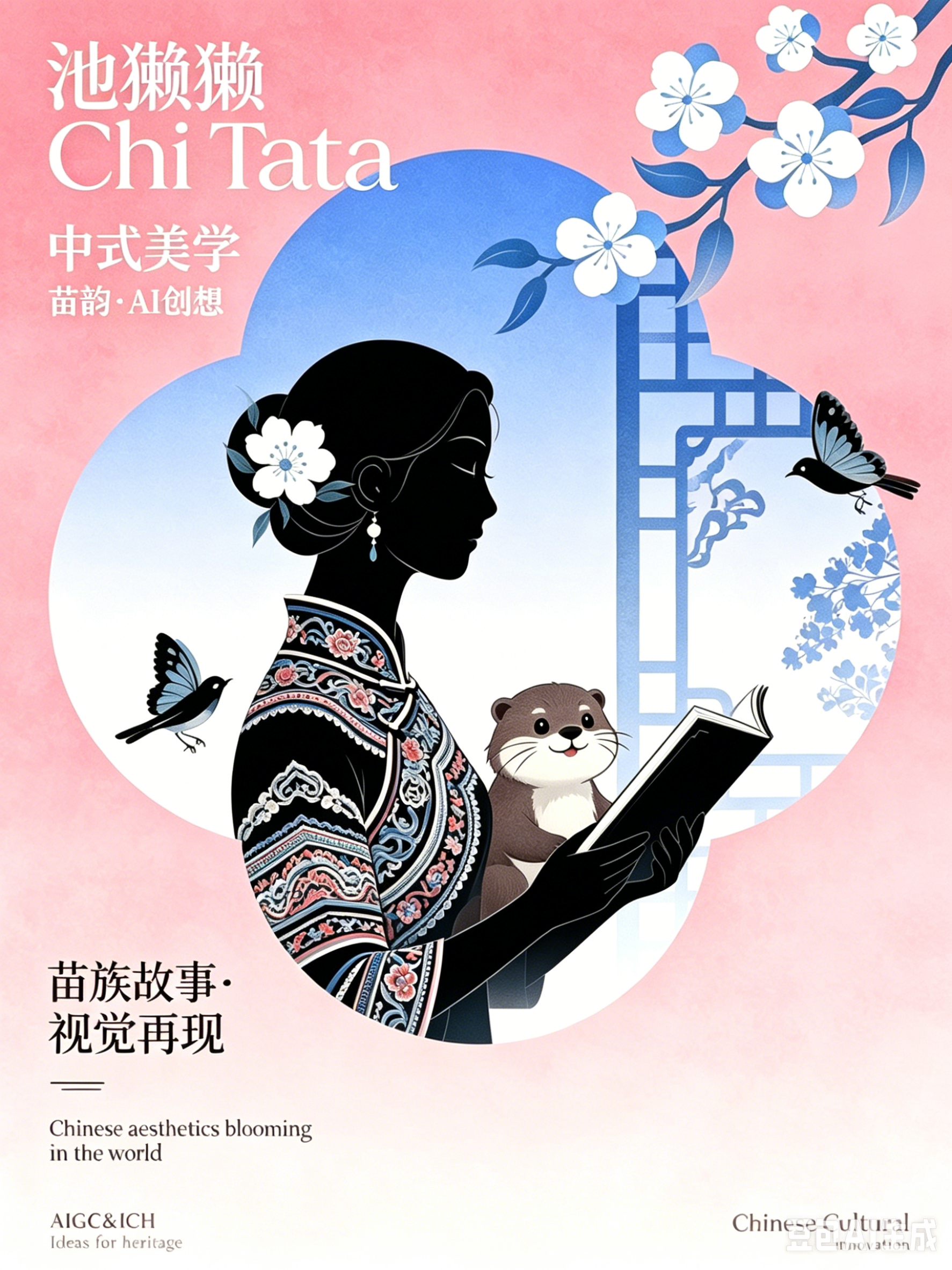
AI-generated portrait of Chi Tata.
Source: Illustration by Dreamina AI / Doubao.
“This is actually the birth of a completely new digital cultural form.”
Xiaohongshu ID: 633024910 | Followers: 564 | Likes & Collections: 9,507
A 30-year-old former advertising creative planner, Chi’s work naturally combines creativity and cultural depth. Her transformation began with an AI film competition on bilibili last September. As a creator who grew up in Guizhou, she has a natural emotional connection to Miao culture.
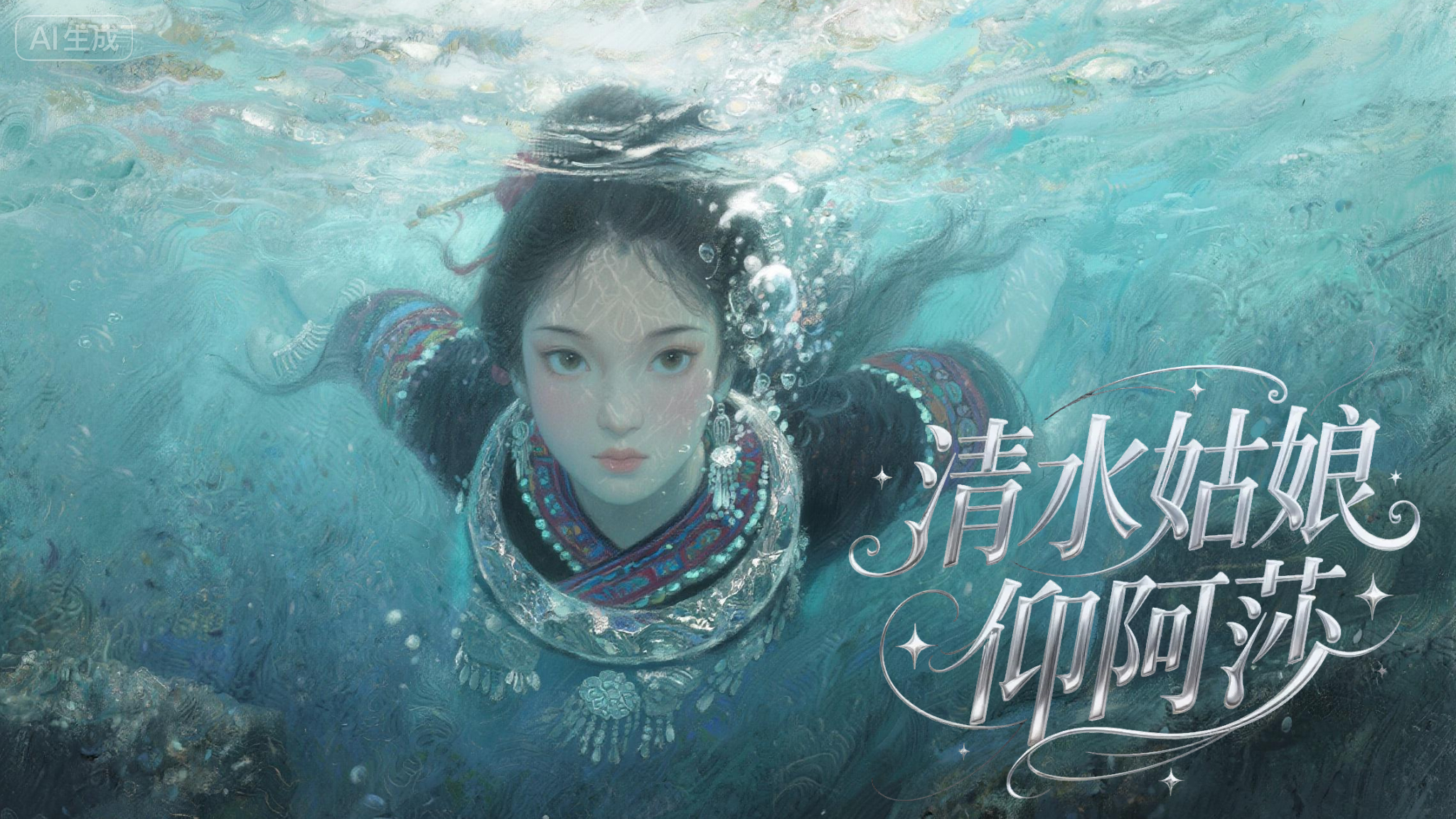
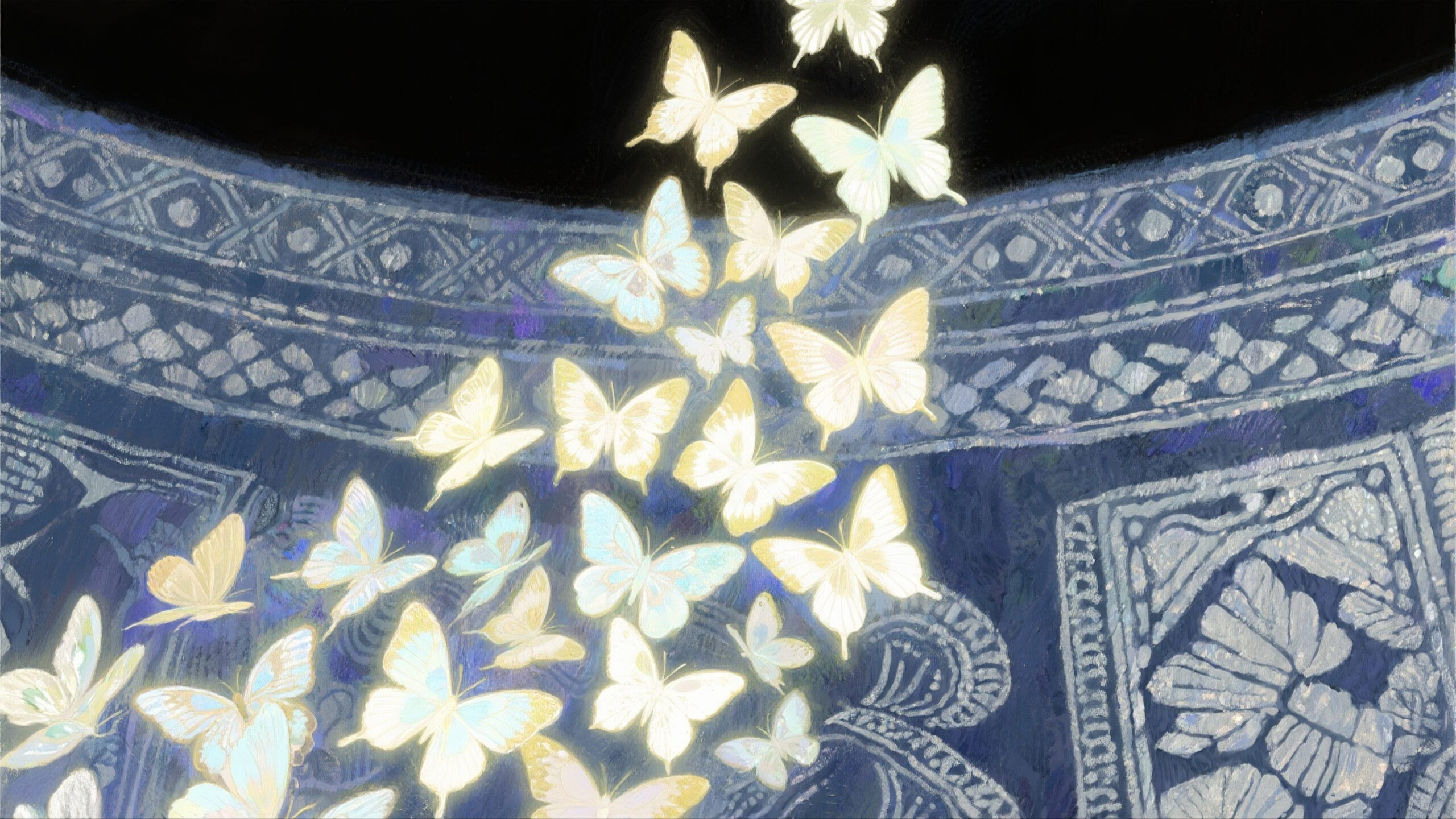
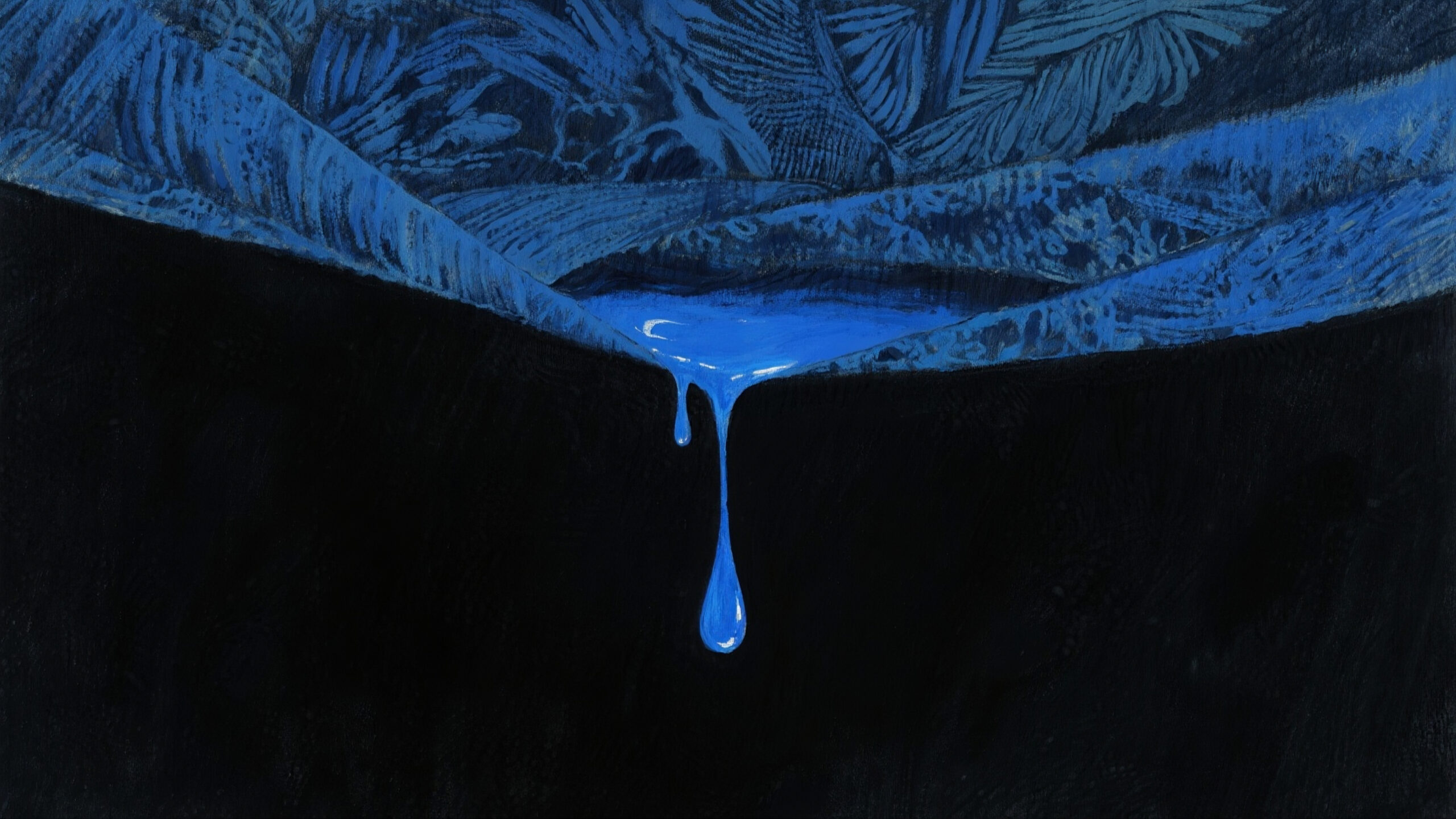
Chi’s representative work is a video based on the legend of Yang Asha, the Miao goddess, which incorporates Miao embroidery and batik elements. Her inspiration came from a chance discovery: the Miao double-fish batik totem bears a striking resemblance to the Hetu Luoshu (ancient Chinese cosmic diagrams), leading her to realize that Southwestern Miao culture shares roots with Central Plains Chinese culture. This perspective gives her work greater depth and resonance. In her creation, she extracts authentic Miao embroidery totems as core visual anchors and uses AI to create kaleidoscopic dynamic interpretations. This complex, deconstructed visual language metaphorizes the inclusiveness and evolution of Miao culture.
Chi has faced technical challenges: limited by early AI model capabilities, her works had issues with frame consistency and camera movement freedom, resulting in visuals that resembled smooth PowerPoint presentations. She adjusted her strategy to focus on aesthetic creative narrative, using visually striking ideas and illustration aesthetics to compensate for technical shortcomings. She has a clear understanding of the relationship between AIGC and ICH: while AI expands the expression space of ICH by visualizing orally transmitted mythological scenes, it can also lead to stereotyped cultural symbols due to data biases. Therefore, she insists on “field research first, then AI creation, ” believing that “AI can never replace our gaze. ” Only creators with profound cultural heritage can translate the “ineffable ” spiritual connotations of ICH — such as the Miao people’s reverence for nature and ancestors — through AI. While her work has not yet brought significant commercial returns, it has attracted attention from local cultural institutions and provided new ideas for the digital communication of Miao culture.
II. Four Distinct Paths: Diverse Explorations in AIGC+ICH
While all four creators transitioned from traditional industries to focus on AIGC and intangible cultural heritage, they have carved out four distinct paths. Their different motivations, core strengths and practice models form a diverse ecosystem for AIGC ICH communication, demonstrating the infinite possibilities of technology-enabled cultural revitalization. Some creators also place strong emphasis on growing their presence on Xiaohongshu, as they believeits user base is mainly made up of high‑income women living in first‑ and second‑tier cities in China.
Lin Chen (Tudou Man, 34): The Industry Rule-Breaker
AI-generated portrait of Tudou Man.
Source: Illustration by Dreamina AI / Doubao.
“Using art to counter the value dilution brought by AI is what I aim to do. ” Lin said in an online interview with us.
Douyin ID: 690938498 | Followers: 8,589 | Likes: 107,000
Lin’s transformation is the most radical among the four. After graduating from university, he taught visual communication for two years before joining the advertising agency, neone, where he worked his way up from graphic designer to partner over seven years. Recognizing the disruptive impact of AIGC on the advertising industry, he abandoned his high-paying partner position to dive into the then-uncertain field of AIGC art. Today, he focuses not only on content creation but also on shaping industry rules, positioning himself as a digital artist, curator and pioneer in AIGC copyright protection.
Lin’s work centers on the core philosophy of “using art to counter AI-induced value dilution. ” He founded the “Regeneration Art Museum,”, which uses “human abandoned objects (trash) and forgotten things (ICH)” as artistic carriers. He invited 15 creators from different fields to create digital reinterpretations, responding to the common criticism that “AI has no soul. ” He also plans to combine digital ICH with MR technology to create immersive exhibition experiences, allowing audiences to “step into ” the scenes using Vision Pro.
His influence extends beyond content creation. In 2024, he sued and won a case in Changshu People’s Court, Jiangsu province, after his AI-generated work “Companion Heart ” was used commercially without permission. The case has been included in textbooks and attracted international attention — Singapore’s CNA conducted an exclusive interview, and a British delegation to China will hold a seminar specifically on his case. His victory established a foundation for copyright protection in the AIGC creative industry and raised awareness among creators. Lin’s ultimate goal is to build his personal IP and turn AIGC works into long-term assets, using them to enhance his brand value rather than pursue immediate monetization.
Chen Lei(Que Niao, 36): The Local Culture Ferrymen
AI-generated portrait of Que Niao.
Source: Illustration by Dreamina AI / Doubao.
“We are people who grew up in Kaili, Guizhou. We have deep feelings for our hometown and an endless supply of local ICH materials. ” Chen Lei said in an online interview with us
Douyin ID: w2412661 | Followers: 4,083 | Likes: 29,000
Xiaohongshu ID:W2412661 | Followers: 9339|Likes & Collections:42,000
Chen Lei is a member of team Que Niao, and he is now thirty six years old. Unlike the other three individual creators, Que Niao is a local collective rooted in Kaili. Their core advantage is “locality”. As native Qiandongnan people, they have grown up immersed in local culture, allowing them to capture the warmth and details of ICH without the cultural disconnect that often plagues outsider creators. They identify as local documentary filmmakers and Guizhou tourism ambassadors, adhering to the philosophy of “not making content for outsiders.”
The team’s work Master Of Face Masks, set against the backdrop of Anshun Dixi – a form of local opera –won the silver award in the Chinese ICH category at an AI film competition co-hosted by CCTV-6 and Bilibili, beating 5,800 other entries. AI assisted the visual generation and production workflow, while the team led the field research, script development, direction, music decisions and cultural verification.This process required extensive pre-research.
The team collected numerous ICH interview data, makeup and costume materials, and stories of forgotten inheritors, carefully refining each character’s image and personality. They spent significant computing power and time manually adjusting AI-generated characters that had Guangdong-style features to make them more authentic to Guizhou locals. They also polished costume and mask designs to avoid color clashes and stylistic similarities, striving to present the dual identity of “ordinary father offstage, martial artist onstage.”
Que Niao’s exploration extends beyond online content. Through their Que Niao Film Club, they have built an offline community, organizing street photography walks and sharing sessions to introduce more people to Kaili’s old streets and local culture. This year, they plan to launch an AI study tour program to attract more “Kaili drifters ” (migrant workers and creators in Kaili) and enrich ICH communication through diverse perspectives. As Kaili’s tourism ambassadors, they have integrated AIGC creation with local cultural tourism, exploring a unique “AI+ICH+Tourism+Community ” development model that injects new vitality into local ICH preservation.
CC Chishaya, 26: The Trendsetter of the Traffic Era
AI-generated portrait of CC Chishaya.
Source: Illustration by Dreamina AI / Doubao.
“I feel much more fulfilled now. The instant feedback is great, and creating in less time means more people are willing to try ICH short videos. ” CC said in an online interview with us
Douyin ID: wuhuuuu96055 | Followers:more than 21,000 | Likes: more than 3,112,000
Xiaohongshu ID:269240056 | Followers: 38,000|Likes & Collections:840,000
CC has a strong background in scenic design, with a bachelor’s degree in environmental design and a master’s degree in stage design. She even received an offer from the Central Academy of Fine Arts’ experimental art doctoral program. Before her transformation, she worked on festival-themed scenic design for large amusement parks, accumulating solid experience in visual presentation and scene construction.
CC had been following AI technology since Midjourney’s launch but was too busy with graduate studies and job hunting to delve deeper. As her career progressed, she became frustrated with the limitations of the traditional design industry: stagnant development, low salaries and limited advancement opportunities.
She turned to AIGC to find new creative possibilities. As an art student, she excels at overall aesthetics and composition but struggles with detailed refinement — a gap AI fills perfectly, allowing her to generate high-quality materials quickly and focus more on creative and aesthetic expression.
She became a full-time AIGC blogger in early 2025 and quickly rose to become a top creator in Douyin’s film and television adaptation track. Her work follows a “visual-first, data-driven ” approach that aligns with short video communication rules.
CC’s signature style combines ICH elements with popular film and television adaptations to create visually striking short videos. She selects highly visual ICH themes and uses AI to integrate these elements with film plots, attracting both entertainment fans and introducing ICH culture to a wider audience in an accessible way. She has also partnered with Guizhou culture and tourism authorities to promote local intangible cultural heritage, creating the AIGC short video “Guizhou · Zhenning ” to showcase embroidery traditions of Zhenning, Guizhou. She acknowledges that in the short video era, “you have to grab the audience’s attention in the first few seconds, ” so she optimizes editing rhythm to avoid slow narratives and ensure her works gain sufficient traffic.
Her income has grown far beyond expectations since transitioning from traditional scenic design. Unlike the traditional design industry’s “client-paid, per-project ” model, her income is directly tied to her work’s performance. “Good data means higher quotes; even if your work is great, no traffic means no high quotes, ” she said. She believes the self-media industry is relatively fair: “As long as your work is good, you can get good data even without followers. ” Her success has inspired peers to follow suit — her shadow puppetry animation for “Hidden Sea Legend ” became an industry benchmark, with many bloggers creating similar content and indirectly promoting shadow puppetry culture.
Chi Jingyu (Chi Tata, 30): The Cultural Core Explorer
AI-generated portrait of Chi Tata.
Source: Illustration by Dreamina AI / Doubao.
“This is actually the birth of a completely new digital cultural form.”
Xiaohongshu ID: 633024910 | Followers: 564 | Likes & Collections: 9,507
A 30-year-old former advertising creative planner, Chi’s work naturally combines creativity and cultural depth. Her transformation began with an AI film competition on bilibili last September. As a creator who grew up in Guizhou, she has a natural emotional connection to Miao culture.
Chi’s representative work is a video based on the legend of Yang Asha, the Miao goddess, which incorporates Miao embroidery and batik elements. Her inspiration came from a chance discovery: the Miao double-fish batik totem bears a striking resemblance to the Hetu Luoshu (ancient Chinese cosmic diagrams), leading her to realize that Southwestern Miao culture shares roots with Central Plains Chinese culture. This perspective gives her work greater depth and resonance. In her creation, she extracts authentic Miao embroidery totems as core visual anchors and uses AI to create kaleidoscopic dynamic interpretations. This complex, deconstructed visual language metaphorizes the inclusiveness and evolution of Miao culture.
Chi has faced technical challenges: limited by early AI model capabilities, her works had issues with frame consistency and camera movement freedom, resulting in visuals that resembled smooth PowerPoint presentations. She adjusted her strategy to focus on aesthetic creative narrative, using visually striking ideas and illustration aesthetics to compensate for technical shortcomings. She has a clear understanding of the relationship between AIGC and ICH: while AI expands the expression space of ICH by visualizing orally transmitted mythological scenes, it can also lead to stereotyped cultural symbols due to data biases. Therefore, she insists on “field research first, then AI creation, ” believing that “AI can never replace our gaze. ” Only creators with profound cultural heritage can translate the “ineffable ” spiritual connotations of ICH — such as the Miao people’s reverence for nature and ancestors — through AI. While her work has not yet brought significant commercial returns, it has attracted attention from local cultural institutions and provided new ideas for the digital communication of Miao culture.
III. Shared Questions: The Debate over Intangible Cultural Heritage Inheritance in the AI Era

As AIGC emerges as a new engine for the communication of intangible cultural heritage (ICH), four creators — Tudou Man, Que Niao, CC and Chi Tata — have broken through in their respective fields while confronting core questions at the intersection of technology and culture. The balance between visual spectacle and cultural depth, the tension between commercial monetization and cultural mission, the cultural authenticity of AI-generated content, and the relationship between digital ICH and traditional inheritance have defined their journeys. Their differing answers reflect the complex ecosystem of ICH inheritance in the AI era and outline the real boundaries of technology empowering culture.
1. Visual Spectacle vs. Cultural Depth: A Dual Pursuit of Traffic Access and Cultural Core
The logic of short-video communication has made visual spectacle the primary tool for ICH to break through niche circles, yet it has also raised industry concerns about “prioritizing form over substance.”
CC understands the “three-second rule ” of short videos. As a leader in the traffic track, she actively selects highly visual ICH elements such as embroidery, shadow puppetry, and Dunhuang patterns, integrating them with hit film and TV IP adaptations to capture viewers’ attention with extreme aesthetics. “Only when people are willing to watch can they learn about the culture behind it, ” she said. She hides cultural notes in videos and supplements ICH knowledge in comment sections, reconciling visual appeal with cultural communication.
Chi Tata prioritizes cultural depth. Focusing on the homology between Miao totems and Central Plains culture, she uses AI to create kaleidoscopic dynamic interpretations of the legend of Yang Asha, Miao embroidery, and batik, metaphorizing the migration and inclusiveness of Miao culture. “Pure visual spectacle will eventually be worthless; only cultural experience is irreplaceable, ” she said.
Tudou Man uses MR technology to resolve the dilemma. His digital ICH exhibitions create immersive visual spectacles while presenting the historical context and craftsmanship of mortise and tenon structures and ICH techniques through interactive installations. “Being ignored is scarier, but we must uphold the core after attracting attention, ” he said.
Rooted in southeastern Guizhou, Que Niao rejects “creating visual illusions for outsiders. ” They use AI to restore the local texture of Anshun Dixi opera and correct distorted images generated by AI. More importantly, they collaborate directly with local ICH inheritors to shoot co-created videos and photos, bringing ICH out of display cases and into contemporary life. “Good-looking visuals must take root in local life to have cultural warmth, ” the team said.
Tudou Man’s Work
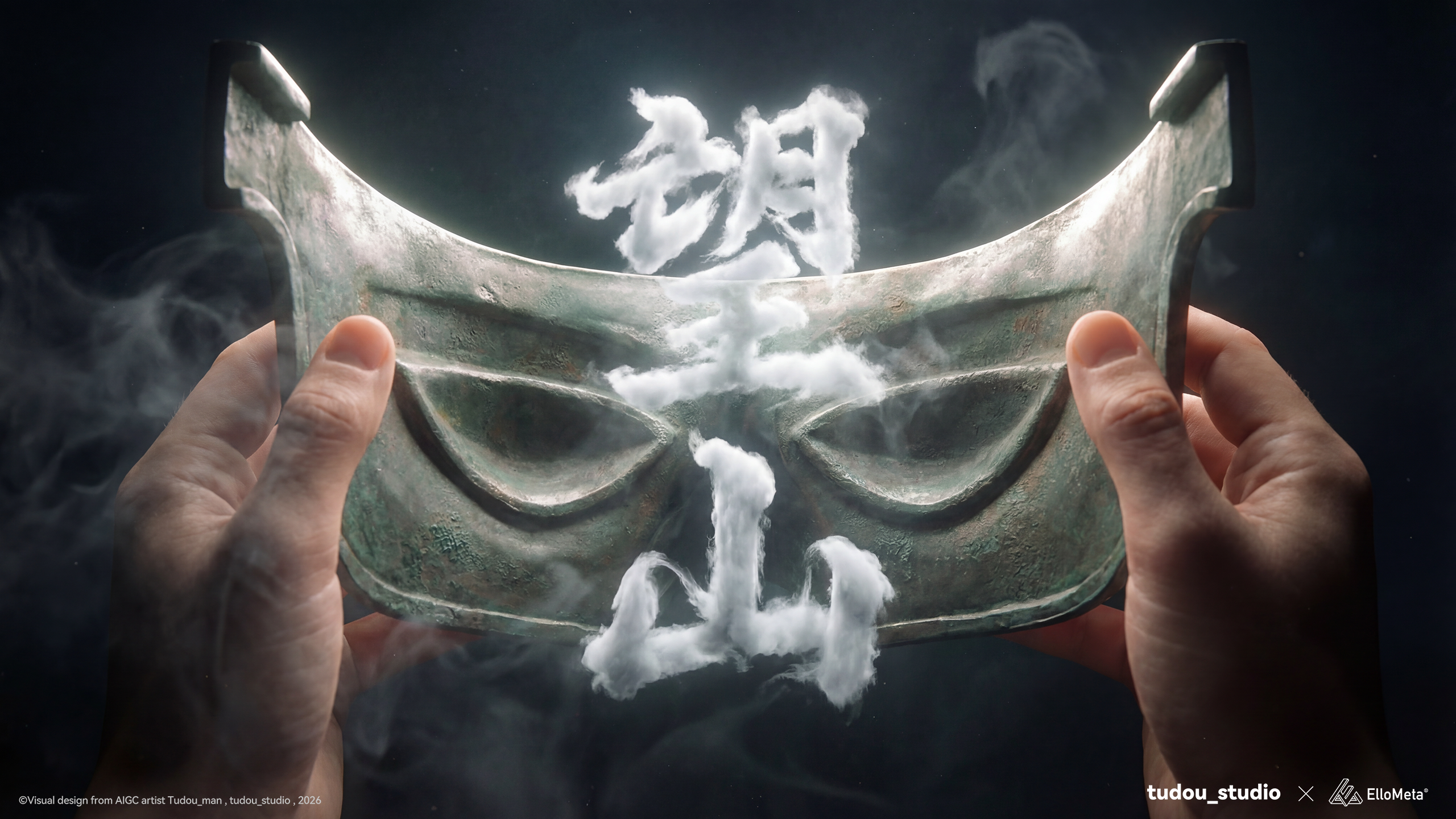
《望山-幻目之镜》

《望山-瓶中梦海》

《望山-轻山云云》

《望山-丝风袅袅》

《望山-桃源仙境》
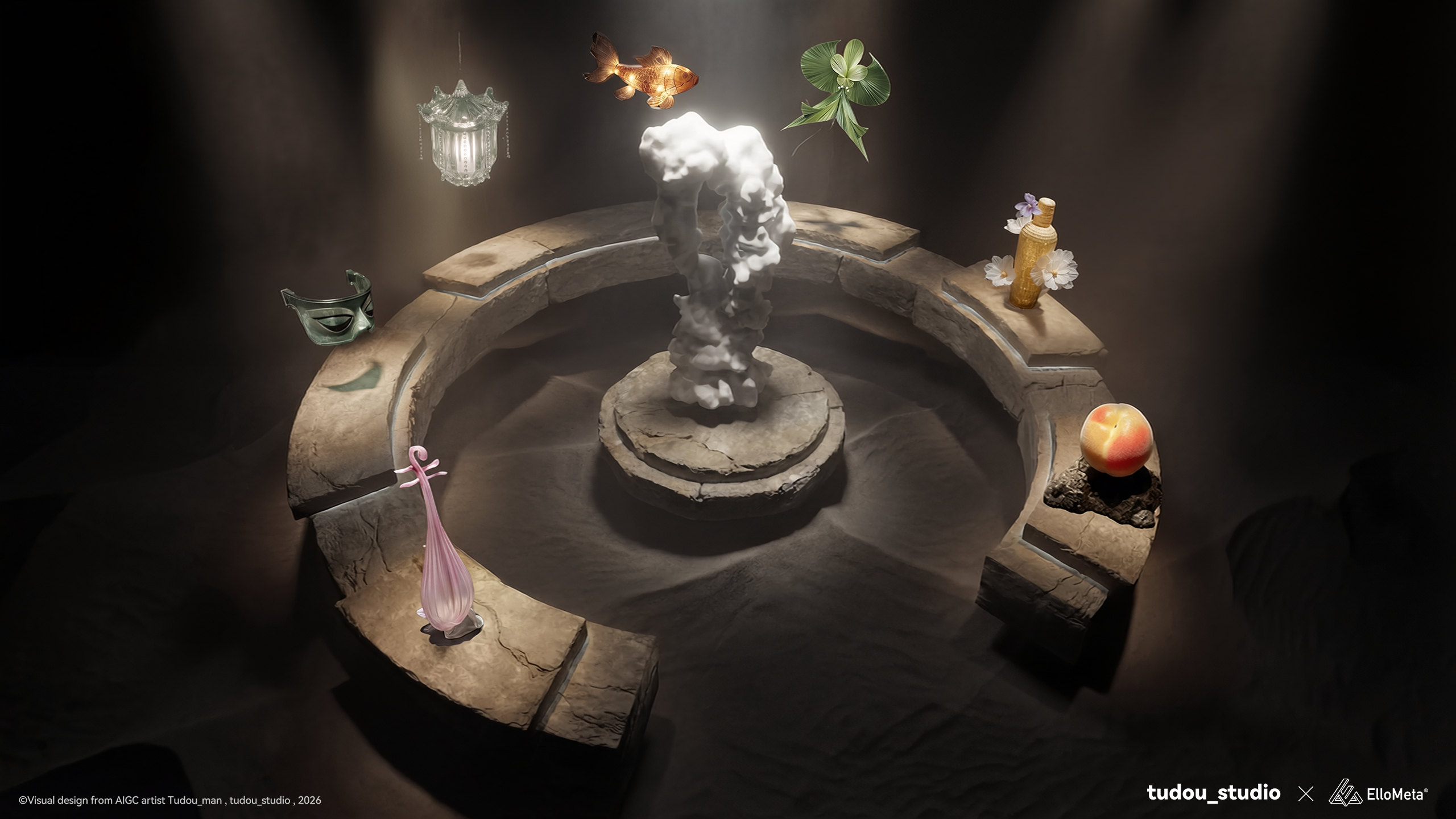
《望山》
2. Commercial Monetization vs. Cultural Mission: A Dynamic Balance of Interest and Sentiment
AIGC has lowered the threshold for ICH creation and monetization, yet it has also intensified the conflict between commercial interests and cultural mission.
CC is a successful model of commercialization. Transitioning from a traditional scene designer, she has doubled her income through artist commissions, platform collaborations, and TV series opening sequences. But she sticks to her bottom line: “Forms can be compromised, but cultural essence must never be sacrificed.”
Tudou Man “stays away from instant monetization. ” Giving up a high salary as an advertising partner, he focuses on IP building and industry rule-setting. “We use art to counter the value dilution brought by AI; culture must not be reduced to a money-making tool, ” he said. His legal victory not only defined copyright boundaries for AIGC works but also made ICH creators realize that cultural innovation in the digital era needs legal protection.
Que Niao follows a “localized commercial ” path, integrating AIGC creation with Kaili cultural tourism and offline communities. Profits from film clubs, AI study tours, and cultural tourism promotions are reinvested in supporting veteran inheritors and local cultural protection. “Part of our offline community and cultural-tourism work is intended to feed back into local cultural preservation., ” the team said.
Chi Tata has not pursued direct commercialization. Her works have attracted attention from local cultural institutions and small orders, but she remains focused on creativity and culture. “Realizing my dream with low cost is not for profit, but to make Miao culture visible, ” she said.
CC Chishaya’s Work
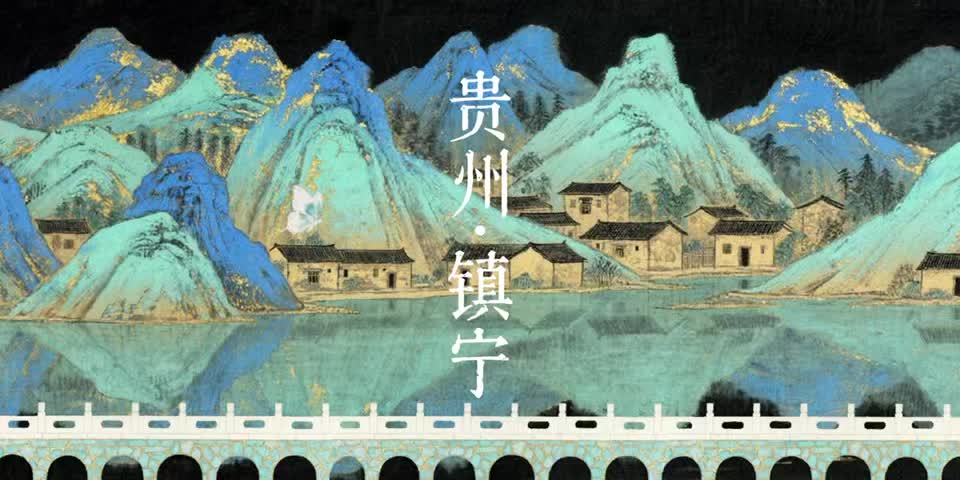
《贵州·镇宁》
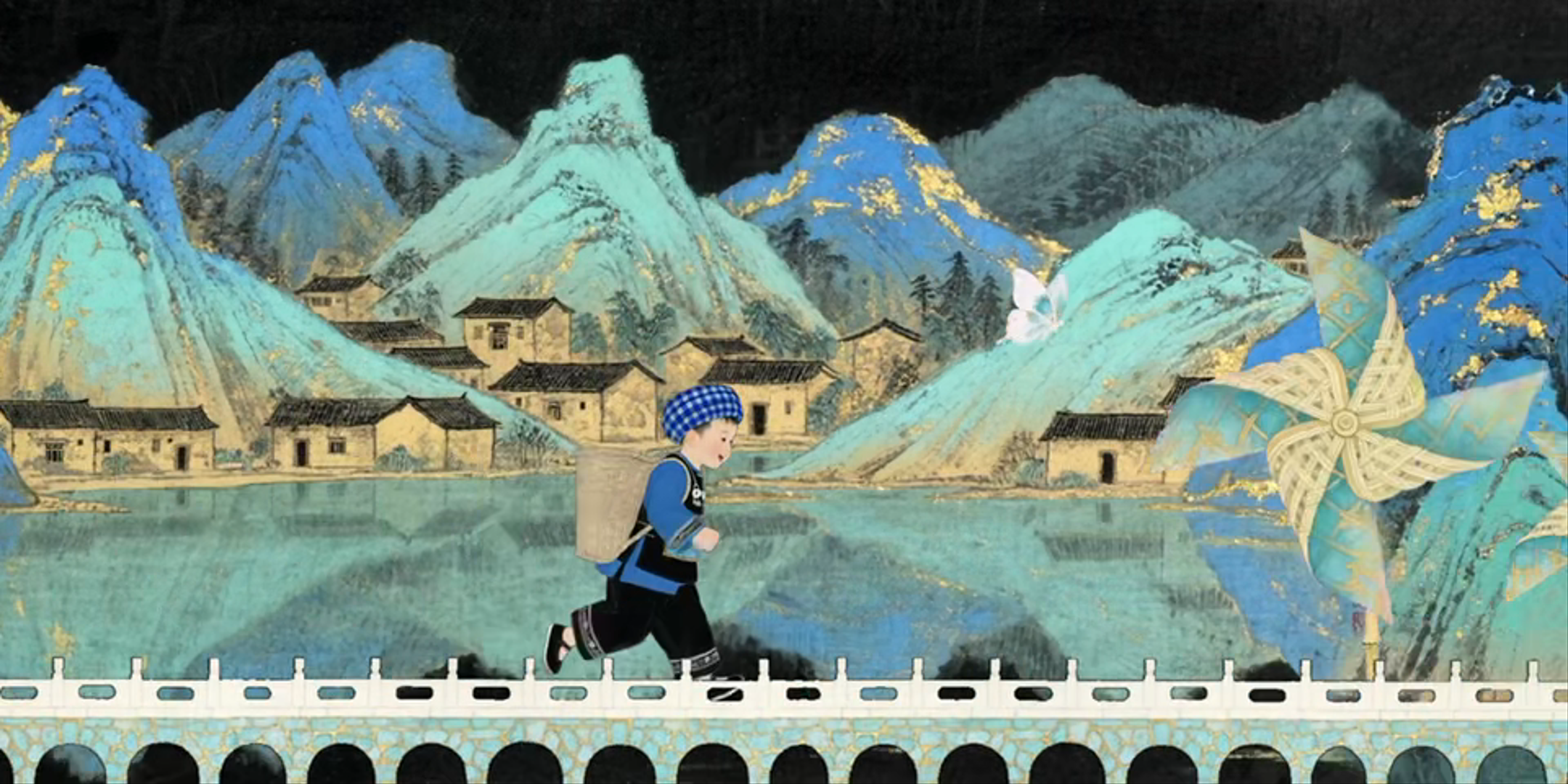
《贵州·镇宁》
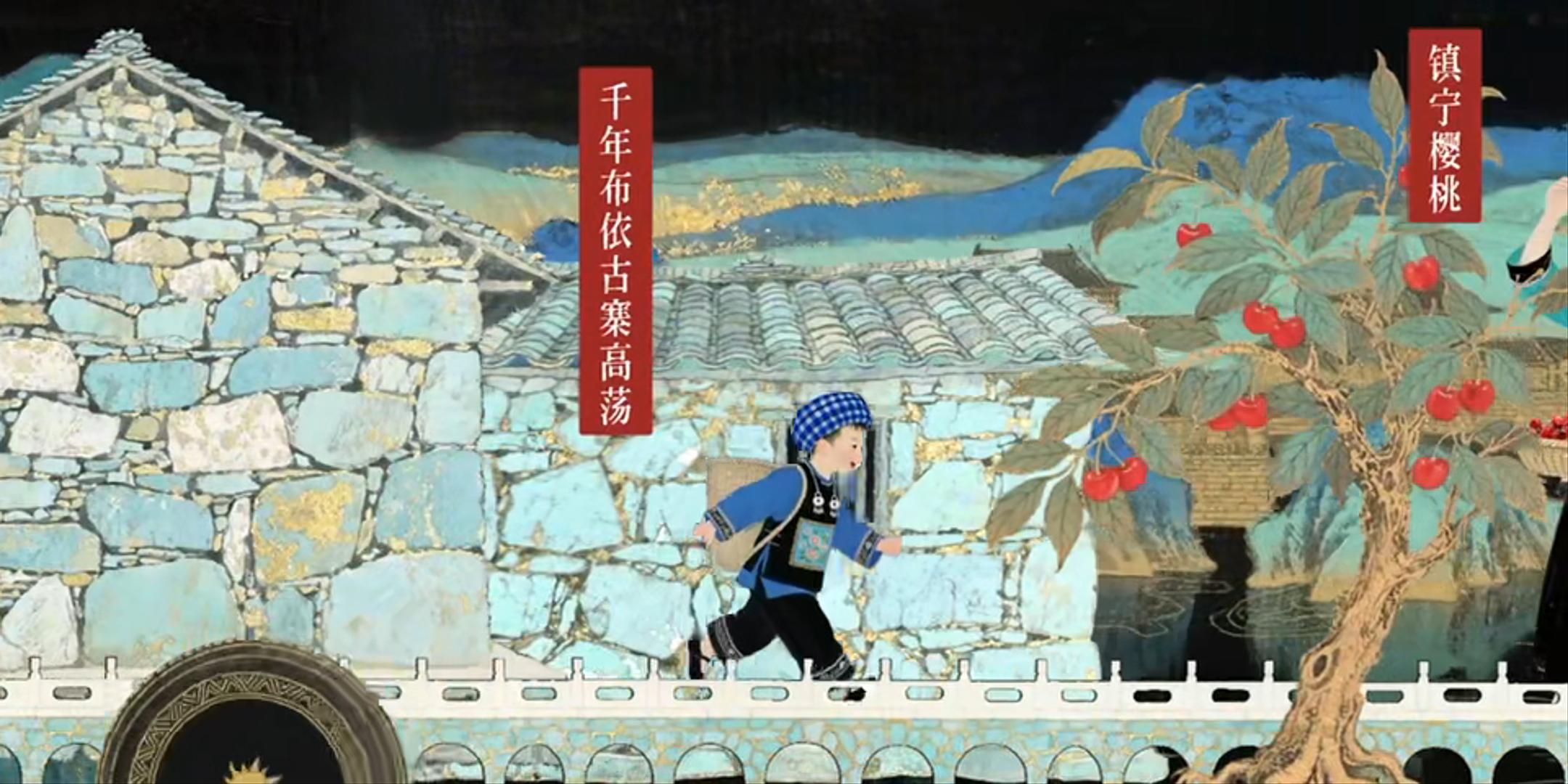
《贵州·镇宁》
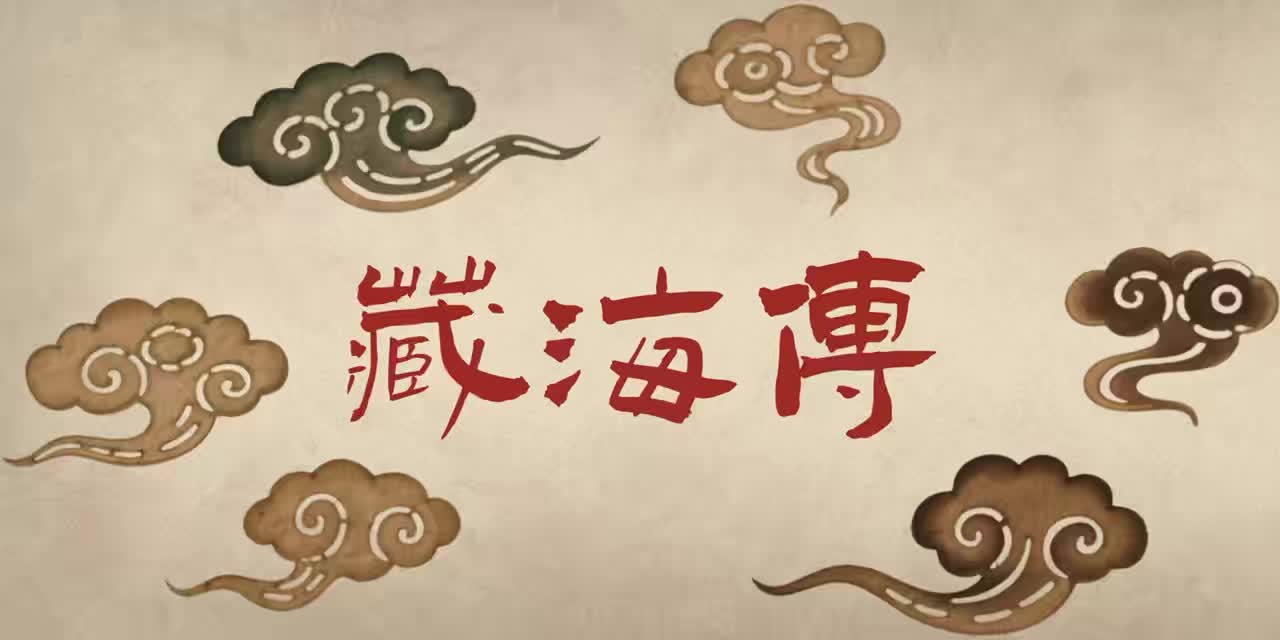
《藏海传》
3. Cultural Accuracy and Authenticity: Human Oversight to Guard the Roots of ICH
Data bias and generation limitations of AI models have made cultural distortion the biggest pain point in AIGC ICH creation. The four creators share a consensus: AI is a tool; humans are the final guardians of cultural authenticity.
While creating Xi Mai, Que Niao encountered AI generating Cantonese-style characters and mismatched costumes. They relied on extensive research, interviews with inheritors, and local street photos to manually revise details. By cooperating directly with ICH inheritors, they obtained first-hand craftsmanship and stories, fundamentally avoiding stereotypes and distortions. “AI has no cultural awareness; the best way is to let inheritors participate in creation, ” the team said.
Chi Tata confronts AI’s “data bias ” head-on. She insists on field research first and uses real totem materials from Liping and Anshun to avoid AI’s “average aesthetic. ” “AI is about recreation, not documentation; the creator’s cultural foundation determines whether ICH communication stays on track, ” she said.
Tudou Man has built an “ICH element verification library ” and clearly labels “secondary creation ” to clarify boundaries. His copyright victory set a benchmark in the cultural sphere: authenticity in digital ICH creation is not only respect for cultural symbols but also protection for creators’ intellectual achievements.
CC follows a “visual first, error elimination ” rule. She verifies ICH knowledge in advance and deletes or revises content with chronological errors or confused patterns. “For official cultural promotion, cultural accuracy comes first; stunning visuals can be abandoned, ” she said.
Que Niao‘s Work
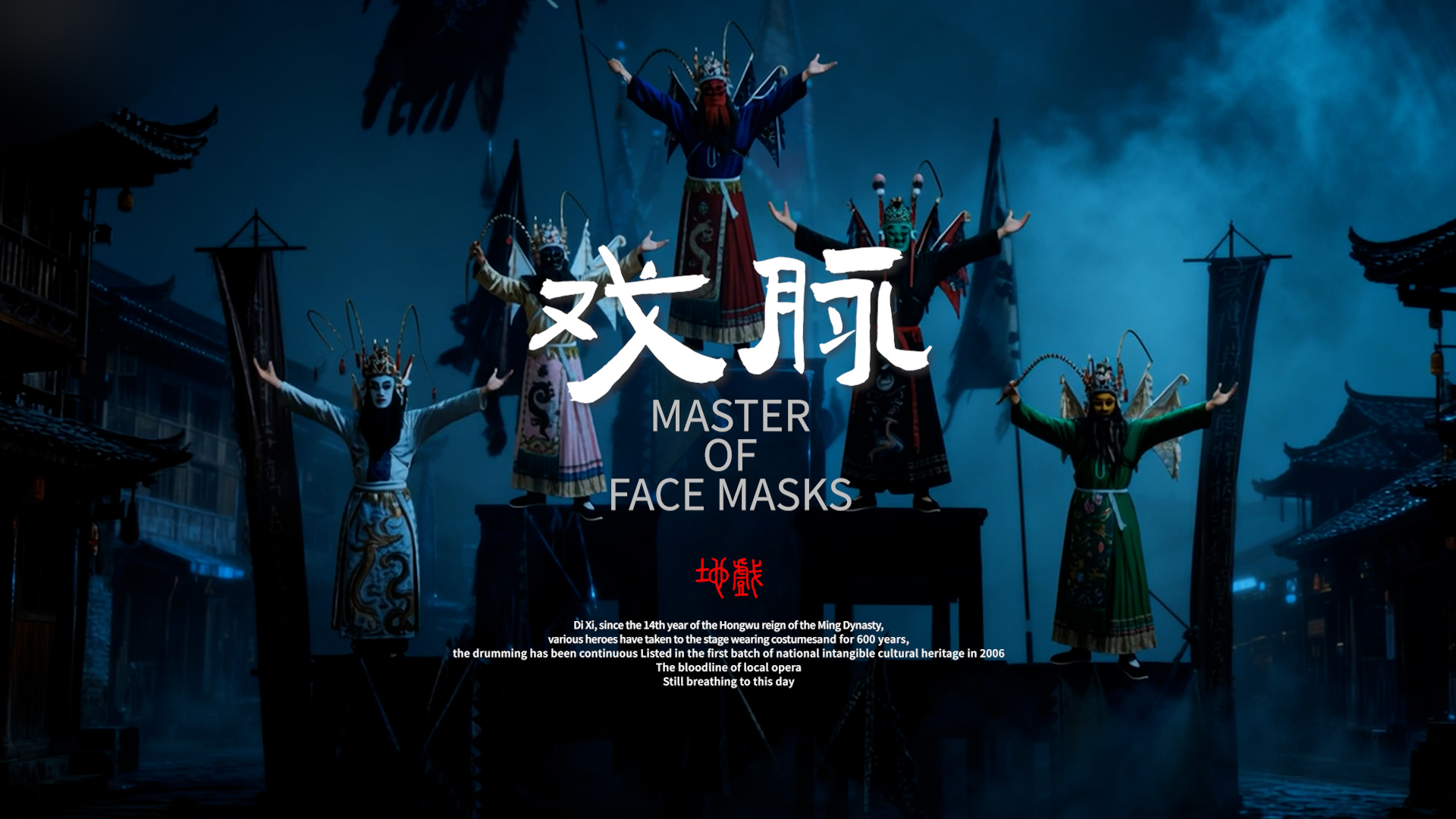
《戏脉》封面
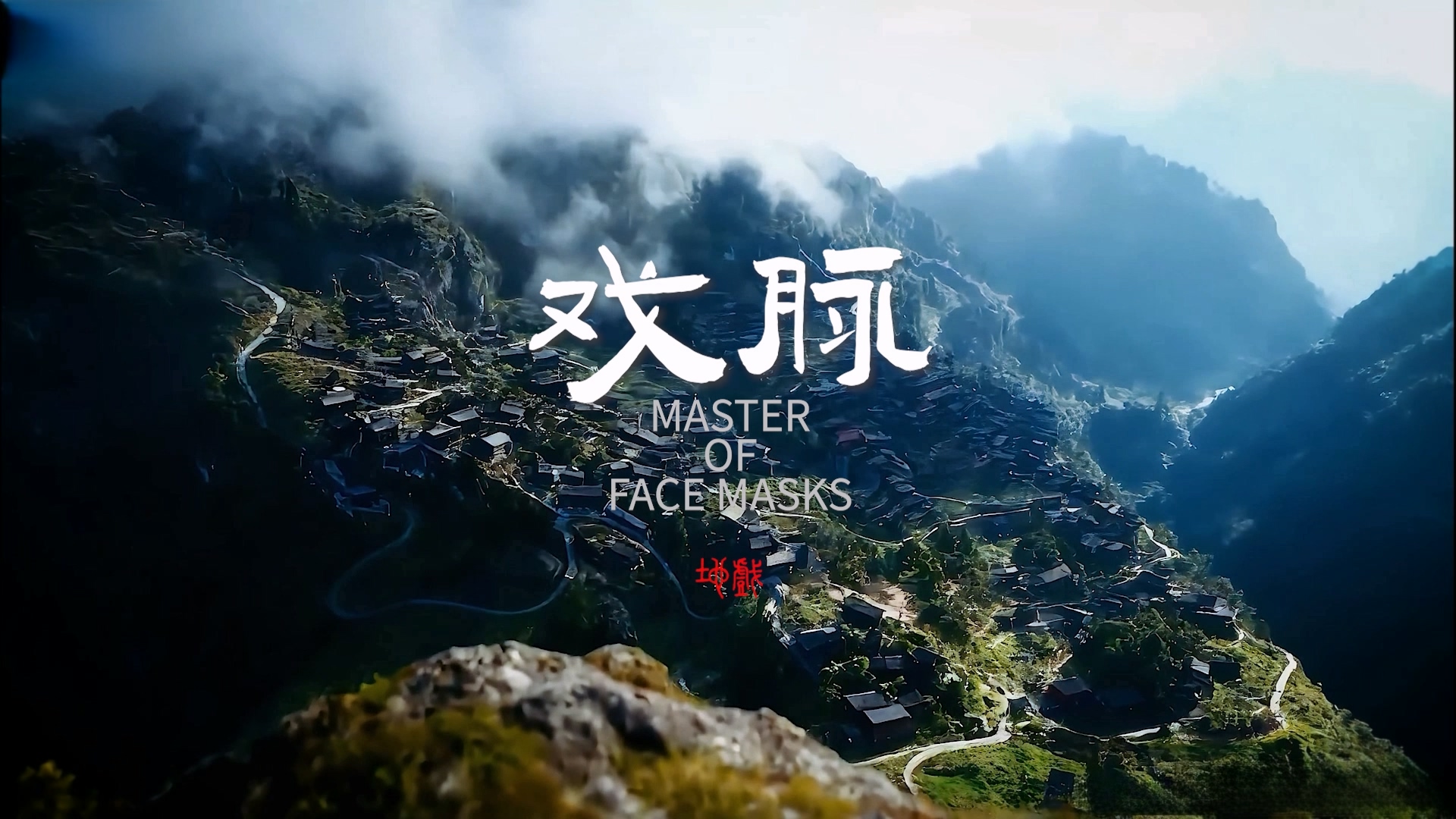
《戏脉》封面
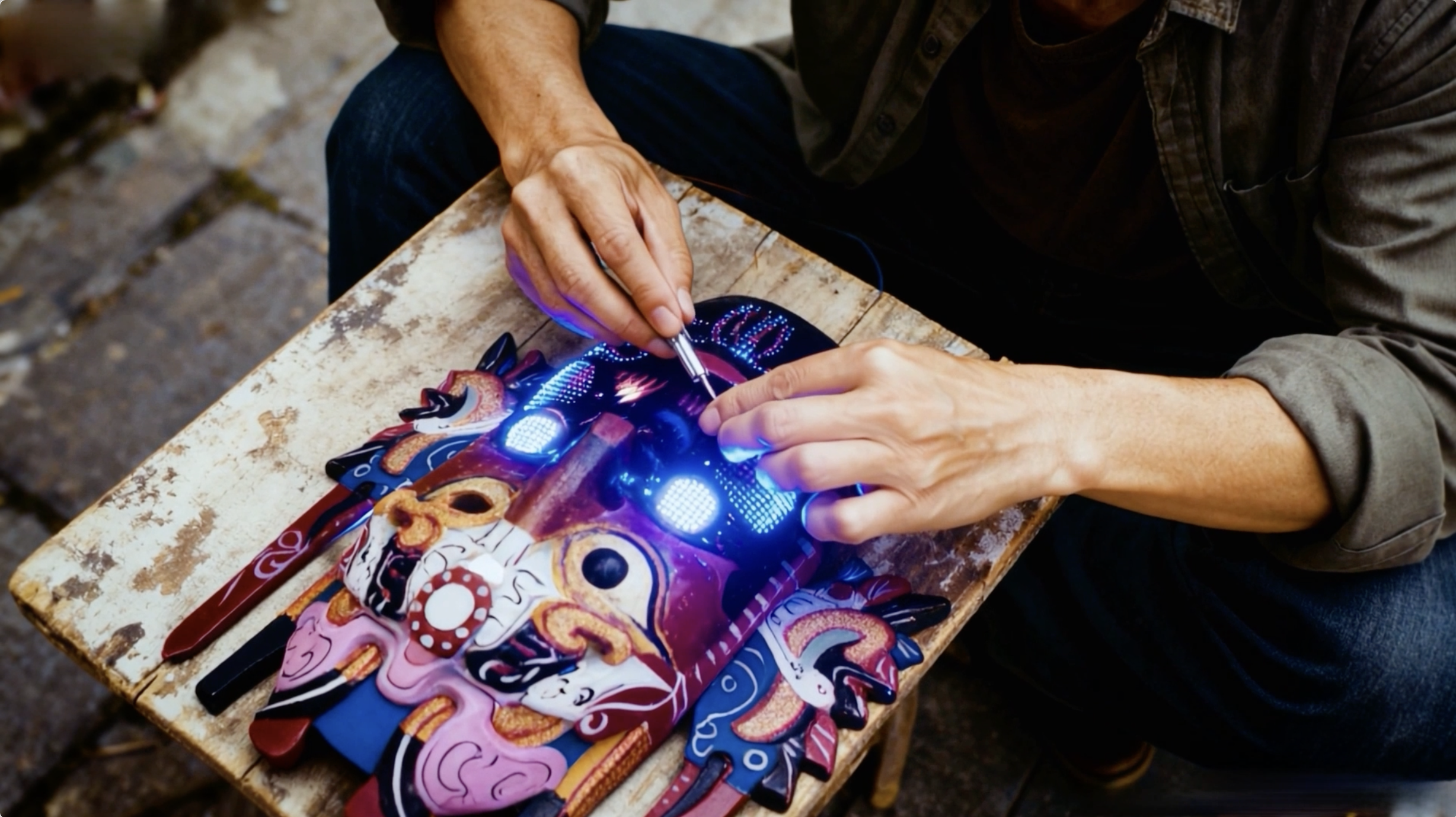
《戏脉》
《戏脉》
4. Digital ICH and Traditional Inheritance: Complementary Symbiosis, Not Replacement
“Will AI replace traditional inheritance? ” is a core industry debate. The four creators prove with practice: digital ICH and traditional inheritance are complementary and symbiotic, not opposing.
Tudou Man clearly defines their roles: traditional inheritors are the core main line of inheritance, preserving original skills; AIGC creators are supplementary carriers expanding communication radius. “AI makes ICH live forever in the digital world; traditional crafts root ICH in the real world, ” he said. His copyright case has helped traditional inheritors recognize digital creation as a new form of cultural expression.
Que Niao practices the philosophy of “guarding the root and expanding coverage. ” Through offline film clubs and AI study tours, they attract young people to ICH. Their co-created videos with inheritors let ancient skills enter contemporary life, forming a closed loop of “online traffic, offline inheritance. “Digital is the wing; tradition is the root; inheritors are the living blood of this root, ” the team said.
Chi Tata views AIGC as “digital translation ” of ICH, not authentic documentation. It can visualize myths and preserve endangered skills digitally. “Traditional inheritance is on-site persistence; digital ICH is cross-time extension; together they form a complete inheritance system, ” she said.
CC uses communication effects to confirm complementary value. Her shadow puppetry and embroidery videos have inspired many creators and encouraged viewers to learn traditional skills. “Digital communication breaks ICH into the mainstream; traditional inheritance grounds ICH in reality, ” she said.
Chi Tata’s Work
《清水姑娘-仰阿莎》
《清水姑娘-仰阿莎》
《清水姑娘-仰阿莎》
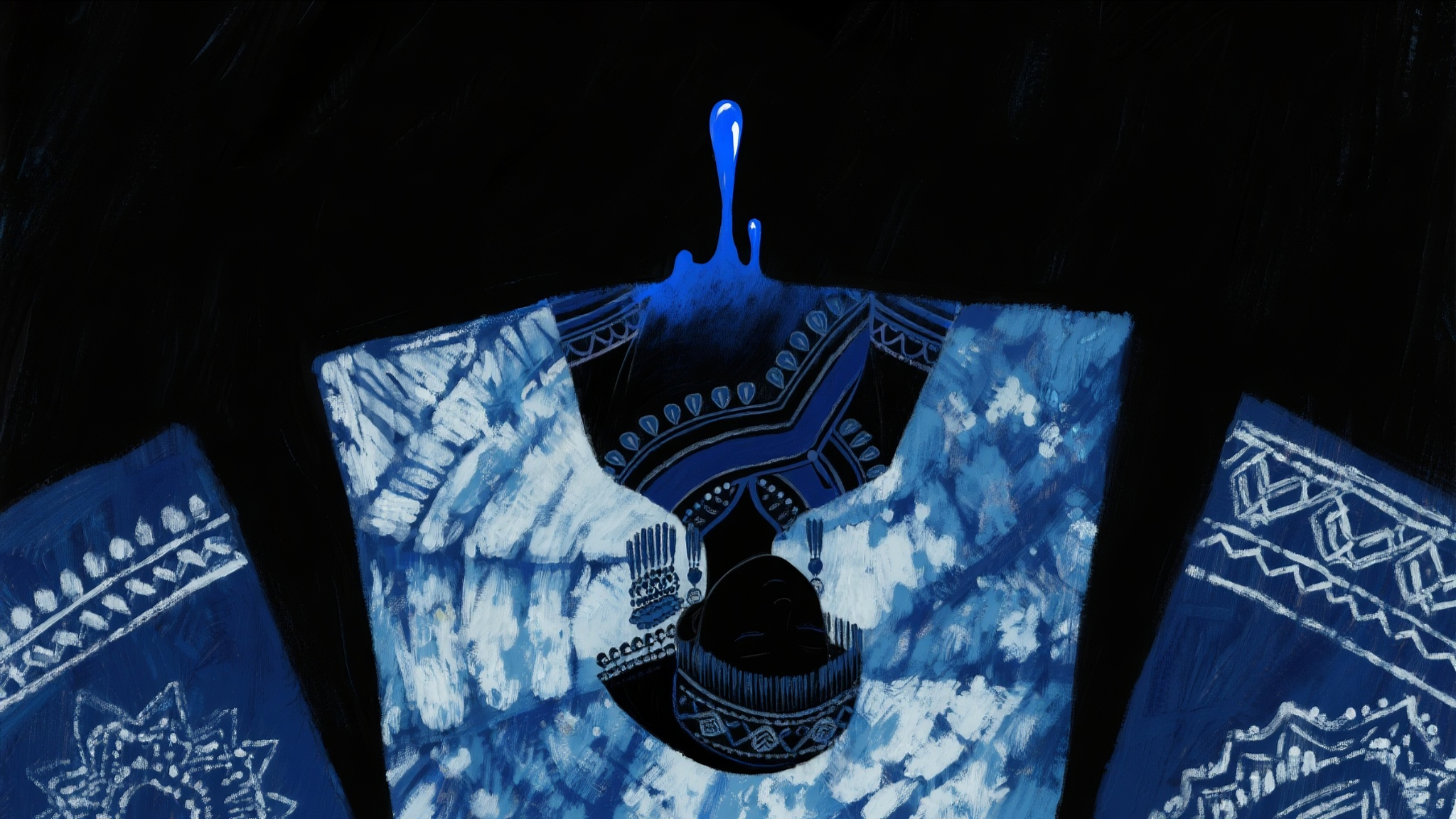
《清水姑娘-仰阿莎》

《清水姑娘-仰阿莎》
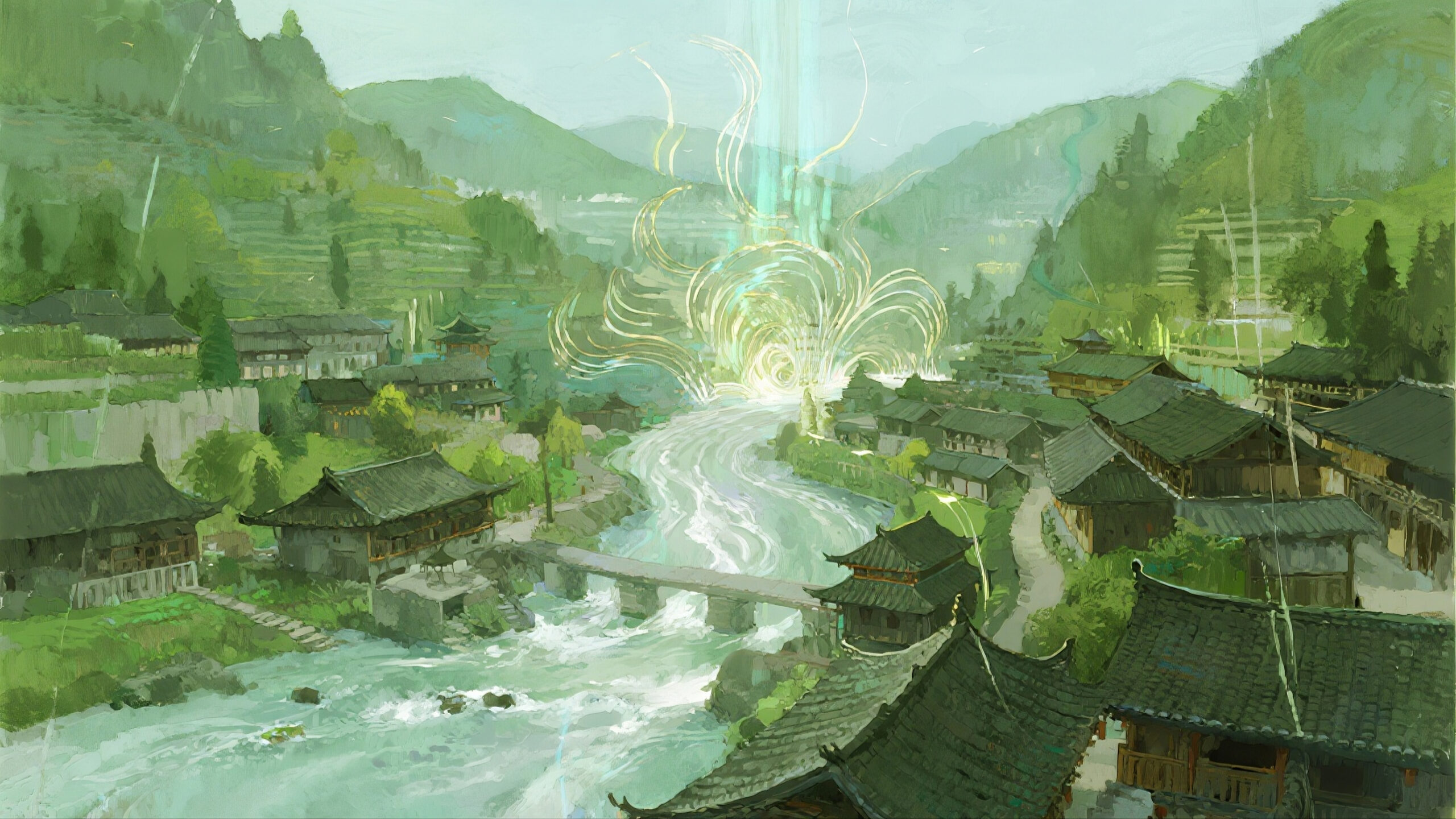
《清水姑娘-仰阿莎》
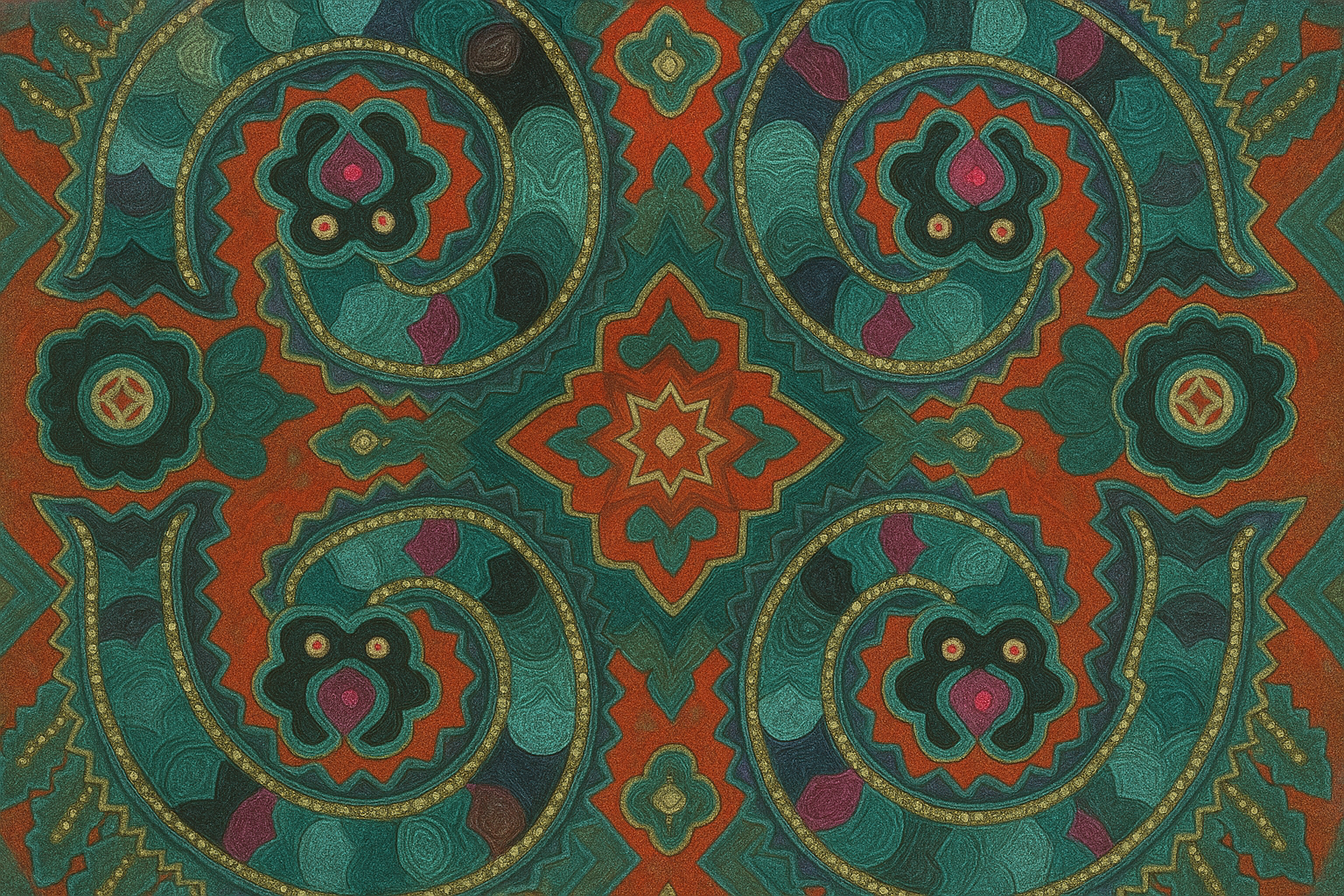
《清水姑娘-仰阿莎》
III. Shared Questions: The Debate over Intangible Cultural Heritage Inheritance in the AI Era
As AIGC emerges as a new engine for the communication of intangible cultural heritage (ICH), four creators — Tudou Man, Que Niao, CC and Chi Tata — have broken through in their respective fields while confronting core questions at the intersection of technology and culture. The balance between visual spectacle and cultural depth, the tension between commercial monetization and cultural mission, the cultural authenticity of AI-generated content, and the relationship between digital ICH and traditional inheritance have defined their journeys. Their differing answers reflect the complex ecosystem of ICH inheritance in the AI era and outline the real boundaries of technology empowering culture.
1. Visual Spectacle vs. Cultural Depth: A Dual Pursuit of Traffic Access and Cultural Core
The logic of short-video communication has made visual spectacle the primary tool for ICH to break through niche circles, yet it has also raised industry concerns about “prioritizing form over substance.”
CC understands the “three-second rule ” of short videos. As a leader in the traffic track, she actively selects highly visual ICH elements such as embroidery, shadow puppetry, and Dunhuang patterns, integrating them with hit film and TV IP adaptations to capture viewers’ attention with extreme aesthetics. “Only when people are willing to watch can they learn about the culture behind it, ” she said. She hides cultural notes in videos and supplements ICH knowledge in comment sections, reconciling visual appeal with cultural communication.
Chi Tata prioritizes cultural depth. Focusing on the homology between Miao totems and Central Plains culture, she uses AI to create kaleidoscopic dynamic interpretations of the legend of Yang Asha, Miao embroidery, and batik, metaphorizing the migration and inclusiveness of Miao culture. “Pure visual spectacle will eventually be worthless; only cultural experience is irreplaceable, ” she said.
Tudou Man uses MR technology to resolve the dilemma. His digital ICH exhibitions create immersive visual spectacles while presenting the historical context and craftsmanship of mortise and tenon structures and ICH techniques through interactive installations. “Being ignored is scarier, but we must uphold the core after attracting attention, ” he said.
Rooted in southeastern Guizhou, Que Niao rejects “creating visual illusions for outsiders. ” They use AI to restore the local texture of Anshun Dixi opera and correct distorted images generated by AI. More importantly, they collaborate directly with local ICH inheritors to shoot co-created videos and photos, bringing ICH out of display cases and into contemporary life. “Good-looking visuals must take root in local life to have cultural warmth, ” the team said.
Tudou Man’s Work
《望山-幻目之镜》
《望山-瓶中梦海》
《望山-轻山云云》
《望山-丝风袅袅》
《望山-桃源仙境》
《望山》
2. Commercial Monetization vs. Cultural Mission: A Dynamic Balance of Interest and Sentiment
AIGC has lowered the threshold for ICH creation and monetization, yet it has also intensified the conflict between commercial interests and cultural mission.
CC is a successful model of commercialization. Transitioning from a traditional scene designer, she has doubled her income through artist commissions, platform collaborations, and TV series opening sequences. But she sticks to her bottom line: “Forms can be compromised, but cultural essence must never be sacrificed.”
Tudou Man “stays away from instant monetization. ” Giving up a high salary as an advertising partner, he focuses on IP building and industry rule-setting. “We use art to counter the value dilution brought by AI; culture must not be reduced to a money-making tool, ” he said. His legal victory not only defined copyright boundaries for AIGC works but also made ICH creators realize that cultural innovation in the digital era needs legal protection.
Que Niao follows a “localized commercial ” path, integrating AIGC creation with Kaili cultural tourism and offline communities. Profits from film clubs, AI study tours, and cultural tourism promotions are reinvested in supporting veteran inheritors and local cultural protection. “Part of our offline community and cultural-tourism work is intended to feed back into local cultural preservation., ” the team said.
Chi Tata has not pursued direct commercialization. Her works have attracted attention from local cultural institutions and small orders, but she remains focused on creativity and culture. “Realizing my dream with low cost is not for profit, but to make Miao culture visible, ” she said.
CC Chishaya’s Work
《贵州·镇宁》
《贵州·镇宁》
《贵州·镇宁》
《藏海传》
3. Cultural Accuracy and Authenticity: Human Oversight to Guard the Roots of ICH
Data bias and generation limitations of AI models have made cultural distortion the biggest pain point in AIGC ICH creation. The four creators share a consensus: AI is a tool; humans are the final guardians of cultural authenticity.
While creating Xi Mai, Que Niao encountered AI generating Cantonese-style characters and mismatched costumes. They relied on extensive research, interviews with inheritors, and local street photos to manually revise details. By cooperating directly with ICH inheritors, they obtained first-hand craftsmanship and stories, fundamentally avoiding stereotypes and distortions. “AI has no cultural awareness; the best way is to let inheritors participate in creation, ” the team said.
Chi Tata confronts AI’s “data bias ” head-on. She insists on field research first and uses real totem materials from Liping and Anshun to avoid AI’s “average aesthetic. ” “AI is about recreation, not documentation; the creator’s cultural foundation determines whether ICH communication stays on track, ” she said.
Tudou Man has built an “ICH element verification library ” and clearly labels “secondary creation ” to clarify boundaries. His copyright victory set a benchmark in the cultural sphere: authenticity in digital ICH creation is not only respect for cultural symbols but also protection for creators’ intellectual achievements.
CC follows a “visual first, error elimination ” rule. She verifies ICH knowledge in advance and deletes or revises content with chronological errors or confused patterns. “For official cultural promotion, cultural accuracy comes first; stunning visuals can be abandoned, ” she said.
Que Niao‘s Work
《戏脉》封面
《戏脉》封面
《戏脉》
《戏脉》
4. Digital ICH and Traditional Inheritance: Complementary Symbiosis, Not Replacement
“Will AI replace traditional inheritance? ” is a core industry debate. The four creators prove with practice: digital ICH and traditional inheritance are complementary and symbiotic, not opposing.
Tudou Man clearly defines their roles: traditional inheritors are the core main line of inheritance, preserving original skills; AIGC creators are supplementary carriers expanding communication radius. “AI makes ICH live forever in the digital world; traditional crafts root ICH in the real world, ” he said. His copyright case has helped traditional inheritors recognize digital creation as a new form of cultural expression.
Que Niao practices the philosophy of “guarding the root and expanding coverage. ” Through offline film clubs and AI study tours, they attract young people to ICH. Their co-created videos with inheritors let ancient skills enter contemporary life, forming a closed loop of “online traffic, offline inheritance. “Digital is the wing; tradition is the root; inheritors are the living blood of this root, ” the team said.
Chi Tata views AIGC as “digital translation ” of ICH, not authentic documentation. It can visualize myths and preserve endangered skills digitally. “Traditional inheritance is on-site persistence; digital ICH is cross-time extension; together they form a complete inheritance system, ” she said.
CC uses communication effects to confirm complementary value. Her shadow puppetry and embroidery videos have inspired many creators and encouraged viewers to learn traditional skills. “Digital communication breaks ICH into the mainstream; traditional inheritance grounds ICH in reality, ” she said.
Chi Tata’s Work
《清水姑娘-仰阿莎》
《清水姑娘-仰阿莎》
《清水姑娘-仰阿莎》
《清水姑娘-仰阿莎》
《清水姑娘-仰阿莎》
《清水姑娘-仰阿莎》
《清水姑娘-仰阿莎》
IV. Future Outlook: A Flourishing Ecosystem for Digital Intangible Cultural Heritage
The differentiated explorations of Tudou Man, Que Niao, CC and Chi Tata have jointly painted a diverse landscape of ICH communication in the AIGC era. Their practices represent not only personal career successes but also drive the industry from “wild growth ” to “rational maturity, ” providing replicable models for building a digital ICH ecosystem.
Their explorations have established four core values for the industry. Lin’s copyright case clarified legal protection for digital creators. Que Niao proved that AI works best when rooted in local culture and community. CC showed that heritage can succeed on short-video platforms. And Chi Tata reminded everyone that cultural knowledge matters more than technology. Together, they show that AIGC ICH communication has no single answer, but diverse paths drive a vibrant ecosystem.
The success of AIGC in empowering ICH is essentially a resonance of technology reducing costs, platform empowerment, and cultural awakening. Technology has cut creation costs by over 90% and boosted efficiency; platforms such as Douyin provide traffic and monetization soil; and rising cultural confidence among young people supplies an audience foundation. Together, they turn ICH from “museum relics ” into “digital trends.”
A critical reminder: the success of these four creators never came from “going viral overnight with AI”, but it was activation of their professional accumulation by AIGC. Tudou Man had experience as a university visual communication teacher and advertising partner; Que Niao had long focused on local imaging and culture; CC held systematic training in environmental, stage, and experimental art; Chi Tata had a background in advertising creative planning. None entered AIGC without foundations, but they use AI as an amplifier and accelerator to scale their aesthetic, narrative, cultural, and professional capabilities at unprecedented efficiency.
Their collective message is clear: AIGC is not suitable for young people to enter blindly without mastering the relevant skills. AI is only a tool to inject vitality; it cannot create aesthetics, replace field research, generate cultural understanding, or compensate for weak professional skills. Tudou Man advises young people: “Do your core job well first, then take ICH and AIGC as inspiration. ” Chi Tata stresses: “AI can never replace our on-site observation. ” Without cultural roots and professional grounding, AIGC only produces homogeneous, superficial, even culturally distorted “digital fast food.”
A flourishing digital ICH ecosystem requires collaborative construction. Creators need both professional skills and genuine care for culture. Platforms like Douyin should support both growth and responsibility. Institutions and governments can help through tourism and education programs. And audiences need to see AI as a tool, not a solution. The success of the four creators lies not in cutting-edge technology, but in respect for culture, devotion to inheritance, and long-term accumulation of professional abilities. AIGC does not create competitiveness, but it makes existing strengths visible, amplified, and realized faster. Tudou Man’s copyright case gave legal protection to digital heritage creators, legitimizing work that had operated in a legal gray area and giving it real value.
From the darkrooms of Kaili to MR exhibition halls in Shanghai, from short-video screens to in-depth social media shares, Miao embroidery totems flow digitally and mortise and tenon structures revive virtually. AIGC injects vitality into ICH but cannot replace its soil; it brings new energy only based on original cultural roots.
In the future, creators who will go the distance are those who master their craft first, then adopt AI as a tool – not a shortcut. With more people grounded in professionalism, guided by culture, and supported by technology, the digital ICH ecosystem will truly flourish. The thousand-year-old cultural heritage will gain a lasting, authentic, and rooted new life in the digital era, a rebirth of inheritance, a vivid expression of cultural confidence rather than an end to tradition.
Extra Credits
Advisor
Yolanda Ma
Editor in Chief
Clarisse Choo
Creative Directors
Syrena Jin
Cheryl Xie
Serena Zhou
Managing Editor
Jiachen Li
Copy Editor
Evelyn Tao
Visual Producer
Jingyi Huang
AI Statement
Interview Records Sorting: Doubao
Data visualization: Coze, Doubao
Image generation: Jimeng(References: Jerry.CC and Yurenjie),
Doubao
IV. Future Outlook: A Flourishing Ecosystem for Digital Intangible Cultural Heritage
The differentiated explorations of Tudou Man, Que Niao, CC and Chi Tata have jointly painted a diverse landscape of ICH communication in the AIGC era. Their practices represent not only personal career successes but also drive the industry from “wild growth ” to “rational maturity, ” providing replicable models for building a digital ICH ecosystem.
Their explorations have established four core values for the industry. Lin’s copyright case clarified legal protection for digital creators. Que Niao proved that AI works best when rooted in local culture and community. CC showed that heritage can succeed on short-video platforms. And Chi Tata reminded everyone that cultural knowledge matters more than technology. Together, they show that AIGC ICH communication has no single answer, but diverse paths drive a vibrant ecosystem.
The success of AIGC in empowering ICH is essentially a resonance of technology reducing costs, platform empowerment, and cultural awakening. Technology has cut creation costs by over 90% and boosted efficiency; platforms such as Douyin provide traffic and monetization soil; and rising cultural confidence among young people supplies an audience foundation. Together, they turn ICH from “museum relics ” into “digital trends.”
A critical reminder: the success of these four creators never came from “going viral overnight with AI”, but it was activation of their professional accumulation by AIGC. Tudou Man had experience as a university visual communication teacher and advertising partner; Que Niao had long focused on local imaging and culture; CC held systematic training in environmental, stage, and experimental art; Chi Tata had a background in advertising creative planning. None entered AIGC without foundations, but they use AI as an amplifier and accelerator to scale their aesthetic, narrative, cultural, and professional capabilities at unprecedented efficiency.
Their collective message is clear: AIGC is not suitable for young people to enter blindly without mastering the relevant skills. AI is only a tool to inject vitality; it cannot create aesthetics, replace field research, generate cultural understanding, or compensate for weak professional skills. Tudou Man advises young people: “Do your core job well first, then take ICH and AIGC as inspiration. ” Chi Tata stresses: “AI can never replace our on-site observation. ” Without cultural roots and professional grounding, AIGC only produces homogeneous, superficial, even culturally distorted “digital fast food.”
A flourishing digital ICH ecosystem requires collaborative construction. Creators need both professional skills and genuine care for culture. Platforms like Douyin should support both growth and responsibility. Institutions and governments can help through tourism and education programs. And audiences need to see AI as a tool, not a solution. The success of the four creators lies not in cutting-edge technology, but in respect for culture, devotion to inheritance, and long-term accumulation of professional abilities. AIGC does not create competitiveness, but it makes existing strengths visible, amplified, and realized faster. Tudou Man’s copyright case gave legal protection to digital heritage creators, legitimizing work that had operated in a legal gray area and giving it real value.
From the darkrooms of Kaili to MR exhibition halls in Shanghai, from short-video screens to in-depth social media shares, Miao embroidery totems flow digitally and mortise and tenon structures revive virtually. AIGC injects vitality into ICH but cannot replace its soil; it brings new energy only based on original cultural roots.
In the future, creators who will go the distance are those who master their craft first, then adopt AI as a tool – not a shortcut. With more people grounded in professionalism, guided by culture, and supported by technology, the digital ICH ecosystem will truly flourish. The thousand-year-old cultural heritage will gain a lasting, authentic, and rooted new life in the digital era, a rebirth of inheritance, a vivid expression of cultural confidence rather than an end to tradition.
Extra Credits
Advisor
Yolanda Ma
Editor in Chief
Clarisse Choo
Creative Directors
Syrena Jin
Cheryl Xie
Serena Zhou
Managing Editor
Jiachen Li
Copy Editor
Evelyn Tao
Visual Producer
Jingyi Huang
AI Statement
Interview Records Sorting: Doubao
Data visualization: Coze, Doubao
Image generation: Jimeng(References: Jerry.CC and Yurenjie),
Doubao
