
Adapt or Disappear: Hong Kong’s Dried Seafood Street at a Crossroads
By Gao Tingshan Gloria and Jin Ying Sally
In China, a bowl of slow-simmered soup cooked with fish maw and sea cucumber costing thousands of yuan per catty, soaked and cooked over one to three days, is not just food. It is dietary therapy, an ancient practice passed down through generations.
But this dried seafood culture is under threat because of evaporated price advantages, tougher customs controls, and a generational shift in taste and time.
In China, a bowl of slow-simmered soup cooked with fish maw and sea cucumber costing thousands of yuan per catty, soaked and cooked over one to three days, is not just food. It is dietary therapy, an ancient practice passed down through generations.
But this dried seafood culture is under threat because of evaporated price advantages, tougher customs controls, and a generational shift in taste and time.
Hong Kong’s Historic Unravelling
Hong Kong’s dried seafood street, once a global epicenter for the trade, is facing a historic unravelling. By the 2026 Lunar New Year, the cross-border shopping logic that sustained the industry for decades has been dismantled by a “perfect storm”: the evaporation of price advantages over mainland e-commerce, the tightening of customs enforcement, and a generational shift in consumer habits. For the first time in a century, the tradition of simmering dried delicacies is struggling to find a place in the fast-paced life of 2026.
Central to this decline is the closing of the “gray area” that once facilitated the flow of premium goods across the border. A new biosafety law has strengthened controls on bringing animal products — including dried seafood — into the mainland, and high-tech surveillance has significantly increased the risk of confiscation. For mainland tourists, what was once a bargain hunt in Sheung Wan has transformed into a high-risk gamble involving potential confiscation and legal penalties.
Beyond the border, the rise of e-commerce and livestreaming has delivered a decentralizing blow to Hong Kong’s retail monopoly. According to a 2025 HKTDC survey, 73% of Chinese consumers now use cross-border e-commerce platforms like Tmall Global to buy overseas products – bypassing Hong Kong’s traditional retail streets. As Shenzhen’s Nanao market outcompetes on price and mainland logistics leapfrog traditional channels, Hong Kong’s century-old shops must now decide: adapt or disappear.
The fate of the dried seafood industry is not singular but split. On the quiet alleys of Sheung Wan, the signs tell one story: “Final Clearance Sale.” Decades-old shops are closing, unable to bear the weight of high rent, low turnover, and a generation that no longer cooks. But not all are giving up.
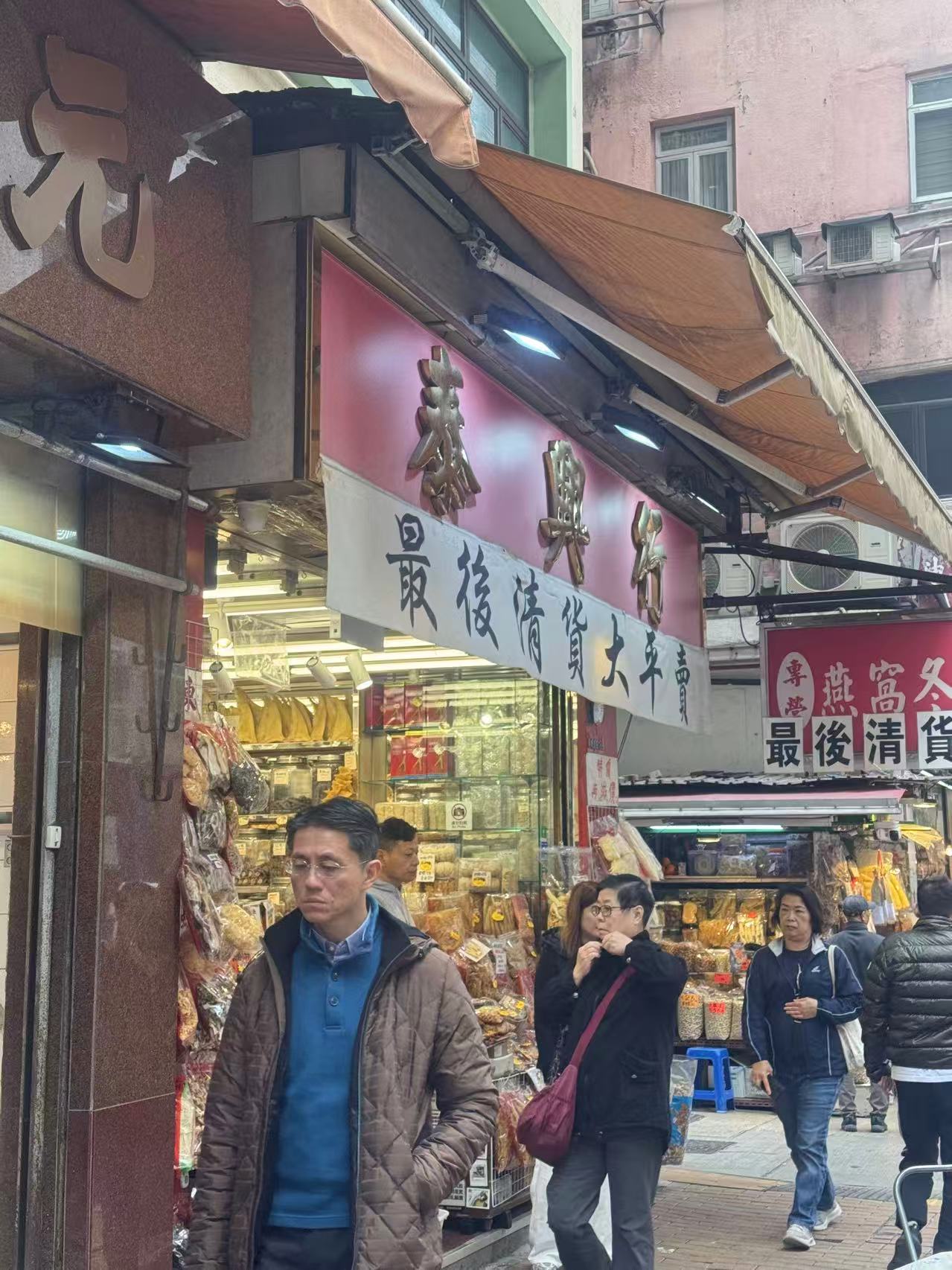
Tai Xing Hong — “Final Clearance Sale” banners mark the end of decades of business (Gloria Gao)
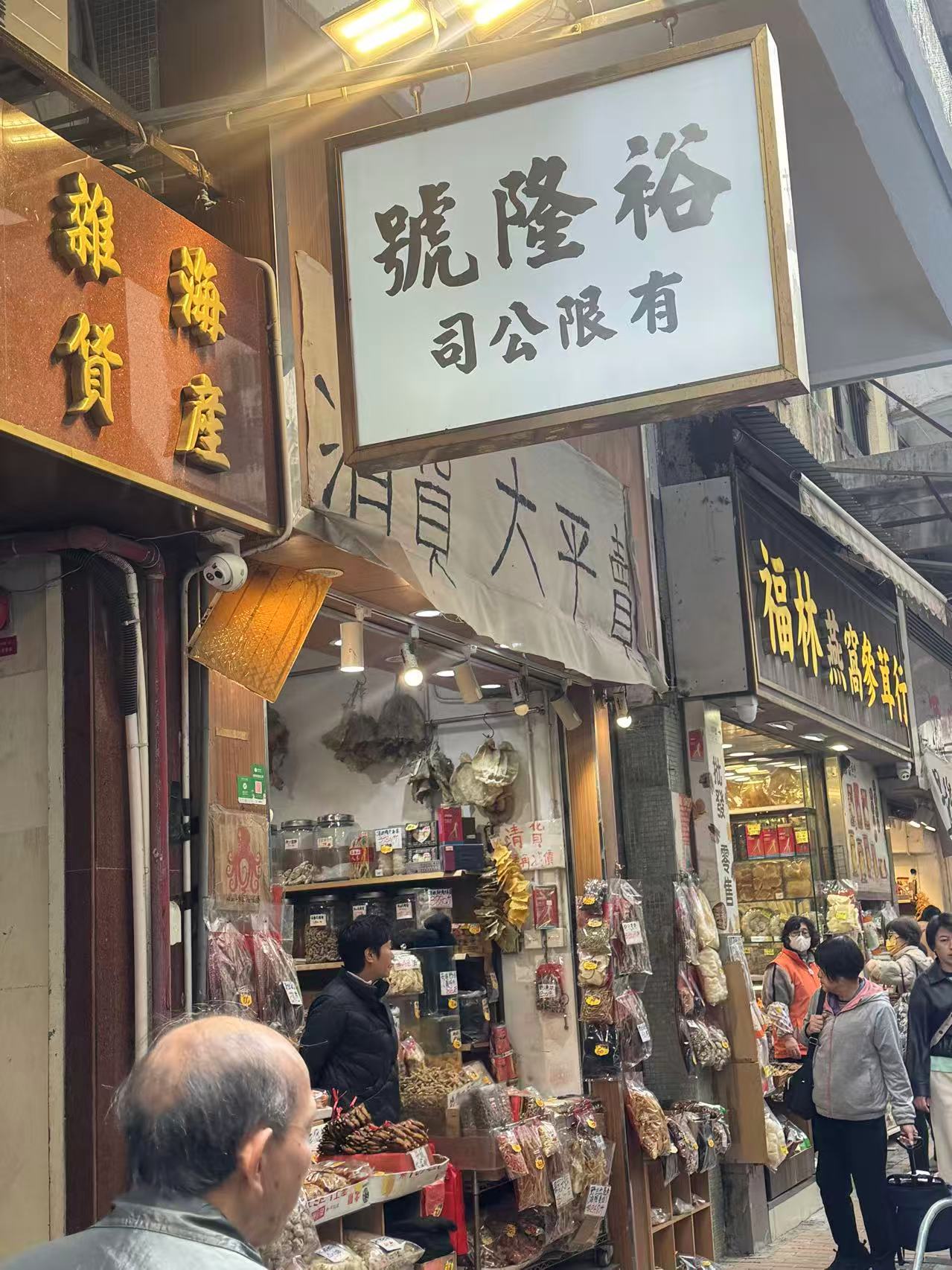
Yu Long He — Another heritage shop shutters after decades on Dried Seafood Street (Gloria Gao)
“Operating a dried seafood business now is asset-heavy and low-turnover; it’s better to rent out the storefront,” said Chen Yinghou.
Chen has lived on Sheung Wan Dried Seafood Street for 15 years and has witnessed the street transform from crowded and noisy to its current desolation.
“When I lived with my parents, the weekends always smelled like slow-simmered stews. They’d be downstairs buying more two or three times a month,” Chen recalled, “But now, look at my kitchen. These things hardly ever appear here. Honestly? It’s just too much work.”
For property-owned shops like “Tai Hing Hong”, an extremely realistic financial choice lies before them: continue to invest millions into slow-moving inventory and expensive master craftsmen, or close up and collect stable rent.
Hong Kong’s Historic Unravelling
Hong Kong’s dried seafood street, once a global epicenter for the trade, is facing a historic unravelling. By the 2026 Lunar New Year, the cross-border shopping logic that sustained the industry for decades has been dismantled by a “perfect storm”: the evaporation of price advantages over mainland e-commerce, the tightening of customs enforcement, and a generational shift in consumer habits. For the first time in a century, the tradition of simmering dried delicacies is struggling to find a place in the fast-paced life of 2026.
Central to this decline is the closing of the “gray area” that once facilitated the flow of premium goods across the border. A new biosafety law has strengthened controls on bringing animal products — including dried seafood — into the mainland, and high-tech surveillance has significantly increased the risk of confiscation. For mainland tourists, what was once a bargain hunt in Sheung Wan has transformed into a high-risk gamble involving potential confiscation and legal penalties.
Beyond the border, the rise of e-commerce and livestreaming has delivered a decentralizing blow to Hong Kong’s retail monopoly. According to a 2025 HKTDC survey, 73% of Chinese consumers now use cross-border e-commerce platforms like Tmall Global to buy overseas products – bypassing Hong Kong’s traditional retail streets. As Shenzhen’s Nanao market outcompetes on price and mainland logistics leapfrog traditional channels, Hong Kong’s century-old shops must now decide: adapt or disappear.
The fate of the dried seafood industry is not singular but split. On the quiet alleys of Sheung Wan, the signs tell one story: “Final Clearance Sale.” Decades-old shops are closing, unable to bear the weight of high rent, low turnover, and a generation that no longer cooks. But not all are giving up.
Tai Xing Hong — “Final Clearance Sale” banners mark the end of decades of business (Gloria Gao)
Yu Long He — Another heritage shop shutters after decades on Dried Seafood Street (Gloria Gao)
“Operating a dried seafood business now is asset-heavy and low-turnover; it’s better to rent out the storefront,” said Chen Yinghou.
Chen has lived on Sheung Wan Dried Seafood Street for 15 years and has witnessed the street transform from crowded and noisy to its current desolation.
“When I lived with my parents, the weekends always smelled like slow-simmered stews. They’d be downstairs buying more two or three times a month,” Chen recalled, “But now, look at my kitchen. These things hardly ever appear here. Honestly? It’s just too much work.”
For property-owned shops like “Tai Hing Hong”, an extremely realistic financial choice lies before them: continue to invest millions into slow-moving inventory and expensive master craftsmen, or close up and collect stable rent.
Global Expansion, Local Contraction
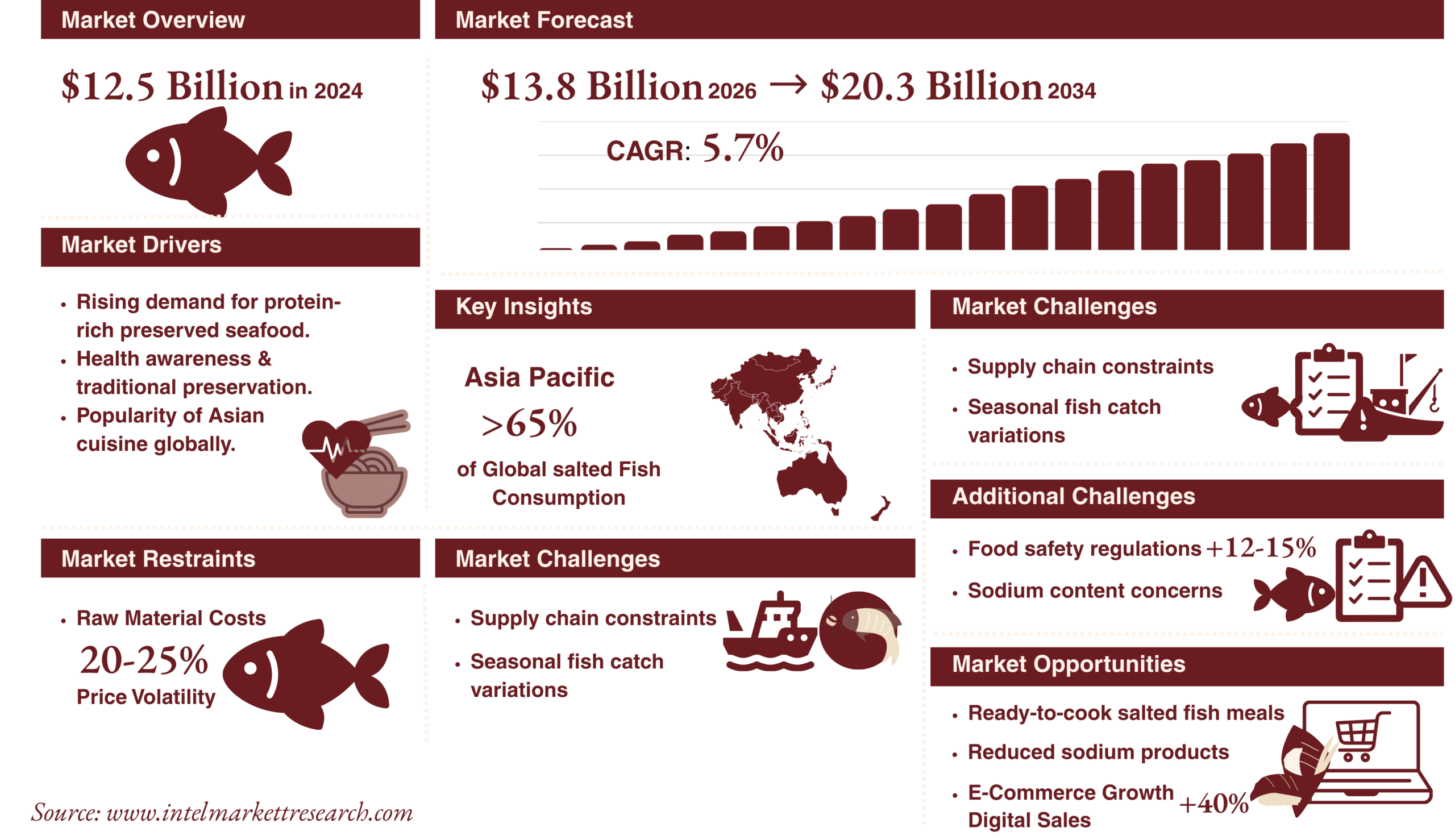
According to global market data from Intelmarket Research, the global salted fish market was valued at US$12.5 billion in 2024 and is projected to grow at a CAGR of 5.7% through 2034. However, the CAGR of Hong Kong’s local dried seafood market is only 3.5%. Hong Kong’s dried seafood street accounts for just 0.03% of the global market.
“What supports this street has never been the dried fish that people eat just to fill their stomachs,” said Mr. Chan, a sales associate at Tai Hing Hong, a century-old shop. “It’s a dietary culture that is passed down through generations. And that core chain is breaking.”
“Among today’s youth, who would still spend three days soaking a dried abalone?” Chen Yinghou lamented.
Young consumers simply “don’t know the goods,” according to Liang Binglin, the owner of HING FAT HONG, and when they walk into a shop with indifferent staff and vague prices, they don’t feel cultural heritage. They feel a disconnect. “This gap has caused Dried Seafood Street to lose an entire generation of potential customers,” he said.
Across the border, in contrast to Hong Kong’s street, the Dried Seafood Street in Nanao, Shenzhen, presents a different scene, driven by transparent pricing and hyper-specific health marketing.
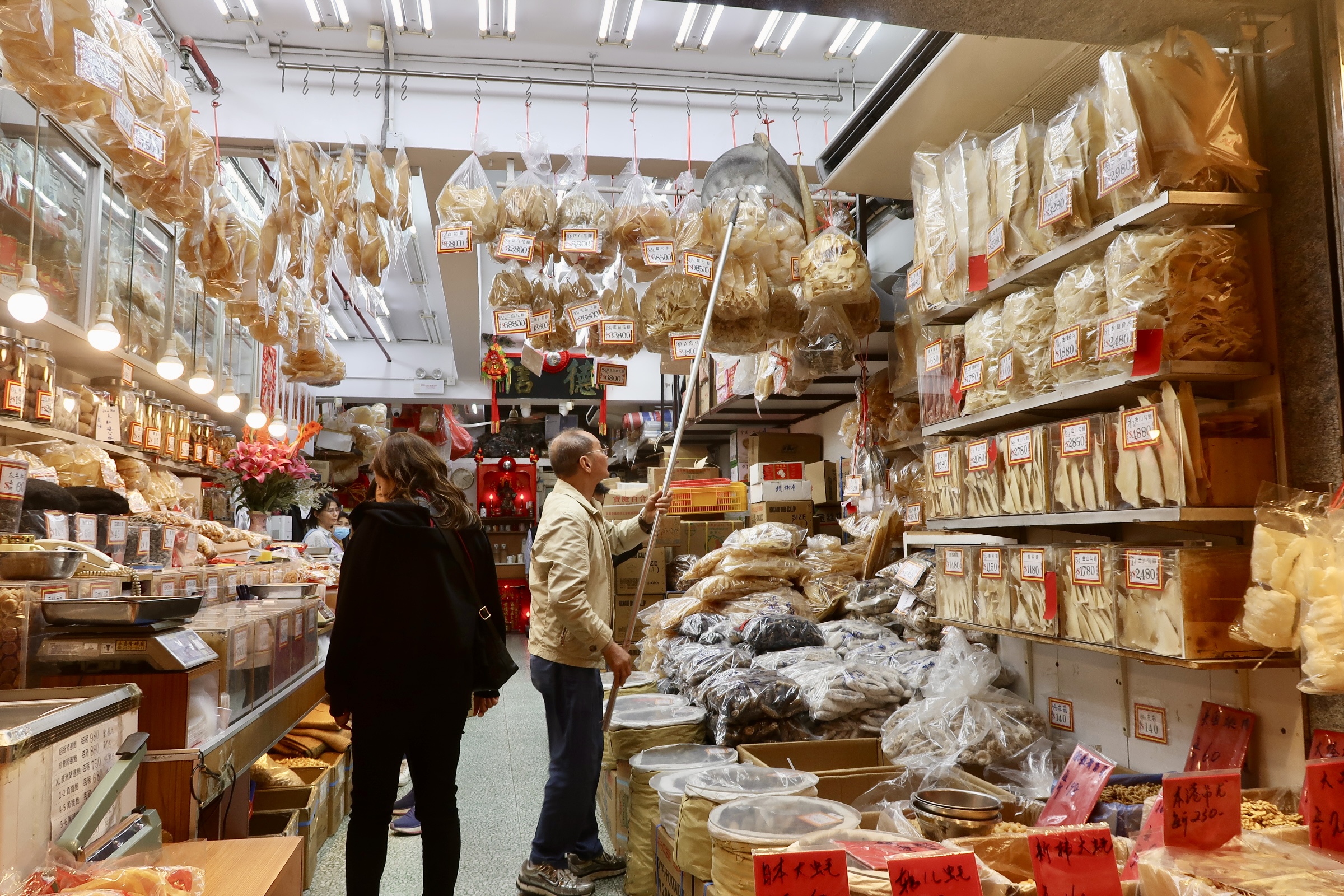
Heritage Dried Seafood Shop in Nanao, Shenzhen (Sally Jin)
“Many Hong Kong people also come here with trolleys to buy. Now our quality is just as good, and our service is better,” said Mr. Zhang Diecheng of “Xiangrun Hong”, a shop he has run for over 30 years in Nanao.
He pointed out that due to high costs in Hong Kong, some shops lower quality standards to maintain profits. “Truly good goods will not be on special sale,” he said. A genuine fish maw can sell for over RMB2,000 per catty, whereas a lower-grade substitute might cost RMB 500 to RMB800. In Hong Kong, that RMB800 item might be priced at a “discount” of RMB1,200 – still overpriced for its actual quality.
Zhang demonstrated how to distinguish real from fake. Products labeled as “White Flower Maw” in some Hong Kong shops might actually be lower-grade Beihai or Min Maw – a different tier entirely, with vast differences in price and rarity. In his shop, White Flower Maw sells for over RMB30,000. In Hong Kong, similar quality exceeds RMB50,000 – nearly double. The difference, he explained, stems not from profit but from high rent and inventory costs.
Global Expansion, Local Contraction
According to global market data from Intelmarket Research, the global salted fish market was valued at US$12.5 billion in 2024 and is projected to grow at a CAGR of 5.7% through 2034. However, the CAGR of Hong Kong’s local dried seafood market is only 3.5%. Hong Kong’s dried seafood street accounts for just 0.03% of the global market.
“What supports this street has never been the dried fish that people eat just to fill their stomachs,” said Mr. Chan, a sales associate at Tai Hing Hong, a century-old shop. “It’s a dietary culture that is passed down through generations. And that core chain is breaking.”
“Among today’s youth, who would still spend three days soaking a dried abalone?” Chen Yinghou lamented.
Young consumers simply “don’t know the goods,” according to Liang Binglin, the owner of HING FAT HONG, and when they walk into a shop with indifferent staff and vague prices, they don’t feel cultural heritage. They feel a disconnect. “This gap has caused Dried Seafood Street to lose an entire generation of potential customers,” he said.
Across the border, in contrast to Hong Kong’s street, the Dried Seafood Street in Nanao, Shenzhen, presents a different scene, driven by transparent pricing and hyper-specific health marketing.
Heritage Dried Seafood Shop in Nanao, Shenzhen (Sally Jin)
“Many Hong Kong people also come here with trolleys to buy. Now our quality is just as good, and our service is better,” said Mr. Zhang Diecheng of “Xiangrun Hong”, a shop he has run for over 30 years in Nanao.
He pointed out that due to high costs in Hong Kong, some shops lower quality standards to maintain profits. “Truly good goods will not be on special sale,” he said. A genuine fish maw can sell for over RMB2,000 per catty, whereas a lower-grade substitute might cost RMB 500 to RMB800. In Hong Kong, that RMB800 item might be priced at a “discount” of RMB1,200 – still overpriced for its actual quality.
Zhang demonstrated how to distinguish real from fake. Products labeled as “White Flower Maw” in some Hong Kong shops might actually be lower-grade Beihai or Min Maw – a different tier entirely, with vast differences in price and rarity. In his shop, White Flower Maw sells for over RMB30,000. In Hong Kong, similar quality exceeds RMB50,000 – nearly double. The difference, he explained, stems not from profit but from high rent and inventory costs.
“Dried Seafood Shops” Starting to Resemble “Convenience Stores”
Those who remain are no longer betting on high-end products alone. Shop owners are diversifying into low-priced, high-frequency items such as snacks, drinks, dried fruits – to generate foot traffic and cash flow. Others are pivoting to live-streaming on platforms like WeChat Video Channel. The dried seafood shop is reinventing itself not as a luxury cabinet, but as a neighbourhood hub.
Man Hing Hong, a family business that has operated out of a rented shopfront for 50 years, embodies this balance. On its counter, a premium Hokkaido sea cucumber at HK$7,200 per catty sits alongside HK$15 packets of fried dough twists and HK$20 per pound of melon seeds.
“If we only sold high-end products, we might go days without a single customer,” a staff member explains.
The same model appears in Shenzhen. Ms. You Youtao, owner of “Ting Hai Chuan Shuo,” stated bluntly that dried seafood is a high-unit-price, low-frequency product, and the market is shrinking. She has shifted toward a “convenience store” model, placing drinks, snacks, and seasonings at the entrance. With labor costs at 5,000 to 6,000 yuan per month, her business is consistently operating at a loss.
“Some customers first buy snacks, then gradually transition to high-end supplements,” she said.
“A convenience store generates more consistent cash flow than waiting for dried seafood regulars,” she said. “And I have two children to raise.”
She has also devised a “price code”: a shelf label might display 5,600 yuan, but a hidden number reveals the true transaction price – say, 3,620 yuan. This cultivates a “loyalty economy,” rewarding returning patrons with unlisted discounts to turn one-time visitors into lifelong clients.
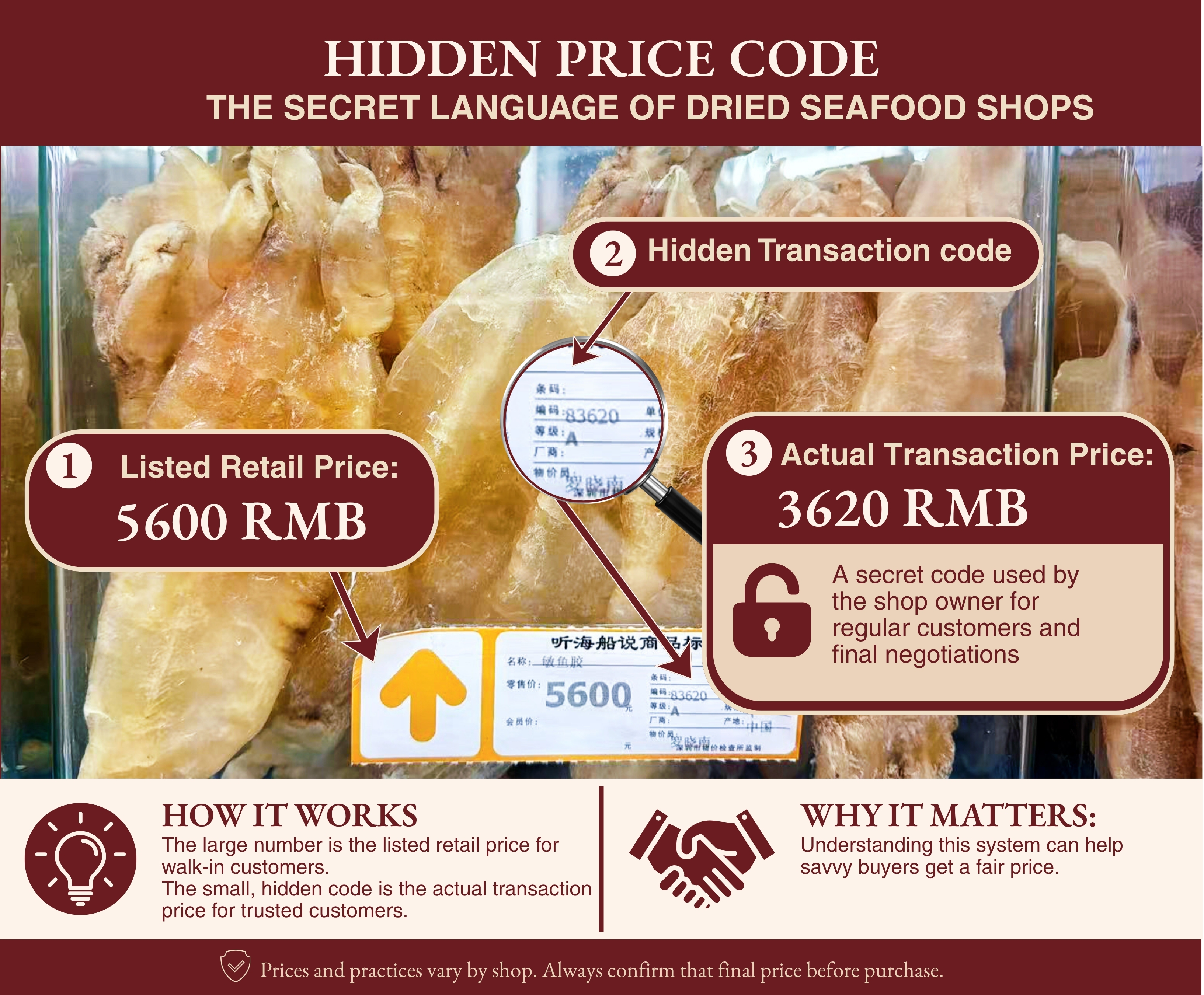
Breakdown of how hidden price codes at “Ting Hai Chuan Shuo” in Nanao, Shenzhen. (Sally Jin)
“Dried Seafood Shops” Starting to Resemble “Convenience Stores”
Those who remain are no longer betting on high-end products alone. Shop owners are diversifying into low-priced, high-frequency items such as snacks, drinks, dried fruits – to generate foot traffic and cash flow. Others are pivoting to live-streaming on platforms like WeChat Video Channel. The dried seafood shop is reinventing itself not as a luxury cabinet, but as a neighbourhood hub.
Man Hing Hong, a family business that has operated out of a rented shopfront for 50 years, embodies this balance. On its counter, a premium Hokkaido sea cucumber at HK$7,200 per catty sits alongside HK$15 packets of fried dough twists and HK$20 per pound of melon seeds.
“If we only sold high-end products, we might go days without a single customer,” a staff member explains.
The same model appears in Shenzhen. Ms. You Youtao, owner of “Ting Hai Chuan Shuo,” stated bluntly that dried seafood is a high-unit-price, low-frequency product, and the market is shrinking. She has shifted toward a “convenience store” model, placing drinks, snacks, and seasonings at the entrance. With labor costs at 5,000 to 6,000 yuan per month, her business is consistently operating at a loss.
“Some customers first buy snacks, then gradually transition to high-end supplements,” she said.
“A convenience store generates more consistent cash flow than waiting for dried seafood regulars,” she said. “And I have two children to raise.”
She has also devised a “price code”: a shelf label might display 5,600 yuan, but a hidden number reveals the true transaction price – say, 3,620 yuan. This cultivates a “loyalty economy,” rewarding returning patrons with unlisted discounts to turn one-time visitors into lifelong clients.
Breakdown of how hidden price codes at “Ting Hai Chuan Shuo” in Nanao, Shenzhen. (Sally Jin)
High-End Positioning: Persistence and Challenges
At “Shun Tak Seafood,” 33-head White Flower Maw is priced at HK$68,500 per catty, and 23-head Min Maw at HK$98,500. But these “special prices” no longer excite consumers.
“Eight or nine years ago, Hong Kong had an absolute advantage. Now? Mainland online prices are even lower, and crossing the border is too troublesome,” said a Shenzhen tourist, who bought only a small bag of dried figs from Xin De Dry Sea Products.
With high-speed rail and bus-to-metro connections, travel from Hong Kong to Shenzhen’s markets is now under an hour — turning a “shopping pilgrimage” into a daily commute.
Deeper obstacles lie in technology. Following the Biosecurity Law of 2021, customs have shifted to AI-powered surveillance. Equipped with CT scanners and X-ray algorithms, authorities can identify fish maw and sea cucumber with clinical accuracy. Offenders face confiscation and fines — a risk that has sealed the “gray area” for good.
High-End Positioning: Persistence and Challenges
At “Shun Tak Seafood,” 33-head White Flower Maw is priced at HK$68,500 per catty, and 23-head Min Maw at HK$98,500. But these “special prices” no longer excite consumers.
“Eight or nine years ago, Hong Kong had an absolute advantage. Now? Mainland online prices are even lower, and crossing the border is too troublesome,” said a Shenzhen tourist, who bought only a small bag of dried figs from Xin De Dry Sea Products.
With high-speed rail and bus-to-metro connections, travel from Hong Kong to Shenzhen’s markets is now under an hour — turning a “shopping pilgrimage” into a daily commute.
Deeper obstacles lie in technology. Following the Biosecurity Law of 2021, customs have shifted to AI-powered surveillance. Equipped with CT scanners and X-ray algorithms, authorities can identify fish maw and sea cucumber with clinical accuracy. Offenders face confiscation and fines — a risk that has sealed the “gray area” for good.
From Traditional Hawking to Live-Streaming
According to a 2025 HKTDC consumer survey of 2,200 middle-income consumers across mainland China, 43% of respondents have bought fresh produce and food online – but only 14% have purchased Hong Kong fresh produce and food through digital channels. When shopping for cross-border products, consumers overwhelmingly turn to mainland platforms: 73% use Tmall Global and 63% use JD Worldwide. The same survey found that online orders arrive in an average of 3.2 days — faster than the one-to-three-day preparation cycle of dried seafood.
In contrast to Hong Kong’s persistence in traditional hawking methods, Liang Binglin of Hong Kong’s HING FAT HONG stated that online goods are a mix of real and fake, making it impossible to determine quality. “You can’t see it, you can’t touch it. There’s no way to be sure of the quality,” he said.
Ms. Zhang Weixia, the owner of “Xingji Dried Seafood,” spoke more directly about digital transformation. She chose WeChat Video Accounts over the more competitive Douyin – its older user base maps directly onto dried seafood’s core demographic.
No bundle deals, same prices online and in-store, and even stopping broadcasts on weekends for her children. This “casualness” has won the trust of customers.
“All products in the shop are clearly priced and genuine. If customers feel the goods are not good or the dryness is not up to standard, they can return them. But I believe in our shop’s quality, so they are all regular customers and recommendations from acquaintances.”
When “Xingji Dried Seafood” sold “Golden Oysters” at the end of 2025, they could stock over a hundred thousand at once and sell them all out, becoming one of the best-selling merchants on the entire street.
From Traditional Hawking to Live-Streaming
According to a 2025 HKTDC consumer survey of 2,200 middle-income consumers across mainland China, 43% of respondents have bought fresh produce and food online – but only 14% have purchased Hong Kong fresh produce and food through digital channels. When shopping for cross-border products, consumers overwhelmingly turn to mainland platforms: 73% use Tmall Global and 63% use JD Worldwide. The same survey found that online orders arrive in an average of 3.2 days — faster than the one-to-three-day preparation cycle of dried seafood.
In contrast to Hong Kong’s persistence in traditional hawking methods, Liang Binglin of Hong Kong’s HING FAT HONG stated that online goods are a mix of real and fake, making it impossible to determine quality. “You can’t see it, you can’t touch it. There’s no way to be sure of the quality,” he said.
Ms. Zhang Weixia, the owner of “Xingji Dried Seafood,” spoke more directly about digital transformation. She chose WeChat Video Accounts over the more competitive Douyin – its older user base maps directly onto dried seafood’s core demographic.
No bundle deals, same prices online and in-store, and even stopping broadcasts on weekends for her children. This “casualness” has won the trust of customers.
“All products in the shop are clearly priced and genuine. If customers feel the goods are not good or the dryness is not up to standard, they can return them. But I believe in our shop’s quality, so they are all regular customers and recommendations from acquaintances.”
When “Xingji Dried Seafood” sold “Golden Oysters” at the end of 2025, they could stock over a hundred thousand at once and sell them all out, becoming one of the best-selling merchants on the entire street.
Sheung Wan: Then & Now

From Sheung Wan to Shenzhen, the different fates of the dried seafood streets are not just regional differences, but the collision of two sets of business logic. Hong Kong’s primary tensions lie in high rents, heavy inventory costs, and a widening gap in consumption culture; Shenzhen’s opportunity lies in low cost, regular customer networks, and the reorganization capability brought by digital tools.
Nanao Dried Seafood Street in Shenzhen has not completely abandoned tradition but has added new operating methods on top of it: dissemination through WeChat Moments and Video Accounts, live-streaming sales, after-sales guarantees, and placing high-frequency small commodities alongside high-end supplements.
This makes dried seafood shops no longer just places to “sell dried goods,” but gradually transforms them into venues that combine transaction, social interaction, and community functions.
A second visit to You Youtao, the owner of “Ting Hai Chuan Shuo,” came on a warm Sunday afternoon. She sat on a low plastic stool outside her shop. The storefront behind her had been renovated once more: a cooler filled with bottled iced tea and cola blocked one side of the entrance. Next to it stood a cardboard box packed with spicy tofu snacks and shrimp-flavored crisps. The high-priced fish maw and sea cucumber were still there — she had kept them — but you could only see them if you stepped inside and looked past the snacks.
She looked up from her phone and said, “I think I’m gonna close this door and open a small convenience store like 7-Eleven.”
Sheung Wan: Then & Now
From Sheung Wan to Shenzhen, the different fates of the dried seafood streets are not just regional differences, but the collision of two sets of business logic. Hong Kong’s primary tensions lie in high rents, heavy inventory costs, and a widening gap in consumption culture; Shenzhen’s opportunity lies in low cost, regular customer networks, and the reorganization capability brought by digital tools.
Nanao Dried Seafood Street in Shenzhen has not completely abandoned tradition but has added new operating methods on top of it: dissemination through WeChat Moments and Video Accounts, live-streaming sales, after-sales guarantees, and placing high-frequency small commodities alongside high-end supplements.
This makes dried seafood shops no longer just places to “sell dried goods,” but gradually transforms them into venues that combine transaction, social interaction, and community functions.
A second visit to You Youtao, the owner of “Ting Hai Chuan Shuo,” came on a warm Sunday afternoon. She sat on a low plastic stool outside her shop. The storefront behind her had been renovated once more: a cooler filled with bottled iced tea and cola blocked one side of the entrance. Next to it stood a cardboard box packed with spicy tofu snacks and shrimp-flavored crisps. The high-priced fish maw and sea cucumber were still there — she had kept them — but you could only see them if you stepped inside and looked past the snacks.
She looked up from her phone and said, “I think I’m gonna close this door and open a small convenience store like 7-Eleven.”
Extra Credits
Advisor
John Noonan
Editor in Chief
Clarisse Choo
Creative Directors
Syrena Jin
Cheryl Xie
Serena Zhou
Managing Director
Jiachen Li
Copy Editor
Grace Yu
Visual Producer
Jingyi Huang
