
When AI becomes the first stop for health decisions
AI health assistants gain ground in China's lower-tier cities—expanding access while introducing new uncertainties
By Xiao Yiqing
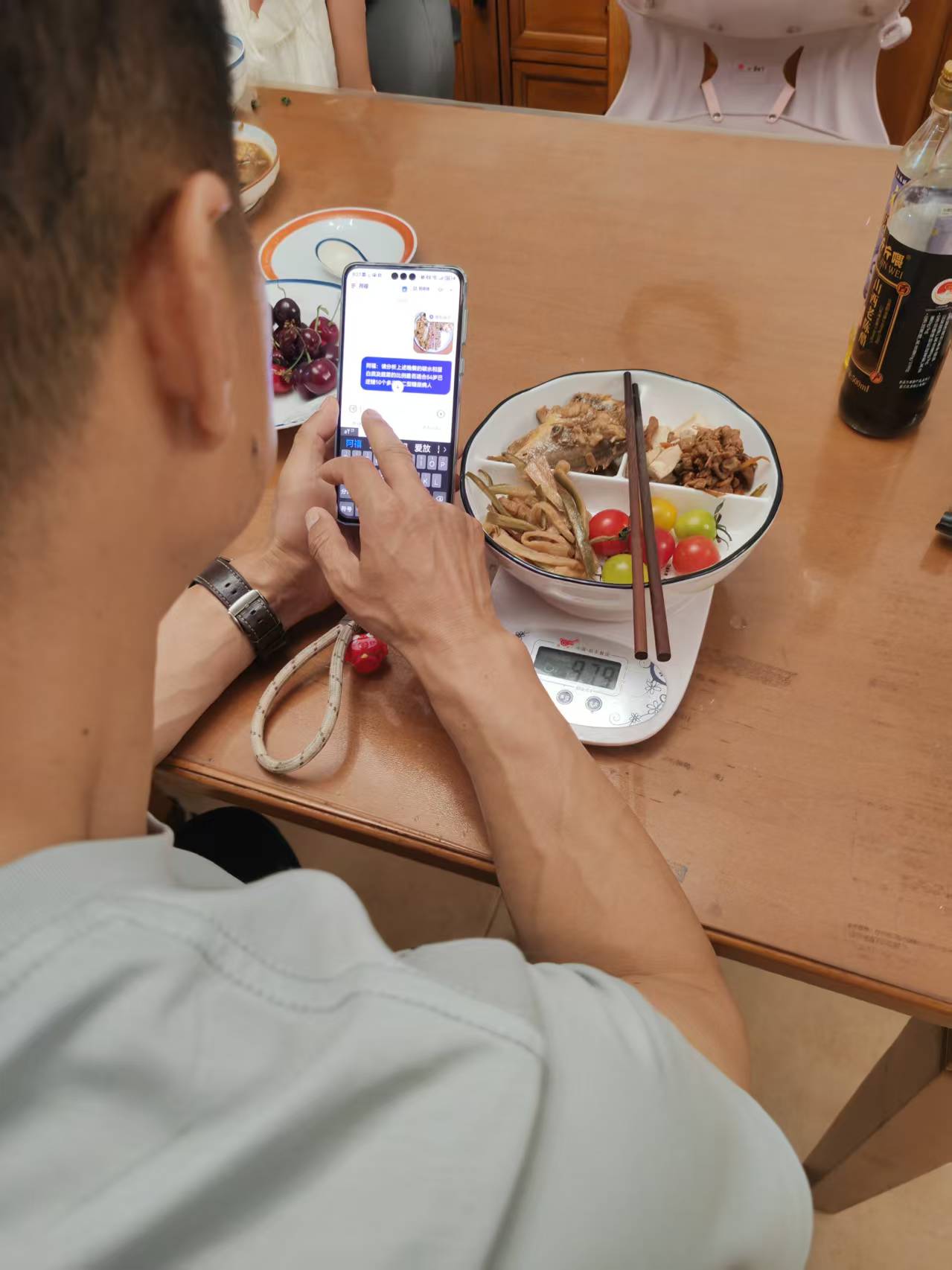
At seven a.m., 54-year-old Zhang Chaoyang sits at his dining table in Luoyang,which is an industrial city in central China’s Henan province, taking a photo of his breakfast — a bowl of multigrain porridge, a boiled egg and a few slices of vegetables.
Instead of sending it to a doctor, he uploads it to an AI health app on his phone.
Zhang is part of a rapidly growing group of users in China turning to AI tools as their first stop for health-related questions.
“Can I eat this? Will it affect my blood sugar?” Zhang types into the chat box.
Within seconds, the app responds with dietary advice, calorie estimates and a suggestion to reduce carbohydrate intake.
For Zhang, who has been trying to control his blood sugar since being diagnosed with diabetes in 2020, these daily interactions have become routine.
“If using search engines before was like looking up information, using AI feels more like asking a health consultant,” Zhang said through an online meeting.
According to Beijing Daily, Ant Group’s AI health assistant app “AQ” has surpassed 100 million users in February 2026, with more than 52% coming from third-tier cities and below.
As AI health tools become more embedded in everyday life, they may widen access in places where medical resources are uneven, but also shift triage, interpretation, and risk onto patients themselves.
At seven a.m., 54-year-old Zhang Chaoyang sits at his dining table in Luoyang,which is an industrial city in central China’s Henan province, taking a photo of his breakfast — a bowl of multigrain porridge, a boiled egg and a few slices of vegetables.
Instead of sending it to a doctor, he uploads it to an AI health app on his phone.
Zhang is part of a rapidly growing group of users in China turning to AI tools as their first stop for health-related questions.
“Can I eat this? Will it affect my blood sugar?” Zhang types into the chat box.
Within seconds, the app responds with dietary advice, calorie estimates and a suggestion to reduce carbohydrate intake.
For Zhang, who has been trying to control his blood sugar since being diagnosed with diabetes in 2020, these daily interactions have become routine.
“If using search engines before was like looking up information, using AI feels more like asking a health consultant,” Zhang said through an online meeting.
According to Beijing Daily, Ant Group’s AI health assistant app “AQ” has surpassed 100 million users in February 2026, with more than 52% coming from third-tier cities and below.
As AI health tools become more embedded in everyday life, they may widen access in places where medical resources are uneven, but also shift triage, interpretation, and risk onto patients themselves.
Why are patients turning to AI first?
“Chronic conditions require constant management. It’s unrealistic to go to the hospital every day,” he said. “Appointments are difficult, and the entire process from registration to examination and then to follow-up visit is very time-consuming.”
After completing a structured health programme where health experts gave personalised guidance to help bring his blood sugar levels back within a normal range, Zhang found himself without ongoing professional support.
He began relying on online information, watching videos and reading articles to guide his diet and exercise.
“But the information online is fragmented, and sometimes mixed with advertisements,” he said.
AI, by contrast, offered something simpler: immediate, low-cost and personalised responses.
He now uses multiple AI health apps to analyse medical reports, ask about exercise routines and check whether certain foods are suitable for his physical condition.
In one instance, after undergoing treatment for a herniated disc, Zhang planned to continue the exercise training to manage diabetes. But after consulting AI, he decided against it.
“It advised me to avoid movements that increase abdominal pressure within three months after treatment, and suggested alternative exercises,” he said. “So I followed that.”
“Now, whenever I have a question about my health, I tend to ask AI first,” he added.
This kind of real-time decision support is becoming one of the defining features of AI health tools and a key reason for users’ adoption.
Lin Yantong, a master’s student from Yulin in Guangxi province who is preparing applications for doctoral programmes, said she also turns to AI almost daily for fitness planning and general health questions.
With much of her time occupied by research and application preparations, Lin said AI tools helped simplify the process of health management and made it more executable.
“AI can directly generate workout plans based on my needs, which saves me a lot of time and effort looking through information,” Lin said. “It feels more convenient because you can ask questions anytime, and there’s less pressure than talking to a doctor.”
Why are patients turning to AI first?
“Chronic conditions require constant management. It’s unrealistic to go to the hospital every day,” he said. “Appointments are difficult, and the entire process from registration to examination and then to follow-up visit is very time-consuming.”
After completing a structured health programme where health experts gave personalised guidance to help bring his blood sugar levels back within a normal range, Zhang found himself without ongoing professional support.
He began relying on online information, watching videos and reading articles to guide his diet and exercise.
“But the information online is fragmented, and sometimes mixed with advertisements,” he said.
AI, by contrast, offered something simpler: immediate, low-cost and personalised responses.
He now uses multiple AI health apps to analyse medical reports, ask about exercise routines and check whether certain foods are suitable for his physical condition.
In one instance, after undergoing treatment for a herniated disc, Zhang planned to continue the exercise training to manage diabetes. But after consulting AI, he decided against it.
“It advised me to avoid movements that increase abdominal pressure within three months after treatment, and suggested alternative exercises,” he said. “So I followed that.”
“Now, whenever I have a question about my health, I tend to ask AI first,” he added.
This kind of real-time decision support is becoming one of the defining features of AI health tools and a key reason for users’ adoption.
Lin Yantong, a master’s student from Yulin in Guangxi province who is preparing applications for doctoral programmes, said she also turns to AI almost daily for fitness planning and general health questions.
With much of her time occupied by research and application preparations, Lin said AI tools helped simplify the process of health management and made it more executable.
“AI can directly generate workout plans based on my needs, which saves me a lot of time and effort looking through information,” Lin said. “It feels more convenient because you can ask questions anytime, and there’s less pressure than talking to a doctor.”
Liu Liang, a chief physician of the emergency intensive care department of a hospital in Dalian (a port city located in Northeast China), said that he had seen fewer patients with mild or non-acute conditions seeking emergency treatment in recent years as AI health tools became more widely used.
“Some people now purchase medicine for treatment on their own with the guidance of AI, observe their condition, and only come to the hospital if it doesn’t improve. This may help reduce pressure on emergency services by filtering out less urgent cases,” Liu said through an online call.
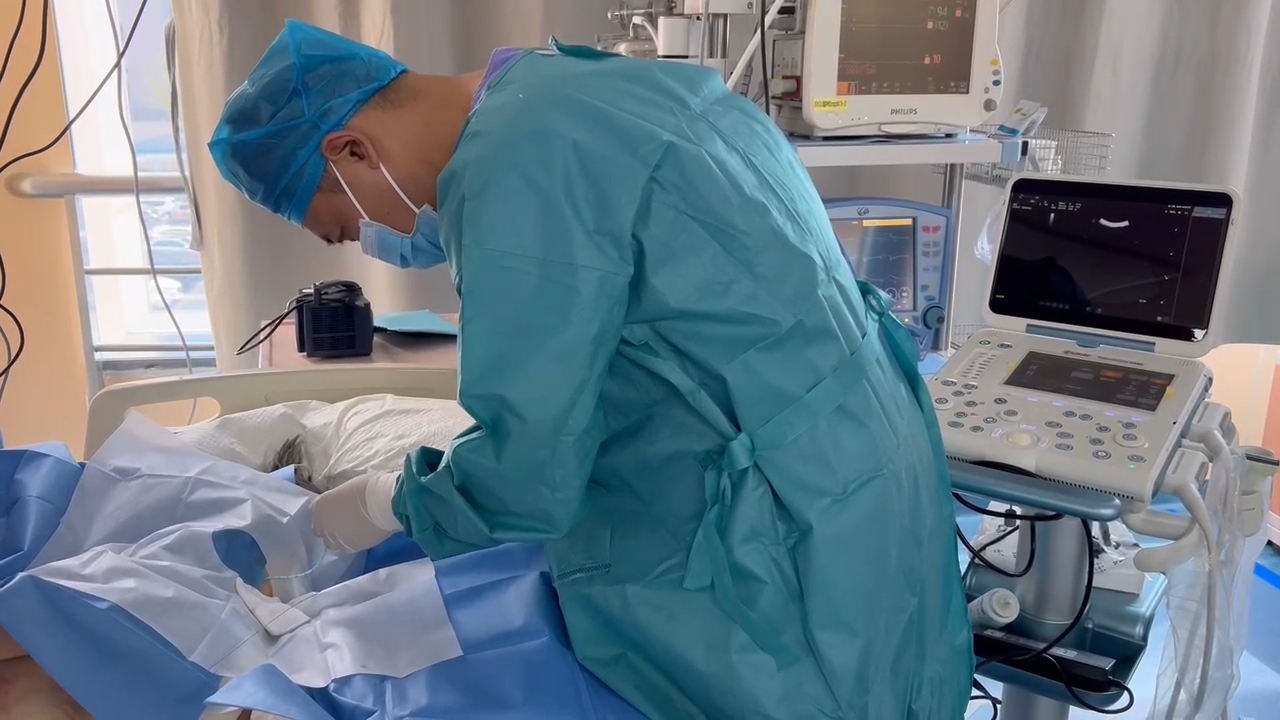
“The essence of medical practice is processing information — collecting it, organising it, and comparing it with clinical findings to make decisions,” he said. “In this regard, AI has clear advantages in terms of speed, scale and comprehensiveness.”
Liu added that AI could also help standardise medical resources by enabling information sharing across regions, potentially narrowing gaps in healthcare quality.
Wang Liping, a head nurse in the emergency department at the same hospital, also pointed out the potential benefits.
“These tools provide a large amount of health information. If used properly, they can help patients become more aware of their conditions and identify problems earlier,” she said through an online call.
For users like Zhang, accessibility is a major advantage.
“Doctors often don’t have time to explain everything in detail,” he said. “But AI can.”
This ability to provide continuous, low-barrier support, particularly in regions where healthcare access is limited, is part of what makes AI health tools appealing.
China’s healthcare resources remain highly uneven. According to data from Horus Think Tank, China had 4,111 tertiary hospitals – China’s highest-ranked hospitals for specialised and complex care, accounting for about 10% of hospitals nationwide by the end of 2024. Yet they handled nearly 64% of hospital visits, according to the Statistical Bulletin on the Development of China’s Health and Wellness Industry in 2024.
This reflects a long-standing structural problem in China’s medical system. Although China has world-class hospitals in major cities such as Beijing and Shanghai, patients from non-centralized areas and rural regions often travel long distances to seek specialized treatment. Many patients flock to large city hospitals to deal with conditions that might be handled elsewhere.
In such a context, AI tools can appear to offer a form of decentralised support.
Liu Liang, a chief physician of the emergency intensive care department of a hospital in Dalian (a port city located in Northeast China), said that he had seen fewer patients with mild or non-acute conditions seeking emergency treatment in recent years as AI health tools became more widely used.
“Some people now purchase medicine for treatment on their own with the guidance of AI, observe their condition, and only come to the hospital if it doesn’t improve. This may help reduce pressure on emergency services by filtering out less urgent cases,” Liu said through an online call.
“The essence of medical practice is processing information — collecting it, organising it, and comparing it with clinical findings to make decisions,” he said. “In this regard, AI has clear advantages in terms of speed, scale and comprehensiveness.”
Liu added that AI could also help standardise medical resources by enabling information sharing across regions, potentially narrowing gaps in healthcare quality.
Wang Liping, a head nurse in the emergency department at the same hospital, also pointed out the potential benefits.
“These tools provide a large amount of health information. If used properly, they can help patients become more aware of their conditions and identify problems earlier,” she said through an online call.
For users like Zhang, accessibility is a major advantage.
“Doctors often don’t have time to explain everything in detail,” he said. “But AI can.”
This ability to provide continuous, low-barrier support, particularly in regions where healthcare access is limited, is part of what makes AI health tools appealing.
China’s healthcare resources remain highly uneven. According to data from Horus Think Tank, China had 4,111 tertiary hospitals – China’s highest-ranked hospitals for specialised and complex care, accounting for about 10% of hospitals nationwide by the end of 2024. Yet they handled nearly 64% of hospital visits, according to the Statistical Bulletin on the Development of China’s Health and Wellness Industry in 2024.
This reflects a long-standing structural problem in China’s medical system. Although China has world-class hospitals in major cities such as Beijing and Shanghai, patients from non-centralized areas and rural regions often travel long distances to seek specialized treatment. Many patients flock to large city hospitals to deal with conditions that might be handled elsewhere.
In such a context, AI tools can appear to offer a form of decentralised support.
Along with these benefits, a more subtle transformation is taking place: AI is not only providing information, but also influencing decisions.
“Patients are increasingly coming in with a prior judgement formed by AI,” Wang said. “Sometimes it helps communication, but it can also create misunderstandings.”
Yang Lin, a deputy chief physician at Dalian Medical University Second Affiliated Hospital, noted that this shift can increase the burden on medical staff.
“Patients may not fully understand what AI is telling them, so doctors need to spend more time explaining and correcting misconceptions,” she said through an online call.
Wang pointed out that AI’s suggestions before diagnosis can also affect trust during doctor-patient communication.
“When patients come with AI’s assessment, as healthcare professionals, we usually feel more nervous and vigilant, and the mutual trust can sometimes be affected,” she said.
In some cases, AI can also amplify uncertainty and create anxiety.
“We’ve seen both patients and their family members experiencing anxiety and confusion due to the judgments made by AI, even though these judgments may not be accurate,” Wang said.
Juliet Xie, a surgical nurse at the First Affiliated Hospital of Henan University of Science and Technology in Luoyang, said some patients had also become more likely to question prescribed medication after consulting AI tools.
“Some patients check the medication themselves and then come back with doubts or concerns,” she said through an online call. “In some cases, they may become hesitant about doctors’ treatment because of conflicting information they got from AI.”
Liu pointed out that such problems are not always caused by the AI itself, and the reliability of AI output often depends on the quality of users’ input.
“If the information provided is incomplete or inaccurate, the result can be misleading,” he said.
These challenges highlight a central tension: while AI tools lower the barrier to accessing health advice, they may also introduce new layers of ambiguity.
“When patients come with AI’s assessment, we usually feel more nervous and vigilant.”
In some cases, AI can also amplify uncertainty and create anxiety.
“We’ve seen both patients and their family members experiencing anxiety and confusion due to the judgments made by AI, even though these judgments may not be accurate,” Wang said.
Juliet Xie, a surgical nurse at the First Affiliated Hospital of Henan University of Science and Technology in Luoyang, said some patients had also become more likely to question prescribed medication after consulting AI tools.
“Some patients check the medication themselves and then come back with doubts or concerns,” she said through an online call. “In some cases, they may become hesitant about doctors’ treatment because of conflicting information they got from AI.”
Liu pointed out that such problems are not always caused by the AI itself, and the reliability of AI output often depends on the quality of users’ input.
“If the information provided is incomplete or inaccurate, the result can be misleading,” he said.
These challenges highlight a central tension: while AI tools lower the barrier to accessing health advice, they may also introduce new layers of ambiguity.
Along with these benefits, a more subtle transformation is taking place: AI is not only providing information, but also influencing decisions.
“Patients are increasingly coming in with a prior judgement formed by AI,” Wang said. “Sometimes it helps communication, but it can also create misunderstandings.”
Yang Lin, a deputy chief physician at Dalian Medical University Second Affiliated Hospital, noted that this shift can increase the burden on medical staff.
“Patients may not fully understand what AI is telling them, so doctors need to spend more time explaining and correcting misconceptions,” she said through an online call.
Wang pointed out that AI’s suggestions before diagnosis can also affect trust during doctor-patient communication.
“When patients come with AI’s assessment, as healthcare professionals, we usually feel more nervous and vigilant, and the mutual trust can sometimes be affected,” she said.
In some cases, AI can also amplify uncertainty and create anxiety.
“We’ve seen both patients and their family members experiencing anxiety and confusion due to the judgments made by AI, even though these judgments may not be accurate,” Wang said.
Juliet Xie, a surgical nurse at the First Affiliated Hospital of Henan University of Science and Technology in Luoyang, said some patients had also become more likely to question prescribed medication after consulting AI tools.
“Some patients check the medication themselves and then come back with doubts or concerns,” she said through an online call. “In some cases, they may become hesitant about doctors’ treatment because of conflicting information they got from AI.”
Liu pointed out that such problems are not always caused by the AI itself, and the reliability of AI output often depends on the quality of users’ input.
“If the information provided is incomplete or inaccurate, the result can be misleading,” he said.
These challenges highlight a central tension: while AI tools lower the barrier to accessing health advice, they may also introduce new layers of ambiguity.
“When patients come with AI’s assessment, we usually feel more nervous and vigilant.”
In some cases, AI can also amplify uncertainty and create anxiety.
“We’ve seen both patients and their family members experiencing anxiety and confusion due to the judgments made by AI, even though these judgments may not be accurate,” Wang said.
Juliet Xie, a surgical nurse at the First Affiliated Hospital of Henan University of Science and Technology in Luoyang, said some patients had also become more likely to question prescribed medication after consulting AI tools.
“Some patients check the medication themselves and then come back with doubts or concerns,” she said through an online call. “In some cases, they may become hesitant about doctors’ treatment because of conflicting information they got from AI.”
Liu pointed out that such problems are not always caused by the AI itself, and the reliability of AI output often depends on the quality of users’ input.
“If the information provided is incomplete or inaccurate, the result can be misleading,” he said.
These challenges highlight a central tension: while AI tools lower the barrier to accessing health advice, they may also introduce new layers of ambiguity.
“These systems appear low-cost, but their errors can scale,” Babic said.
He explained that many AI health applications are designed to minimise the risk of missing serious conditions. As a result, they tend to generate more “false positives” — flagging potential issues that may not exist.
“When more people are encouraged to seek further testing or medical attention unnecessarily, the burden shifts to the healthcare system,” he said.
Babic described this as a form of “externality”, where the costs generated by a technology are borne not by developers, but by society.
“The key issue is not just whether the AI is accurate,” Babic said. “It’s how it changes behaviour, and how those behavioural changes affect the system as a whole.”
“These systems appear low-cost, but their errors can scale,” Babic said.
He explained that many AI health applications are designed to minimise the risk of missing serious conditions. As a result, they tend to generate more “false positives” — flagging potential issues that may not exist.
“When more people are encouraged to seek further testing or medical attention unnecessarily, the burden shifts to the healthcare system,” he said.
Babic described this as a form of “externality”, where the costs generated by a technology are borne not by developers, but by society.
“The key issue is not just whether the AI is accurate,” Babic said. “It’s how it changes behaviour, and how those behavioural changes affect the system as a whole.”
On one hand, it can provide basic guidance where professional services are less accessible. On the other hand, it may function as a substitute rather than a bridge.
At the user level, this substitution has quietly occurred. Zhang said that in his daily health management, compared to consulting real doctors, he has become “more dependent on AI”.
“Only when something feels serious would I go to the hospital,” Zhang said.
When asked whether he saw any risks in using such tools, Zhang paused before saying he had not noticed any so far.
But healthcare professionals said such risks may not always be immediately visible to users.
Lin said after relying on AI for health advice for a period of time, some AI-generated suggestions had recently made her more cautious about such tools.
“Once I consulted AI about my cold and thought it was nothing serious, but a few days later, the situation became much worse,” Lin said. “Then it suggested several drugs together, but that felt risky to me because I didn’t know whether there could be side effects or interactions.”
Lin said one of the greatest difficulties was judging whether her condition should actually be considered “moderate” or “serious”, which are the distinctions that determine whether AI recommends self-management or professional treatment.
“Now I tend to combine the suggestions from AI and actual cases from social media platforms such as Rednote for a comprehensive judgment,” Lin said.
Xie noted that one of the significant advantages of human diagnosis is the ability to actively guide patients in uncovering their real physical conditions.
“In real consultations, doctors often discover problems patients themselves did not notice or thought were unrelated,” Xie said. “That usually comes out through face-to-face communication and follow-up questions.”
Meanwhile, Liu pointed out that the quality of current AI medical suggestions is closely related to the digital literacy of patients.
“The greatest risk is the deviation in the AI’s output due to patients’ incomplete input,” Liu said. “If patients provide incomplete or inaccurate information, AI’s suggestions can easily become misleading.”
Furthermore, Liu noted that patients’ understanding and compliance in executing the AI’s output cannot be guaranteed due to their cultural literacy, living habits, and beliefs.
“For those with certain cultural literacy and comprehension ability, in the case of mild symptoms, they can first use AI for preliminary recommendations. But in the opposite situation, people should seek medical assistance immediately,” Liu said.
On one hand, it can provide basic guidance where professional services are less accessible. On the other hand, it may function as a substitute rather than a bridge.
At the user level, this substitution has quietly occurred. Zhang said that in his daily health management, compared to consulting real doctors, he has become “more dependent on AI”.
“Only when something feels serious would I go to the hospital,” Zhang said.
When asked whether he saw any risks in using such tools, Zhang paused before saying he had not noticed any so far.
But healthcare professionals said such risks may not always be immediately visible to users.
Lin said after relying on AI for health advice for a period of time, some AI-generated suggestions had recently made her more cautious about such tools.
“Once I consulted AI about my cold and thought it was nothing serious, but a few days later, the situation became much worse,” Lin said. “Then it suggested several drugs together, but that felt risky to me because I didn’t know whether there could be side effects or interactions.”
Lin said one of the greatest difficulties was judging whether her condition should actually be considered “moderate” or “serious”, which are the distinctions that determine whether AI recommends self-management or professional treatment.
“Now I tend to combine the suggestions from AI and actual cases from social media platforms such as Rednote for a comprehensive judgment,” Lin said.
Xie noted that one of the significant advantages of human diagnosis is the ability to actively guide patients in uncovering their real physical conditions.
“In real consultations, doctors often discover problems patients themselves did not notice or thought were unrelated,” Xie said. “That usually comes out through face-to-face communication and follow-up questions.”
Meanwhile, Liu pointed out that the quality of current AI medical suggestions is closely related to the digital literacy of patients.
“The greatest risk is the deviation in the AI’s output due to patients’ incomplete input,” Liu said. “If patients provide incomplete or inaccurate information, AI’s suggestions can easily become misleading.”
Furthermore, Liu noted that patients’ understanding and compliance in executing the AI’s output cannot be guaranteed due to their cultural literacy, living habits, and beliefs.
“For those with certain cultural literacy and comprehension ability, in the case of mild symptoms, they can first use AI for preliminary recommendations. But in the opposite situation, people should seek medical assistance immediately,” Liu said.
How to draw the line?
Healthcare professionals stress the importance of maintaining the distinction between AI and real doctors.
Liu noted that, unlike human clinicians, AI systems are still unable to assess the reliability of patients’ self-reported symptoms or provide humanistic care which is necessary in medical and nursing work.
“Doctors can judge whether a patient is describing their condition accurately, and can also respond to their emotional state. These are things AI may lack,” he said.
Wang agreed, adding that while AI may be appropriate for minor conditions or general advice, serious or urgent cases require professional care.
“AI is useful as a support tool for health management or information gathering, but not for diagnosis. Medical treatment still relies on clinical judgement and direct examination,” she said.
How to draw the line?
Healthcare professionals stress the importance of maintaining the distinction between AI and real doctors.
Liu noted that, unlike human clinicians, AI systems are still unable to assess the reliability of patients’ self-reported symptoms or provide humanistic care which is necessary in medical and nursing work.
“Doctors can judge whether a patient is describing their condition accurately, and can also respond to their emotional state. These are things AI may lack,” he said.
Wang agreed, adding that while AI may be appropriate for minor conditions or general advice, serious or urgent cases require professional care.
“AI is useful as a support tool for health management or information gathering, but not for diagnosis. Medical treatment still relies on clinical judgement and direct examination,” she said.
Who bears the risk?
For users like Zhang, the stakes of each individual interaction may seem small — a question about breakfast, a decision about exercise.
But at scale, these micro-decisions accumulate.
As more people turn to AI as their first point of consultation, the question is no longer just about convenience or efficiency. It is about responsibility.
Currently, the line between AI’s assistance and medical diagnosis remains unclear, as does who should bear the risks when mistakes occur.
Just as Babic said, “Companies are creating externalities which they’re not responsible for. The burden is ultimately being borne by the healthcare system, and the whole society.”
Who bears the risk?
For users like Zhang, the stakes of each individual interaction may seem small — a question about breakfast, a decision about exercise.
But at scale, these micro-decisions accumulate.
As more people turn to AI as their first point of consultation, the question is no longer just about convenience or efficiency. It is about responsibility.
Currently, the line between AI’s assistance and medical diagnosis remains unclear, as does who should bear the risks when mistakes occur.
Just as Babic said, “Companies are creating externalities which they’re not responsible for. The burden is ultimately being borne by the healthcare system, and the whole society.”
Extra Credits
Advisor
Feng Wang
Editorial Director
Clarisse Choo
Creative Directors
Syrena Jin
Cheryl Xie
Serena Zhou
Managing Editor
Jiachen Li
Copy Editor
Evelyn Tao
Visual Producer
Bunnie Shen
Jingyi Huang
