
Red Looks Better
How a cheap plastic market lamp turned Red A into Hong Kong’s everyday icon
written by Andy Huang & photographed by Clarisse Choo
On the fish-and-vegetable floor of Wan Chai Market, the red lamps illuminate the space. The red lights cast a warm glow across the white tiles, the foam boxes and the vendor’s hands. Silver fish turn pink at the edges. A customer points, bargains, pays and leaves. The red lamp did its part in selling the fish.
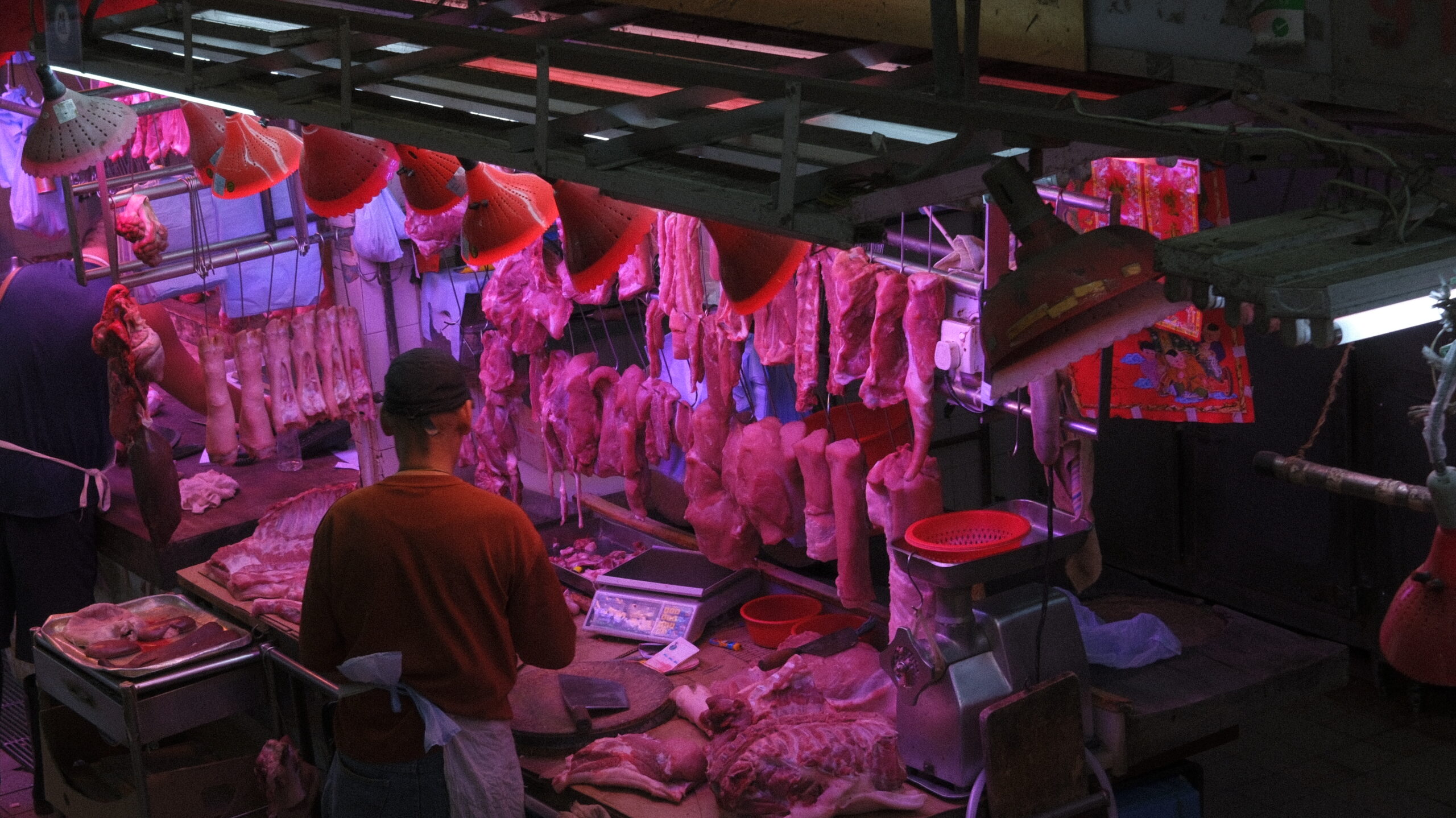
A vendor works beneath Red A plastic lamps at a meat stall in Causeway Bay Market.
Candy Chong has used the same kind of red plastic lamp for about 10 years at her fish stall. She bought it because it worked. “The ingredients look more beautiful under the lamp, and it attracts customers,” said Chong.
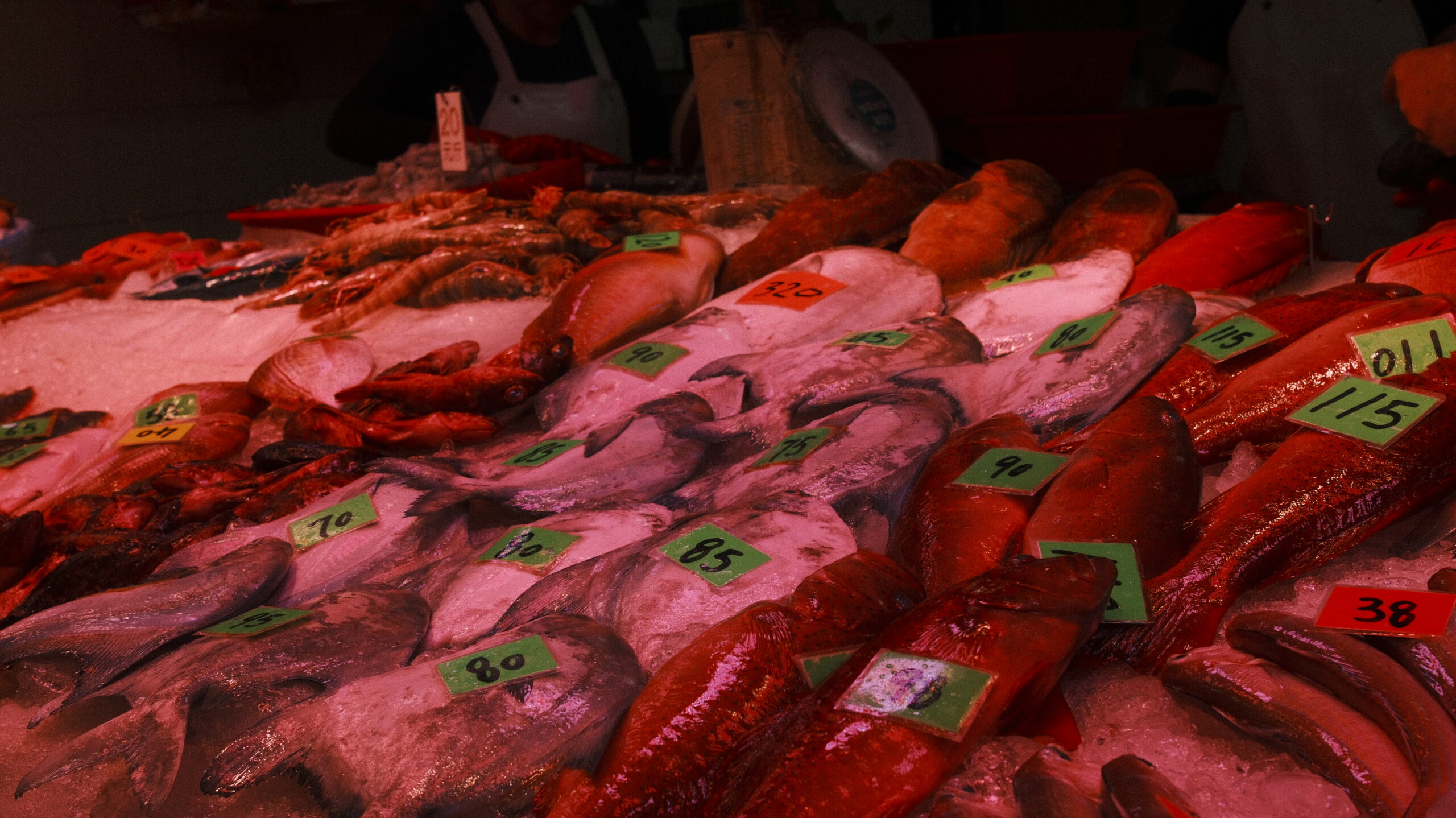
Fish are displayed on ice under Red A lamps at Wan Chai Market.
The lamp is manufactured by Red A, a Hong Kong plastics company. These household goods have moved through markets, kitchens and crowded flats for decades. Its history shows how these everyday products became a Hong Kong icon.
Star Industrial Co., Ltd. founded Red A in 1949, when Hong Kong was rebuilding after the Chinese civil war and demand for low-cost household goods was rising. Red A became known for its plastic objects that were cheap, and durable: buckets, basins, chairs, containers, baskets, food boxes, school cases and lamps.
Hong Kong’s plastic toy industry dominated the city’s manufacturing in the 1950s and plastic flowers in the early 1960s, Red A found its place in the home. It imported machines from Japan and made household products that ordinary families could afford.
In the 1960s, Hong Kong households needed containers to store water, especially during the water shortage crisis that struck the city from 1963 to 1964. Government records showed that water was supplied for only four hours every fourth day. At the time people were using heavy metal buckets. Red A offered a lighter alternative: red plastic buckets. The plastic buckets held water for drinking, cooking and washing.
Another significant Red A product was the school briefcase. It advertised that it could be stepped on, used as a small stool and is waterproof. It was what postwar Hong Kong consumers needed: strong, cheap, portable and ready for crowded living.
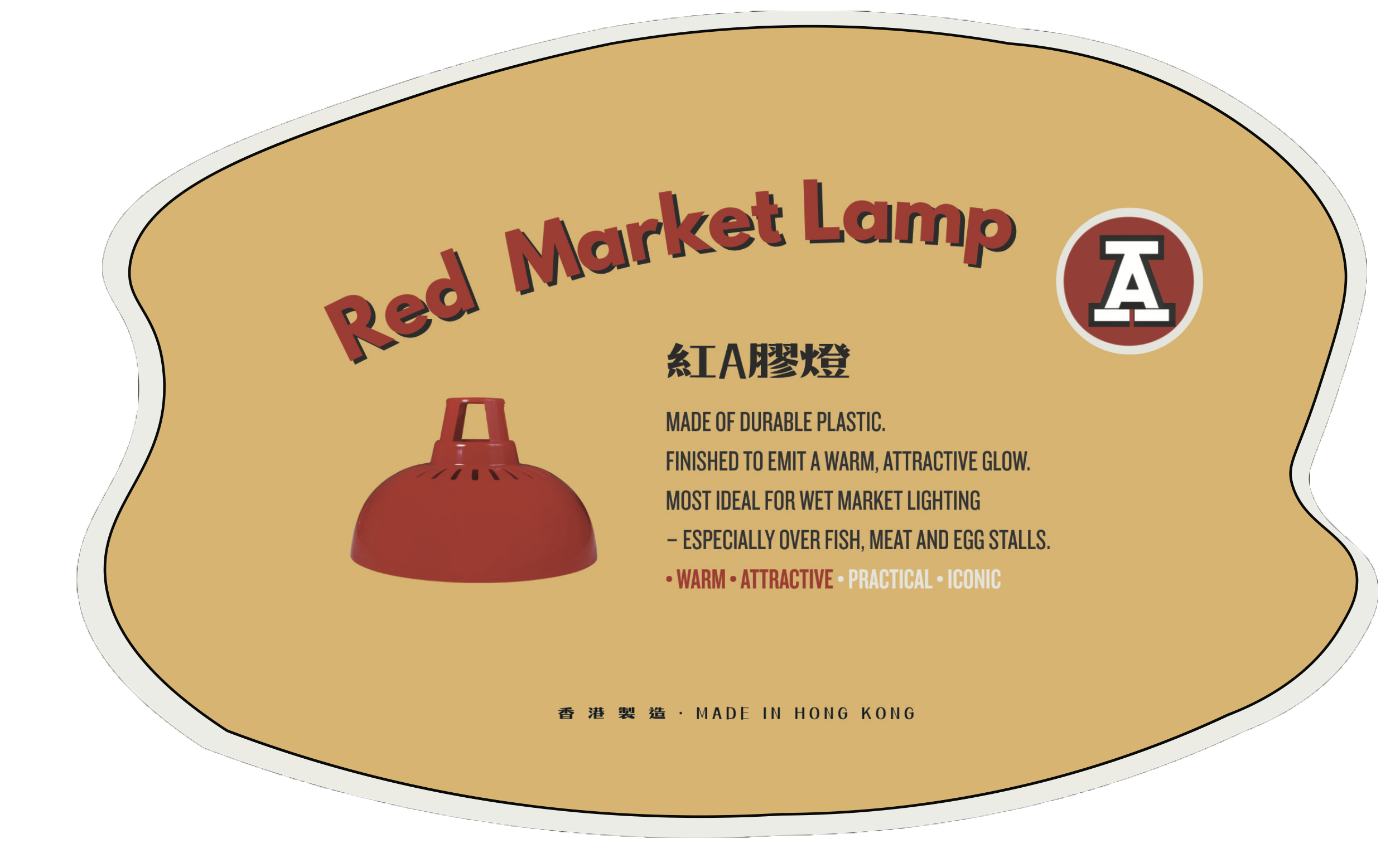
The market lamp belongs to that same family of inventions. Its shape is plain: a rounded plastic shade, hard, light and bright. But in a market, it changes the color temperature of the stall. Fish look warmer. Meat looks redder. Eggs look richer. Stall owners are able to make their products more enticing.
Red A catalogs show the lamp shade was sold by the late 1960s in red and white. The white version was rare and was used mainly by pawnshops. The red version spread through markets because it made food look more appetizing. A functional choice became a visual symbol for old Hong Kong: red light, wet tiles, plastic baskets, handwritten price signs, vendors calling out prices. You know where you are before anyone tells you.
Red A items aren’t just functional, they’re also collectibles. On Shanghai Street in Mong Kok, Hak Dei, a shop that sells vintage household objects, places Red A goods on shelves of tableware. Food boxes, plastic lamps and small red objects sit among ceramics, storage boxes and old kitchenware. Here, the same material that is staple infrastructure in markets and kitchens becomes something residents and tourists alike can buy, pick up, examine and buy again.
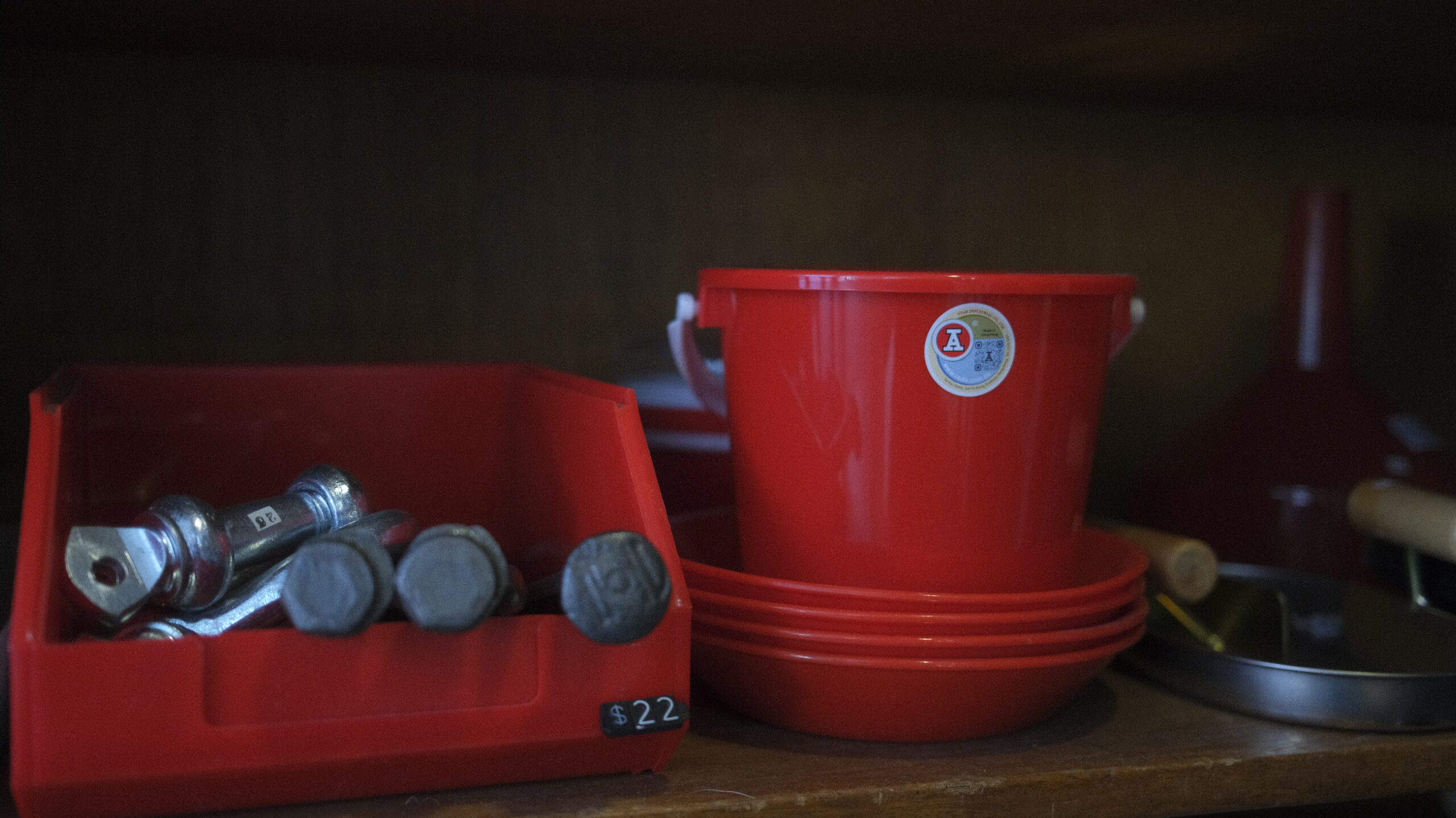
Red plastic containers and buckets made by Red A sit on a shelf at Hak Dei.
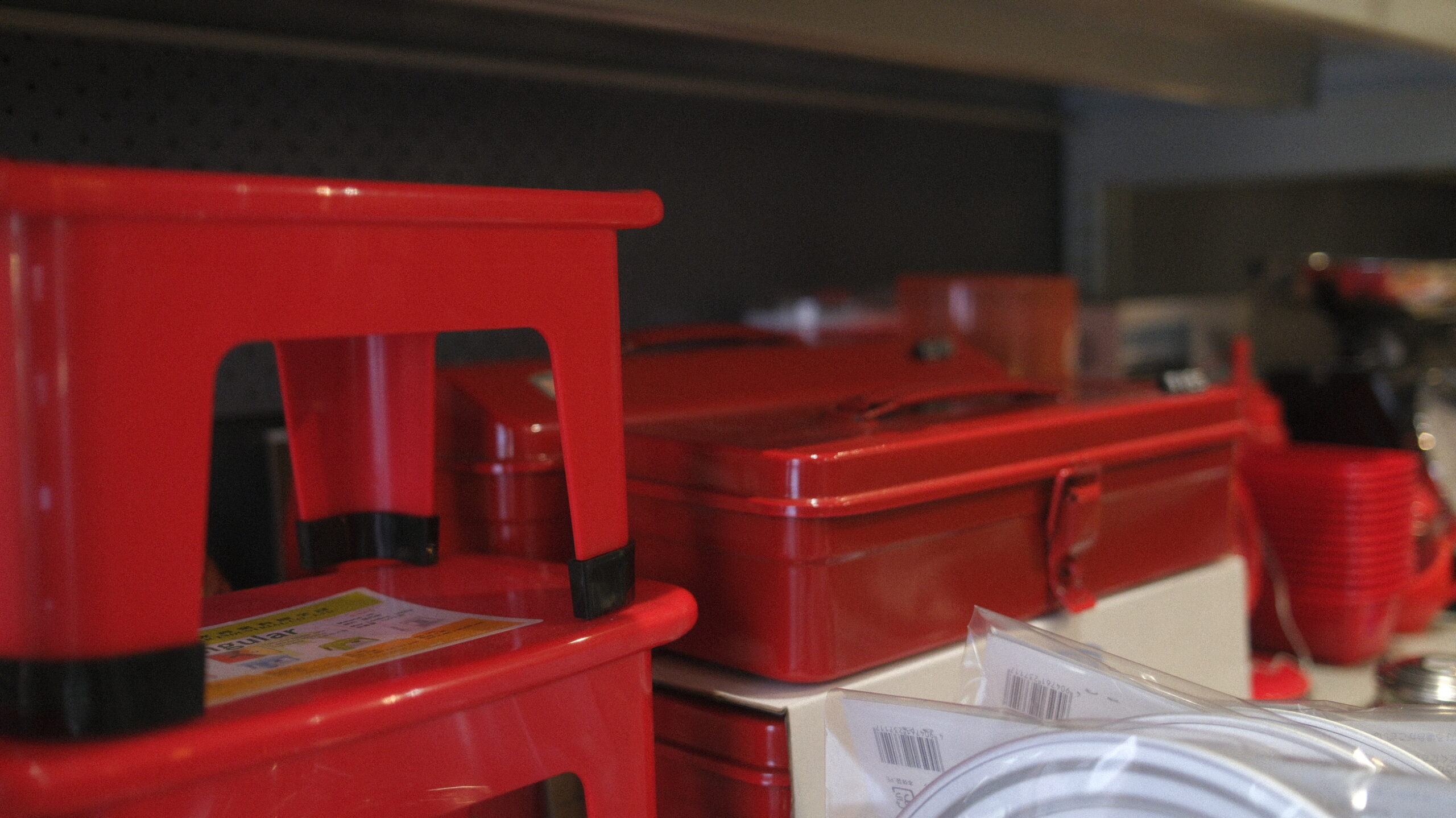
A stack of red plastic stools sits beside other red household goods.
Abby Lam, who works at Hak Dei, said the appeal is broader than a youth trend for “retro” objects.
“Not only young people, many middle-aged and older customers come too,” Lam said.
Some shoppers are drawn by the memories associated with Red A objects. Others are drawn by durability, color or familiarity. Lam emphasized another reason the objects still matter: Red A is “made in Hong Kong” and is treasured for being a traditional local brand.
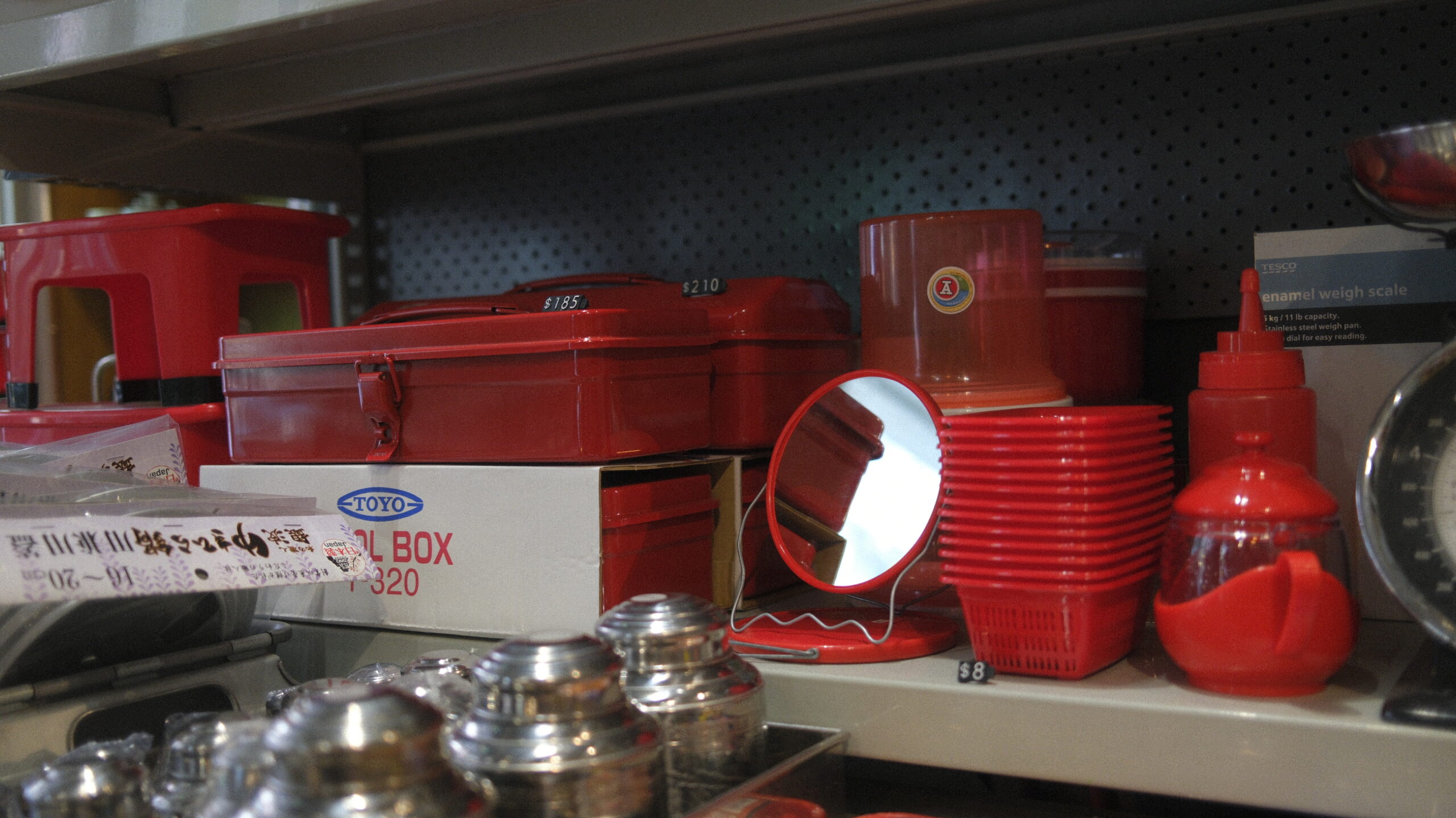
Red household objects are displayed at Hak Dei on Shanghai Street in Mong Kok.
Red A objects were made for crowded flats, wet markets and restaurant kitchens, and that is why “made in Hong Kong” carries weight here. It names more than a place of production. It points to a time when the city made the things people touched every day.
Red A objects have become more than just plastic materials. The red lamps keep working. The old-school items have become a core memory. Hong Kong does not remember itself only through skylines, ferries or neon. Sometimes it is remembered through plastic.
On the fish-and-vegetable floor of Wan Chai Market, the red lamps illuminate the space. The red lights cast a warm glow across the white tiles, the foam boxes and the vendor’s hands. Silver fish turn pink at the edges. A customer points, bargains, pays and leaves. The red lamp did its part in selling the fish.
A vendor works beneath Red A plastic lamps at a meat stall in Causeway Bay Market.
Candy Chong has used the same kind of red plastic lamp for about 10 years at her fish stall. She bought it because it worked. “The ingredients look more beautiful under the lamp, and it attracts customers,” said Chong.
Fish are displayed on ice under Red A lamps at Wan Chai Market.
The lamp is manufactured by Red A, a Hong Kong plastics company. These household goods have moved through markets, kitchens and crowded flats for decades. Its history shows how these everyday products became a Hong Kong icon.
Star Industrial Co., Ltd. founded Red A in 1949, when Hong Kong was rebuilding after the Chinese civil war and demand for low-cost household goods was rising. Red A became known for its plastic objects that were cheap, and durable: buckets, basins, chairs, containers, baskets, food boxes, school cases and lamps.
Hong Kong’s plastic toy industry dominated the city’s manufacturing in the 1950s and plastic flowers in the early 1960s, Red A found its place in the home. It imported machines from Japan and made household products that ordinary families could afford.
In the 1960s, Hong Kong households needed containers to store water, especially during the water shortage crisis that struck the city from 1963 to 1964. Government records showed that water was supplied for only four hours every fourth day. At the time people were using heavy metal buckets. Red A offered a lighter alternative: red plastic buckets. The plastic buckets held water for drinking, cooking and washing.
Another significant Red A product was the school briefcase. It advertised that it could be stepped on, used as a small stool and is waterproof. It was what postwar Hong Kong consumers needed: strong, cheap, portable and ready for crowded living.
The market lamp belongs to that same family of inventions. Its shape is plain: a rounded plastic shade, hard, light and bright. But in a market, it changes the color temperature of the stall. Fish look warmer. Meat looks redder. Eggs look richer. Stall owners are able to make their products more enticing.
Red A catalogs show the lamp shade was sold by the late 1960s in red and white. The white version was rare and was used mainly by pawnshops. The red version spread through markets because it made food look more appetizing. A functional choice became a visual symbol for old Hong Kong: red light, wet tiles, plastic baskets, handwritten price signs, vendors calling out prices. You know where you are before anyone tells you.
Red A items aren’t just functional, they’re also collectibles. On Shanghai Street in Mong Kok, Hak Dei, a shop that sells vintage household objects, places Red A goods on shelves of tableware. Food boxes, plastic lamps and small red objects sit among ceramics, storage boxes and old kitchenware. Here, the same material that is staple infrastructure in markets and kitchens becomes something residents and tourists alike can buy, pick up, examine and buy again.
Red plastic containers and buckets made by Red A sit on a shelf at Hak Dei.
A stack of red plastic stools sits beside other red household goods.
Abby Lam, who works at Hak Dei, said the appeal is broader than a youth trend for “retro” objects.
“Not only young people, many middle-aged and older customers come too,” Lam said.
Some shoppers are drawn by the memories associated with Red A objects. Others are drawn by durability, color or familiarity. Lam emphasized another reason the objects still matter: Red A is “made in Hong Kong” and is treasured for being a traditional local brand.
Red household objects are displayed at Hak Dei on Shanghai Street in Mong Kok.
Red A objects were made for crowded flats, wet markets and restaurant kitchens, and that is why “made in Hong Kong” carries weight here. It names more than a place of production. It points to a time when the city made the things people touched every day.
Red A objects have become more than just plastic materials. The red lamps keep working. The old-school items have become a core memory. Hong Kong does not remember itself only through skylines, ferries or neon. Sometimes it is remembered through plastic.
Extra Credits
Advisor
Diana Jou
Editor in Chief
Clarisse Choo
Creative Directors
Syrena Jin
Cheryl Xie
Serena Zhou
Managing Editor
Jiachen Li
